Types, Uses and Complete List of Construction Hand Tools
- What Are Construction Hand Tools?
- Types of Construction Hand Tools
- Hand Tools Classification by Function
- Fastening & Tightening Tools
- Cutting & Shaping Tools
- Striking & Demolition Tools
- Measuring & Alignment Tools
- Digging & Excavation Tools
- Finishing & Surface Tools
- Support & Utility Tools
- Sealing & Application Tools
- Safety Tips
- Trusted Brands for Construction Hand Tools
- Why Hand Tools Still Matter
- Conclusion
- FAQs
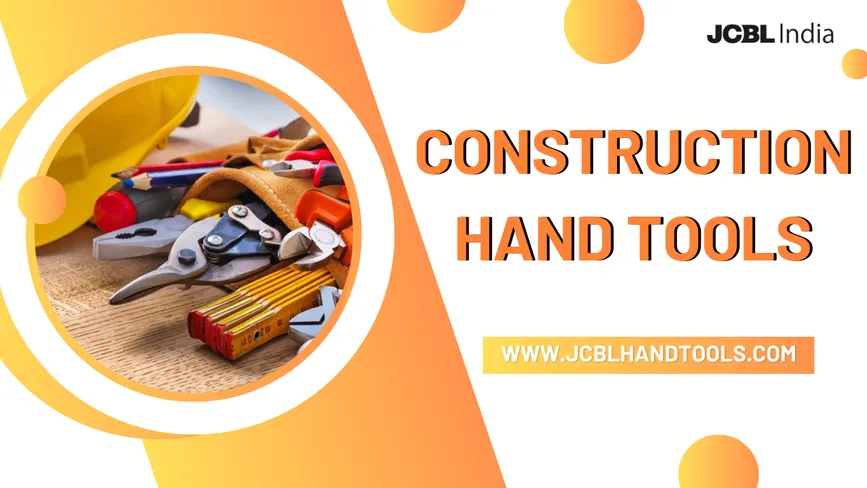
Construction hand tools are manually operated tools used for cutting, fastening, measuring, digging, and finishing in construction work. They do not require electricity and are essential for precise and controlled tasks on-site.
Examples include:
- Hammer
- Screwdriver
- Measuring tape
- Chisel
- Spanner
What Are Construction Hand Tools?
Construction hand tools are tools that work using human effort instead of electricity or batteries. These tools are commonly used for:
- Cutting and shaping materials
- Tightening and fastening components
- Measuring and aligning structures
- Digging and preparing surfaces
- Finishing and smoothing work
Types of Construction Hand Tools
Hand tools for construction are categorized based on their function into:
- Fastening Tools
- Cutting Tools
- Striking Tools
- Measuring Tools
- Digging Tools
- Finishing Tools
- Support Tools
- Sealing Tools
This classification helps in selecting the right tool for each task and improves efficiency on-site.
Hand Tools Classification by Function
| Category | Description | Common Tasks |
| Fastening & Tightening Tools | Used to join, secure, or loosen components | Tightening bolts, fixing screws |
| Cutting & Shaping Tools | Used to cut, trim, or shape materials | Cutting wood, bricks, metal |
| Striking & Demolition Tools | Used for impact and breaking tasks | Hammering, demolition |
| Measuring & Alignment Tools | Ensure accuracy and proper layout | Measuring, leveling, alignment |
| Digging & Excavation Tools | Used for groundwork and soil handling | Digging, trenching |
| Finishing & Surface Tools | Used for smoothing and final finishing | Plastering, leveling |
| Support & Utility Tools | Provide support and handling assistance | Holding, supporting materials |
| Sealing & Application Tools | Used for applying sealants and fillers | Sealing joints, filling gaps |
Fastening & Tightening Tools
These tools are used where secure connections, grip, and controlled force are required.
1. Adjustable Spanner
- Uses: Tightening and loosening nuts and bolts of different sizes
- Types: Adjustable spanner, pipe wrench
- Pro Tip: Always pull the spanner toward you for better control and reduced slipping risk
- Common Mistake: Using a loose jaw setting can round off bolt edges
On-Site Use:
Commonly used in plumbing installations where pipe fittings vary in size
2. Wrench
- Uses: Tightening fasteners with precise grip
- Types: Open-end wrench, socket wrench
- Pro Tip: Use the correct size for a snug fit to prevent damage
- Common Mistake: Applying excessive force instead of switching to the right size
On-Site Use:
Used in mechanical assembly and structural fastening work
3. Screwdriver
- Uses: Tightening and loosening screws
- Types: Flathead, Phillips, Torx
- Pro Tip: Match the screwdriver tip exactly to the screw head
- Common Mistake: Using worn-out tips damages screws
On-Site Use:
Used in electrical fittings and hardware installation
4. Pliers
- Uses: Gripping, bending, twisting, and cutting wires
- Types: Combination pliers, needle-nose pliers
- Pro Tip: Use insulated pliers for electrical tasks
- Common Mistake: Using pliers instead of a wrench reduces efficiency
On-Site Use:
Used by electricians for cutting and joining wires
Cutting & Shaping Tools
These tools are used for modifying materials with precision.
5. Chisel
- Uses: Cutting and shaping materials
- Types: Wood chisel, cold chisel, masonry chisel
- Pro Tip: Apply controlled hammer force for accuracy
- Common Mistake: Using the wrong chisel type for the material
On-Site Use:
Used for removing excess concrete or shaping joints
6. Handsaw
- Uses: Cutting wood manually
- Types: Crosscut saw, rip saw
- Pro Tip: Use long and smooth strokes for clean cuts
- Common Mistake: Uneven pressure leads to crooked cuts
On-Site Use:
Used in carpentry for cutting wooden planks
7. Utility Knife
- Uses: Cutting lightweight materials
- Types: Retractable blade, fixed blade
- Pro Tip: Replace blades regularly for precision and safety
- Common Mistake: Using dull blades increases slip risk
On-Site Use:
Used for cutting drywall, insulation, and plastic materials
8. Bolster
- Uses: Cutting bricks and stones
- Types: Brick bolster, cold bolster
- Pro Tip: Strike evenly along the line for a clean cut
- Common Mistake: Uneven force causes cracks instead of clean breaks
On-Site Use:
Used in masonry work to adjust brick sizes
Striking & Demolition Tools
These tools are used where force, impact, and dismantling are required.
9. Claw Hammer
- Uses: Driving and removing nails
- Types: Curved claw, straight claw
- Pro Tip: Hold from the end of the handle for better leverage
- Common Mistake: Holding too close reduces impact force
On-Site Use:
Used in framing, carpentry, and shuttering work
10. Sledgehammer
- Uses: Heavy demolition tasks
- Types: Short handle, long handle
- Pro Tip: Maintain balance and controlled swings
- Common Mistake: Over-swinging without control
On-Site Use:
Used for breaking concrete slabs during renovation
11. Crowbar
- Uses: Prying, lifting, and demolition
- Types: Flat crowbar, gooseneck crowbar
- Pro Tip: Focus on leverage rather than force
- Common Mistake: Incorrect angle reduces efficiency
On-Site Use:
Used to remove wooden boards and dismantle structures
Measuring & Alignment Tools
These tools ensure accuracy and structural correctness.
12. Measuring Tape
- Uses: Measuring dimensions
- Types: Steel tape, fiberglass tape
- Pro Tip: Lock the tape before marking
- Common Mistake: Measuring loosely leads to errors
On-Site Use:
Used for layout marking before cutting or installation
13. Spirit Level
- Uses: Checking horizontal and vertical alignment
- Types: Box level, torpedo level
- Pro Tip: Flip and recheck for accuracy
- Common Mistake: Relying on a single reading
On-Site Use:
Used in tile installation and brick alignment
14. Plumb Bob
- Uses: Checking vertical alignment
- Types: Steel, brass
- Pro Tip: Allow it to stabilize before marking
- Common Mistake: Marking while the tool is swinging
On-Site Use:
Used for wall and column alignment
15. Mason’s Square
- Uses: Checking right angles
- Types: Steel, aluminum
- Pro Tip: Verify both inner and outer angles
- Common Mistake: Ignoring small deviations
On-Site Use:
Used in frame and corner alignment
16. Plumb Rule
- Uses: Checking vertical straightness
- Types: Wooden, metal
- Pro Tip: Use along with a plumb bob for better accuracy
- Common Mistake: Using it alone without reference
On-Site Use:
Used in column and wall construction
17. Line and Pins
- Uses: Maintaining straight alignment in brickwork
- Types: Nylon line, mason line
- Pro Tip: Keep the line tight at all times
- Common Mistake: Loose lines cause uneven walls
On-Site Use:
Used during bricklaying to maintain straight courses
Digging & Excavation Tools
These tools are used in groundwork and site preparation.
18. Shovel
- Uses: Digging and lifting materials
- Types: Round shovel, square shovel
- Pro Tip: Use leg strength instead of back while lifting
- Common Mistake: Overloading the shovel
On-Site Use:
Used in foundation digging and soil movement
19. Pickaxe
- Uses: Breaking hard surfaces
- Types: Pick mattock, cutter mattock
- Pro Tip: Use controlled swings for safety
- Common Mistake: Over-swinging reduces control
On-Site Use:
Used in rocky soil excavation
20. Hoe
- Uses: Soil digging and trenching
- Types: Draw hoe, Dutch hoe
- Pro Tip: Maintain consistent motion for efficiency
- Common Mistake: Uneven strokes reduce productivity
On-Site Use:
Used for trench preparation for cables or pipes
21. Digging Bar
- Uses: Breaking compact ground
- Types: Pinch bar, tamping bar
- Pro Tip: Let the tool weight do most of the work
- Common Mistake: Applying unnecessary force
On-Site Use:
Used in foundation hole preparation
Finishing & Surface Tools
These tools are used to achieve final surface quality.
22. Trowel
- Uses: Applying and smoothing cement or plaster
- Types: Brick trowel, finishing trowel
- Pro Tip: Keep a slight angle for smoother finish
- Common Mistake: Applying uneven pressure
On-Site Use:
Used in plastering and tile work
23. Float
- Uses: Smoothing concrete surfaces
- Types: Wooden float, magnesium float
- Pro Tip: Use at the correct stage of drying
- Common Mistake: Over-finishing wet concrete
On-Site Use:
Used for floor finishing
24. Rake
- Uses: Leveling loose materials
- Types: Garden rake, concrete rake
- Pro Tip: Use light strokes for even distribution
- Common Mistake: Applying too much force
On-Site Use:
Used for spreading gravel or leveling surfaces
Support & Utility Tools
25. Sawhorse
- Uses: Supporting materials during work
- Types: Wooden sawhorse, metal sawhorse
- Pro Tip: Ensure stability before use
- Common Mistake: Using on uneven surfaces
On-Site Use:
Used while cutting boards or working on materials
26. Wedge
- Uses: Splitting and separating materials
- Types: Steel wedge, wood wedge
- Pro Tip: Position correctly before striking
- Common Mistake: Misalignment reduces effectiveness
On-Site Use:
Used for splitting logs or separating structures
Sealing & Application Tools
27. Caulk Gun
- Uses: Filling gaps and sealing joints
- Types: Manual caulk gun, electric caulk gun
- Pro Tip: Cut the nozzle at a 45-degree angle for better flow
- Common Mistake: Uneven pressure leads to poor sealing
On-Site Use:
Used in sealing windows, doors, and joints
Safety Tips
How to safely use hand tools?
- Always inspect tools before use
- Use proper PPE (gloves, helmet, goggles)
- Keep tools clean and maintained
- Never use damaged tools
- Store tools properly
👉 These safety practices improve productivity and reduce accidents
Trusted Brands for Construction Hand Tools
One well-known manufacturer is JCBL Hand Tools, known for:
- Durable materials
- Precision design
- Professional-grade performance
Why Hand Tools Still Matter
Even with advanced machinery, hand tools remain essential because:
- They offer better control
- Ideal for small & precise tasks
- Cost-effective
- No power dependency
Conclusion
Construction hand tools are more than just basic equipment—they directly influence precision, speed, and safety on every project.
On real job sites, skilled workers don’t just use tools—they:
- Choose the right type for the task
- Apply the correct technique
- Follow safety practices consistently
The difference between average and professional work often comes down to how well tools are selected and used.
Mastering these tools not only improves efficiency but also ensures long-term durability, fewer errors, and safer working conditions.
FAQs
Hand tools are important because they provide precision, control, and flexibility. They are essential for small tasks, finishing work, and situations where power tools are not practical.
Hand tools in construction are manually operated tools used for tasks such as cutting, fastening, measuring, digging, and finishing. They do not require electricity and are essential for precision work on-site.
Some of the most common hand tools include:
1. Hammer
2. Screwdriver
3. Pliers
4. Measuring tape
5. Spanner
6. Chisel
7. Handsaw
8. Spirit level
9. Shovel
10. Trowel
These tools are used daily across carpentry, masonry, and general construction work.
The 10 most common construction hand tools are:
1. Hammer
2. Screwdriver
3. Pliers
4. Measuring tape
5. Spanner
6. Chisel
7. Handsaw
8. Spirit level
9. Shovel
10. Trowel
These tools are widely used for both basic and advanced construction tasks.
Construction Hand tools are categorized based on their function, including:
1. Fastening and tightening tools
2. Cutting and shaping tools
3. Striking and demolition tools
4. Measuring and alignment tools
5. Digging and excavation tools
6. Finishing and surface tools
7. Support and utility tools
8. Sealing and application tools
This classification helps in selecting the right tool for each task.
Basic construction tools include hand tools that are essential for everyday tasks such as measuring, cutting, fastening, and leveling. Examples include hammer, tape measure, screwdriver, and pliers.
Tools used in construction include hand tools, power tools, and heavy machinery. However, hand tools are the most commonly used for precision work, repairs, and finishing tasks.