What is Forging? Process, Benefits
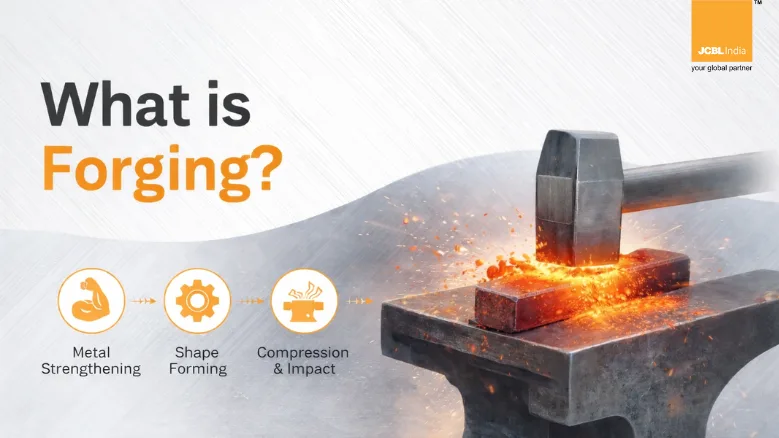
Forging is a manufacturing process where metal is shaped using compressive force (usually after heating) to create stronger, denser, and more durable components. Unlike casting, forging does not melt the metal; it refines its internal grain structure, resulting in superior strength and reliability.
What is Forging in Manufacturing?
Forging is one of the oldest and most trusted metal-forming processes used in modern manufacturing. It involves shaping metal using localized compressive forces, typically after heating it to a malleable state.
In simple terms:
Forging = Heating + Pressure + Controlled Shaping
Because the metal is not melted, its internal grain structure remains intact and becomes aligned, making forged parts significantly stronger than those made by other methods.
Forging is a controlled manufacturing process that improves the mechanical properties of metal by applying compressive force, producing high-strength, fatigue-resistant components.
What Does “Forged” Mean?
A forged product refers to any component that has been shaped under high pressure rather than being cut or cast.
Key Characteristics of Forged Parts:
- Higher strength-to-weight ratio
- Improved fatigue resistance
- Better impact tolerance
- Longer service life
This is why forged components are widely used in automotive, industrial, and heavy-duty applications.
How the Forging Process Works (Step-by-Step)
The forging process is engineered for strength, consistency, and performance.
1. Heating
The metal (usually steel) is heated to a specific temperature to increase ductility without melting it.
2. Shaping
The heated metal is placed into dies or molds to define the desired shape.
3. Applying Compressive Force
High pressure is applied using hammers or presses to form the metal and refine its internal structure.
4. Cooling & Finishing
The forged part is cooled and may undergo trimming, machining, or heat treatment for final performance.
Why Forging is Preferred for Hand Tool Manufacturing
Forging is the industry standard for professional-grade hand tools, and for good reason.
1. Superior Strength
Forged tools can withstand:
- High torque
- Mechanical stress
- Repeated load cycles
They are far less likely to bend, crack, or fail.
2. Exceptional Durability
The dense grain structure ensures the following:
- Longer lifespan
- Consistent performance under harsh conditions
3. Impact Resistance
Forged tools absorb shock better, making them ideal for:
- Hammering
- Striking
- Heavy-duty operations
Common Forged Hand Tools
Forging is widely used to manufacture tools that demand high reliability:
- Spanners and wrenches
- Hammers and striking tools
- Pliers and gripping tools
- Automotive repair tools
- Industrial maintenance tools
Forging vs Casting: Which is Better?
| Feature | Forging | Casting |
| Strength | Very high | Moderate |
| Grain Structure | Refined and aligned | Random |
| Durability | Excellent | Lower |
| Impact Resistance | High | Lower |
| Best Use Case | Tools, load-bearing parts | Complex shapes, low-stress parts |
Verdict: Forging is the better choice for hand tools that face stress, torque, and repeated use. To gain in-depth understanding of differences in these manufacturing processes, see our comprehensive guide on the
“Difference Between Cast and Forged Tools”
Applications of Forged Tools Across Industries
Forged tools are widely used in industries where strength, reliability, and long-term performance are essential.
Automotive Industry
Forged tools are ideal for high-torque tasks such as tightening and loosening bolts, making them a go-to choice in automotive repair and maintenance.
Industrial Maintenance
These tools are built to handle continuous use in tough environments, ensuring dependable performance even under heavy workloads.
Professional Toolkits
Forged tools are trusted by professionals, including:
- Mechanics
- Engineers
- Technicians
B2B & Export Markets
Forged tools meet international quality standards and are preferred for:
- Consistent performance
- Reliable durability
- Long service life
Materials Used in Forging
The most common materials used for forged hand tools include:
- Carbon Steel: High strength and affordability
- Alloy Steel: Enhanced toughness and wear resistance
- Chrome Vanadium Steel (Cr-V): Premium durability and corrosion resistance
Why Forged Tools Are Stronger?
Forging improves metal strength through grain flow alignment.
When force is applied:
- Internal grain lines follow the shape of the tool
- Weak points are minimized
- Structural integrity increases
This results in:
- Higher fatigue resistance
- Better load distribution
- Reduced failure risk
Conclusion
Forging remains the gold standard in hand tool manufacturing because it delivers unmatched strength, durability, and reliability.
For professionals working in demanding environments, forged tools are not just a choice; they are a necessity.
At JCBL Hand Tools, forging is at the core of our manufacturing process. Our tools are engineered to meet global standards and perform under the toughest conditions.
FAQs
Forging is the process of shaping metal using heat and compressive force to make it stronger and more durable.
Forged tools are stronger because the process aligns the metal’s grain structure, improving strength and resistance to stress.
Yes, forging is better for high-strength applications because it produces denser and more durable components than casting.
Chrome vanadium steel and alloy steel are considered the best due to their strength, toughness, and wear resistance.
Most high-quality professional tools are forged because they offer superior performance and a longer lifespan.
Related Post
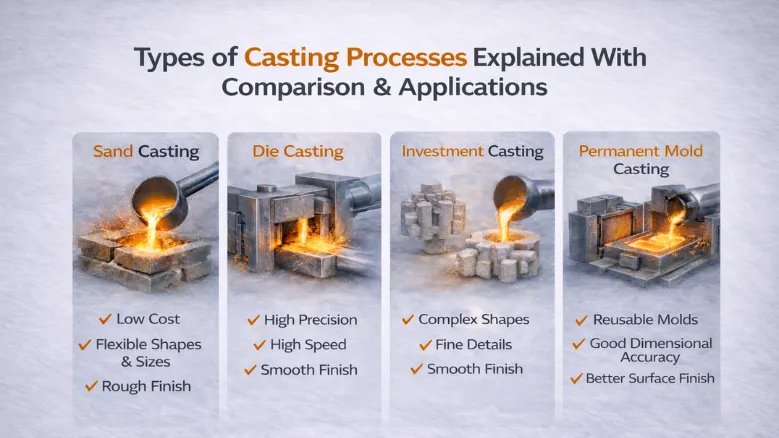
Types of Casting Processes Explained With Comparison & Applications
Mainly, there are four types of casting processes, including sand casting, die casting, investment casting, [...]
The Complete Process of Hand Tool Manufacturing: From Forging to Finishing
Hand tools are manufactured through 8 key stages: Steel selection→ forging machining→ heat treatment→ surface [...]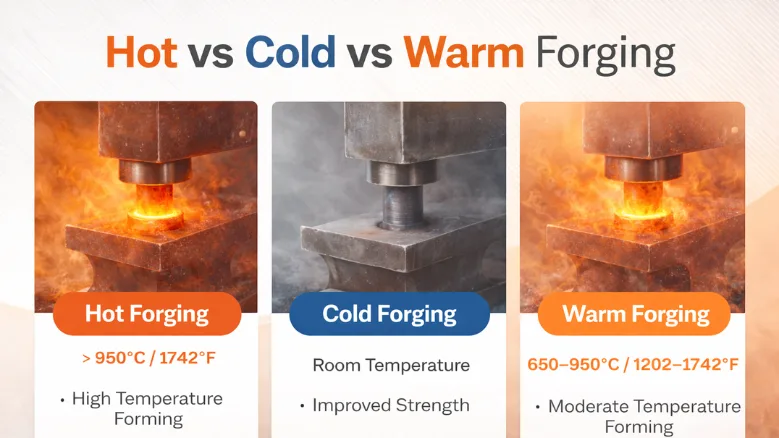
Hot vs Cold vs Warm Forging: Key Differences Explained
In the manufacturing of professional hand tools, forging is not only a metalworking technique; it [...]