Complete Guide to Spanner Sizes, Wrench Sizes & Conversions (2026 Updated)
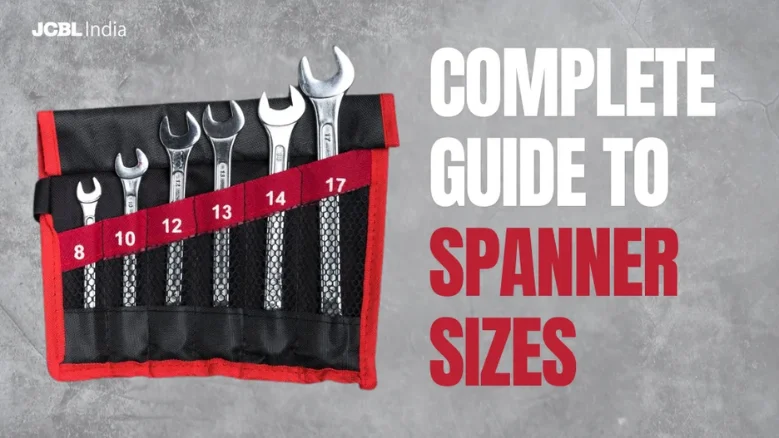
What is a Spanner (Wrench Tool)?
A spanner (also called a wrench) is a hand tool used to tighten or loosen nuts and bolts by applying torque.
- UK/India → Spanner
- US → Wrench
Spanner and wrench refer to the same tool with different regional names.
Spanner vs Wrench (Clear Difference)
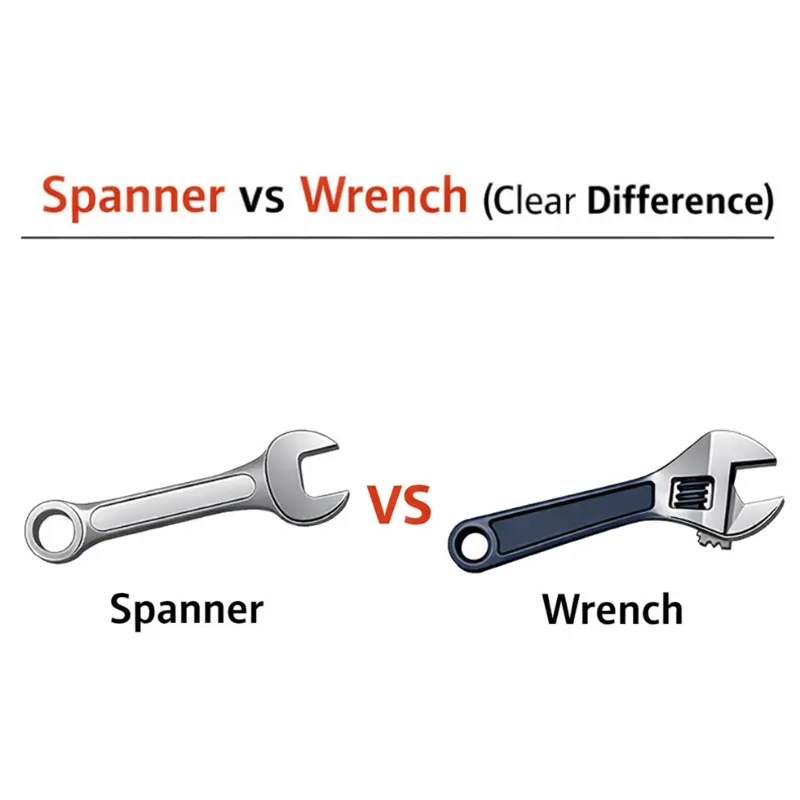
| Term | Region | Meaning |
| Spanner | UK, India | Tool for nuts & bolts |
| Wrench | USA | Same tool |
| Adjustable Wrench | Global | Adjustable jaw tool |
There is no functional difference between a spanner and a wrench.
What is Spanner Size?
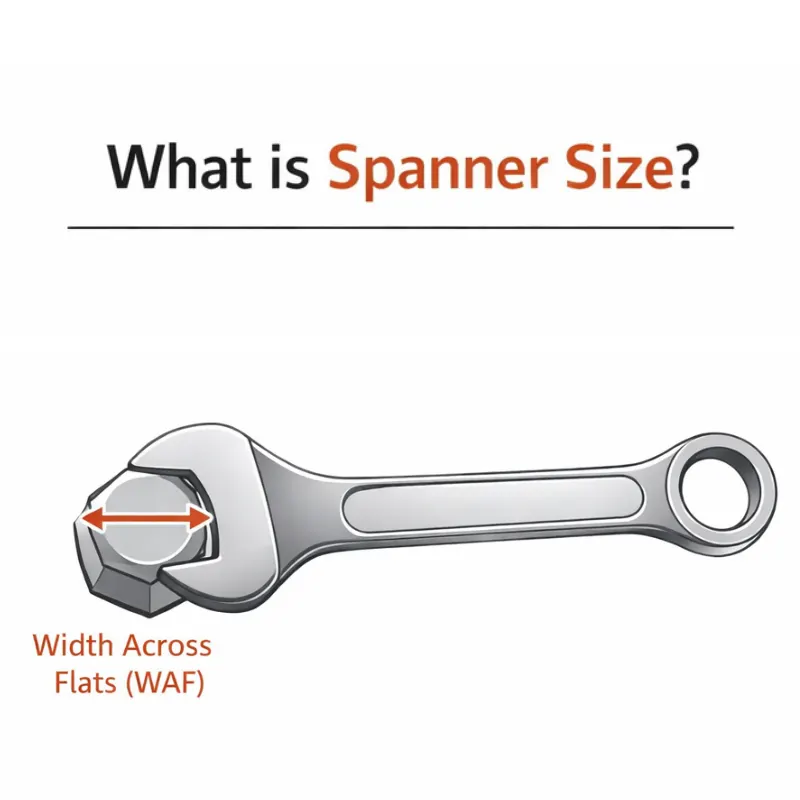
Spanner size refers to the width across flats (WAF) of a nut or bolt.
- 10 mm spanner fits a 10 mm bolt
- 3/8 inch wrench fits a 3/8 inch bolt
Most Common Spanner Sizes
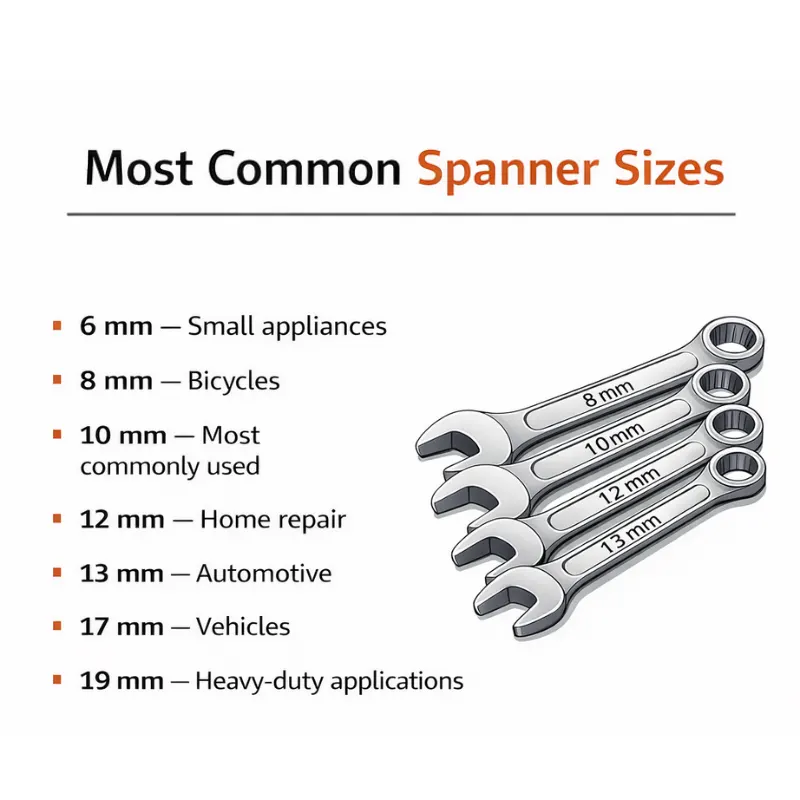
Common metric spanner sizes include:
- 6 mm – small appliances
- 8 mm – bicycles
- 10 mm – most commonly used
- 12 mm – home repair
- 13 mm – automotive
- 17 mm – vehicles
- 19 mm – heavy-duty applications
The most commonly used spanner sizes are 8 mm, 10 mm, 12 mm, and 13 mm, with 10 mm being the most widely used.
Complete Spanner Size Chart
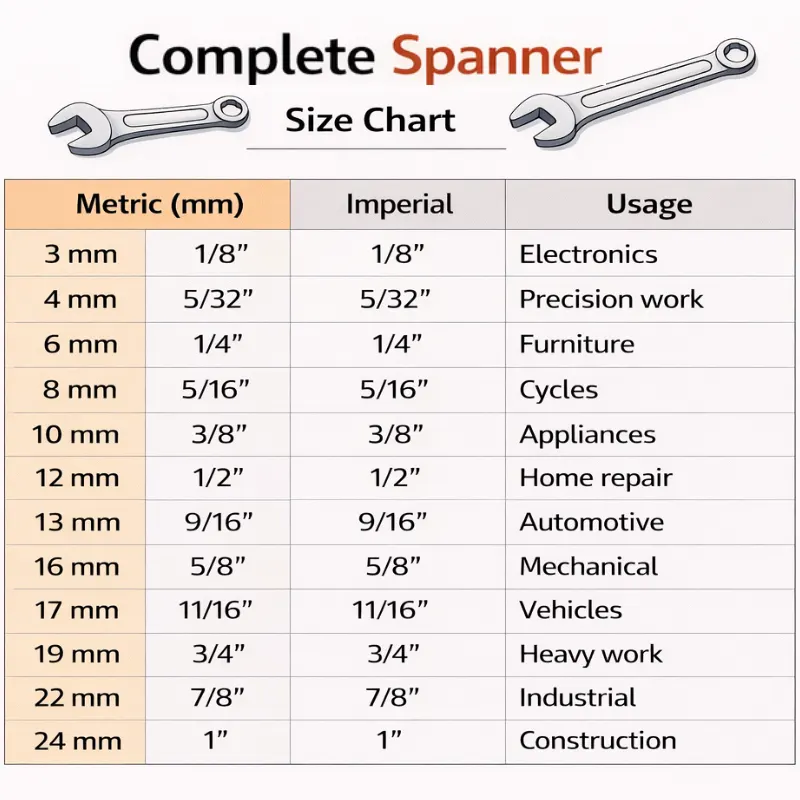
| Metric (mm) | Imperial | Usage |
| 3 mm | 1/8″ | Electronics |
| 4 mm | 5/32″ | Precision work |
| 6 mm | 1/4″ | Furniture |
| 8 mm | 5/16″ | Cycles |
| 10 mm | 3/8″ | Appliances |
| 12 mm | 1/2″ | Home repair |
| 13 mm | 9/16″ | Automotive |
| 16 mm | 5/8″ | Mechanical |
| 17 mm | 11/16″ | Vehicles |
| 19 mm | 3/4″ | Heavy work |
| 22 mm | 7/8″ | Industrial |
| 24 mm | 1″ | Construction |
Conversion Reference
- 3/16 inch = 4.76 mm
- 13/16 inch = 20.64 mm
3 mm is commonly used in electronics and precision work.
A 10 mm wrench is approximately equal to a 3/8 inch wrench.
How to Choose the Right Spanner Size
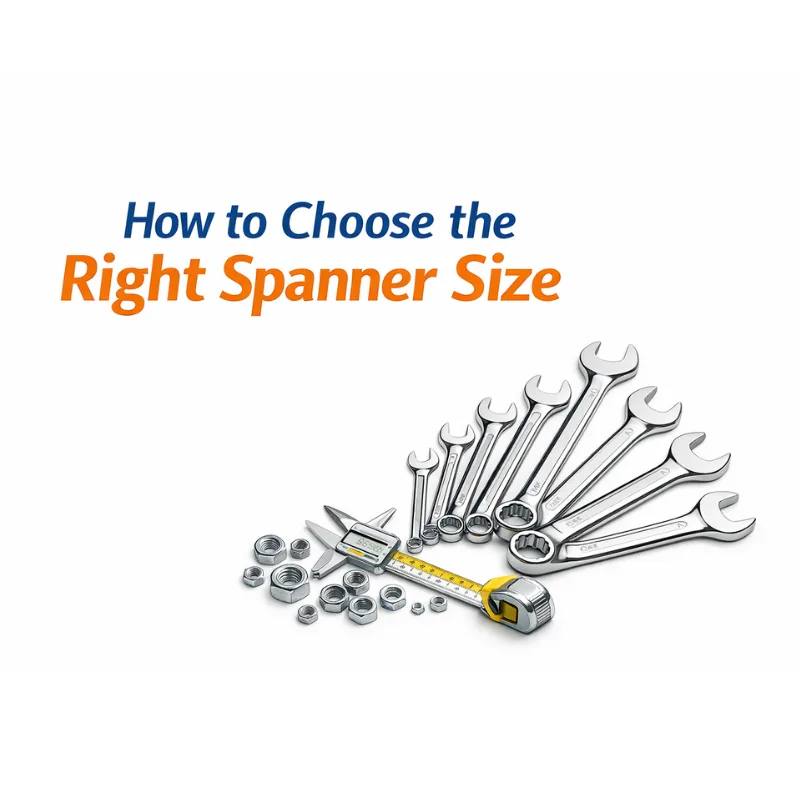
- Measure the bolt or nut across flats (WAF)
- Identify whether it is metric or imperial
- Select the exact matching size
Using the correct size ensures proper grip and prevents damage.
Types of Spanners
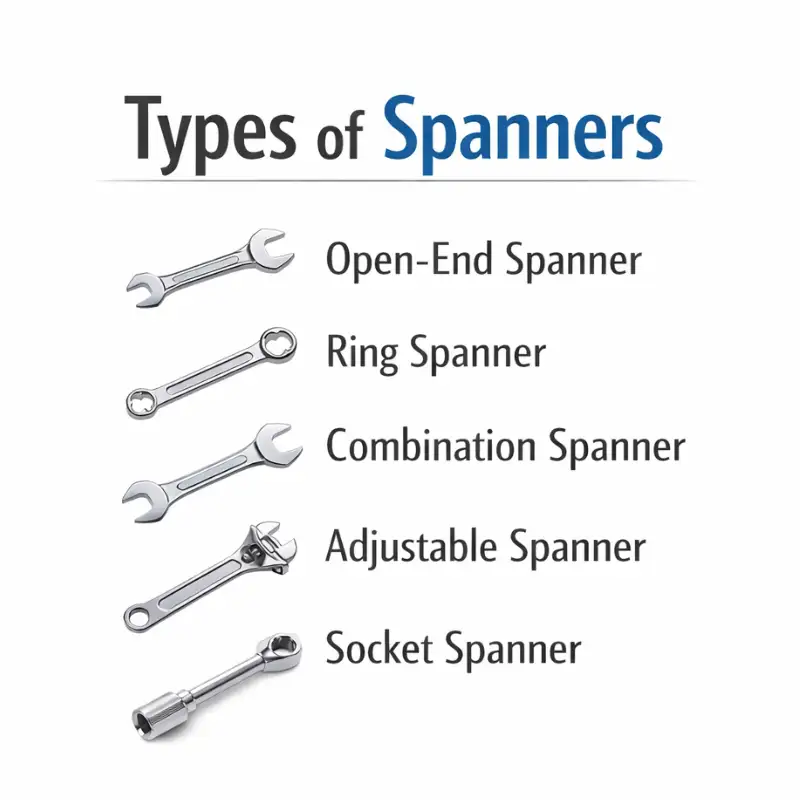
Open-End Spanner
- Quick access
- Suitable for low torque
Ring Spanner
- Full grip
- Suitable for high torque
Combination Spanner
- Open-end and ring combination
Adjustable Spanner
- Fits multiple sizes
- Less precise than fixed spanners
Socket Spanner
- Used with ratchet
- Suitable for tight spaces
Common types of spanners include open-end, ring, combination, adjustable, and socket spanners.
Adjustable Spanner Sizes
Adjustable spanners are categorized by length:
- 6 inch – light work
- 8 inch – general use
- 10 inch – medium tasks
- 12 inch and above – heavy-duty tasks
M16 Spanner Size
An M16 bolt typically requires:
- 24 mm spanner (standard)
- In some cases, 22 mm depending on tolerance
Common Mistakes to Avoid

- Using incorrect size
- Using adjustable tools for precision tasks
- Applying excessive force
- Ignoring tool type
Practical Example
Using a loose-fitting spanner on a tight bolt can round off the edges, making removal difficult and increasing repair time.
Maintenance and Tool Care
- Clean tools after use
- Apply oil to prevent rust
- Store in a toolbox
- Mark sizes for easy identification
Multilingual Reference
- Tabla de llaves para pernos – spanner size chart
- Tamaños de llaves inglesas – wrench sizes
Conclusion
Spanner sizes are essential for selecting the correct tool for nuts and bolts. Using the right size improves efficiency, prevents damage, and ensures safety. Matching the spanner size accurately with the fastener is important for effective results in both professional and DIY applications.
For reliable performance and long-term durability, choosing high-quality tools is equally important. JCBL Hand Tools offers a wide range of precision-engineered spanners and hand tools designed to meet industry standards and deliver consistent results across automotive, industrial, and household tasks.
FAQs
The most common spanner size is 10 mm, widely used in automotive, appliances, and household repairs.
There is no functional difference. “Spanner” is used in the UK/India, while “wrench” is used in the USA.
A 10 mm wrench is approximately equal to 3/8 inch.
An M16 bolt typically requires a 24 mm spanner.
Yes, but adjustable spanners are less precise and may slip under high torque.
Related Post
What Materials Are Spanners Made Of? (Complete Guide)
Spanners are hand tools designed to tighten or loosen nuts and bolts, and they are [...]
Box Spanner vs. Ring Spanner: Key Differences and When to Use Them
In the world of mechanical and automotive tools, spanners play a crucial role in loosening [...]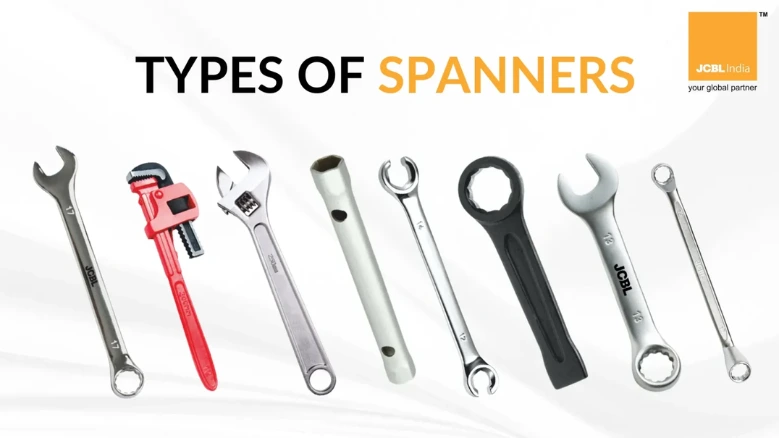
Different Types Of Spanners and Their Uses
Spanners are essential tools for various mechanical and DIY tasks. These versatile tools come in [...]