Box Spanner vs Ring Spanner: Key Differences, Uses & Which One Should You Choose?

- What is a Box Spanner?
- What is a Box Spanner Used For?
- What is a Ring Spanner?
- What are Ring Spanners Used For?
- Box Spanner vs Ring Spanner (Key Differences)
- Difference Between Spanner and Wrench
- Types of Spanners (Quick Overview)
- 24mm Box Spanner – Practical Example
- When to Use Box Spanner vs Ring Spanner
- How to Choose the Right Spanner
- Advantages of Box Spanner
- Advantages of Ring Spanner
- Conclusion
- FAQs
A box spanner is best for reaching deep or recessed fasteners, while a ring spanner provides a stronger grip and higher torque for tight or exposed bolts.
In simple terms:
- Box spanner → deep access
- Ring spanner → strong grip & high torque
Understanding this difference helps you choose the right tool for better efficiency, safety, and performance. This guide explains their key differences, practical uses, and how to select the right spanner for your task.
What is a Box Spanner?
A box spanner is a tubular tool designed to fit over nuts and bolts, mainly used for deep or recessed fasteners where regular tools cannot reach.
To explore more in detail, read our complete guide on
👉 What is a Box Spanner? Types, Uses and Benefits
What is a Box Spanner Used For?
A box spanner is used when access is limited or when the fastener is located deep inside a component.
Common Uses of Box Spanner:
- Loosening deep-seated nuts and bolts
- Plumbing fittings and pipelines
- Bicycle and light mechanical repairs
- Working inside engines or enclosed spaces
- DIY and household maintenance
👉 In practical applications, box spanners are preferred where standard tools fail to reach recessed fasteners.
What is a Ring Spanner?
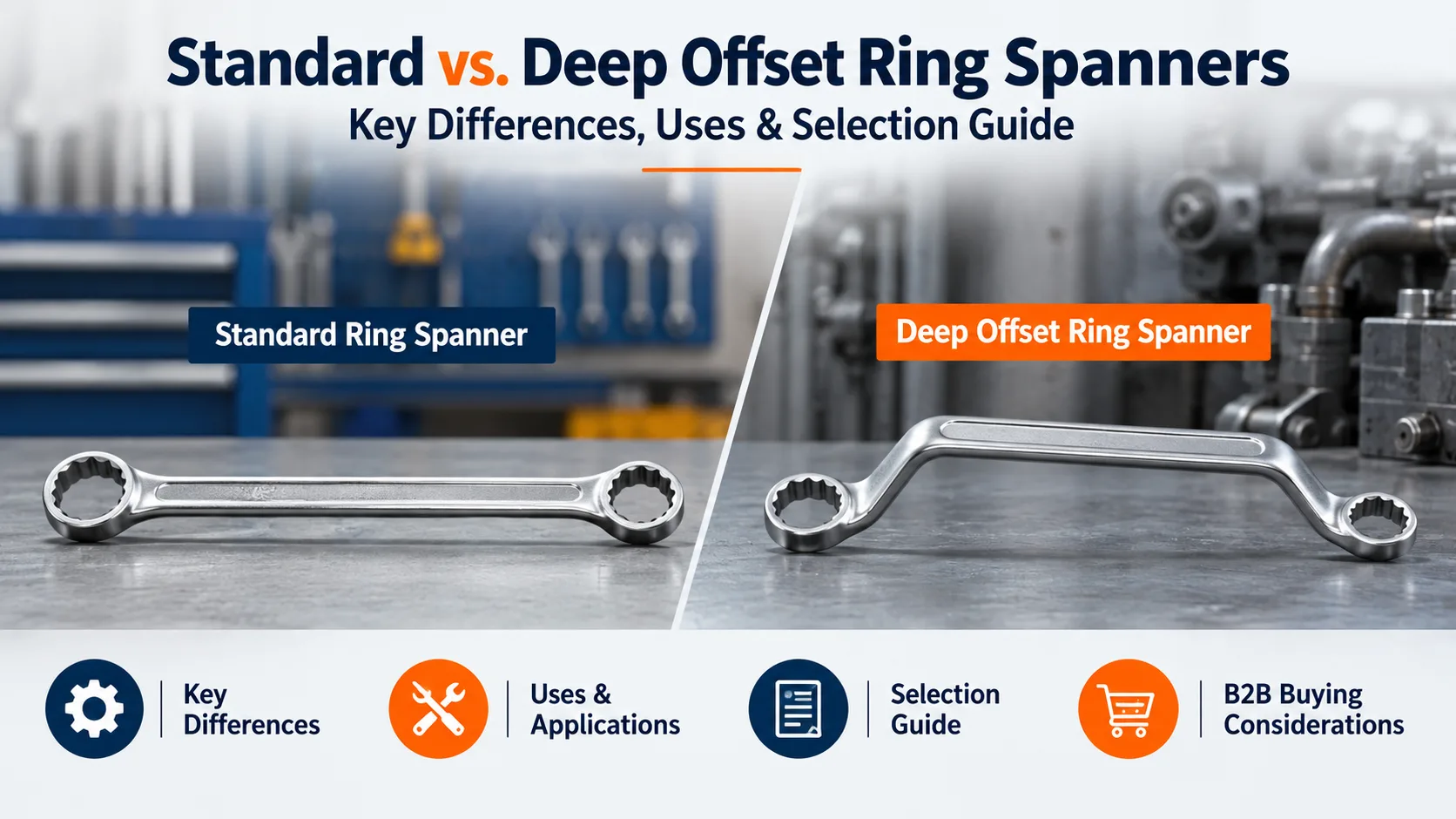
A ring spanner is a closed-loop tool that completely surrounds a nut or bolt to provide a strong grip and high torque.
Learn more about its design and applications here:
👉 What is a Ring Spanner
What are Ring Spanners Used For?
Ring spanners are used in applications where strong grip and torque are required.
Common Uses of Ring Spanner:
- Tightening or loosening rusted or tight bolts
- Automotive repair and servicing
- Heavy machinery maintenance
- Industrial and construction work
Box Spanner vs Ring Spanner (Key Differences)
Key Differences at a Glance
| Feature | Box Spanner | Ring Spanner |
| Design | Tubular (hollow) | Closed-loop |
| Access | Deep / recessed areas | Open / exposed fasteners |
| Torque | Moderate | High |
| Grip | Good | Very strong |
| Usage | Plumbing, DIY, light work | Automotive, industrial |
Difference Between Spanner and Wrench
- Spanner is commonly used in India and the UK
- Wrench is commonly used in the US
👉 Both terms refer to tools used to tighten or loosen nuts and bolts.
Types of Spanners (Quick Overview)
Different types of spanners are designed for specific applications:
- Box spanner
- Ring spanner
- Open-end spanner
- Combination spanner
- Adjustable spanner
Explore all types in detail here:
👉 Types of Spanners
24mm Box Spanner – Practical Example
A 24mm box spanner is typically used for medium to heavy fasteners in automotive and machinery applications. Its tubular design allows better reach and control when working in tight spaces.
When to Use Box Spanner vs Ring Spanner
Choosing the right tool depends on the working condition and bolt position.
In real-world applications, professionals select tools based on access, torque requirements, and fastener condition to ensure efficiency and prevent damage.
Use a Box Spanner when:
- The fastener is located in a deep or recessed area
- You are working in tight spaces
- Precision and controlled torque are required
Use a Ring Spanner when:
- The bolt is tight, rusted, or requires high torque
- You need a secure grip with minimal slippage
- You are working on automotive or heavy machinery
👉 In professional workshops, mechanics use both tools together to handle different types of fastening challenges efficiently.
How to Choose the Right Spanner
To ensure safety and efficiency:
- Always use the correct size (e.g., 24mm for 24mm nuts)
- Prefer tools made from high-strength steel
- Avoid loose-fitting tools to prevent slippage
- Use ring spanners for heavy-duty work and box spanners for access
👉 Using the wrong tool can damage both the fastener and the tool itself.
Advantages of Box Spanner
- Ideal for deep or hard-to-reach fasteners
- Lightweight and easy to handle
- Works well in confined spaces
- Reduces risk of slipping in narrow areas
Advantages of Ring Spanner
- Provides maximum grip
- Suitable for high torque applications
- Prevents rounding of nuts and bolts
- Durable and ideal for heavy-duty use
Conclusion
Both box spanners and ring spanners are essential tools, but their effectiveness depends on the application. A box spanner is ideal for accessing deep or recessed fasteners, while a ring spanner offers superior grip and torque for tight or exposed bolts.
For the best results, professionals often use both tools together to handle different fastening tasks efficiently and safely.
If you’re looking for reliable and high-quality hand tools, explore the complete range from JCBL Hand Tools, designed to meet professional standards for durability, precision, and performance.
FAQs
A box spanner is used for deep or recessed fasteners, while a ring spanner is designed for exposed bolts and provides better grip and higher torque.
You should use a box spanner when the fastener is located in a deep or confined space where a regular spanner cannot reach.
A ring spanner is best used when the bolt is tight, rusted, or requires high torque for loosening or tightening.
A box spanner is better for deep bolts because its tubular design allows it to reach recessed fasteners easily.
A ring spanner provides better grip and higher torque because it fully encloses the nut or bolt, reducing the risk of slipping.
Related Readings: