Essential Safety Equipment When Using Hand Tools
- What Is Safety Equipment?
- Why Do You Need Safety Equipment When Using Hand Tools?
- List of 10 Safety Devices and Their Uses With Hand Tools
- Quick Reference: Safety Equipment and Their Uses
- Essential Safety Gear for Using Power Equipment & Cordless Drills
- Hand Tool Safety Best Practices & Procedures
- Essential Safety Equipment Checklist
- Conclusion
Hand tools are essential in workshops, construction sites, manufacturing facilities, and home improvement projects. While these safety tools and equipment help improve efficiency and precision, they can also cause serious injuries if used without proper safety precautions. Flying debris, sharp edges, repetitive motions, and falling objects are common workplace hazards that can lead to accidents.
Using the right safety tools and equipment list significantly reduces these risks and helps create a safer, more productive work environment. Whether you are a professional tradesperson looking for the best work safety tools or a DIY enthusiast learning the basics of equipment safety, understanding and using the proper protective gear is essential.
What Is Safety Equipment?
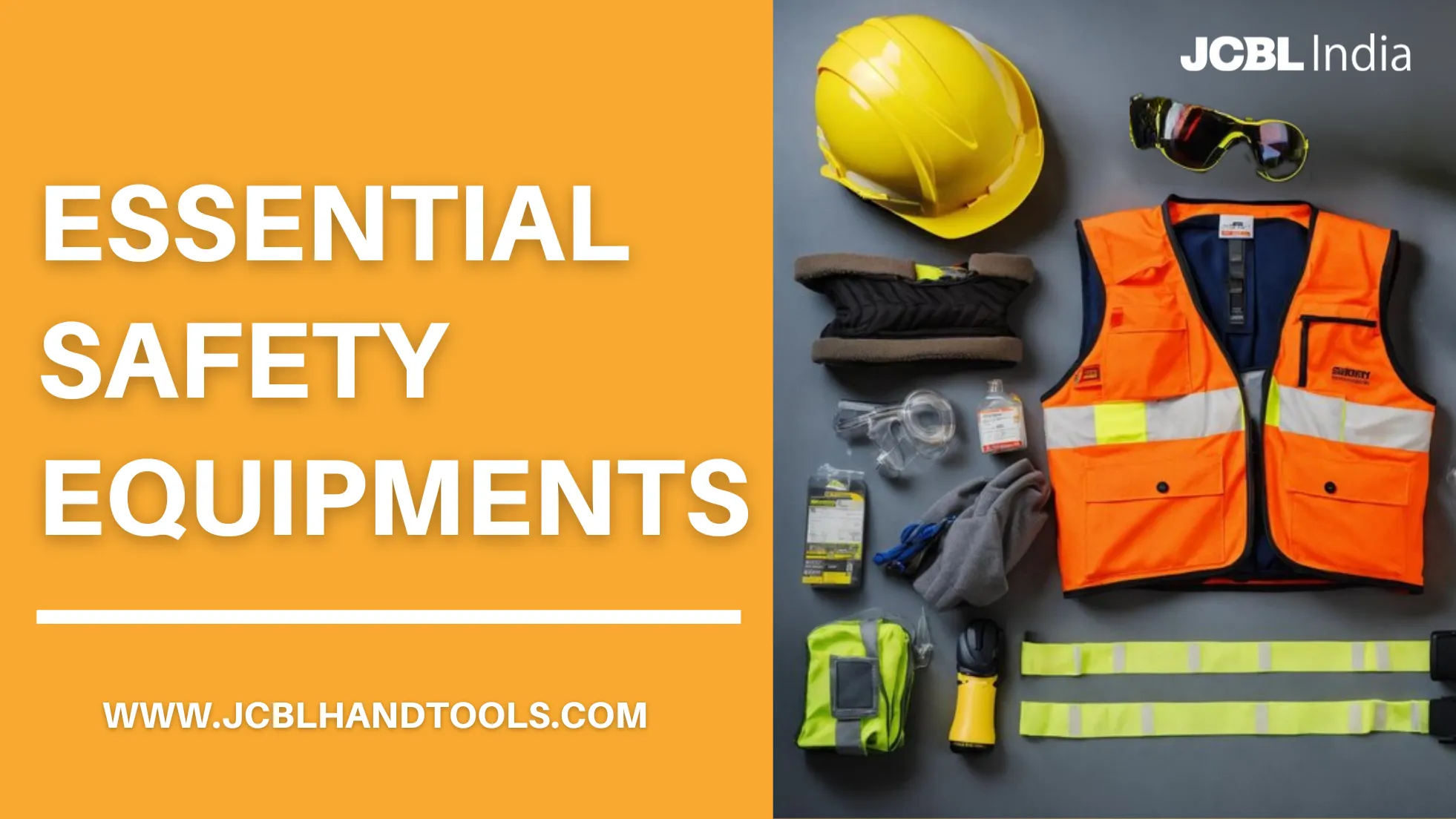
Safety equipment (also known as safety gears or safety paraphernalia) refers to protective gear, devices, components, and accessories designed to drastically reduce the risk of accidents and physical injuries in the workplace.
What is safety equipment? It includes essential personal protective equipment (PPE) items such as safety glasses, heavy-duty work gloves, hard hat safety helmets, hearing protection, respirators, steel-toed boots, and reflective high-visibility clothing used to prevent severe injuries while performing tasks with hand and power tools.
Why Do You Need Safety Equipment When Using Hand Tools?
Even simple, non-powered hand tools can cause deep cuts, severe eye injuries, blunt impact wounds, muscle strain, and long-term respiratory health issues when handled improperly. Utilizing appropriate safety equipment and tools helps workers achieve full compliance with workplace health and safety laws (hse equipment) while safeguarding their physical well-being.
Using appropriate safety equipment and tools helps to:
- Protect eyes from high-velocity flying particles and airborne dust.
- Prevent deep hand injuries, puncture wounds, skin abrasions, and cuts.
- Reduce hazardous exposure to toxic workplace dust, organic vapors, and chemical fumes.
- Protect feet and toes from heavy falling objects or structural impact hazards.
- Minimize irreversible inner-ear hearing damage in loud environments.
- Improve overall workplace safety, worker efficiency, and task execution.
- Ensure absolute compliance with occupational health and safety regulations.
List of 10 Safety Devices and Their Uses With Hand Tools
To establish a completely secure work environment, a structured safety equipment list must be followed. Below is an exhaustive list of 10 safety devices and their uses during manual tool operations:
1. Safety Glasses or Goggles
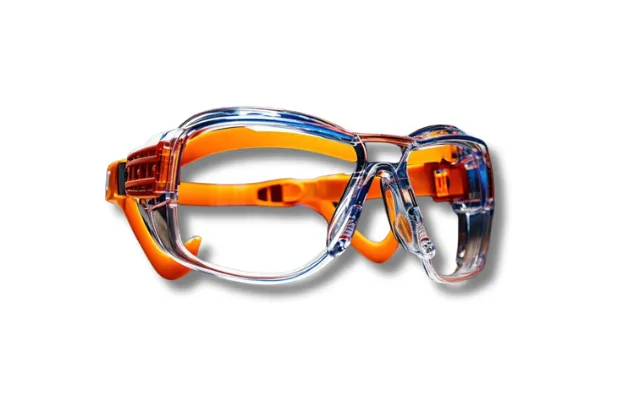
Safety glasses and goggles are widely considered the most critical components of personal protective equipment. When operating hand tools like hammers, chisels, metal cutters, or manual saws, small particles can instantly become airborne and cause permanent vision damage.
- Key Benefits: Protects eyes from flying debris, prevents dust particle exposure, and drastically improves overall workplace safety metrics.
- Best Used For: Hammering, chiseling, manual cutting tasks, and intensive metalworking.
Safety glasses protect the wearer’s eyes from abrasive dust, dangerous sharp debris, flying sparks, and tool-related structural hazards during manual tool operations.
2. Work Gloves

Industrial-grade work gloves are designed to insulate hands from cuts, deep abrasions, skin punctures, and painful wood splinters while providing an enhanced, non-slip secure grip on heavy metallic tool handles.
- Key Benefits: Protects skin surfaces against cuts and scrapes, improves structural manual tool handling, and reduces overall hand fatigue.
- Best Used For: Operating pliers, wrenches, screwdrivers, and heavy-duty utility knives.
3. Hearing Protection
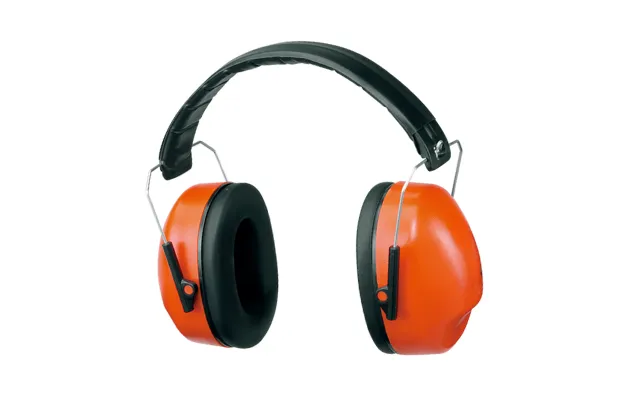
Although manual hand tools operate silently, technicians often execute tasks in loud collective industrial environments where heavy machinery or power equipment raises ambient noise levels beyond safe operational thresholds.
- Common Structural Types: Foam expansion earplugs and acoustic overhead earmuffs.
- Key Benefits: Drastically reduces ambient noise decibel exposure, prevents occupational hearing loss, and improves concentration.
4. Respiratory Protection
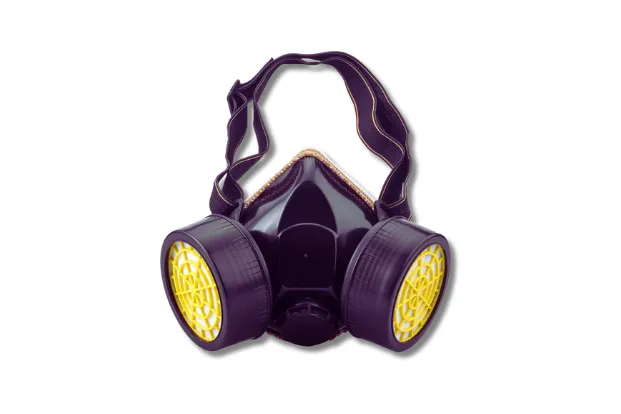
Working on tasks involving wood panels, concrete blocks, thermal insulation materials, or raw metals can release toxic micro-particles. Respiratory equipment prevents these dangerous airborne contaminants from entering human lungs.
- Common Structural Types: Disposable particulate dust masks and chemical cartridge respirators.
- Key Benefits: Filters microscopic airborne particles, protects human respiratory health, and reduces exposure to dangerous workplace dust.
5. Safety Helmet (Hard Hat)
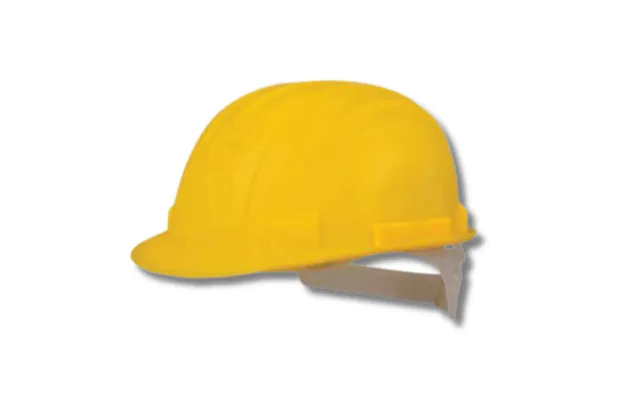
An industrial hard hat safety helmet protects the worker’s cranial area from unexpected falling objects, sharp overhead structural edges, and accidental mechanical impacts in active zones.Understanding the structural differences between types of safety helmets is essential to choosing the right level of head protection for your specific job site.
- Key Benefits: Protects workers from traumatic head injuries, cleanly absorbs directional impact forces, and enhances workplace safety.
- Best Applied In: Active construction sites, overhead industrial warehouses, and large manufacturing facilities.
6. Steel-Toed Boots
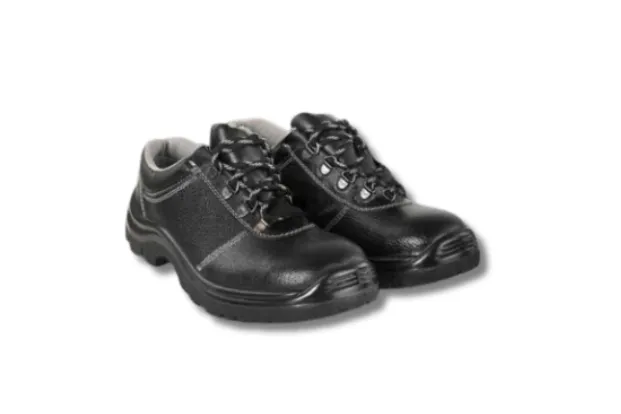
Foot and toe injuries are highly common in heavy workshops where large metallic tools or heavy raw materials are routinely handled. Steel-toed boots provide rigid armor protection against crushing and high-mass impact hazards.
- Key Benefits: Protects vulnerable toes from falling heavy objects, improves structural footing stability, and provides high-grade slip resistance.
- Recommended For: Mechanical workshops, building construction sites, and manufacturing plants.
7. Tool Belt
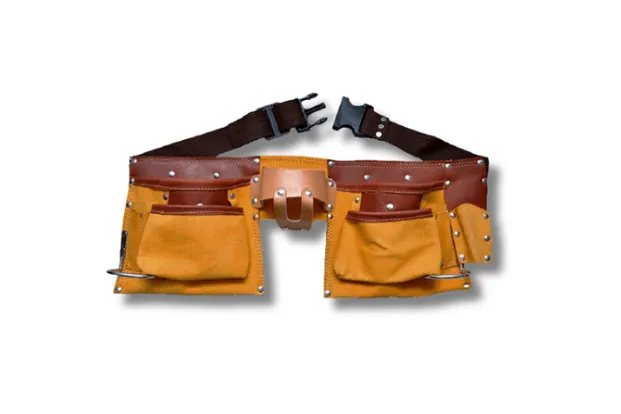
A heavy-duty tool belt allows operators to organize their frequently used hand tools, keeping them stable, safely oriented, and easily accessible without cluttering the hands.
- Key Benefits: Improves worker productivity, reduces unsafe bodily stretching or climbing movements, and minimizes tool misplacement risks.
- Commonly Carries: Manual screwdrivers, gripping pliers, long measuring tapes, and retractable utility knives.
8. Knee Pads
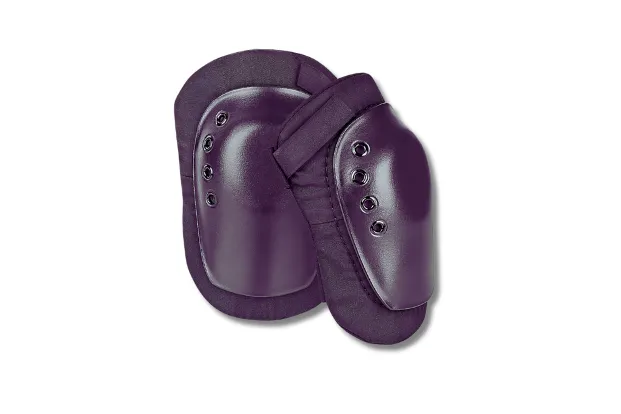
Construction, tile flooring installation, and lower-level building maintenance tasks require prolonged kneeling on rough surfaces. Knee pads cushion the patella area to dramatically lower structural joint stress.
- Key Benefits: Reduces occupational knee strain, increases prolonged comfort, and supports long-term joint health.
- Common Applications: Tile flooring installation, industrial carpentry, and lower-level machinery maintenance.
9. First Aid Kit

Even with strict safety compliance, minor workplace incidents can occur. A perfectly packed and updated first aid kit ensures swift biomedical care is rendered immediately to stop complications.
- Essential Included Items: Sterile adhesive bandages, antiseptic cleansing wipes, medical gauze pads, hypoallergenic tape, and disposable nitrile gloves.
Key Benefits: Enables instant, rapid response to physical injuries, lowers injury severity, and supports workplace safety preparedness.
10. High-Visibility Clothing
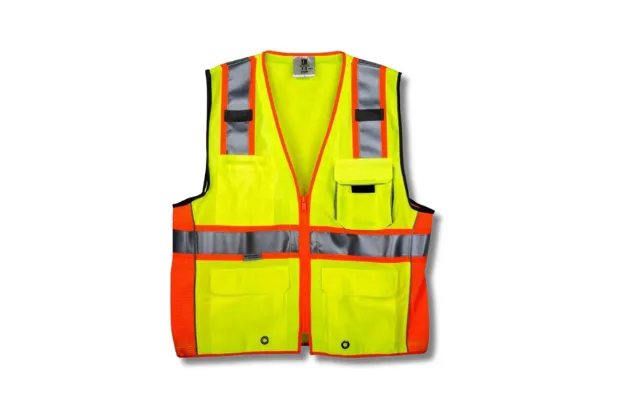
High-visibility clothing utilizes reflective materials to make workers easily recognizable in low-light environments, busy industrial plants, or near active vehicle traffic.
- Key Benefits: Dramatically increases human visibility, lowers severe accident risks, and improves shared safety awareness.
- Common Examples: Neon reflective vests, high-visibility insulated jackets, and reflective strip shirts.
Quick Reference: Safety Equipment and Their Uses
| Safety Tool & Equipment | Primary Use / Application | Core Protective Benefit |
| Safety Glasses / Goggles | Hammering, chiseling, metal cutting, and manual sawing | Shields eyes from high-velocity flying debris and fine dust. |
| Industrial Work Gloves | Handling pliers, utility knives, and abrasive materials | Prevents painful cuts, punctures, scrapes, and splinters. |
| Acoustic Hearing Protection | Working around loud workshop machinery and power tools | Reduces hazardous decibel exposure to prevent hearing loss. |
| Respiratory Dust Masks | Woodworking, concrete sanding, and insulation handling | Filters out dangerous micro-particles from entering lungs. |
| Safety Helmet (Hard Hat) | Construction zones, heavy warehouses, and rigging areas | Absorbs heavy structural impacts and protects against falling objects. |
| Steel-Toed Safety Boots | Heavy lifting, material transport, and machinery spaces | Shields feet from heavy crushing forces and punctures. |
| Reflective High-Visibility Gear | Low-light workspaces, roadside operations, construction yards | Ensures clear visibility to vehicle operators and coworkers. |
Essential Safety Gear for Using Power Equipment & Cordless Drills
While basic hand tools require strict safety measures, operating power tools—such as cordless drills, angle grinders, circular saws, and rotary hammers—introduces high-speed rotational forces, mechanical torque, and electrical hazards. To address specific industry requirements, follow these dedicated safety protocols:
- What safety measures should I follow when using a cordless drill? When operating a cordless drill, always wear tightly-fitting safety glasses to guard against high-velocity wood or metal chips. Ensure you wear snug-fitting gloves; loose-fitting gloves must never be used as they can easily wrap around the spinning drill chuck and cause severe finger injuries.
- Personal Protective Equipment for Heavy Power Tools: When operating high-powered, high-decibel equipment, heavy-duty acoustic earmuffs are mandatory to block continuous sound waves. Additionally, reinforce your safety gear list with high-impact face shields to completely isolate the facial area from high-energy grinding sparks.
While working around power tools, machines, and hand tools, what personal protective equipment is absolutely necessary? The non-negotiable PPE combination includes high-impact safety glasses or full-face shields, snug-fitting cut-resistant gloves, acoustic hearing protection, and steel-toed boots.
Hand Tool Safety Best Practices & Procedures
Following basic hand tool safety procedures can significantly lower workplace accident rates. Incorporate these proactive safety measures into your daily routine:
- Thoroughly inspect tools for structural damage or cracks before each use.
- Always select and use the exact correct tool required for the specific task.
- Keep all manual cutting edges clean, sharp, and properly maintained.
- Isolate and replace damaged, bent, or fractured tools immediately.
- Always wear the specified personal protective equipment required for the work zone.
- Maintain a clean, organized, and dry work area to prevent accidental slips.
- Safely store hand tools in dedicated toolboxes or racks after use.
- Strictly follow all established corporate and regulatory workplace safety procedures.
Essential Safety Equipment Checklist
Before initiating any hand tool or power equipment task, run through this comprehensive pre-work safety checklist to verify your gear is ready:
- ✅ High-Visibility Clothing (Reflective vests or high-vis shirts)
- ✅ Safety Glasses or Goggles (Impact-Resistant)
- ✅ Industrial Work Gloves (Snug-fitting and cut-resistant)
- ✅ Acoustic Hearing Protection (Earplugs or heavy earmuffs)
- ✅ Respiratory Protection (Dust mask or chemical respirator)
- ✅ Safety Helmet / Hard Hat (For overhead hazards)
- ✅ Steel-Toed Boots (With slip-resistant sole profiles)
- ✅ Ergonomic Tool Belt (For organized hands-free movement)
- ✅ Protective Knee Pads (For low-level or flooring tasks)
- ✅ Fully Stocked First Aid Kit (Fully verified and close by)
Conclusion
Using the right safety tools and equipment is non-negotiable when handling hand tools or heavy workshop machinery. From high-impact safety glasses and task-specific types of safety gloves to specialized types of safety helmets, every piece of personal protective equipment serves a distinct operational purpose in mitigating workplace hazards.
By bridging the gap between basic tool maintenance and correct safety gear application, industrial workshops can drastically minimize downtime, reduce severe injuries, and establish a high-efficiency environment. Ultimately, a workspace is only as safe as the safety procedures and protective layers put into practice. Making a conscious investment in premium, industry-compliant safety equipment today ensures a healthier, accident-free workforce tomorrow.
Related Post

Choosing the Right Safety Shoes for Your Industry
In industries where physical labor is routine and hazards are ever-present, even a single oversight [...]
How Safety Gloves Help Prevent Workplace Injuries
In industrial and high-risk work environments, Personal Protective Equipment (PPE) is essential, but while most [...]
How Many Types Of Safety Helmets Are There?
Safety helmets are critical personal protective equipment (PPE) designed to safeguard workers and riders from [...]