The Complete Process of Hand Tool Manufacturing: From Forging to Finishing
Hand tools are manufactured through 8 key stages: Steel selection→ forging machining→ heat treatment→ surface coating→ assembly→ quality testing→ and finishing.
Each stage directly impacts the tool’s strength, durability, precision, and safety for professional use.
Hand Tool Manufacturing Process: Step-by-Step
1. Steel Selection: The Foundation of Tool Performance
Steel selection is the first step of hand tool manufacturing process. This involves selection of the right metal grade based on required strength, hardness and applications.
Common steel types used:
- High Carbon Steel: Ideal for cutting tools and chisels
- Alloy Steel: Offers toughness and flexibility
- Chrome-Vanadium (Cr-V): High strength and wear resistance
- Chrome-Molybdenum (Cr-Mo): Best for impact tools
Why it matters:
- Prevents breakage under stress
- Maintains shape during heavy use
- Improves corrosion resistance
- Extends tool lifespan
2. Forging: Where Tools Gain Strength
Forging is a process where heated steel is shaped using high-pressure hammers or presses.
Benefits of forging:
- Aligns metal grain structure → increases strength
- Reduces internal defects
- Improves impact resistance
- Enhances load-bearing capacity
Forged vs Cast Tools:
| Feature | Forged Tools | Cast Tools |
| Strength | High | Medium |
| Durability | Long-lasting | Lower |
| Structural Integrity | Superior | Prone to defects |
| Use Case | Industrial/professional | Light-duty |
Forging is preferred for professional-grade tools due to superior performance.
3. Machining & Shaping: Achieving Precision
Once forged, the rough tool still carries excess metal and uneven surfaces. The shaping process gives the tool its final geometry and ensures accuracy.
Key operations include:
- Trimming excess material
- Grinding for smooth surfaces
- Milling for slots and profiles
- Drilling for holes and joints
- Knurling for grip patterns
Outcome: Accurate dimensions and proper tool geometry for safe use.
4. Heat Treatment: Enhancing Mechanical Properties
Heat treatment is where the true mechanical properties of a tool are enhanced. Controlled heating and cooling manipulate the internal structure of the metal.
Main processes:
- Hardening: Increases surface hardness
- Tempering: Reduces brittleness
- Normalizing: Improves grain structure
Benefits:
- Prevents bending under torque
- Increases wear resistance
- Reduces risk of cracking
Without proper heat treatment, even high-grade steel tools can fail prematurely.
5. Surface Coating: Protection & Longevity
Surface treatment protects tools from moisture, chemicals, wear, and impact. It also improves appearance and sometimes enhances grip.
Common coatings:
- Chrome plating (corrosion resistance)
- Nickel plating (smooth finish)
- Black oxide (anti-rust)
- Powder coating (impact protection)
- Satin finish (better grip)
Result: Longer lifespan and improved appearance.
6. Assembly: Functional Integration
Not all tools are single-piece constructions. Items such as pliers, vices, greasing tools, screwdrivers, and some automotive tools require multi-component assembly.
Assembly processes include:
- Attaching handles and grips
- Fitting springs and joints
- Riveting or fastening
- Lubrication of moving parts
- Alignment adjustments
Outcome: Smooth operation, safety, and user comfort.
7. Quality Testing: Ensuring Reliability
Quality is not an afterthought—it is woven throughout the process. Before tools reach the packaging stage, they undergo strict testing.
Common tests:
- Torque testing (wrenches, sockets)
- Hardness testing (Rockwell/Vickers scale)
- Dimensional inspection
- Drop and impact tests
- Corrosion resistance testing
Why it matters:
- Ensures consistent performance
- Reduces defects in bulk orders
- Builds trust with importers and distributors
8. Finishing & Packaging: Final Touches
After each tool has passed quality checks, it gets its finishing touches. Final touches include:
- Polishing for smooth finish
- Laser marking for branding and specifications
- Deburring to remove sharp edges
- Protective coating application
- Export-grade packaging
Result: Safe, professional, and market-ready tools.
What Makes a High-Quality Hand Tool?
High-quality hand tools are defined by five critical factors:
- Strength: Ability to withstand high torque and repeated force
- Durability: Resistance to wear, corrosion, and deformation
- Precision: Accurate dimensions and alignment for safe operation
- Ergonomics: Comfortable grip and ease of use
- Consistency: Uniform quality across production batches
These qualities are achieved through controlled manufacturing processes, not by chance.
Hand Tool Manufacturing Process Overview
| Stage | Purpose | Outcome |
| Steel Selection | Choose material | Strength & durability |
| Forging | Shape metal | Structural integrity |
| Machining | Precision shaping | Accuracy |
| Heat Treatment | Modify properties | Hardness & toughness |
| Coating | Surface protection | Corrosion resistance |
| Assembly | Combine parts | Functionality |
| Testing | Quality assurance | Reliability |
| Finishing | Final touches | Safety & appearance |
Note: Forging and heat treatment are the most critical stages. Together, they determine over 70% of a tool’s strength, durability, and performance.
Why Is the Hand Tool Manufacturing Process Important?
The hand tool manufacturing process directly impacts performance, safety, durability, and consistency—making it critical for both professionals and bulk buyers.
Key reasons why it matters:
- Predictable Performance: Tools function reliably without sudden failure under load
- Safety: Proper metallurgy and heat treatment reduce risks of snapping, slipping, or cracking
- Longer Lifespan: High-quality manufacturing ensures tools last longer and resist wear
- Better ROI for Importers: Fewer defects lead to lower returns, higher customer satisfaction, and stronger market reputation
- Batch Consistency: Standardized processes ensure uniform quality across large production volumes
A tool’s performance is only as good as the manufacturing process behind it. Premium manufacturers rely on controlled, repeatable, and globally accepted production methods to ensure consistent quality.
How to Identify High-Quality Hand Tools
Look for these indicators:
- Forged construction (not cast)
- Proper surface finishing
- Accurate dimensions
- Corrosion-resistant coating
- Ergonomic design
- Compliance with international standards (e.g., ISO)
Conclusion
Hand tool manufacturing is a precision-driven process that combines metallurgy, engineering, and strict quality control. From selecting the right steel to forging, machining, heat treatment, and finishing, every stage directly impacts the tool’s strength, durability, and performance.
For distributors and importers, understanding this process is essential for evaluating manufacturers, ensuring consistent quality, and minimizing risks in global sourcing.
Choosing the right partner makes all the difference. JCBL Hand Tools stands out with advanced forging capabilities, high-grade material sourcing, precision manufacturing, and export-ready quality standards—making it a reliable choice for bulk procurement.
FAQs
Hand tools are manually operated tools used for tasks such as cutting, tightening, shaping, gripping, and striking. They are powered entirely by human effort rather than electricity or motors. Common examples include wrenches, pliers, hammers, screwdrivers, and chisels, which are widely used in construction, automotive, and repair work.
Common handworking tools include spanners, combination wrenches, pliers, pincers, screwdrivers, vices, hammers, chisels, and punches. These tools are used across industries such as construction, automotive repair, agriculture, and metalworking, where manual precision and durability are essential.
The manufacturing process directly determines the quality of hand tools. Factors such as steel selection, forging, machining, heat treatment, and surface coating influence strength, durability, and safety. Tools made with controlled processes perform reliably and resist bending, breaking, or corrosion.
Forging is important because it strengthens the metal by aligning its internal grain structure. This process produces tools that are tougher, more durable, and capable of handling high loads and impact, making forged tools superior to cast alternatives.
Buyers can identify high-quality hand tools by checking for forged construction, precise dimensions, smooth finishing, corrosion-resistant coatings, and ergonomic design. Tools manufactured with proper processes and quality standards typically offer better performance and longer service life.
Related Post
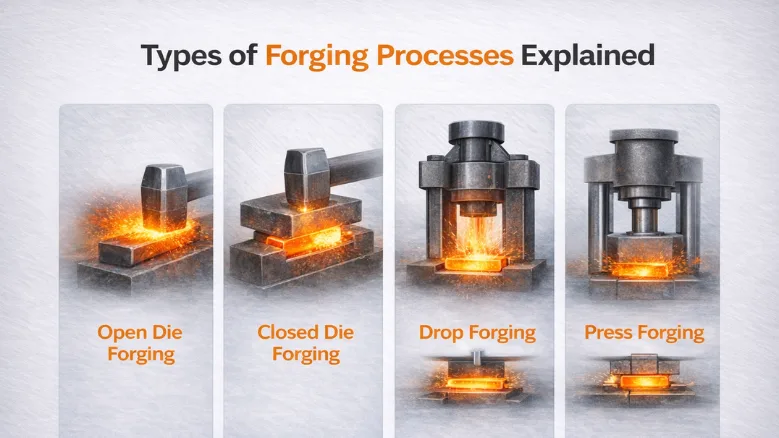
Types of Forging Processes Explained
Types of Forging Processes Explained Forging processes are manufacturing processes used to create strength and [...]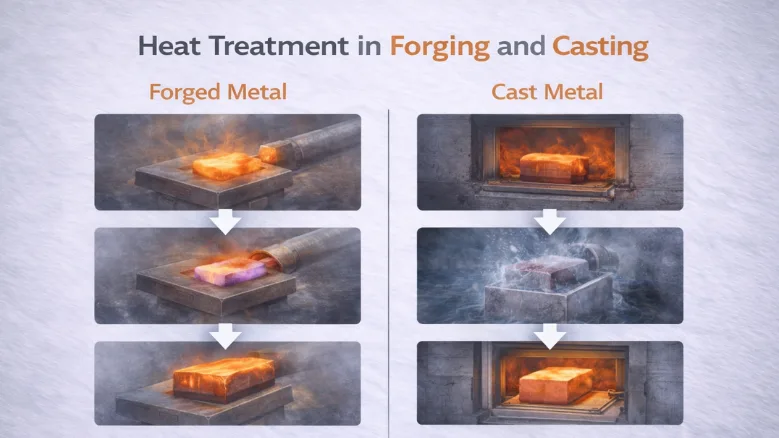
Heat Treatment in Forging and Casting: Process, Benefits
Heat treatment forging and heat treatment casting are controlled heating and cooling processes used to [...]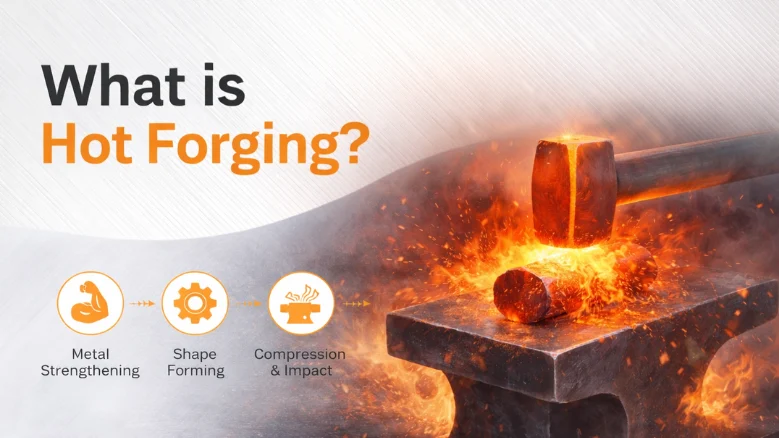
What Is Hot Forging?
In the world of industrial tool-making, strength and dependability are not optional items; they are [...]