What is a Chisel? Types, Uses & Complete Guide
- What is a Chisel?
- Types of Chisels
- Classification of Chisels
- Chisels at a Glance
- Types of Chisels and Their Uses (Detailed)
- Woodworking Chisels
- Metalworking (Cold) Chisels
- Masonry Chisels
- Hammered vs Non-Hammered Chisels
- What Materials Can Chisels Work With?
- Material Used For Chisel Making
- How To Choose The Right Chisel For Your Need
- Expert Insight: Choosing the Right Chisel
- Quick Summary
- Conclusion
- FAQs
What is a Chisel?
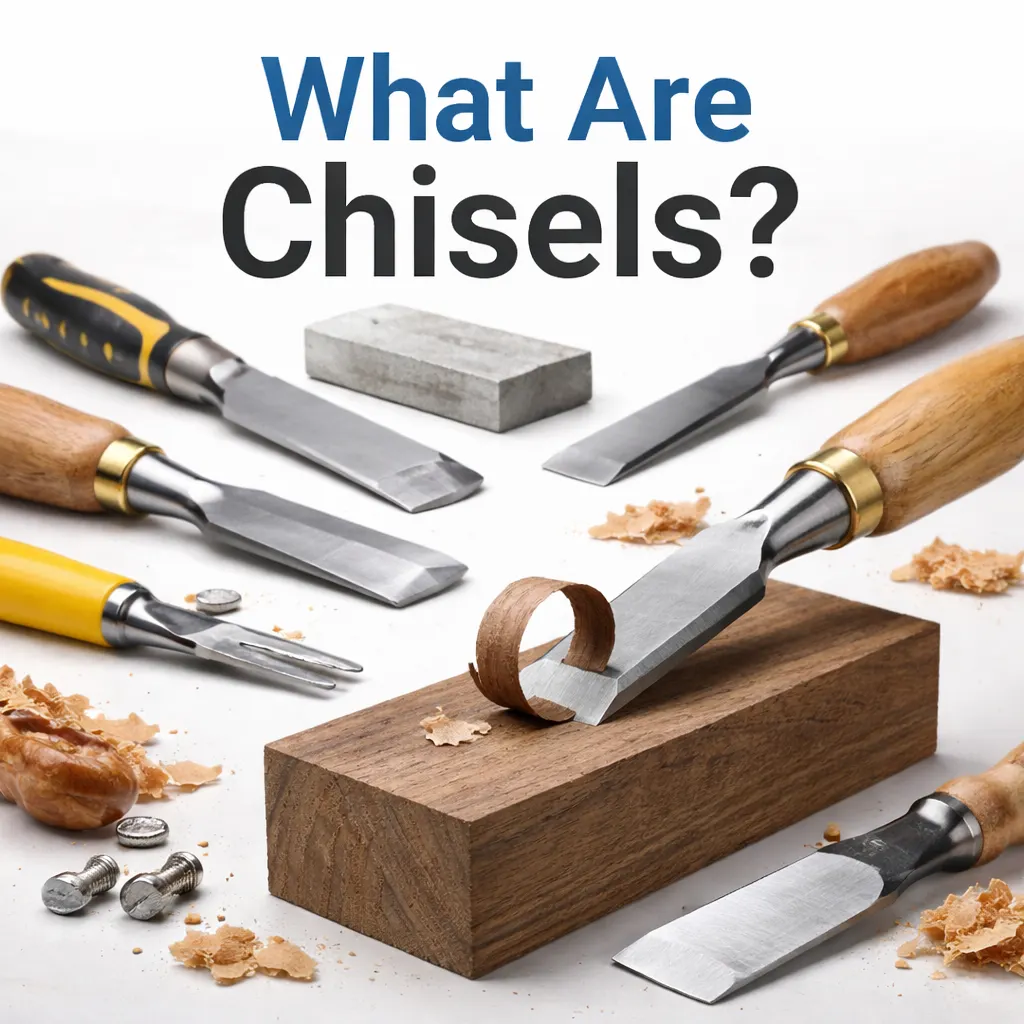
A chisel is a cutting tool with a sharp metal edge used to cut, shape, carve, or scrape materials like wood, metal, and stone. It consists of a hardened steel blade on one end and a handle on the other, allowing the user to apply controlled force using a hammer, mallet, or hand pressure.
Chisels are widely used in woodworking, metalworking, and masonry due to their ability to deliver precise cuts and detailed shaping that power tools often cannot achieve.
Types of Chisels
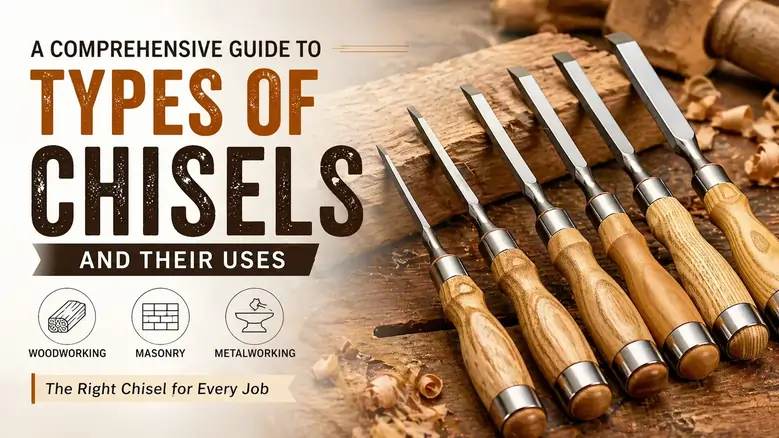
The main types of chisels are bevel edge chisels, bench chisels, mortise chisels, paring chisels, butt chisels, corner chisels, flat chisels, cape chisels, round nose chisels, diamond point chisels, masonry chisels, bolster chisels, and toothed chisels. These chisels are used for woodworking, metalworking, masonry, carving, shaping, and precision cutting tasks.
Classification of Chisels
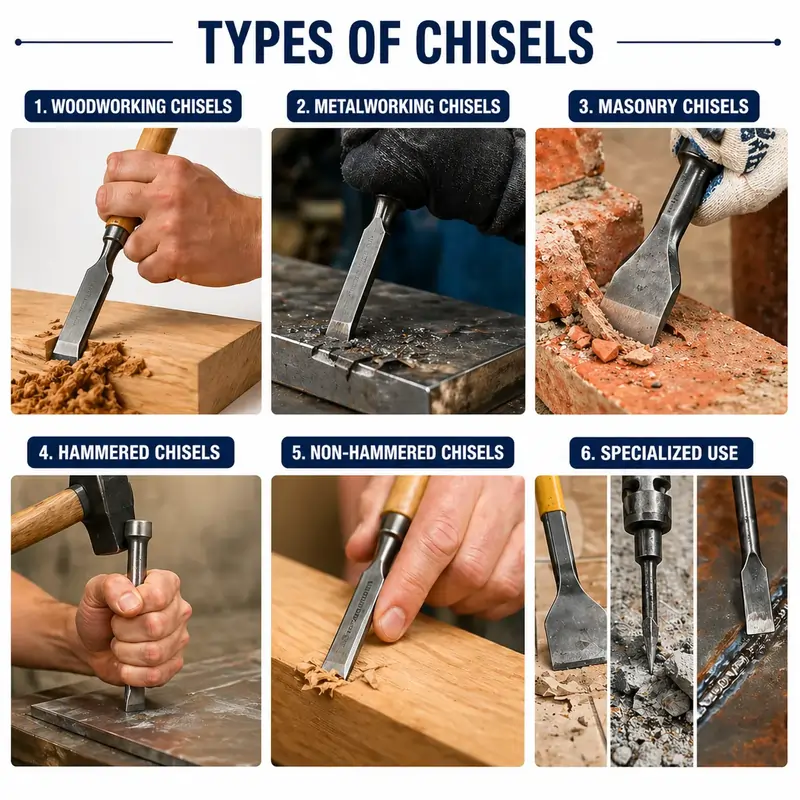
Chisels are broadly categorized into:
- Woodworking chisels (for cutting and shaping wood)
- Metalworking chisels (cold chisels) (for cutting metal)
- Masonry chisels (for stone, brick, and concrete)
They can also be classified as:
- Hammered chisels (used with a hammer or mallet)
- Non-hammered chisels (used with hand pressure for precision work)
👉 This classification helps in selecting the right tool for each task.
Chisels at a Glance
| Category | Common Types | Primary Use |
| Woodworking | Bevel Edge, Mortise, Bench, Paring | Wood cutting & joinery |
| Metalworking | Flat, Cape, Round Nose, Diamond Point | Metal cutting |
| Masonry | Masonry, Bolster, Toothed | Stone & concrete work |
Types of Chisels and Their Uses (Detailed)
Woodworking Chisels
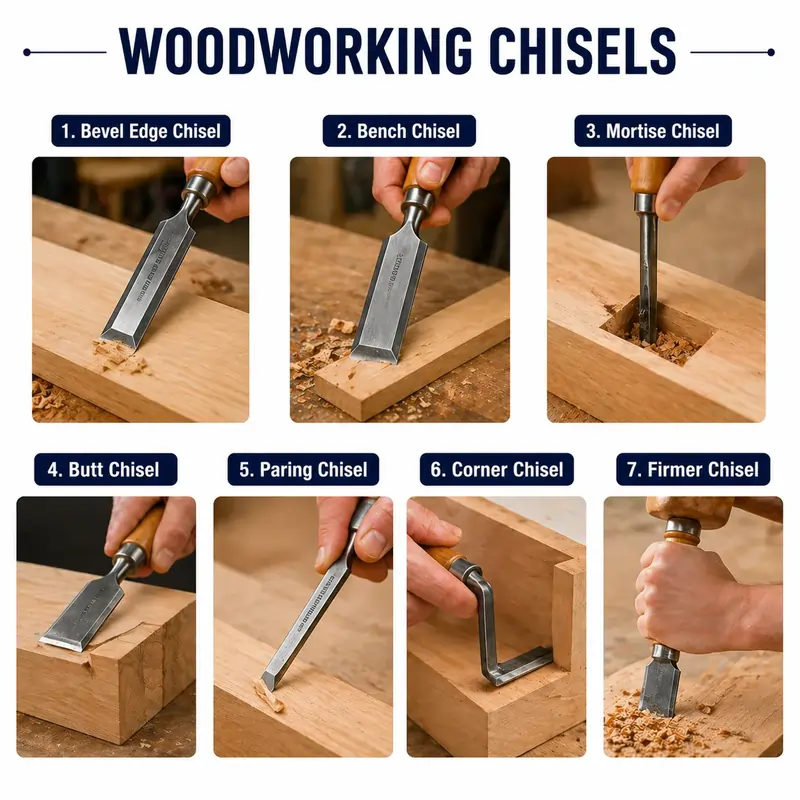
Wood chisels are designed for precision cutting, shaping, and finishing of wood surfaces.
1. Bevel Edge Chisel
A versatile chisel with sloped edges that allows easy access into tight joints such as dovetails. It is one of the most commonly used chisels in woodworking.
2. Bench Chisel
A general-purpose chisel used for chopping, trimming, and shaping wood. It is strong enough for light hammering and precise enough for finishing work.
3. Mortise Chisel
A heavy-duty chisel with a thick blade designed specifically for cutting deep mortise joints. It can withstand repeated hammer strikes without bending.
4. Butt Chisel
A shorter version of a bench chisel, ideal for working in confined spaces such as installing hinges and fittings.
5. Paring Chisel
A long, thin chisel used for fine finishing and shaving off thin layers of wood. It is typically used without a hammer.
6. Corner Chisel
An L-shaped chisel used to create sharp 90-degree corners in joints and mortises.
👉 Wood chisels are essential for furniture making, cabinetry, and detailed carpentry work.
Metalworking (Cold) Chisels
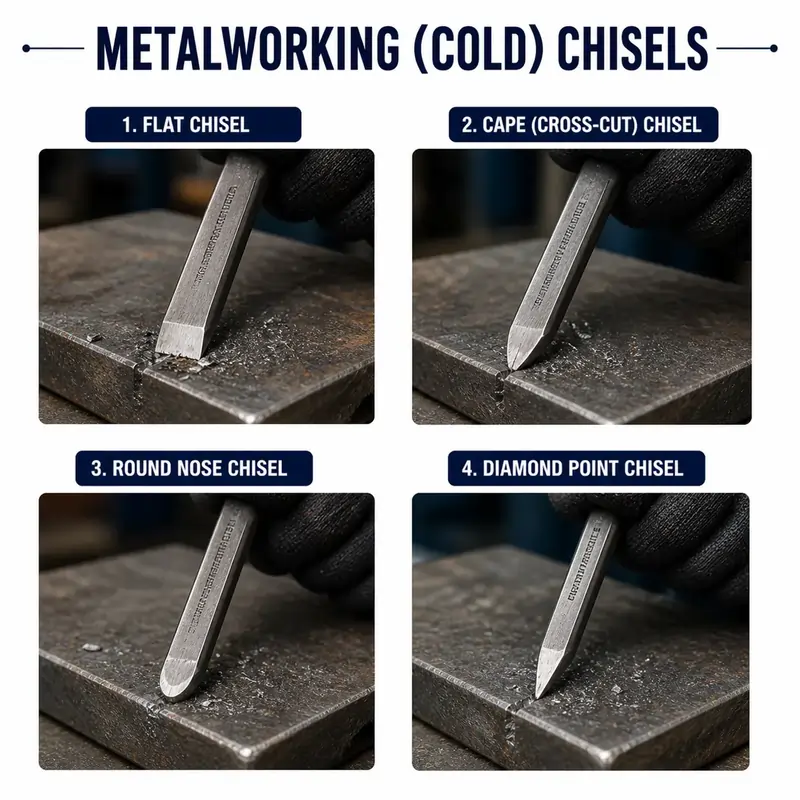
Cold chisels are designed to cut and shape metal without heating it.
1. Flat Chisel
Used for cutting metal rods, sheets, and removing excess material. It is the most commonly used metal chisel.
2. Cape (Cross-cut) Chisel
A narrow chisel used for cutting grooves, slots, and keyways in metal surfaces.
3. Round Nose Chisel
Designed for creating semicircular grooves and concave shapes in metal.
4. Diamond Point Chisel
Used for cleaning sharp corners and removing broken bolts or rivets.
👉 Cold chisels are widely used in fabrication, repair, and mechanical work.
Masonry Chisels
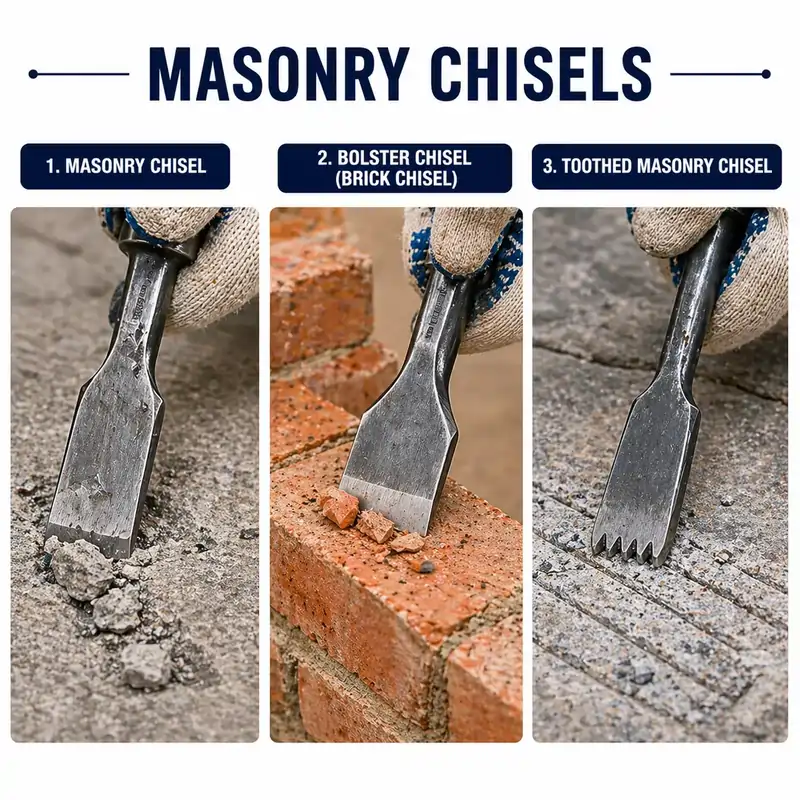
Masonry chisels are built to handle hard materials like stone, bricks, and concrete.
1. Masonry Chisel
A strong chisel with a wide blade used for cutting bricks, concrete blocks, and stones.
2. Bolster Chisel (Brick Chisel)
Designed for splitting bricks evenly and making straight cuts in masonry work.
3. Toothed Masonry Chisel
Used for shaping and smoothing stone surfaces during finishing work.
👉 These chisels are commonly used in construction and renovation projects.
Hammered vs Non-Hammered Chisels
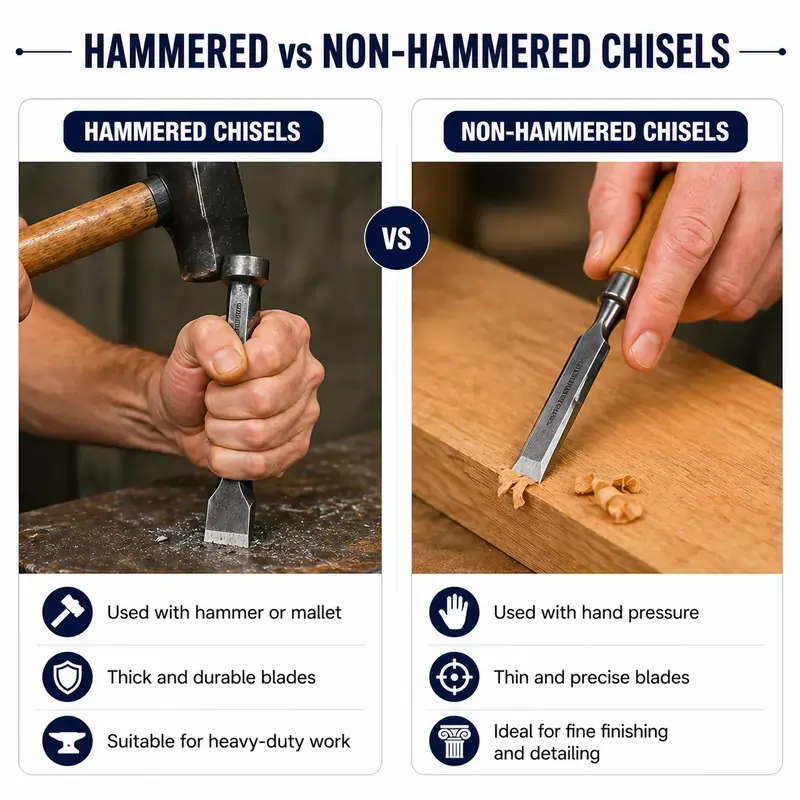
Hammered Chisels
- Used with hammer or mallet
- Thick and durable blades
- Suitable for heavy-duty work
Non-Hammered Chisels
- Used with hand pressure
- Thin and precise blades
- Ideal for fine finishing and detailing
👉 Choosing the correct type improves both safety and precision.
What Materials Can Chisels Work With?
Chisels are designed to work with:
- Wood → Carpentry, furniture making
- Metal → Fabrication, repair work
- Stone → Construction and masonry
👉 Always match the chisel type to the material to avoid damage.
Material Used For Chisel Making
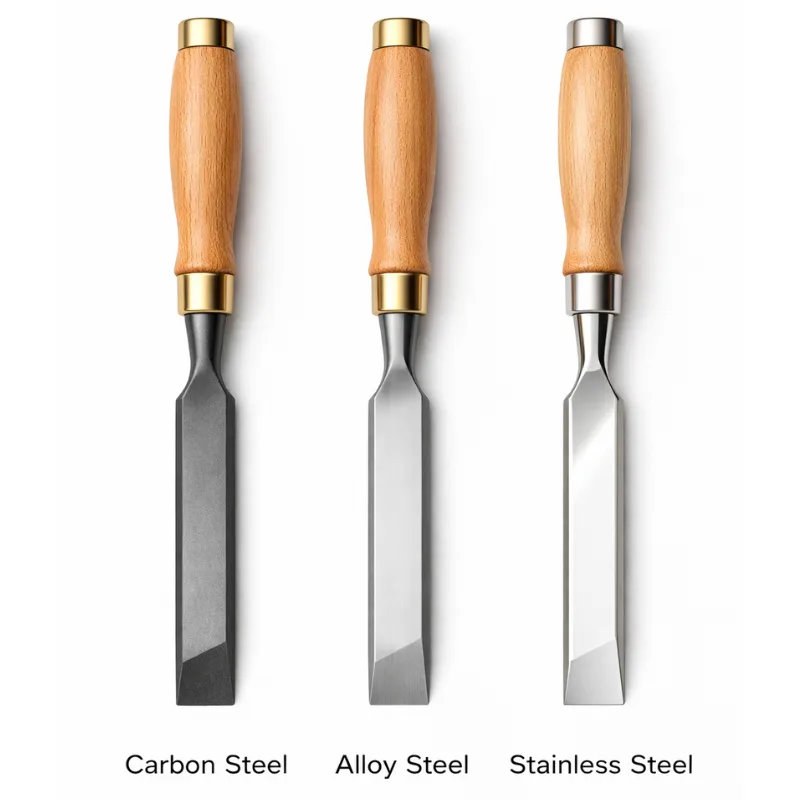
1. Carbon Steel
- Edge Retention: High carbon content allows the blade to take an exceptionally sharp edge, perfect for fine woodworking.
- Ease of Sharpening: This material is relatively easy to hone back to a razor finish using standard whetstones.
- Maintenance Note: Requires regular oiling to prevent rust and can be brittle if dropped on hard surfaces.
2. Alloy Steel
- Extreme Toughness: Infused with chromium and vanadium (CRV), these chisels are virtually indestructible under normal use.
- Impact Protection: They can withstand high-impact strikes from metal hammers without chipping or deforming.
- Professional Choice: The preferred material for metalworking and heavy-duty construction tools.
3. Stainless Steel
- Rust Resistance: Known for its superior corrosion resistance, making it the best choice for tools used in damp environments.
- Low Maintenance: Ideal for masonry chisels that may come into contact with wet mortar or outdoor elements.
- Durability: While harder to sharpen than carbon steel, it provides a long service life in harsh conditions.
How To Choose The Right Chisel For Your Need

Selecting the right chisel depends on:
1. Material Type
- Wood → Use bevel, bench, or paring chisels
- Metal → Use cold chisels
- Stone → Use masonry chisels
2. Work Type
- Heavy cutting → Mortise or masonry chisel
- Fine finishing → Paring or dovetail chisel
3. Precision Requirement
- Detailed work → Thin blades
- Heavy-duty work → Thick, strong blades
4. Budget
- Investment Pieces: High-end chisels are a long-term investment that save time on sharpening and provide cleaner results.
- Standard Quality: Budget-friendly options are suitable for one-off DIY tasks or general household repairs.
👉 Proper selection improves efficiency, accuracy, and tool life.
Expert Insight: Choosing the Right Chisel
Chisels are not one-size-fits-all tools. Their performance depends on:
Chisels are precision tools, not universal tools. Professionals choose chisels based on blade geometry, material hardness, and the type of force required. Using the right chisel not only improves work quality but also reduces effort and increases safety.
Quick Summary
Chisels are cutting tools used in woodworking, metalworking, and masonry. They are categorized based on material and usage, including woodworking chisels, cold chisels for metal, and masonry chisels for stone. Selecting the right chisel ensures better precision, durability, and efficiency.
Conclusion
Understanding different types of chisels helps in choosing the right tool for the job. Whether you’re working with wood, metal, or stone, using the correct chisel improves efficiency, precision, and safety.
For those seeking durability and performance, JCBL Hand Tools offers a premium range of chisels crafted from high-quality steel to meet the demands of any industry.
FAQs
The Bench Chisel is the best all-purpose tool for beginners. It is strong enough for light striking but sharp enough for fine paring and shaping.
Only if the chisel is specifically designed with a striking cap or steel hoop. Otherwise, a wooden or rubber mallet should be used to prevent the handle from splitting.
A cold chisel is made of specially tempered steel used for cutting “cold” (unheated) metals like bolts, rivets, and sheet metal. It is a staple in metalworking.
If you have to apply excessive force, or if the tool “crushes” wood fibers rather than slicing them cleanly, it is time to sharpen or hone the blade.
Explore More Useful Guides:
- Explore a complete list of must-have woodworking tools in 12 Essential Carpentry Hand Tools Every Woodworker & Professional Carpenter Needs.
- Understand hacksaw types, blade selection, and safety tips in Types of Hacksaws: Uses, Blade Guide & Safety Tips.
- Get a full overview of workshop tools and their uses in A Complete Guide to Workshop Hand Tools: Types, Uses, and Essential Tools for Every Workshop.