Cross Peen vs Ball Peen Hammer: Key Differences

- What is a Peen (or Pein) on a Hammer?
- What Is a Cross Peen (Cross Pein) Hammer?
- What Is a Ball Peen Hammer? (Machinist Hammer)
- Cross Peen Hammer vs Ball Peen Hammer: The Definitive Comparison
- Core Head-to-Head Comparisons
- Industrial Tool Selection: How to Choose the Right Hammer
- Professional Safety Tips for Hand Tool Maintenance
- Conclusion
- FAQs
When working with metal fabrication, blacksmithing, riveting, or mechanical repairs, choosing the right striking tool directly impacts the precision of your work. Two of the most essential hand tools in a metalworker’s arsenal are the cross peen hammer (often spelled as cross pein) and the ball peen hammer (also known as a machinist hammer or ball pin hammer).
While both belong to the forged carbon steel striking family, their shapes, force distribution, and material applications differ significantly. This comprehensive guide breaks down their definitions, specific use cases, spelling variants, and how to choose the right one for your workshop.
What is a Peen (or Pein) on a Hammer?
Before comparing the two, it is crucial to understand the anatomy of a hand tool. The peen (alternatively spelled pein, pin, or pen) refers to the shaped, specialized end of the hammer head located directly opposite the flat striking face.
The primary purpose of the peen is to shape, bend, spread, or texture metal surfaces through controlled impact, a manufacturing process known as peening. Depending on the engineering task, a peen can be ball-shaped, cross-wedged, straight, or pointed.
What Is a Cross Peen (Cross Pein) Hammer?
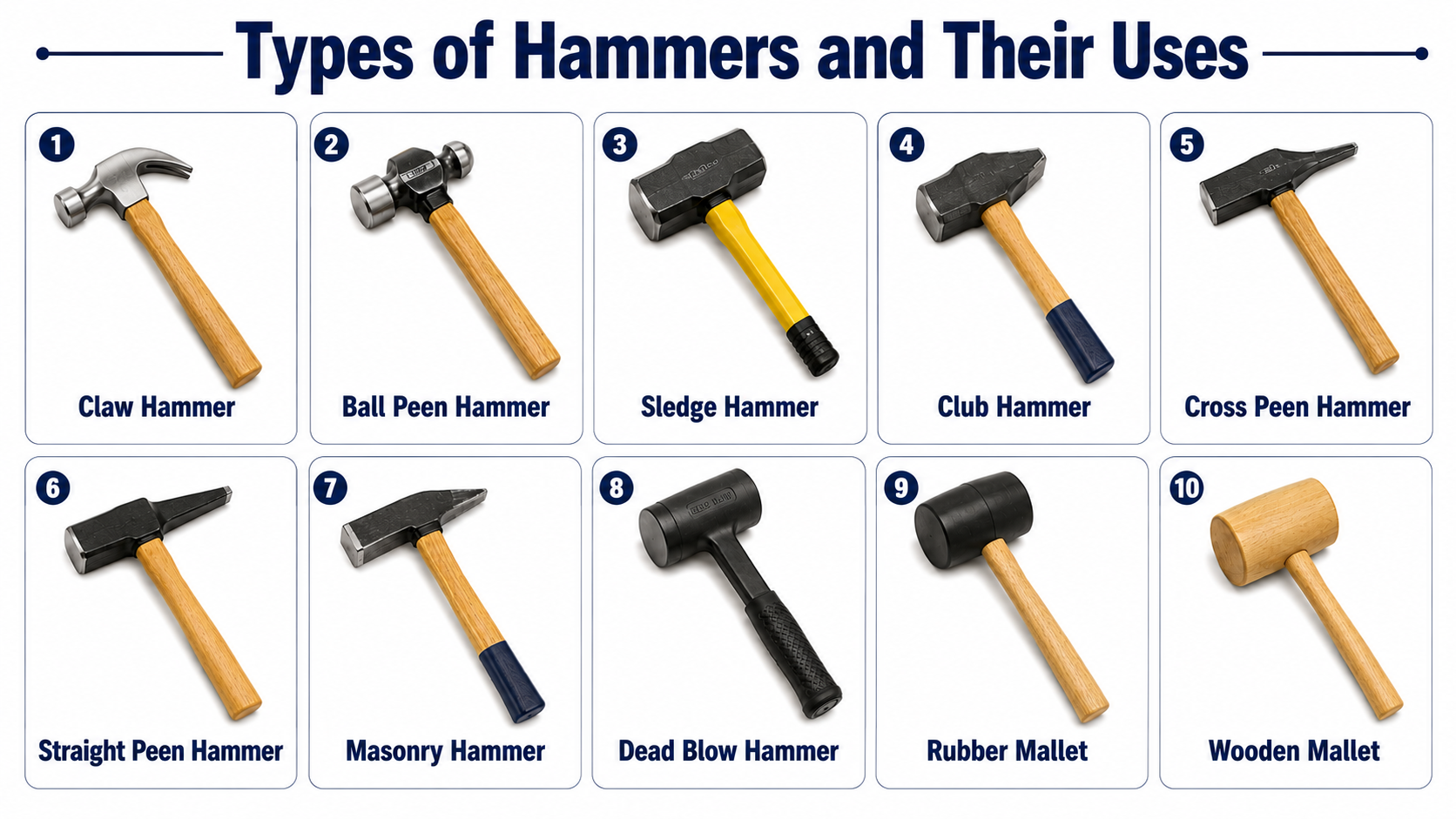
A cross peen hammer is a specialized metalworking tool featuring a dual-purpose forged steel head: a flat striking face on one side and a narrow, wedge-shaped peen on the opposite side. The defining characteristic is that the wedge-shaped peen runs perpendicular (at a cross angle) to the wooden or fiberglass handle.
Top Cross Peen Hammer Uses
The narrow wedge profile concentrates the entire force of your swing into a sharp, linear area. This makes it ideal for:
- Directional Metal Shaping: Drawing out and expanding hot metal along a specific axis during blacksmith forging.
- Starting Small Fasteners: Safely tapping panel pins, tacks, and small nails without hitting your fingers.
- Tight Space Fabrication: Reaching into narrow grooves, corners, and recessed metal channels where a flat face cannot fit.
- Groove Creation: Forming precise indentations and structural creases in sheet metal.
Who Uses It?
It is a staple hand tool for blacksmiths, sheet metal fabricators, welders, and precision mechanics.
What Is a Ball Peen Hammer? (Machinist Hammer)
A ball peen hammer (commonly searched as ball pin or ball pein hammer) features a flat striking face on one side and a distinct, rounded ball-shaped peen on the other. Made from high-carbon forged steel, it is engineered to be harder than a standard woodworking hammer so it can strike other metals without chipping.
Top Ball Peen Hammer Uses
The hemispherical ball peen spreads the impact force evenly in all directions, preventing the tool from cutting or piercing the material. It is primarily used for:
- Riveting Operations: Expanding the tail of a metal rivet shank to lock structural plates permanently into place.
- Surface Peening: Striking metal surfaces to close microscopic cracks, relieve internal stresses, and harden the material finish.
- Gasket Making & Shaper Work: Tapping along flange edges to cleanly cut out custom automotive gaskets.
- Striking Hardened Tools: Driving cold chisels, center punches, and pin punches safely.
Who Uses It?
It is widely utilized in automotive workshops, machine shops, industrial maintenance units, and structural engineering plants.
Cross Peen Hammer vs Ball Peen Hammer: The Definitive Comparison
This quick-reference lookup table highlights the structural and mechanical differences between the two primary metalworking hammers:
| Structural Feature | Cross Peen Hammer (Cross Pein) | Ball Peen Hammer (Machinist Hammer) |
| Peen Geometry | Narrow, linear wedge-shaped profile | Hemispherical, rounded ball profile |
| Force Profile | Concentrated linear force (along a straight line) | Uniformly distributed omnidirectional impact |
| Primary Engineering Role | Directional forging, drawing out, and grooving | Riveting, metal hardening, and punch striking |
| Metalworking Specialty | Blacksmithing and sheet metal bending | Machining, automotive fabrication, and riveting |
| Fastener Compatibility | Excellent for panel pins and small tacks | Specifically designed for expanding structural rivets |
| Surface Finish Effect | Creates controlled linear grooves/creases | Smoothes, hardens, and leaves rounded profiles |
Core Head-to-Head Comparisons
1. Cross Peen vs Straight Peen Hammer
The distinction lies entirely in the orientation of the wedge relative to the tool handle:
- Cross Peen: The wedge runs perpendicular (at a 90-degree cross) to the handle. This allows you to spread metal horizontally while swinging vertically.
- Straight Peen: The wedge runs parallel (aligned straight) with the handle, directing the metal expansion sideways.
2. Ball Peen Hammer vs Regular Claw Hammer
Using a regular woodwork hammer on hardened metal is a safety hazard. Here is how they differ:
| Feature | Regular Woodworking Claw Hammer | Industrial Ball Peen Hammer |
| Core Material | Medium-carbon steel (can chip on hardened steel) | Heavy-duty forged high-carbon steel |
| Rear Profile | Curved or straight claw for pulling out wood nails | Rounded peen for shaping and hardening metals |
| Intended Task | Carpentry, driving nails, and dismantling timber | Metal fabrication, machining, and structural riveting |
| Tool Striking | Not safe for hitting metal punches or cold chisels | Optimized for striking high-tensile punches safely |
Industrial Tool Selection: How to Choose the Right Hammer
- Select a Cross Peen Hammer if: Your project requires directional stretching of metal, precise blacksmith forging, creating straight structural creases, or setting small panel pins in recessed areas.
- Select a Ball Peen Hammer if: Your primary tasks involve installing metal rivets, striking cold chisels or center punches, flanging sheet metal edges, or stress-relieving welded joints.
Professional Safety Tips for Hand Tool Maintenance
- Always Wear Impact Goggles: Metal-on-metal striking can produce microscopic flying shards.
- Inspect Handle Integrity: Check for fractures in wooden shafts or loose epoxy seals on fiberglass handles before starting.
- Avoid Angled Strikes: Ensure the flat striking face lands parallel to the target to avoid dangerous glancing blows or tool chipping.
- Match Tool Hardness: Never strike a surface that is harder than the hammer head itself.
Conclusion
Whether you are configuring an automotive assembly line, upgrading a commercial machining workshop, or stocking a DIY metal fabrication bench, understanding the mechanical difference between a cross peen and a ball peen hammer is essential. Keeping both variants in your industrial toolkit ensures you have the correct balance of concentrated directional force and smooth omnidirectional shaping power for any engineering task.
For professionals who demand industrial-grade durability and precise weight distribution, exploring high-quality forged steel options from JCBL Hand Tools ensures you always have the right tool for the job. Stocking reliable equipment not only improves efficiency but also guarantees safety during heavy-duty industrial maintenance.
FAQs
A ball peen hammer is the industry-standard tool used for riveting applications. Its rounded peen is specifically engineered to shape, spread, and flatten the tail end of a metal rivet shank without damaging the surrounding structural plates.
It is called a ball peen hammer because its forged steel head features a traditional flat face on one side and a distinct hemispherical, ball-shaped peen on the opposite side, which is used for metal contouring.
The purpose of a ball peen hammer is to execute specialized metalworking tasks such as expanding rivets, hardening metal surfaces through peening, shaping sheet metal profiles, and safely striking high-tensile tools like cold chisels and center punches.
A cross peen hammer is used for directional forging, drawing out hot steel blocks, starting small panel pins, and forming precise structural grooves in sheet metal channels where a wide tool head cannot clear.
No, it is highly inefficient. The flat face of a ball peen hammer is smaller and slightly convex compared to a carpentry claw hammer. Using it on wood easily bends standard nails and leaves deep, unsightly “half-moon” dents in the timber.
Related Readings: