15 Best-Selling Hand Tool Categories for Hardware Distributors
For hardware distributors, success isn’t just about stocking more products—it’s about stocking the right categories. The most profitable inventories are built around hand tools that serve multiple industries, generate repeat demand, and remain relevant regardless of seasonal market fluctuations.
From construction sites and automotive workshops to manufacturing facilities and maintenance teams, professional users rely on durable hand tools every day. For distributors, this translates into consistent sales opportunities and stronger customer retention.
This guide highlights the 15 best-selling hand tool categories that continue to drive demand across domestic and international hardware markets.
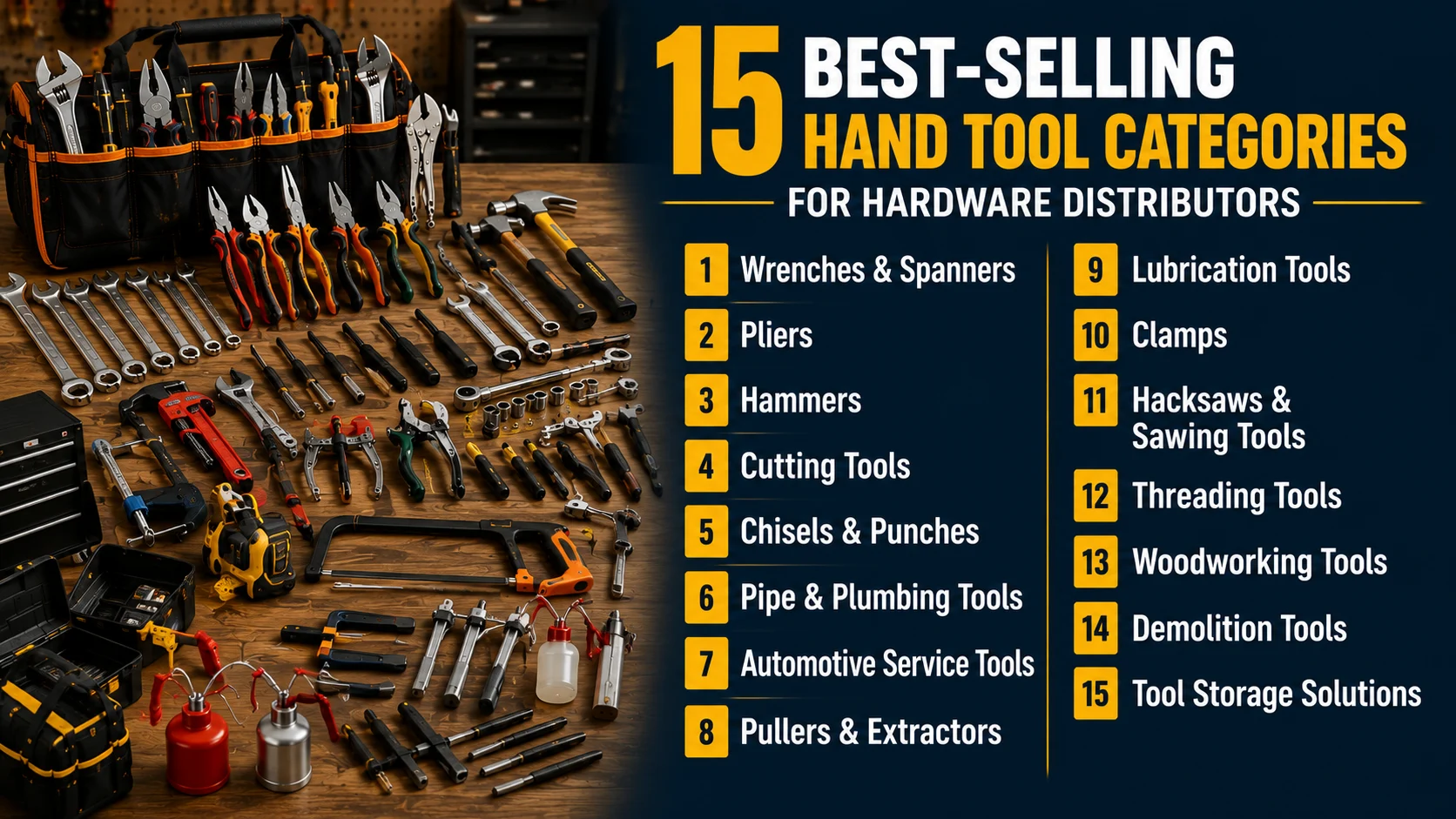
Top 15 Best-Selling Hand Tool Categories Every Hardware Distributor Should Stock
1. Wrenches & Spanners
Wrenches and spanners remain among the highest-volume hand tools in the hardware market. Their use extends across automotive repair, machinery assembly, industrial maintenance, and construction projects.
Distributors should prioritize a range of sizes, durable materials, and corrosion-resistant finishes to meet the needs of both professional mechanics and industrial users.
2. Pliers
Pliers are everyday essentials for electricians, mechanics, maintenance technicians, and fabrication professionals. Since different jobs require different jaw designs, customers often purchase multiple types rather than a single tool.
A balanced inventory typically includes gripping, cutting, locking, and adjustable pliers to serve a wider customer base.
3. Hammers
Whether driving nails, shaping metal, or performing demolition work, hammers remain indispensable across industries. Different applications require different hammer designs, making this category a consistent contributor to repeat sales.
Offering a variety of weights and head styles allows distributors to serve construction professionals, workshops, and industrial users alike.
4. Cutting Tools
Precision cutting tools help professionals work efficiently without damaging surrounding materials. They are widely used in sheet metal fabrication, electrical installations, plumbing, and general maintenance.
Distributors that stock reliable cutting tools benefit from demand across both industrial and retail customers.
5. Chisels & Punches
Chisels and punches are essential for masonry, fabrication, metalworking, and repair applications. They are commonly used for cutting, shaping, marking, and removing materials with accuracy.
Because these tools experience continuous wear during heavy-duty use, replacement demand remains strong throughout the year.
6. Pipe & Plumbing Tools
Pipe installation and maintenance require specialized tools capable of handling different pipe materials and diameters. Contractors, plumbers, HVAC technicians, and maintenance teams regularly purchase these tools for installation and repair work.
Reliable performance and precise cutting capabilities are key purchasing factors in this category.
7. Automotive Service Tools
The automotive aftermarket continues to generate steady demand for specialized service tools used during routine vehicle maintenance and repairs.
Products designed for wheel servicing, brake maintenance, suspension work, and filter removal are commonly stocked by distributors supplying garages and automotive workshops.
8. Pullers & Extractors
Removing bearings, gears, pulleys, and other tightly fitted components requires dedicated extraction tools. These products are widely used in industrial maintenance, manufacturing facilities, and automotive workshops.
Although considered specialized tools, they deliver consistent demand from professional buyers.
9. Lubrication Tools
Preventive maintenance depends heavily on proper lubrication. Grease guns, oil cans, and fluid transfer tools are routinely purchased by maintenance teams responsible for machinery, agricultural equipment, commercial vehicles, and industrial assets.
This category often generates repeat purchases due to regular servicing requirements.
10. Clamps
Clamps play an important role in woodworking, fabrication, welding, furniture manufacturing, and assembly operations. They provide stability and precision during cutting, joining, and finishing processes.
Since projects vary significantly in size, distributors benefit from offering multiple clamp styles and capacities.
11. Hacksaws & Sawing Tools
Despite the widespread use of power tools, manual hacksaws continue to be valued for portability, affordability, and controlled cutting. They are commonly used for cutting metal, plastic pipes, and lightweight materials during installation and maintenance work.
Replacement blades further contribute to recurring sales within this category.
12. Threading Tools
Threading tools enable technicians to create or restore threads on fasteners and components during repair and manufacturing operations. They are frequently used in machine shops, maintenance departments, and engineering workshops.
This category appeals primarily to professional and industrial buyers seeking precision and durability.
13. Woodworking Tools
Traditional woodworking hand tools continue to hold strong demand among carpenters, furniture manufacturers, and skilled craftsmen. Applications such as shaping, smoothing, drilling, and clamping ensure these tools remain relevant alongside modern machinery.
Distributors serving woodworking professionals should consider this category a long-term investment.
14. Demolition Tools
Renovation and construction projects require durable tools capable of prying, lifting, pulling, and breaking materials safely. Crow bars, pry bars, nail pullers, and similar tools remain essential for contractors handling structural modifications and repair work.
Their rugged construction makes quality a major purchasing consideration.
15. Tool Storage Solutions
Professional users invest not only in tools but also in organized storage systems that improve efficiency and protect equipment. Tool boxes, cabinets, and mobile trolleys help technicians keep their workspaces organized while extending tool life.
For distributors, tool storage products complement core hand tool sales and increase average order value.
What Makes These Hand Tool Categories Best Sellers?
The strongest-performing hand tool categories share several characteristics that contribute to long-term demand:
- They are used across multiple industries, including construction, automotive, manufacturing, maintenance, woodworking, and fabrication.
- Most require periodic replacement because of continuous professional use.
- They appeal to both industrial buyers and retail customers, broadening market reach.
- Multiple sizes and variants encourage repeat purchases from existing customers.
- They provide distributors with opportunities to expand product offerings while maintaining healthy inventory turnover.
Rather than relying on seasonal demand, these categories support year-round business growth.
How Hardware Distributors Can Build a Profitable Hand Tool Inventory
Successful distributors focus on building an inventory that balances breadth with reliability. Instead of stocking every available product, prioritize categories that consistently generate demand while offering enough variety to meet customer requirements.
Consider the following when planning inventory:
- Stock both fast-moving everyday tools and specialized professional products.
- Offer multiple sizes and configurations within high-demand categories.
- Choose products manufactured from durable materials suitable for industrial use.
- Maintain consistent availability to encourage repeat business.
- Partner with manufacturers capable of supplying a broad range of hand tools under one portfolio.
A well-planned inventory not only improves stock rotation but also positions distributors as dependable sourcing partners for professional buyers.
Why Hardware Distributors Choose JCBL Hand Tools
For distributors, working with a manufacturer that offers a comprehensive product range can simplify procurement and reduce sourcing complexity.
JCBL Hand Tools offers a diversified portfolio covering industrial, automotive, construction, woodworking, maintenance, and workshop applications. The catalogue includes tools manufactured using quality materials such as carbon steel, chrome vanadium (CrV) steel, and SG iron where applicable, with multiple sizes and finish options available across product categories. This extensive range enables distributors to source a variety of professional hand tools from a single supplier while serving the needs of diverse industries.
Conclusion
For hardware distributors, long-term growth depends on stocking products that deliver consistent demand across multiple industries. Categories such as wrenches, pliers, hammers, automotive service tools, lubrication equipment, and tool storage solutions continue to drive steady sales because they support everyday professional work.
Building inventory around these proven categories allows distributors to improve stock turnover, expand their customer base, and strengthen business relationships. Partnering with a manufacturer that offers a broad, dependable hand tool portfolio further simplifies sourcing while ensuring customers have access to the quality tools they need.
FAQs
The best-selling hand tool categories include wrenches and spanners, pliers, hammers, cutting tools, chisels and punches, pipe tools, automotive service tools, pullers, lubrication tools, clamps, hacksaws, threading tools, woodworking tools, demolition tools, and tool storage solutions. These categories serve multiple industries and generate consistent demand.
Wrenches, pliers, hammers, automotive service tools, pipe tools, and cutting tools typically experience the highest demand in the wholesale hardware market because they are widely used in construction, manufacturing, automotive repair, maintenance, and industrial applications.
Hardware distributors should prioritize categories with broad industrial applications, steady year-round demand, multiple product variants, and high repeat purchase potential. Stocking versatile categories helps improve inventory turnover and serve a wider customer base.
Focusing on product categories allows distributors to build a balanced inventory that meets diverse customer needs. It also simplifies procurement, encourages cross-selling, and supports long-term business growth by offering complete solutions instead of isolated products.
Distributors should evaluate manufacturers based on product quality, material durability, manufacturing consistency, product range, bulk supply capability, packaging standards, and reliable delivery. A manufacturer with a comprehensive portfolio can simplify sourcing and improve inventory management.