10 Red Flags When Evaluating a Hand Tool Supplier
Choosing the right hand tool supplier is about more than finding the lowest price. For distributors, wholesalers, importers, retailers, and OEM buyers, an unreliable supplier can lead to inconsistent product quality, delayed shipments, compliance issues, and dissatisfied customers. Evaluating suppliers carefully before placing an order helps reduce procurement risks and build a dependable supply chain.
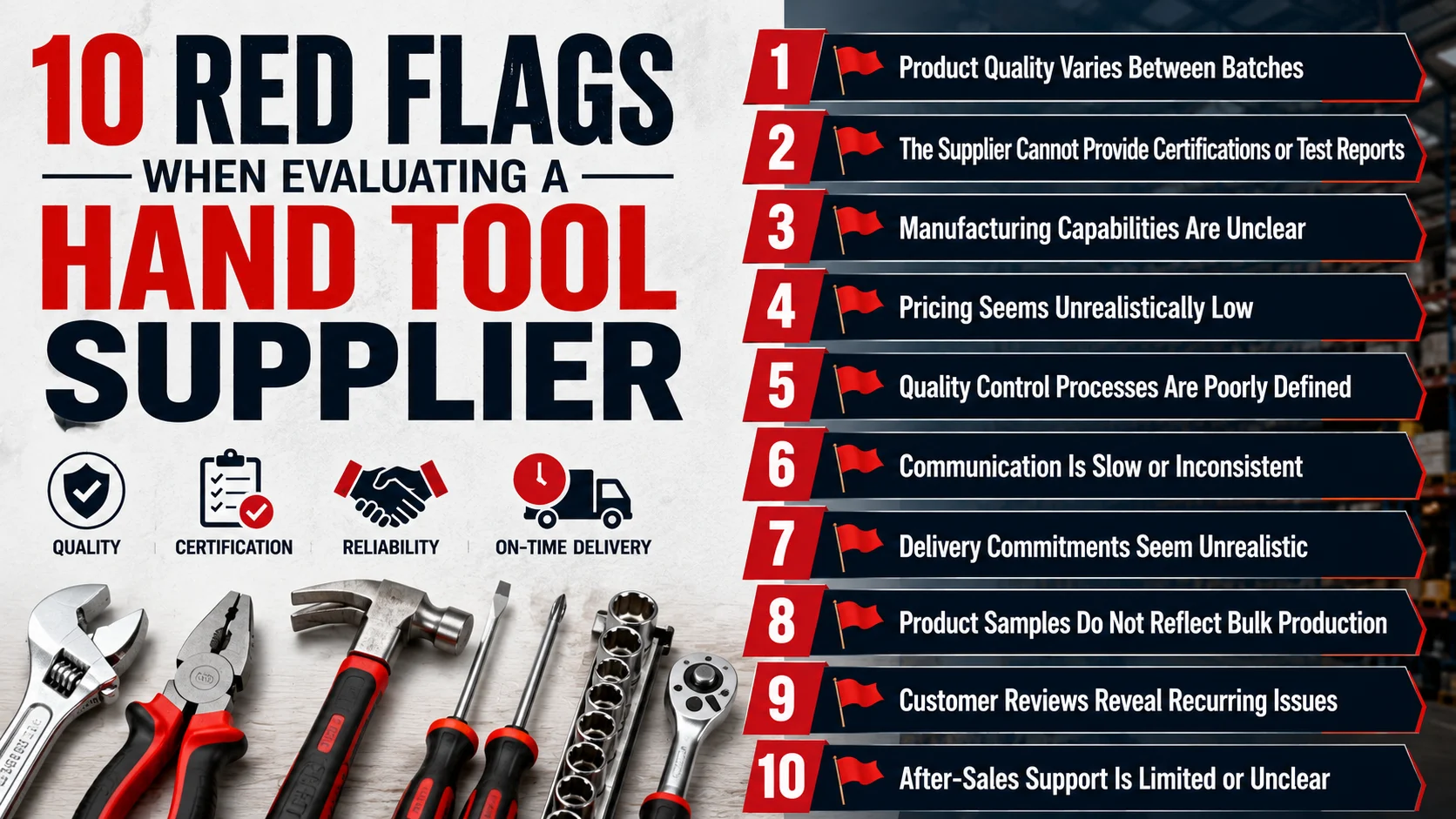
This guide highlights the 10 most common red flags to watch for when evaluating a hand tool supplier and explains how to verify each one before making a purchasing decision.
What Are the Biggest Red Flags When Evaluating a Hand Tool Supplier?
The most common warning signs include inconsistent product quality, missing certifications, unclear manufacturing capabilities, unrealistic pricing, weak quality control, poor communication, unreliable delivery commitments, inconsistent product samples, negative customer feedback, and limited after-sales support. Identifying these issues early can help buyers avoid costly sourcing mistakes.
Why Identifying Supplier Red Flags Matters
A supplier’s reliability directly affects your business performance. Poor-quality hand tools can increase product returns and warranty claims, while delayed shipments can disrupt inventory planning and customer commitments. Likewise, inadequate quality control or missing compliance documentation can create challenges in international trade.
A thorough supplier evaluation helps you identify potential risks, compare suppliers more effectively, and establish long-term partnerships based on quality, consistency, and trust.
1. Product Quality Varies Between Batches
One of the biggest warning signs is inconsistent product quality across different production batches. Variations in material strength, hardness, dimensions, or surface finish often indicate weak manufacturing controls.
Why it matters: Inconsistent products increase customer complaints, returns, and damage to your brand reputation.
How to verify: Request recent inspection reports, product specifications, and samples from multiple production batches to assess consistency.
2. The Supplier Cannot Provide Certifications or Test Reports
Reliable manufacturers should be able to provide relevant certifications and testing documents when requested. If a supplier hesitates to share quality certifications, material reports, or product testing results, it may indicate poor quality management or limited transparency.
Why it matters: Certifications help demonstrate that manufacturing processes and products meet recognized quality standards.
How to verify: Ask for quality certifications, material test reports, inspection records, and other compliance documents relevant to your market.
3. Manufacturing Capabilities Are Unclear
Some suppliers operate solely as trading companies, while others manufacture products in-house. Neither model is inherently better, but buyers should clearly understand who is responsible for production.
Why it matters: Limited visibility into manufacturing capabilities makes it difficult to evaluate production capacity, quality control, and scalability.
How to verify: Ask about production facilities, manufacturing equipment, production capacity, and whether third-party factory audits are available.
4. Pricing Seems Unrealistically Low
A significantly lower quotation compared to other suppliers may appear attractive, but it can also indicate compromises in raw materials, manufacturing processes, or quality inspections.
Why it matters: Lower upfront costs may lead to higher expenses through product failures, warranty claims, or replacement orders.
How to verify: Compare quotations based on specifications, materials, certifications, packaging, and included services—not price alone.
5. Quality Control Processes Are Poorly Defined
Every reputable hand tool supplier should have documented quality control procedures throughout production. Suppliers who cannot explain their inspection process may struggle to maintain consistent product quality.
Why it matters: Weak quality control increases the likelihood of defects reaching your customers.
How to verify: Ask how products are inspected during production, what tests are performed before shipment, and whether inspection reports can be shared.
6. Communication Is Slow or Inconsistent
Delayed responses, incomplete answers, or unclear technical information often signal poor customer service or inadequate internal processes.
Why it matters: Communication issues can delay quotations, production approvals, shipping schedules, and problem resolution.
How to verify: Evaluate response times, the accuracy of information provided, and the supplier’s willingness to answer technical questions during the inquiry stage.
7. Delivery Commitments Seem Unrealistic
Promises of exceptionally short lead times without explaining production schedules or inventory availability should be viewed cautiously.
Why it matters: Missed delivery deadlines can disrupt inventory planning, sales commitments, and customer satisfaction.
How to verify: Ask about average production lead times, current manufacturing capacity, and previous on-time delivery performance.
8. Product Samples Do Not Reflect Bulk Production
Receiving a high-quality sample does not always guarantee the same quality in large production orders. Without proper production controls, batch consistency may decline.
Why it matters: Differences between approved samples and delivered products can create significant quality issues.
How to verify: Request pre-production approval samples and discuss quality consistency requirements before confirming bulk production.
9. Customer Reviews Reveal Recurring Issues
While every supplier may receive occasional complaints, repeated concerns about product quality, delayed deliveries, or poor customer support deserve careful attention.
Why it matters: Consistent negative feedback often reflects ongoing operational challenges rather than isolated incidents.
How to verify: Review customer testimonials, export history, case studies, and independent business references whenever possible.
10. After-Sales Support Is Limited or Unclear
A supplier’s responsibility should not end once products are shipped. Clear warranty terms and responsive after-sales service are essential for resolving quality concerns efficiently.
Why it matters: Without defined support processes, handling defective products or shipment issues becomes difficult.
How to verify: Ask about warranty policies, replacement procedures, claim resolution timelines, and technical support availability.
Supplier Evaluation Checklist
Before selecting a hand tool supplier, use this checklist:
- Verify consistent product quality across production batches.
- Review certifications and product testing reports.
- Understand the supplier’s manufacturing capabilities.
- Compare quotations beyond price alone.
- Evaluate documented quality control procedures.
- Assess communication speed and technical responsiveness.
- Confirm realistic production and delivery timelines.
- Compare production samples with final specifications.
- Research customer reviews and export experience.
- Review warranty terms and after-sales support.
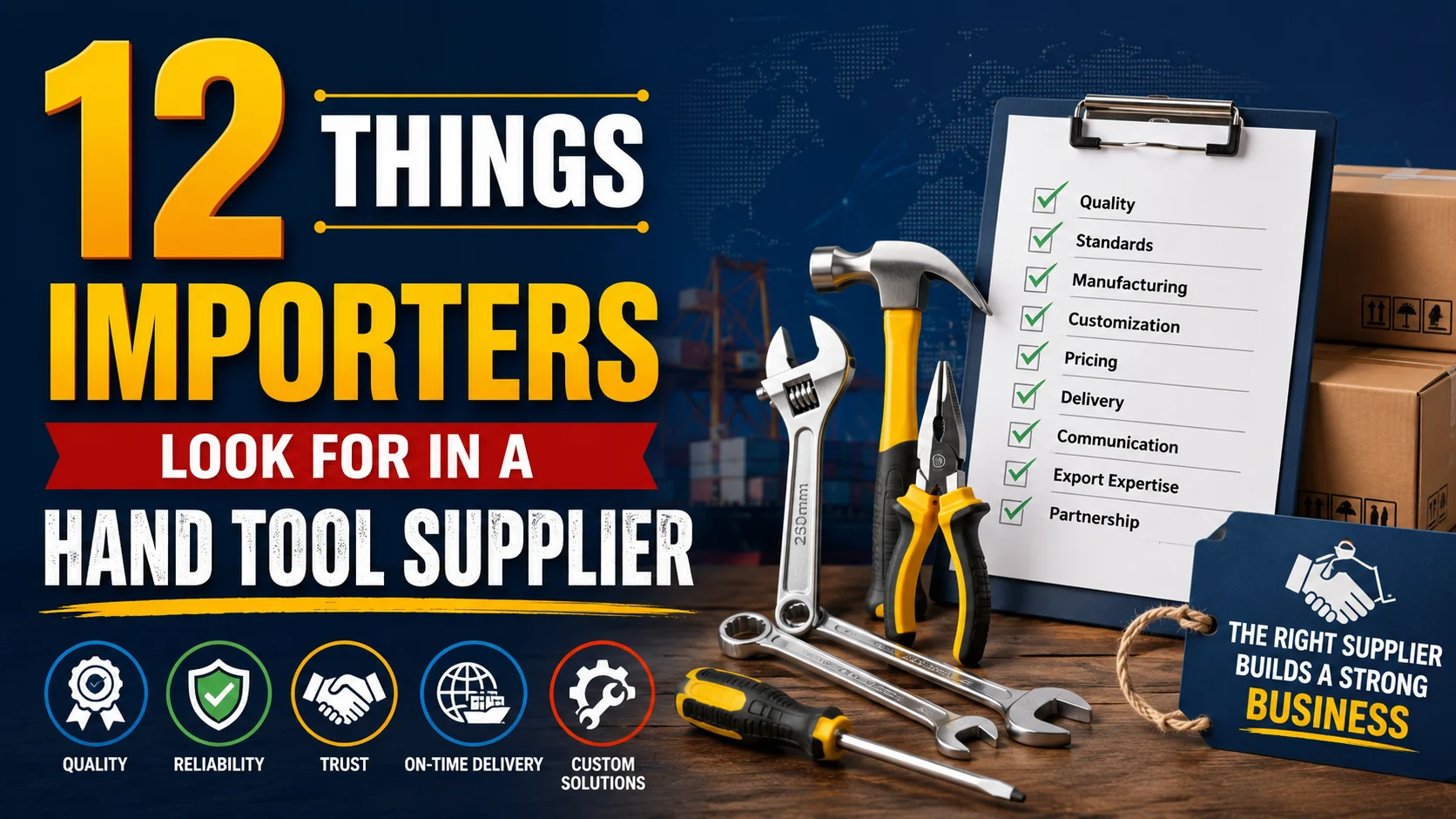
For a more detailed understanding of supplier selection criteria, you can also read our guide on What Importers Look for in a Hand Tool Supplier.
Questions to Ask Before Finalizing a Hand Tool Supplier
Before placing a purchase order, consider asking these questions:
- Where are the hand tools manufactured?
- What quality inspections are performed before shipment?
- Can you provide recent material or product testing reports?
- What certifications does your facility hold?
- What is your standard production lead time?
- Can third-party factory inspections be arranged?
- How do you handle defective products or warranty claims?
- Can you share references from existing international customers?
These questions help buyers evaluate a supplier’s transparency, manufacturing capability, and commitment to quality before entering a long-term business relationship.
Conclusion
Selecting a reliable hand tool supplier requires more than comparing prices. Product consistency, manufacturing transparency, quality control, communication, delivery performance, and after-sales support all play a critical role in building a successful sourcing partnership.
By recognizing these 10 red flags and conducting a structured supplier evaluation, buyers can reduce procurement risks, improve product reliability, and establish long-term relationships with suppliers that consistently deliver quality and value.
FAQs
Product quality consistency is the most important factor. A reliable hand tool supplier must deliver uniform performance, material strength, and finish across all production batches.
You can verify trustworthiness by checking certifications, requesting product test reports, reviewing factory capabilities, evaluating communication speed, and confirming customer references or export history.
Inconsistent quality indicates weak manufacturing control and poor inspection systems. It often leads to product failures, higher returns, and damage to your brand reputation.
Not always. Extremely low pricing can indicate compromised material quality, lack of proper testing, or missing quality control processes, which may increase long-term costs.
You should ask about manufacturing location, quality inspection processes, certifications, production lead time, warranty policies, and how they handle defective products.