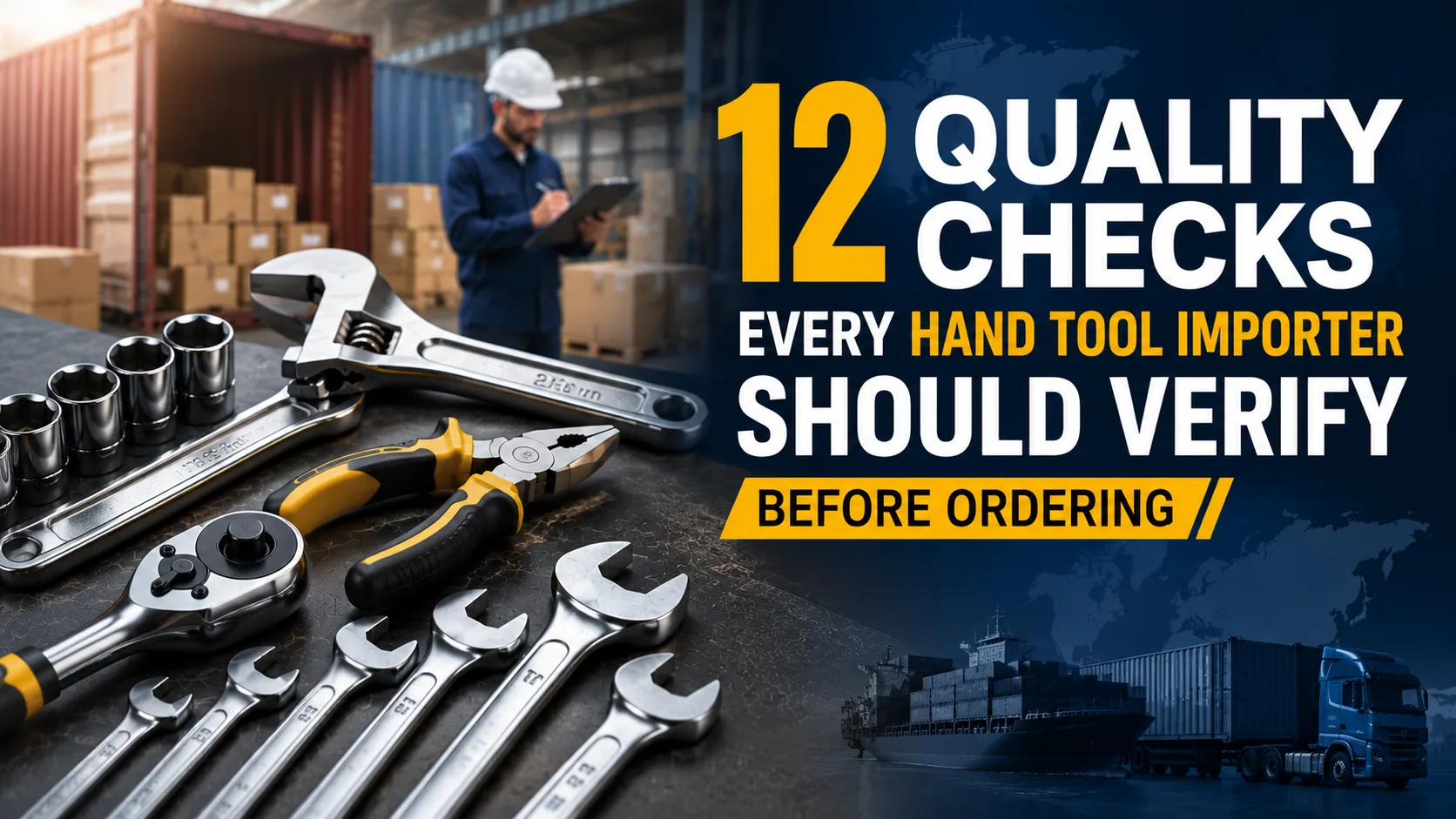
12 Quality Checks Every Hand Tool Importer Should Verify Before Ordering
Importing hand tools involves more than comparing prices and negotiating order quantities. Product quality directly affects customer satisfaction, warranty claims, distributor relationships, and brand reputation. A single shipment containing defective tools can result in returns, negative reviews, and lost business opportunities.
Before placing an order, importers should verify specific quality parameters that determine a tool’s durability, performance, safety, and consistency. Conducting these checks helps minimize sourcing risks and ensures that products meet market expectations.
In this guide, we cover the 12 essential quality checks every hand tool importer should verify before ordering from a manufacturer or supplier.
Why Quality Verification Matters for Hand Tool Importers
Quality issues are among the most common challenges faced by hand tool importers. Problems such as premature wear, tool breakage, rusting, inaccurate dimensions, and inconsistent production can lead to customer complaints and financial losses.
Verifying quality before ordering helps importers do the following:
- Reduce product returns and warranty claims
- Ensure consistent product performance
- Meet market-specific quality requirements
- Protect brand reputation
- Avoid costly shipment rejections
- Build long-term customer trust
A structured quality verification process allows importers to make informed sourcing decisions rather than relying solely on supplier claims.
12 Key Quality Checks to Verify
1. Raw Material Quality
Confirm the steel grade, material composition, mill test certificates, traceability records, and sourcing standards. High-quality raw materials provide better strength, wear resistance, and longer service life.
2. Hardness and Heat Treatment
Review Rockwell hardness reports, heat treatment records, and batch testing documentation. Proper heat treatment ensures the right balance of strength and toughness while preventing premature wear or brittleness.
3. Dimensional Accuracy
Verify product dimensions, tolerance compliance, jaw openings, socket sizes, and thread specifications. Accurate dimensions ensure proper fit, functionality, and performance.
4. Torque and Load Capacity
Check torque ratings, load-bearing capacity, strength tests, and fatigue testing results. This is especially important for tools such as spanners, pliers, ratchets, sockets, and screwdrivers that must withstand repeated use under force.
5. Surface Finish Quality
Inspect for smooth finishing, uniform polishing, consistent coatings, scratch-free surfaces, and burr-free edges. A quality finish improves appearance, durability, and corrosion protection.
6. Corrosion Resistance
Review salt spray test reports, coating specifications, plating thickness measurements, and anti-rust treatments. Effective corrosion protection helps tools withstand humid and demanding environments.
7. Handle Strength and Ergonomics
Assess grip quality, bonding strength, slip resistance, impact resistance, and ergonomic design. Strong, comfortable handles improve user safety and tool usability.
8. Manufacturing Consistency
Evaluate production controls, quality records, defect rates, and process standardization practices. Consistent manufacturing ensures that bulk orders match approved samples.
9. Compliance and Certifications
Verify quality certifications, product testing reports, regulatory compliance documents, and export requirements. Compliance helps prevent market access issues and shipment delays.
10. Packaging Quality
Review protective packaging, carton strength, moisture protection measures, labeling accuracy, and transportation durability. Proper packaging prevents product damage during storage and shipping.
11. Batch Inspection Reports
Request pre-shipment inspection reports, dimensional records, functional testing results, and defect analysis reports. These documents provide objective proof of product quality before dispatch.
12. Supplier Quality Control System
Assess incoming material inspections, in-process quality checks, final inspections, testing capabilities, and continuous improvement practices. A strong quality management system is often the best indicator of a reliable long-term manufacturing partner.
By verifying these quality parameters before ordering, importers can reduce sourcing risks, minimize product defects, and ensure consistent hand tool quality across every shipment.
Common Mistakes Hand Tool Importers Should Avoid
Many quality issues occur because importers focus primarily on price.
The most common mistakes include:
- Approving orders based only on samples
- Skipping factory audits
- Ignoring material certifications
- Not reviewing test reports
- Overlooking corrosion resistance requirements
- Failing to verify packaging standards
- Skipping third-party inspections
Avoiding these mistakes can significantly improve product quality and long-term profitability.
Conclusion
Successful hand tool importing depends on consistent product quality, reliable manufacturing processes, and proper quality verification before ordering.
By evaluating raw materials, hardness, dimensional accuracy, performance testing, corrosion resistance, packaging standards, and supplier quality systems, importers can reduce defects, improve customer satisfaction, and build stronger supplier relationships.
Following these 12 quality checks helps ensure that every shipment meets expectations and supports long-term business growth.
FAQs
Raw material quality and hardness testing are among the most important checks because they directly affect strength, durability, and performance.
Hardness reports confirm that the tools have been properly heat-treated and can withstand intended working conditions without excessive wear or breakage.
Importers should review salt spray test reports, coating specifications, plating thickness records, and anti-rust treatment documentation.
Yes. Independent inspections help verify that the finished batch meets agreed quality standards before export.
Strong quality control systems help maintain consistent manufacturing standards, reduce defect rates, and ensure reliable product quality across multiple production batches.