What is ODM Manufacturing? Meaning, Process, Benefits
- Quick Facts About ODM Manufacturing
- What Does ODM Mean in Manufacturing?
- How ODM Manufacturing Works: Step-by-Step Process
- ODM Manufacturing in the Hand Tools Industry
- Common Products Manufactured Under ODM
- Key Characteristics of ODM Manufacturing
- Benefits of ODM Manufacturing for B2B Buyers
- Limitations of ODM Manufacturing
- Who Should Choose ODM Manufacturing?
- ODM vs OEM Manufacturing: Key Differences
- When to Choose ODM vs OEM
- Conclusion
- FAQs
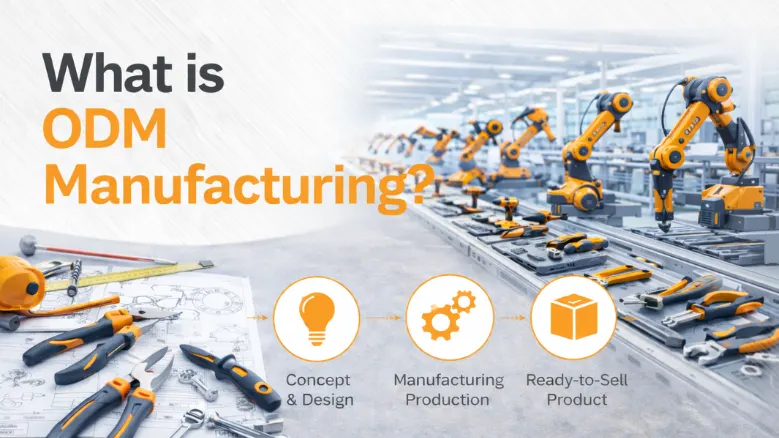
ODM (Original Design Manufacturing) is a manufacturing model in which a manufacturer designs, engineers, and produces products that are marketed and sold under another company’s brand. The buyer selects from pre-developed designs and focuses on branding and distribution, while the manufacturer manages product development, production, and quality assurance.
Quick Facts About ODM Manufacturing
- Full Form: Original Design Manufacturer
- Design Ownership: Manufacturer retains intellectual property
- Customization Scope: Branding, packaging, and minor cosmetic changes
- Time to Market: Short (ready-to-produce designs)
- Investment Requirement: Low (no in-house R&D needed)
- Ideal For: Distributors, wholesalers, private-label brands
- Common Sectors: Hand tools, automotive components, electronics, consumer goods
What Does ODM Mean in Manufacturing?
ODM (Original Design Manufacturer) refers to a business arrangement where the manufacturer provides a complete product solution, including design, engineering, and production.
Key elements include:
- The manufacturer develops and owns the product design, including CAD drawings and technical specifications
- Buyers select products from an existing portfolio of proven designs
- Products are rebranded and sold under the buyer’s identity
- Core engineering, tooling, and production processes remain unchanged
- Customization is typically limited to non-functional aspects such as branding, packaging, surface finish, and labeling
This model contrasts with manufacturing approaches where buyers are responsible for product design and technical inputs.
How ODM Manufacturing Works: Step-by-Step Process
ODM manufacturing follows a structured workflow designed to ensure consistency, efficiency, and scalability.
1. Product Design and Engineering
Manufacturers conduct market research and develop product designs based on application requirements, material performance, ergonomics, and compliance standards. In hand tools, this includes selecting appropriate steel grades, defining hardness levels through heat treatment, and ensuring ergonomic grip design.
2. Design Validation and Testing
Before commercialization, designs are validated through mechanical testing, stress analysis, and durability assessments to ensure reliability under real-world usage conditions.
3. Product Selection by Buyer
B2B buyers evaluate and select products from the manufacturer’s catalog based on target market needs, price positioning, and application use cases.
4. Branding and Customization
Buyers apply their brand identity through:
- Logo engraving or printing
- Packaging design (retail or industrial)
- Color coding or surface finishing
- Product labeling and documentation
5. Manufacturing and Process Control
Production is carried out using established industrial processes such as:
- Forging for strength and structural integrity
- Machining for precision dimensions
- Heat treatment for hardness and durability
- Surface finishing (e.g., chrome plating, coating) for corrosion resistance
Quality control checkpoints are integrated throughout production to ensure dimensional accuracy, material consistency, and performance standards.
6. Inspection and Quality Assurance
Products undergo final inspection, batch testing, and quality audits to ensure compliance with specifications and international standards where applicable.
7. Packaging and Logistics
Finished products are packaged based on buyer requirements and prepared for bulk distribution or retail supply chains, including export documentation and labeling compliance.
ODM Manufacturing in the Hand Tools Industry
The hand tools industry is highly compatible with ODM manufacturing due to the predictable functionality and standardization of products. Tools are typically designed to meet established performance criteria, making them suitable for repeatable manufacturing and large-scale distribution.
ODM enables businesses to:
- Access proven tool designs with consistent performance
- Maintain cost competitiveness in price-sensitive markets
- Ensure uniform quality across product batches
This makes ODM a practical approach for companies targeting volume-driven markets and wide distribution networks.
Common Products Manufactured Under ODM
ODM manufacturing is commonly used for standardized hand tools such as:
- Spanners and wrench sets
- Hammers and striking tools
- Pliers and gripping tools
- Screwdrivers and fastening tools
- General-purpose toolkits
These products are widely used across industries and typically follow recognized dimensional and performance standards, making them suitable for ODM production.
Key Characteristics of ODM Manufacturing
- Manufacturer-Owned Designs: All product designs and engineering specifications are developed and controlled by the manufacturer, enabling reuse across multiple clients.
- Pre-Validated Products: Products are tested and validated prior to market release, reducing uncertainty in performance and reliability.
- Limited Customization Scope: Customization is restricted to branding and visual elements, ensuring production efficiency and consistency.
- Private Labeling Capability: Businesses can build their own brand presence without investing in product development infrastructure.
- Scalable and Repeatable Production: Standardized processes enable manufacturers to handle varying order volumes while maintaining consistency.
- Consistent Quality Standards: Uniform materials, tooling, and inspection protocols ensure predictable product quality across production cycles.
Benefits of ODM Manufacturing for B2B Buyers
- Lower Capital Investment: No requirement for in-house R&D, prototyping, or testing infrastructure significantly reduces upfront costs.
- Accelerated Market Entry: Ready-to-manufacture designs allow businesses to respond quickly to market demand and reduce lead times.
- Reduced Technical Complexity: Manufacturers manage engineering, material selection, and compliance, minimizing technical burden on buyers.
- Operational Efficiency: Streamlined sourcing and production processes simplify supply chain management and reduce coordination efforts.
- Portfolio Expansion Flexibility: Businesses can expand product offerings across categories without increasing internal technical capabilities.
Limitations of ODM Manufacturing
- Limited Product Differentiation: Since designs are standardized, differentiation relies heavily on branding and market positioning.
- Shared Designs Across Buyers: Manufacturers may supply similar designs to multiple clients, reducing exclusivity.
- Restricted Design Control: Buyers cannot significantly alter product functionality or core specifications.
- Dependence on Manufacturer Capabilities: Future design improvements and innovations depend on the manufacturer’s development priorities.
Who Should Choose ODM Manufacturing?
ODM manufacturing is suitable for:
- Businesses entering the hand tools market with limited technical resources
- Distributors and wholesalers building private-label product lines
- Companies targeting fast-moving, price-sensitive markets
- Organizations seeking low-risk product expansion strategies
- Buyers prioritizing speed, scalability, and cost efficiency over customization
ODM vs OEM Manufacturing: Key Differences
| Feature | ODM Manufacturing | OEM Manufacturing |
| Design Ownership | Manufacturer | Buyer |
| Product Development | Manufacturer-led | Buyer-led |
| Customization | Limited | Extensive |
| Time to Market | Faster | Longer |
| Cost Structure | Lower initial investment | Higher due to R&D |
| Exclusivity | Limited | High |
When to Choose ODM vs OEM
- Choose ODM when speed, cost control, and simplified operations are critical
- Choose OEM when product innovation, differentiation, and full design ownership are required
Conclusion
ODM manufacturing is a strategically efficient model that enables businesses to scale quickly using pre-developed, reliable product designs. In industries like hand tools—where standardization, durability, and cost efficiency are essential—ODM provides a strong foundation for consistent product supply and market expansion.
For B2B buyers, the decision between ODM and OEM should be guided by business objectives, resource availability, and desired level of product control. When speed and operational efficiency are priorities, ODM remains a highly practical and scalable solution.
FAQs
ODM stands for Original Design Manufacturer, where the manufacturer designs and produces products that are sold under another company’s brand.
Yes, it is widely used by distributors, wholesalers, and private-label brands for efficient sourcing and faster product launches.
Customization is typically limited to branding, packaging, labeling, and minor cosmetic changes.
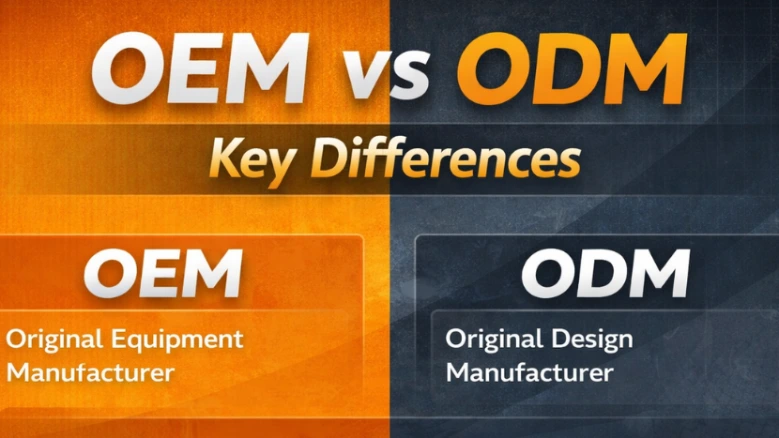
ODM uses manufacturer-owned designs, while OEM manufacturing involves production based on buyer-provided designs.
Yes, standardized processes allow ODM manufacturers to scale production efficiently across different order volumes.