Industrial Applications of Precision Hand Tools in Manufacturing
- What Are Precision Hand Tools in Manufacturing?
- Role of Precision Hand Tools in Manufacturing Operations
- Industrial Applications of Precision Hand Tools in Manufacturing
- Precision Hand Tools Commonly Used in Manufacturing
- How Precision Hand Tools Improve Manufacturing Accuracy
- Industry-Specific Use Cases of Precision Hand Tools
- Future Demand for Precision Hand Tools in Manufacturing
- Conclusion
- FAQs
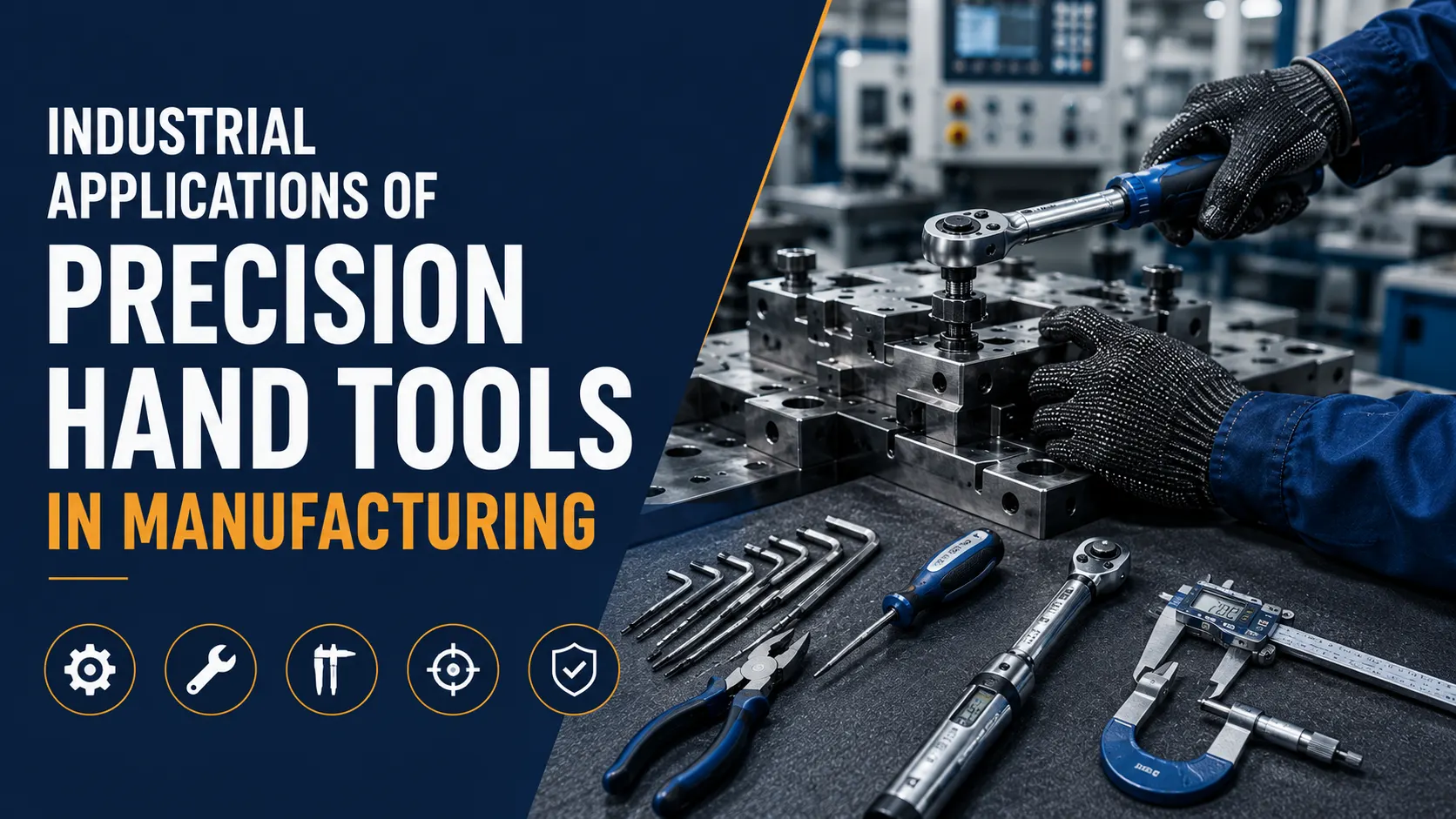
Precision hand tools are used in manufacturing to perform controlled fastening, precision assembly, machine calibration, dimensional inspection, and equipment maintenance. These tools help manufacturers maintain production accuracy, reduce operational errors, and improve assembly consistency across industrial operations.
Industries such as automotive, aerospace, electronics, metal fabrication, and heavy engineering rely on precision hand tools to support high-accuracy manufacturing environments where even minor deviations can affect product quality and equipment performance.
What Are Precision Hand Tools in Manufacturing?
Precision hand tools are industrial tools designed for applications that require accurate fastening, precise measurements, controlled adjustments, and repeatable assembly operations in manufacturing environments.
Key Characteristics
- Controlled torque application
- Dimensional accuracy
- Precision fitting capability
- Calibration support
- Industrial-grade durability
Unlike standard hand tools, precision hand tools are built to maintain consistent performance during repetitive industrial operations.
Role of Precision Hand Tools in Manufacturing Operations
Precision hand tools support manufacturing operations by improving assembly accuracy, maintaining dimensional consistency, and reducing production deviations during industrial processes.
Key Manufacturing Functions
- Precision assembly
- Machine setup and calibration
- Controlled fastening
- Dimensional inspection
- Preventive maintenance
- Electrical component installation
Manufacturing facilities use these tools to maintain tighter tolerances and improve operational reliability during high-volume production.
Industrial Applications of Precision Hand Tools in Manufacturing
Precision hand tools are used in manufacturing to support accurate assembly, controlled fastening, machine calibration, and equipment maintenance. These tools help manufacturers maintain dimensional accuracy, production consistency, and operational reliability across industrial processes.
1. Assembly Line Operations
Precision hand tools are used in assembly lines for controlled fastening, component alignment, and repeatable production accuracy.
Common Applications
- Component fastening
- Structural fitting
- Mechanical alignment
- Torque verification
Commonly Used Tools
| Tool | Application |
| Torque Screwdrivers | Controlled fastening |
| Industrial Wrenches | Assembly tightening |
| Precision Pliers | Component gripping |
| Hex Keys | Equipment assembly |
Incorrect fastening torque can lead to:
- Loose assemblies
- Vibration-related failures
- Product inconsistencies
Precision fastening tools help maintain assembly consistency across large production batches.
2. CNC Machine Setup and Calibration
Precision hand tools are used in CNC manufacturing for machine alignment, tooling setup, and dimensional verification.
Precision Tasks
- Tool alignment
- Fixture positioning
- Calibration procedures
- Tolerance inspection
Common Precision Tools
| Tool Type | CNC Application |
| Vernier Calipers | Dimensional verification |
| Micrometers | Precision measurement |
| Torque Tools | Controlled tightening |
| Alignment Tools | Machine positioning |
Small setup deviations can affect:
- Machining accuracy
- Surface finish quality
- Tolerance compliance
This makes precision tooling essential in close-tolerance manufacturing.
3. Industrial Equipment Maintenance
Manufacturing facilities use precision hand tools during preventive maintenance and industrial equipment servicing.
Key Maintenance Applications
- Conveyor servicing
- Hydraulic system maintenance
- Rotating equipment repair
- Machinery adjustments
Common Maintenance Tools
| Tool | Maintenance Function |
| Torque Wrenches | Controlled tightening |
| Precision Screwdrivers | Fine adjustments |
| Measuring Instruments | Alignment verification |
| Industrial Pliers | Component handling |
Accurate fastening helps reduce:
- Equipment instability
- Shaft misalignment
- Unplanned downtime
4. Electrical and Electronics Manufacturing
Precision hand tools are used in electronics manufacturing for PCB assembly, connector installation, and fine wiring operations.
Common Electronics Applications
- PCB installation
- Connector assembly
- Fine wiring
- Circuit handling
Common Electronics Tools
| Tool | Application |
| Micro Screwdrivers | Small-component fastening |
| Precision Cutters | Wire trimming |
| Insulated Tools | Electrical safety |
| Anti-Static Tools | Circuit protection |
Precision handling helps prevent:
- Circuit damage
- Loose connections
- Component misalignment
5. Aerospace Manufacturing Applications
Aerospace manufacturers use precision hand tools for structural assembly, fastening verification, and tolerance inspection.
Aerospace Applications
- Structural fastening
- Precision assembly
- Compliance inspection
- Component alignment
Common Aerospace Tools
| Tool | Aerospace Application |
| Calibrated Torque Tools | Fastening verification |
| Precision Measuring Instruments | Tolerance inspection |
| Alignment Tools | Structural positioning |
| Inspection Tools | Quality verification |
Minor assembly deviations in aerospace manufacturing can affect:
- Structural reliability
- Compliance standards
- Operational safety
6. Metal Fabrication and Heavy Engineering
Metal fabrication facilities use precision hand tools for structural fitting, dimensional inspection, and industrial assembly operations.
Common Fabrication Applications
- Component positioning
- Structural alignment
- Equipment assembly
- Industrial fitting
Commonly Used Tools
| Tool | Fabrication Application |
| Precision Pliers | Component positioning |
| Measuring Instruments | Dimensional inspection |
| Fastening Tools | Structural assembly |
| Alignment Tools | Equipment fitting |
Precision handling improves fabrication accuracy and equipment integration in heavy engineering operations.
Precision Hand Tools Commonly Used in Manufacturing
| Precision Hand Tool | Manufacturing Application |
| Torque Wrenches | Controlled fastening and torque verification |
| Precision Screwdrivers | Fine assembly operations |
| Vernier Calipers | Dimensional inspection |
| Micrometers | Precision calibration |
| Precision Pliers | Component gripping and positioning |
| Crimping Tools | Electrical assembly |
| Hex Keys | Machine setup and equipment assembly |
Manufacturers select precision hand tools based on:
- Production tolerances
- Assembly requirements
- Operational workload
- Industrial application type
- Accuracy requirements
How Precision Hand Tools Improve Manufacturing Accuracy
Precision hand tools improve manufacturing accuracy by supporting controlled fastening, repeatable assembly, dimensional consistency, and reliable calibration procedures.
Manufacturing Benefits of Precision Hand Tools
| Manufacturing Area | Operational Impact |
| Controlled Fastening | Reduces over-tightening and under-tightening |
| Dimensional Inspection | Improves tolerance verification |
| Assembly Alignment | Maintains positioning accuracy |
| Calibration Procedures | Supports machining consistency |
| Preventive Maintenance | Improves equipment reliability |
| Quality Control | Reduces rework and defects |
Key Operational Benefits
- Lower rework rates
- Better assembly consistency
- Improved dimensional accuracy
- Reduced fastening errors
- Stable production workflows
- Improved machinery reliability
In high-volume manufacturing environments, repeatable precision is essential for maintaining production quality and operational efficiency.
Industry-Specific Use Cases of Precision Hand Tools
| Industry | Primary Application |
| Automotive Manufacturing | Engine assembly and fastening precision |
| Electronics Manufacturing | PCB assembly and fine wiring |
| Aerospace Manufacturing | Compliance-sensitive assembly |
| Heavy Engineering | Structural fitting and equipment assembly |
| Metal Fabrication | Alignment and dimensional verification |
Each manufacturing sector uses precision hand tools to maintain operational accuracy and production consistency in industry-specific workflows.
Future Demand for Precision Hand Tools in Manufacturing
The demand for precision hand tools is increasing as manufacturers adopt tighter production tolerances, automated systems, and precision-focused manufacturing workflows.
Key Industry Trends
- Industry 4.0 manufacturing
- Smart torque systems
- Digitally calibrated tools
- High-precision production environments
- Advanced quality-control systems
Manufacturers increasingly require precision tools capable of supporting calibration-sensitive and high-accuracy industrial operations.
Conclusion
Precision hand tools play a critical role in modern manufacturing operations that require controlled assembly, dimensional accuracy, machine calibration, and reliable equipment maintenance.
Their industrial applications extend across assembly lines, CNC machining, electronics production, aerospace manufacturing, preventive maintenance, and heavy engineering operations. Businesses looking for durable industrial tooling solutions can explore the complete range available at JCBL Hand Tools.
As manufacturing environments continue moving toward tighter tolerances and precision-focused workflows, precision hand tools will remain essential for maintaining production consistency, operational reliability, and industrial accuracy.
FAQs
Precision hand tools are used for controlled fastening, dimensional inspection, machine calibration, precision assembly, equipment maintenance, and tolerance verification in manufacturing operations.
Industries including automotive, aerospace, electronics, metal fabrication, heavy engineering, and industrial machinery manufacturing use precision hand tools.
Precision fastening helps maintain assembly consistency, structural reliability, dimensional accuracy, and operational stability during manufacturing processes.
Common precision tools used in CNC operations include micrometers, vernier calipers, torque tools, alignment instruments, and precision adjustment tools.
Precision hand tools reduce manufacturing errors by supporting accurate assembly, controlled fastening, repeatable calibration, and dimensional consistency across production operations.