What is OEM Manufacturing? A Complete B2B Guide for Hand Tool Brands
- Why OEM Manufacturing Matters in Today’s B2B Market
- What Does OEM Mean in Manufacturing?
- How OEM Manufacturing Works (Step-by-Step Process)
- OEM Manufacturing in the Hand Tools Industry
- Why Brands Choose OEM Manufacturing
- Who Should Use OEM Manufacturing?
- OEM vs ODM Manufacturing: What’s the Difference?
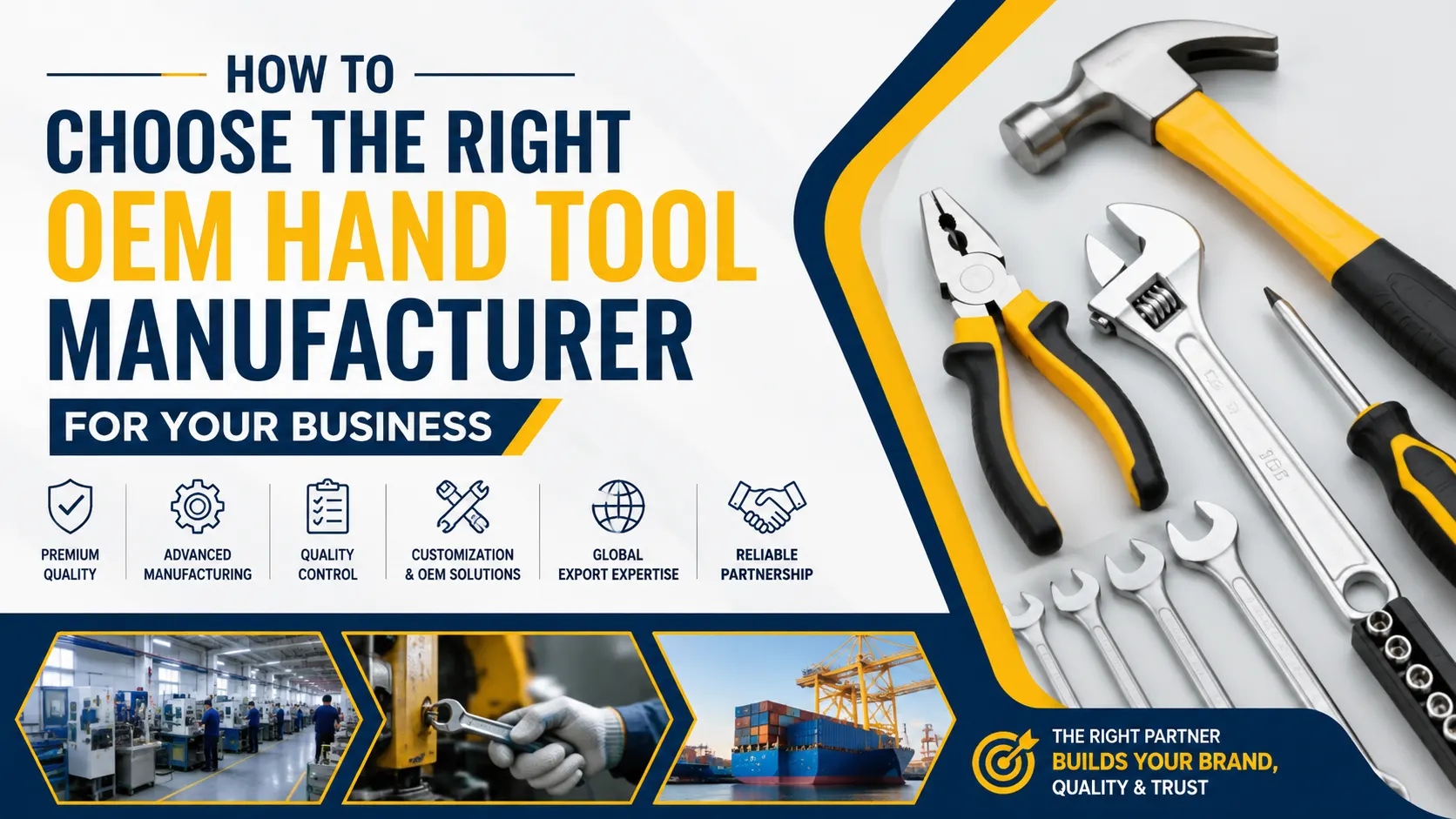
- Key Things to Check Before Choosing an OEM Manufacturer
- Conclusion
- Who Should Consider OEM Manufacturing?
- OEM vs ODM: Key Differences
- Conclusion
- FAQs
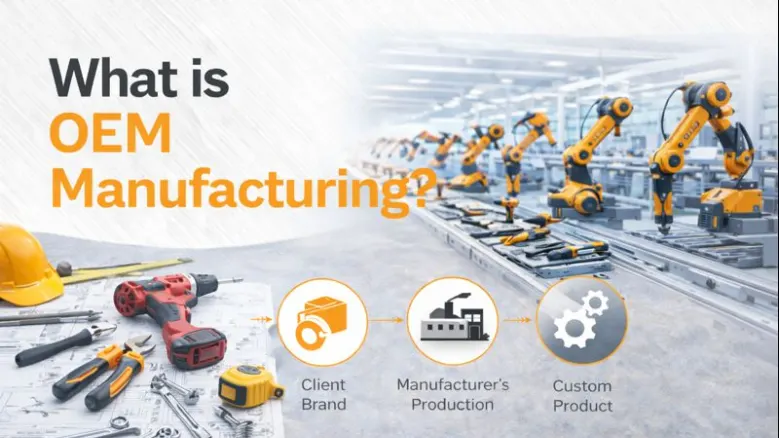
OEM (Original Equipment Manufacturing) is a business model where a manufacturer produces products based on another company’s design, specifications, and branding.
In simple terms, you design the product, and the OEM manufacturer makes it for you, while you sell it under your own brand name.
Why OEM Manufacturing Matters in Today’s B2B Market
Today, many successful brands do not own factories. Instead, they focus on product design, branding, and sales, while relying on OEM manufacturers for production.
This shift is driven by three major factors:
- High cost of setting up manufacturing units
- Need for faster product launches
- Global competition requires consistent quality
For industries like hand tools, where precision and durability directly impact performance, OEM manufacturing helps brands stay competitive without compromising on quality.
In short, OEM allows businesses to scale faster, reduce risk, and stay focused on growth.
What Does OEM Mean in Manufacturing?
OEM manufacturing is a partnership between two specialized players.
Key Roles Explained
| Role | What They Do |
| Brand Owner | Creates product design, defines specifications, owns the brand and IP |
| OEM Manufacturer | Produces the product, manages production processes, ensures quality |
Simple Example
A hand tool company designs a high-strength wrench with a specific torque capacity and finish. Instead of manufacturing it themselves, they share the design with an OEM partner who produces it exactly as required.
How OEM Manufacturing Works (Step-by-Step Process)
OEM manufacturing is not just “outsourcing”; it is a controlled and collaborative process.
1. Product Design & Technical Inputs
The brand provides detailed specifications such as:
- CAD drawings
- Material grade (e.g., chrome vanadium steel)
- Dimensions and tolerances
- Performance requirements
The clearer the inputs, the better the final product.
2. Prototype Development & Testing
Before mass production:
- Samples are created
- Performance is tested
- Design improvements are made
This step helps avoid costly mistakes later.
3. Production Planning
The OEM manufacturer plans:
- Raw material sourcing
- Tooling and dies
- Production timelines
- Batch sizes
Good planning ensures cost efficiency and timely delivery.
4. Manufacturing Execution
This is where actual production happens. In hand tools, it typically includes:
- Forging: Shaping the tool for strength
- Machining: Achieving precise dimensions
- Heat treatment: Improving hardness and durability
- Surface finishing: Corrosion resistance and appearance
- Assembly: Final product build
Each step directly affects tool performance.
5. Branding & Packaging
Products are customized with:
- Laser marking or stamping
- Brand logos
- Retail or bulk packaging
This is where the product becomes “your brand.”
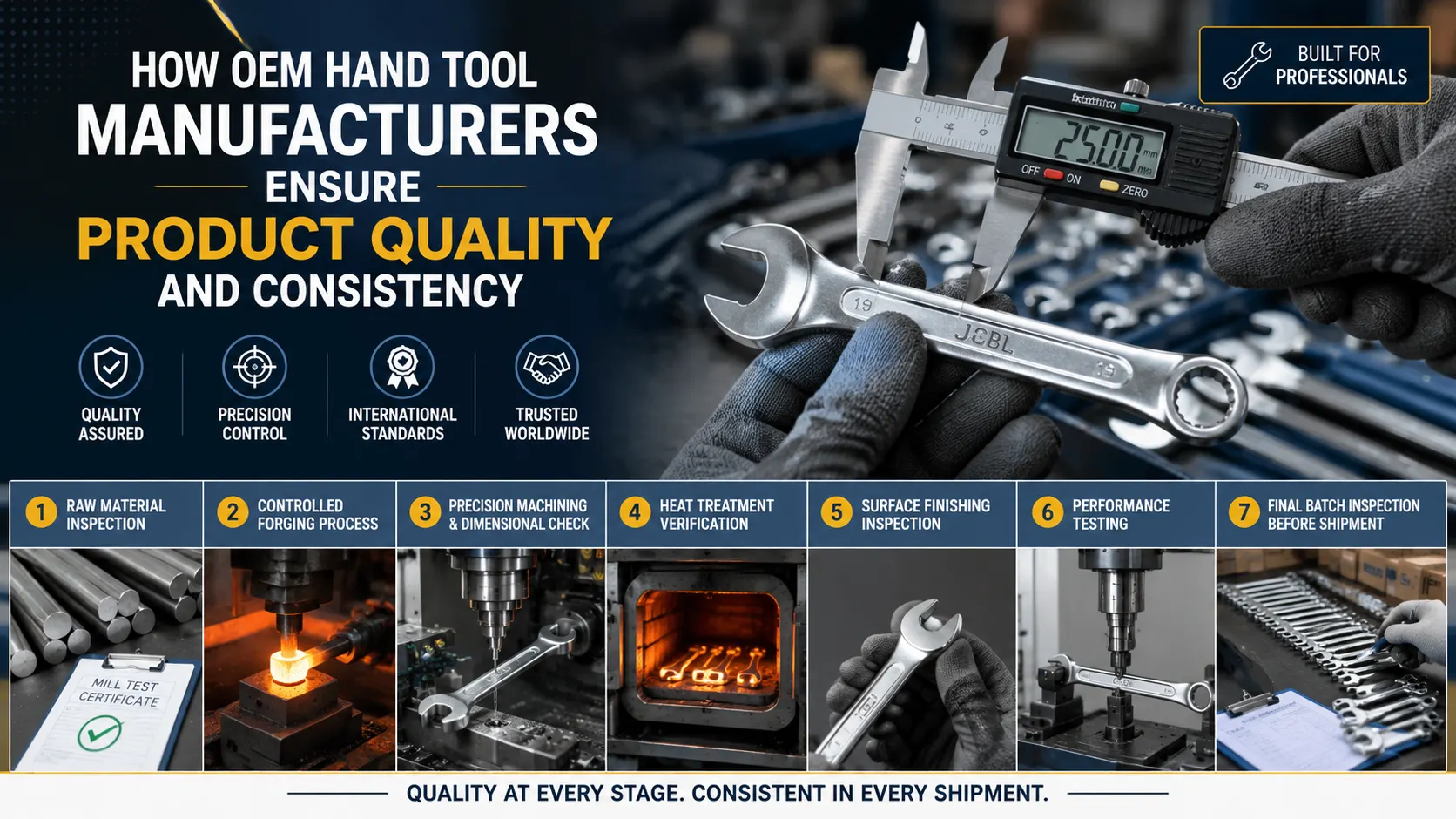
6. Quality Inspection & Testing
Reliable OEM manufacturers follow strict quality checks, such as:
- Dimensional accuracy checks
- Strength and load testing
- Surface finish inspection
This ensures every batch meets the same standard.
7. Dispatch & Delivery
Finished goods are:
- Delivered as per agreed timelines
- Packed securely
- Shipped domestically or internationally
OEM Manufacturing in the Hand Tools Industry
Hand tools are performance-driven products. Even small variations in material or design can impact usability and safety.
This is why OEM manufacturing plays a critical role.
Common OEM Hand Tools
- Spanners and wrenches
- Pliers
- Screwdrivers
- Socket sets
What Can Be Customized?
OEM manufacturing allows deep customization, such as:
- Tool design: Size, shape, grip comfort
- Material selection: Different steel grades for strength
- Heat treatment levels: Hardness vs flexibility
- Surface finish: Chrome plating, matte finish, anti-rust coating
- Branding: Logo placement, engraving style
- Packaging: Retail-ready or bulk export packaging
This flexibility helps brands target different industries and price segments.
Why Brands Choose OEM Manufacturing
OEM manufacturing is not just about saving money—it helps businesses grow faster and operate more efficiently.
1. Full Control Over Product Design: You own the product design and specifications. This means your product remains unique and cannot be easily copied.
2. Lower Investment Risk: You don’t need to invest in:
- Machinery
- Factory setup
- Workforce
This helps you save money and reduces financial risk.
3. Easy Scalability: You can easily adjust production based on demand.
- Increase production when sales grow
- Reduce production during slow periods
No need to worry about fixed manufacturing costs.
4. Consistent Quality: OEM manufacturers follow:
- Standard processes
- Skilled production methods
- Strict quality checks
This ensures every product meets the same quality standards.
5. Faster Time-to-Market: Since the manufacturer already has systems in place:
- No setup time is needed
- Products can be launched faster
6. Better Market Positioning: With customization, you can:
- Target different price segments (premium or budget)
- Create products that stand out from competitors
Who Should Use OEM Manufacturing?
OEM is ideal for businesses that want to focus on growth without managing factories.
Best Fit For:
- Established brands expanding product lines
- Startups with ready product designs
- Export companies serving global markets
- Private label brands building their own identity
- Engineering-driven companies with in-house R&D
If you already know what you want to build, OEM is the smartest way to build it.
OEM vs ODM Manufacturing: What’s the Difference?
Many businesses confuse OEM and ODM. Here’s a simple comparison:
| Factor | OEM | ODM |
| Who designs the product? | You | Manufacturer |
| Customization level | High | Limited |
| Ownership of design | You | Manufacturer |
| Speed to market | Moderate | Faster |
OEM = Custom + Control
ODM = Ready-made + Quick launch
Key Things to Check Before Choosing an OEM Manufacturer
Choosing the right partner can make or break your product.
Important Factors to Evaluate:
- Manufacturing Capabilities: Do they have expertise in forging, machining, and finishing?
- Quality Systems: Do they follow proper inspection and testing processes?
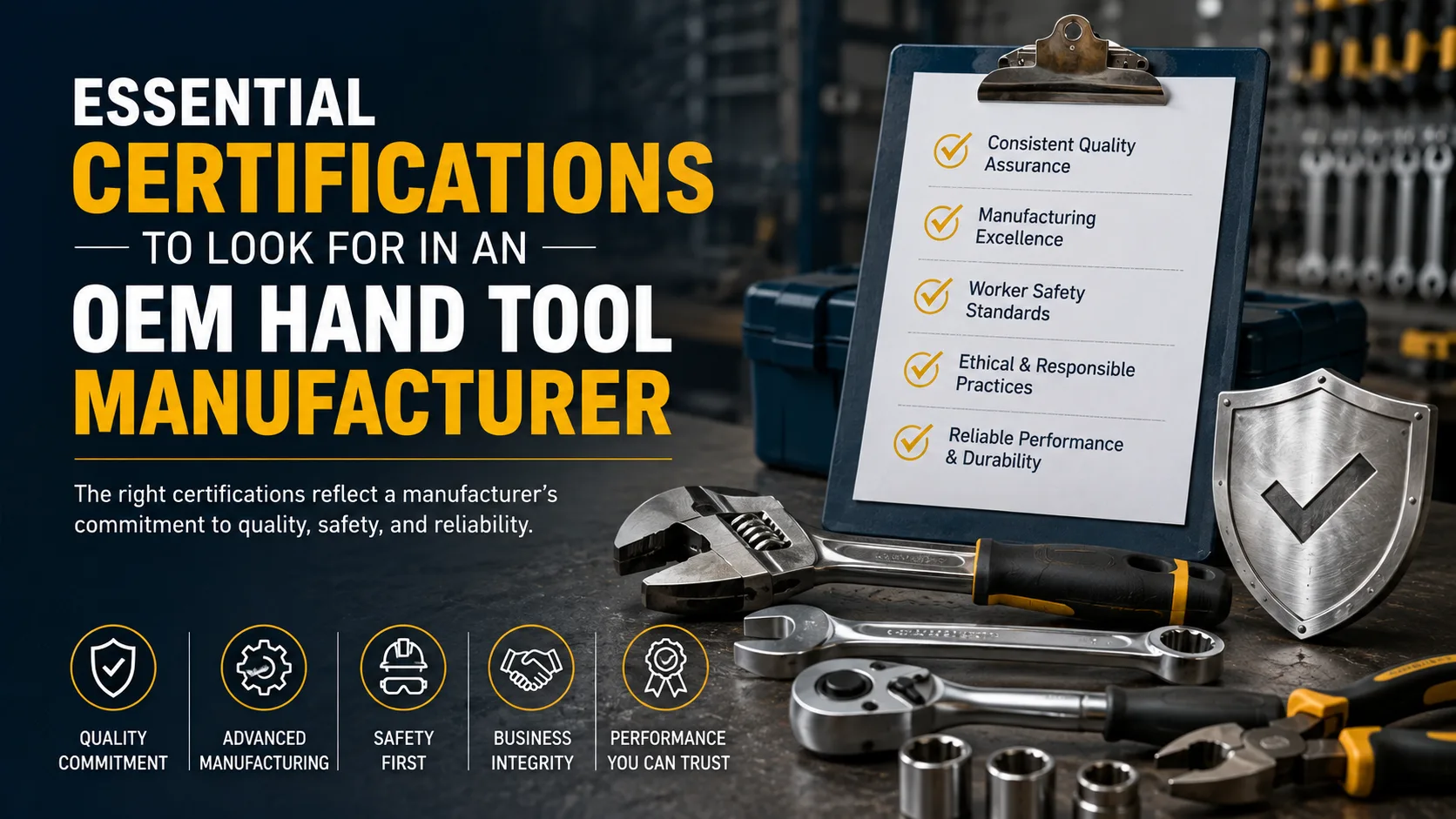
- Certifications: Check for standards like ISO, DIN, or ANSI compliance.
- Production Capacity: Can they handle your current and future volume?
- Export Experience: Do they understand international shipping and regulations?
- Communication & Support: Are they responsive and technically clear?
A good OEM partner acts like a long-term extension of your business.
Conclusion
OEM manufacturing is a powerful model that helps businesses bring high-quality products to market without investing in production infrastructure.
In the hand tools industry, where precision, strength, and reliability are critical, OEM partnerships provide a practical and scalable way to grow.
By combining your product vision with manufacturing expertise, OEM enables faster launches, better quality control, and long-term competitiveness.
Who Should Consider OEM Manufacturing?
OEM Manufacturing can be successfully used for:
- Established Brands: Expanding product lines without building manufacturing infrastructure
- Design-Led Companies: Organizations with in-house R&D and product engineering teams
- Premium or Specialized Tool Brands: Businesses offering patented or performance-critical tools
- Export-Oriented Companies: Brands supplying international markets with varying standards
OEM provides these businesses with a reliable path to market-ready products backed by manufacturing expertise.
OEM vs ODM: Key Differences
Though sometimes confused, OEM and ODM have two distinct uses in business:
- OEM (Original Equipment Manufacturer): Products are produced entirely according to the designs provided by the buyer.
- ODM (Original Design Manufacturer): The products are designed and manufactured by the suppliers and are sold under the brand of the buyer.
OEM is the best for those who value customization and want the rights to the IP, and ODM is for those looking for quicker solutions that can be used for design as well.
Conclusion
The OEM manufacturing process is vital for the hand tools market, as it helps manufacturers provide customized, quality products without actually manufacturing them. By separating product design from manufacturing execution, OEM models support scalability, quality control, and cost efficiency.
For B2B businesses operating in competitive and specification-driven markets, OEM hand tool manufacturing remains a dependable strategy for long-term growth and supply chain stability.
FAQs
OEM manufacturing is when a company produces products based on another brand’s design. For example, a brand designs a wrench and an OEM manufacturer produces it, which is then sold under the brand’s name.
OEM is better if you want full control over product design and branding. ODM is better if you want a ready-made product with faster launch time.
Yes, startups can use OEM manufacturing if they already have a clear product design. It helps them enter the market without heavy investment.
Yes, OEM manufacturing allows complete customization, including design, materials, finishes, branding, and packaging.
OEM manufacturing is commonly used in hand tools, automotive, electronics, industrial equipment, and consumer goods.