Types of Hammers and Their Uses: A Complete Guide for Professionals and DIY Users
- What Is a Hammer?
- What Are the Main Types of Hammers?
- Quick Reference: Hammer Types by Primary Use and Industry
- Types of Hammers Used in Workshops
- Parts of a Hammer
- 10 Common Uses of a Hammer
- Detailed Breakdown of Hammers and Their Field Applications
- What is a Mallet and When Should You Use It?
- Selection Matrix: Choosing a Hammer by Industry
- Conclusion
- Frequently Asked Questions
Whether you are building heavy furniture, fabricating metal components, breaking stone, or maintaining industrial machinery, matching the hammer to the specific task is critical.
Using the wrong tool does not just slow you down—it damages materials, ruins premium finishes, and transmits repetitive shock to your wrist and forearm joints.
At JCBL Hand Tools, we work closely with professionals across construction, metal fabrication, high-end woodworking, and industrial maintenance. Based on these practical applications and field tests, we have compiled this definitive guide to help you understand the structural differences between various hammers and how to choose the right one for your trade.
What Is a Hammer?
A hammer is a hand tool designed to deliver controlled force through impact. It consists of a weighted head attached to a handle and is commonly used for driving nails, shaping materials, breaking objects, fitting components, and striking other tools such as chisels or punches.
What Are the Main Types of Hammers?
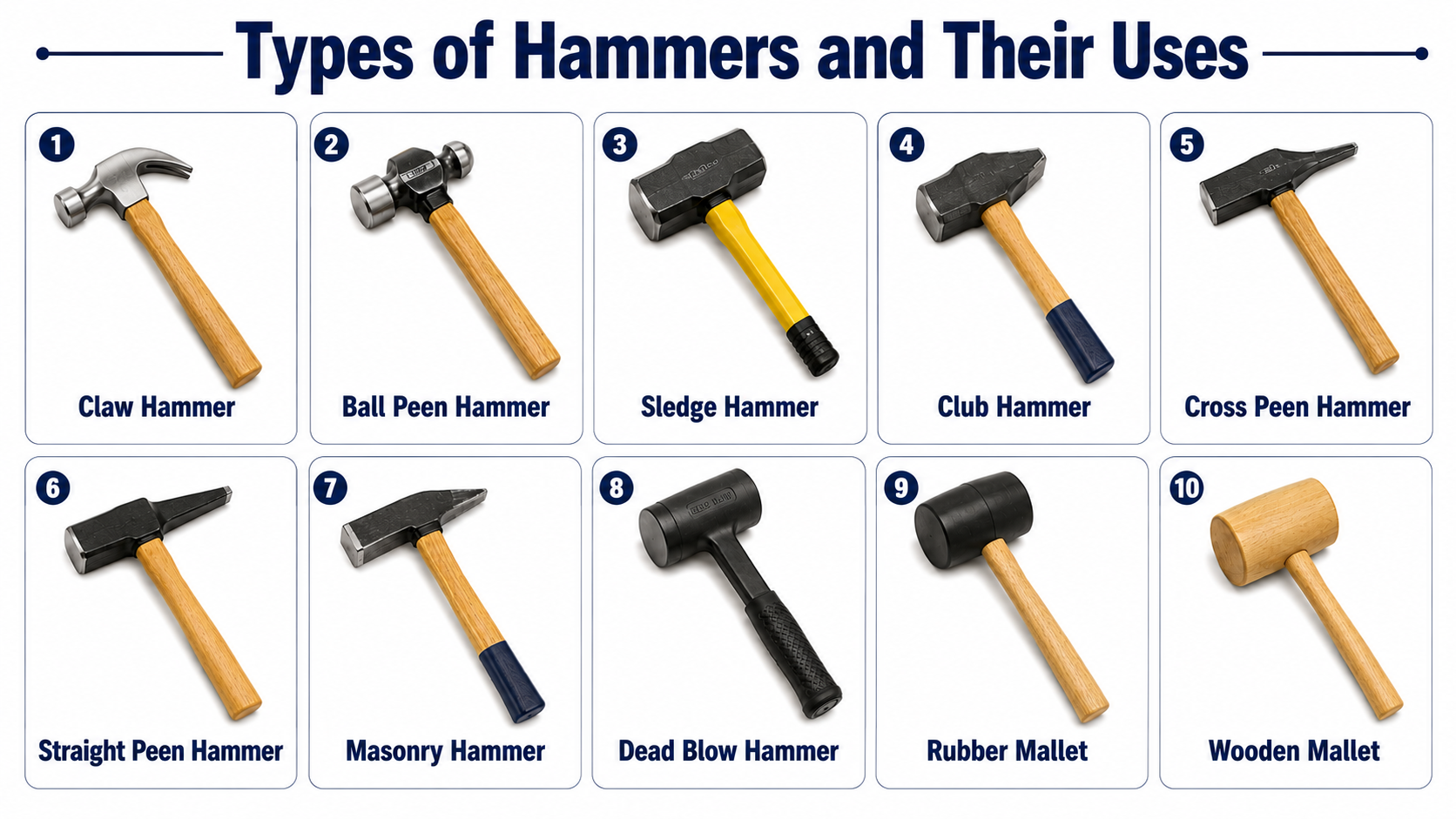
The most common types of hammers include claw hammers, ball peen hammers, sledge hammers, club hammers, cross peen hammers, straight peen hammers, masonry hammers, dead blow hammers, rubber mallets, and wooden mallets. Each type is designed for a specific application such as carpentry, metalworking, masonry, demolition, or precision assembly.
Quick Reference: Hammer Types by Primary Use and Industry
If you need a fast overview, this table outlines the standard industry alignment for striking tools based on workshop and job site demands.
| Hammer Type | Primary Use | Common Industry / Trade |
| Claw Hammer | Nail driving and framing extraction | Carpentry, DIY, and Framing |
| Ball Peen Hammer | Metal shaping, riveting, and punch striking | Engineering and Machinist Workshops |
| Sledge Hammer | Heavy demolition and driving deep stakes | Construction and Demolition |
| Club (Engineer’s) Hammer | Short-stroke heavy striking and masonry chiseling | Stone Masonry and Light Demolition |
| Cross Peen Hammer | Directional metal stretching and starting small fasteners | Blacksmithing and Fabrication |
| Masonry Hammer | Scoring, splitting, and trimming brick/stone | Bricklaying and Masonry |
| Dead Blow Hammer | High-force impact without rebound or surface damage | Automotive and Machine Assembly |
| Rubber Mallet | Gentle surface alignment and fragile material setting | Tiling, Flooring, and Trim Work |
Head-to-Head Comparison: Claw Hammer vs. Ball Peen Hammer
Because claw hammers and ball peen hammers are the two most frequently confused hand tools, understanding their operational baseline is crucial:
| Feature | Claw Hammer | Ball Peen Hammer |
| Primary Use | Nail Driving & Fastener Extraction | Metalworking & Riveting |
| Common Industry | Carpentry, Framing, and DIY | Engineering, Machining, and Auto Mechanics |
| Nail Removal | Yes (via curved or straight rear claw) | No (rear section features a rounded peen) |
| Riveting Capacity | No (striking face can split/damage metal rivets) | Yes (engineered directly for flattening rivets) |
| Sheet Metal Work | No (will crack, crease, or stretch thin plates) | Yes (designed to contour and shape raw sheets) |
Types of Hammers Used in Workshops
Engineering workshops typically require multiple specific hammer types to handle metalworking, machinery calibrations, and custom fabrication projects. The most common types of hammers in workshop environments include ball peen hammers, club hammers, dead blow hammers, and cross peen hammers. These specialty options provide the high structural fatigue resistance and precise directional force necessary for equipment maintenance, metal shaping, and industrial tool assembly tasks.
Parts of a Hammer
1. The Face
The primary striking area. Finish carpenters prefer a smooth face because it will not leave cross-hatch marks on expensive trim. Framing carpenters and heavy builders use a milled or checkered face (often called a waffle head); the raised pattern bites into the nail head, preventing the hammer from slipping off during high-velocity swings.
2. The Peen
The rear section of the hammer head opposite the face. Instead of driving fasteners, the peen is engineered to shape, cut, or direct metal flow. Depending on the shop requirement, this will be shaped as a ball, a vertical wedge, or a horizontal wedge.
3. The Eye
The internal slot where the handle interfaces with the forged steel head. This is the highest stress point of the tool. Heavy industrial setups require double-wedged configurations (using both wood and steel wedges) or epoxy-poured seals to ensure the head cannot loosen or fly off during repetitive high-impact work.
4. The Handle
Absorbs shock and provides leverage. Hickory wood offers natural flexibility and dampens tool vibration beautifully. Fiberglass is ideal for rugged job sites as it is immune to weather splits and completely non-conductive. Solid forged steel offers maximum structural strength but transmits higher impact vibration unless paired with an advanced shock-dampening grip.
10 Common Uses of a Hammer
While driving nails is the most familiar application, a hammer remains one of the most versatile hand tools across industrial and residential jobs. The ten primary applications include:
- Fastener Driving: Securely sinking common framing or finish nails into timber.
- Fastener Extraction: Using curved or straight claws to pry apart temporary wood bracing and pull bent nails.
- Structural Demolition: Shattering drywall, studs, masonry, and old concrete installations using high-mass heads.
- Metal Forging & Shaping: Bending, drawing out, and managing the contours of structural raw metals.
- Riveting: Flattening metal rivet pins to lock structural sheets together permanently.
- Chisel Driving: Striking wood or cold-steel chisels to carve joints or cut channels.
- Component Alignment: Tapping heavy metal parts or machinery gently into place without shifting calibration.
- Staking: Driving landscape timbers, rebar pins, or survey stakes deep into hard soil.
- Tile and Slab Seating: Embedding large format tiles into thin-set mortar evenly using soft-faced heads.
- General Maintenance: Popping stubborn, rusted automotive parts, bearings, or cotter pins loose.
Detailed Breakdown of Hammers and Their Field Applications
1. Claw Hammer
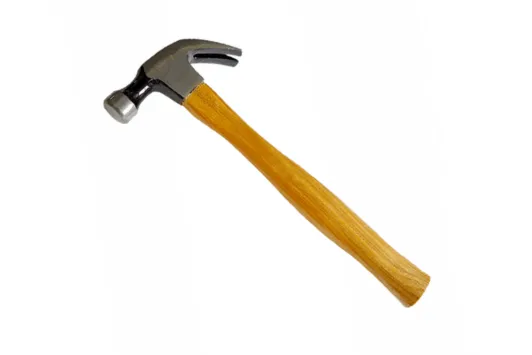
The most common striking tool found in residential toolboxes and commercial framing crews alike.
- Common Applications: Driving framing nails, removing old fasteners, and general carpentry.
- The Practical Reality: The curved claw acts as a classic lever. When you pull back on the handle, the curve rolls against the wood surface, multiplying your hand force to pull deeply embedded nails out of dense timber.
2. Ball Peen Hammer
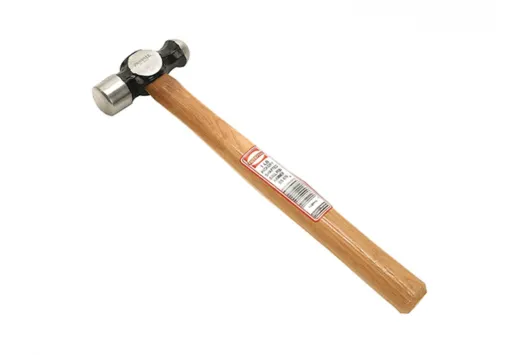
Often referred to as the machinist’s hammer, this is a staple in engineering workshops, auto garages, and maintenance bays.
- Common Applications: Expanding rivet pins, shaping raw sheet metal, flattening metal welds, and striking hardened cold chisels or center punches.
- The Practical Reality: The head is forged from high-carbon steel and tempered harder than a standard claw hammer. This prevents the face from chipping or deformation when hitting other hardened steel tools like punches or chisels.
3. Sledge Hammer
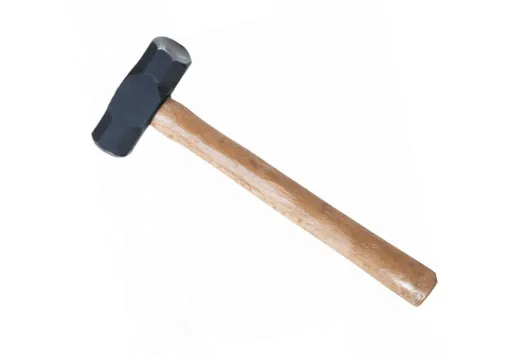
A high-mass tool engineered strictly for raw kinetic energy transfer during major construction tools setups.
- Common Applications: Structural demolition, smashing heavy concrete slabs, breaking through stone walls, and driving heavy grounding rods or fence posts.
- The Practical Reality: With heads weighing between 8 to 20 pounds mounted on long 36-inch handles, these require a two-handed swing and wide operational clearance to safely manage the tool’s momentum.
4. Club Hammer
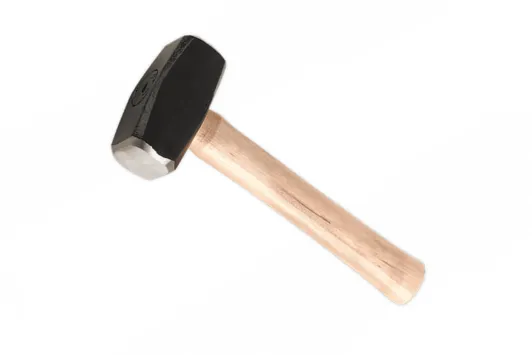
Also known as a drilling hammer, this tool bridges the gap between a standard hand hammer and a massive sledge.
- Common Applications: Striking star drills or masonry chisels, light concrete fracturing, and heavy mechanical dismantling in confined spaces.
- The Practical Reality: It pairs a heavy 2 to 4-pound head with a short, thick handle. This allows an engineer or mason to deliver significant crushing impact with a single hand, keeping the other hand free to steady the chisel or workpiece.
5. Cross Peen Hammer
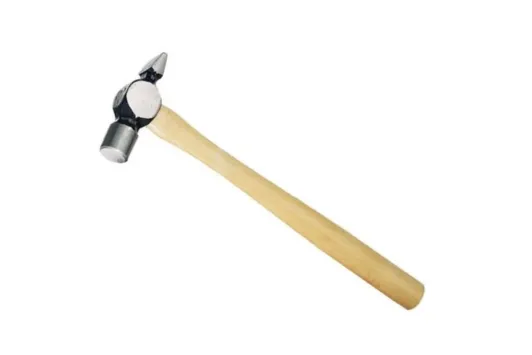
A specialized tool used extensively by custom fabricators, blacksmiths, and metal workers.
- Common Applications: Starting small tacks without pinching fingers, stretching panel steel, and forming custom metal bends.
- The Practical Reality: The wedge-shaped peen runs horizontally (perpendicular to the handle). When you strike hot or malleable metal with the peen, it forces the material to expand lengthwise along a single axis rather than flattening out in all directions.
6. Straight Peen Hammer
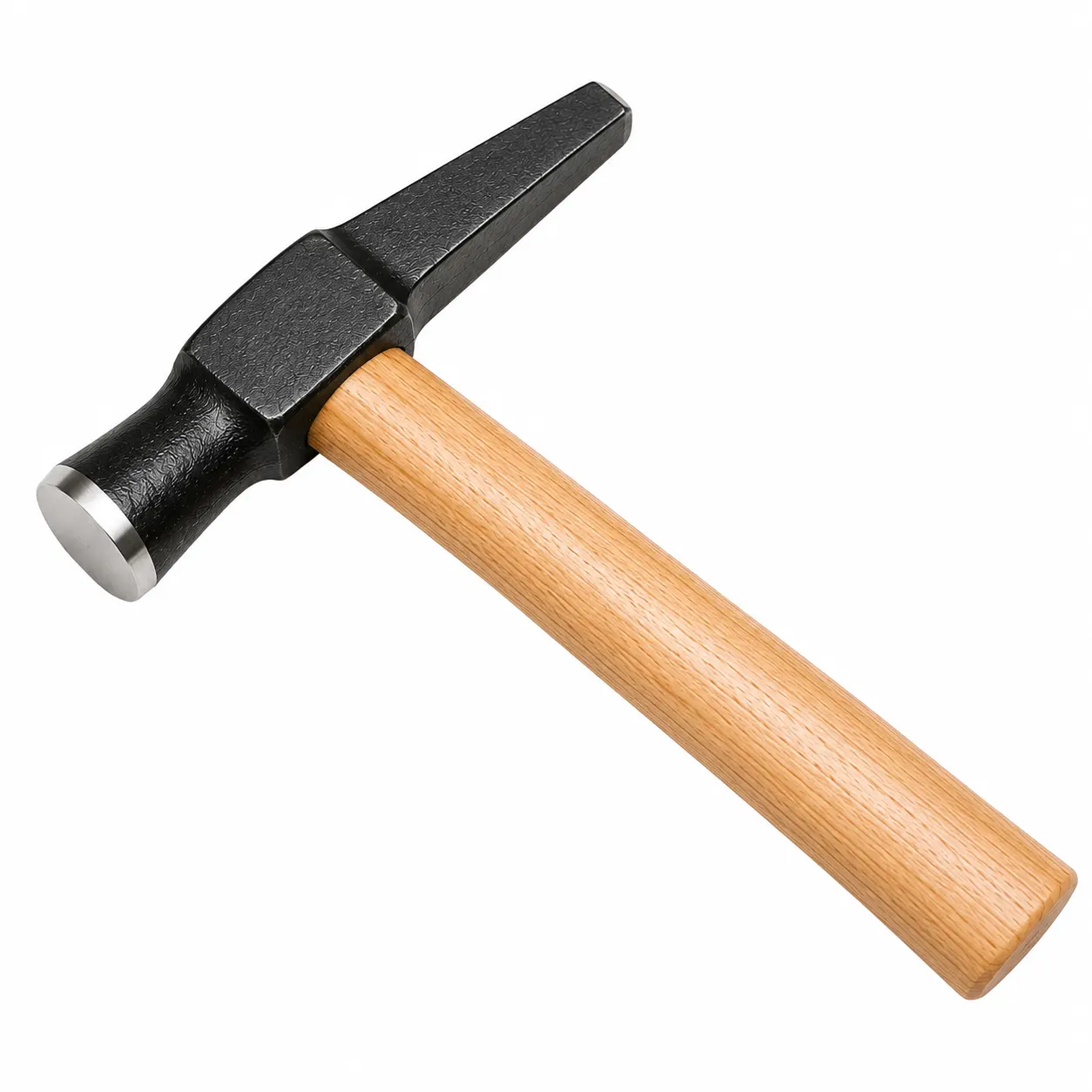
- Common Applications: Cabinet making, custom automotive body fabrication, and tracking crisp lines in sheet metal.
- The Practical Reality: Symmetrical to the cross peen, but the wedge runs vertically (parallel to the handle). This makes it much easier to strike accurately inside narrow metal channels or vertical grooves.
7. Masonry Hammer
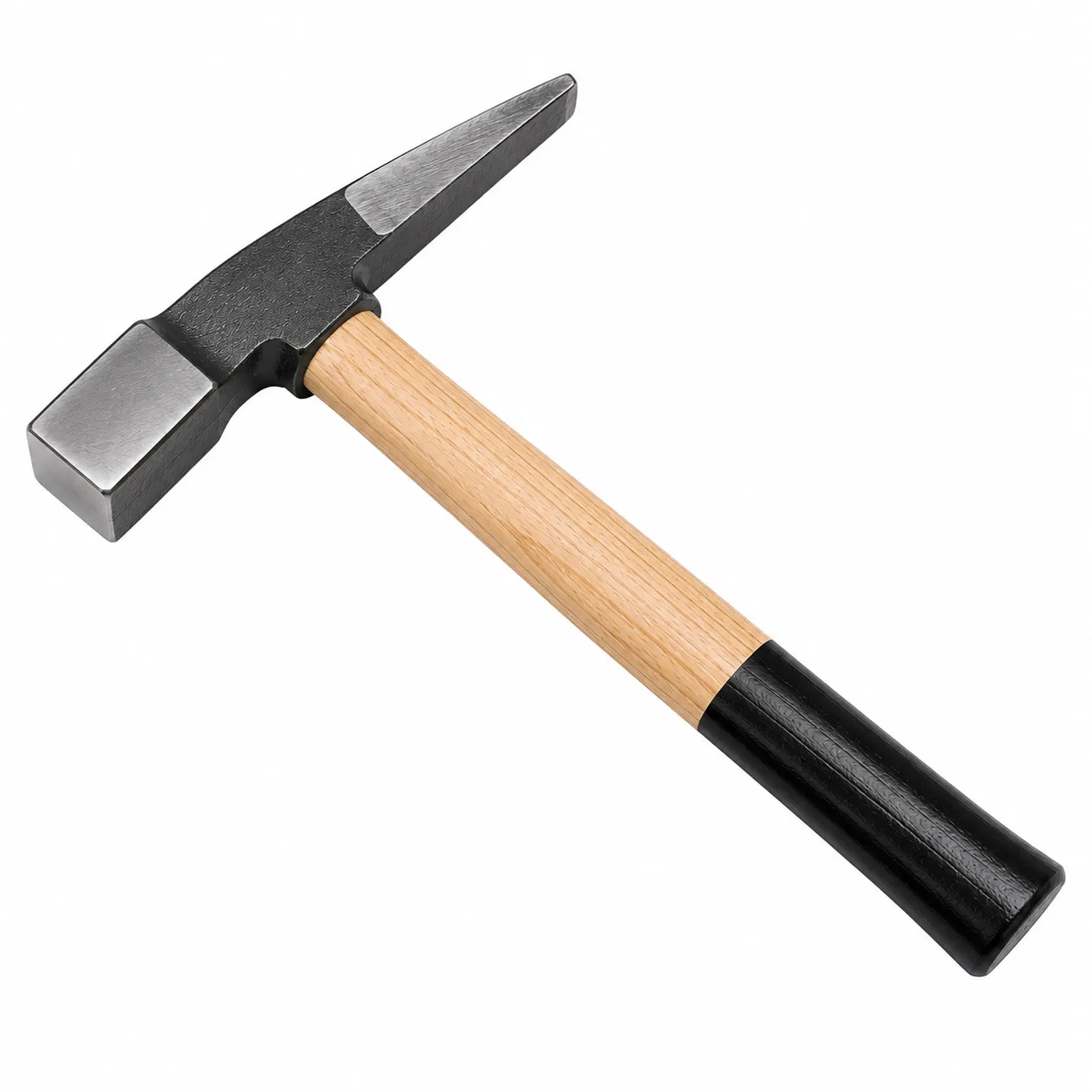
Also known as a brick hammer, this tool is highly targeted toward structural clay and stone work.
- Common Applications: Cleanly splitting bricks, dressing stone edges, clearing old mortar from joints, and scoring concrete pathways.
- The Practical Reality: It features a square face for striking masonry tools, paired with a long, sharp chisel-like blade on the reverse. The blade allows a bricklayer to score a clean line around a brick and snap it perfectly in half with a single sharp tap.
8. Dead Blow Hammer
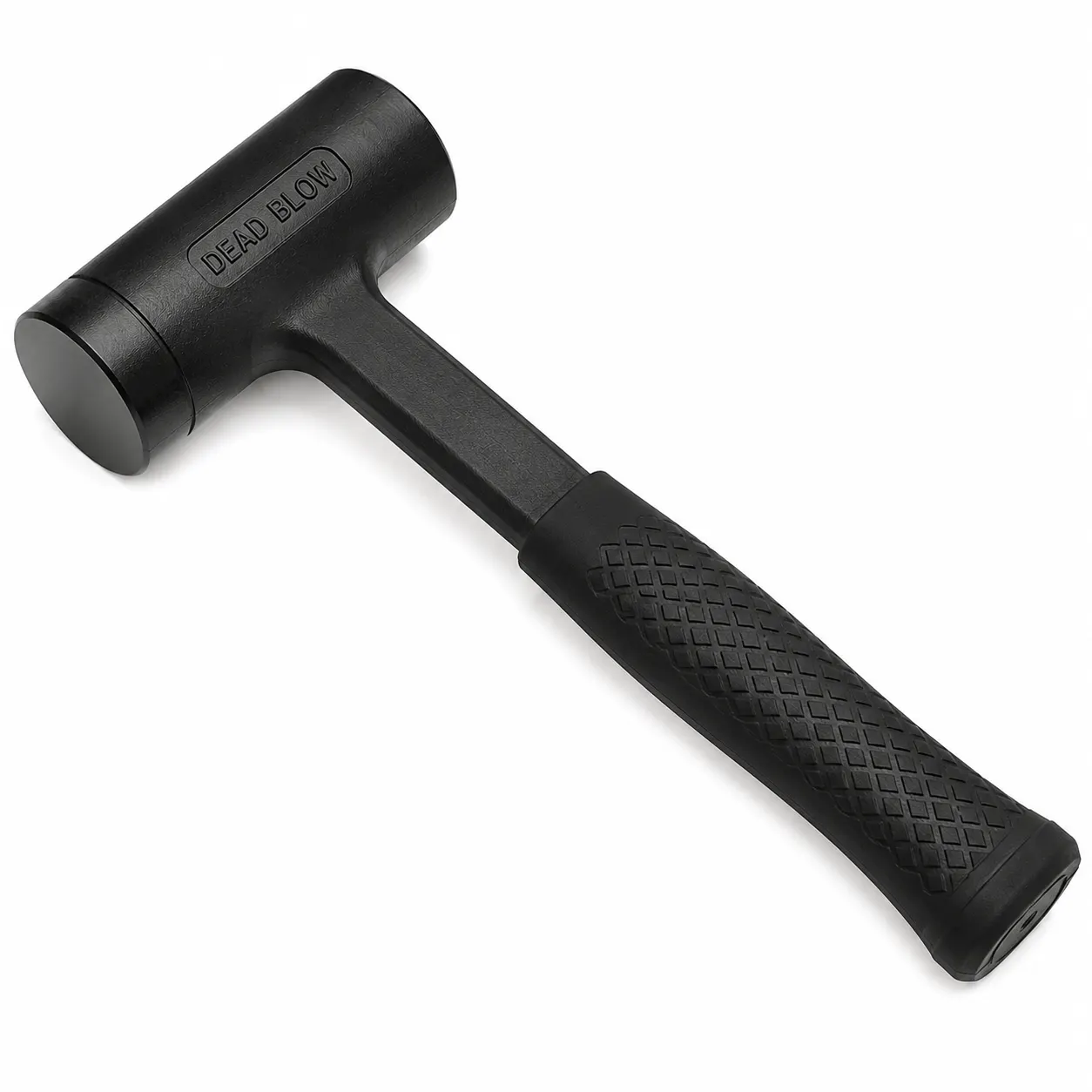
A specialized safety and assembly tool used heavily in transmission shops, machine maintenance, and precision manufacturing.
- Common Applications: Seating tight bearings, assembling engine components, adjusting heavy machinery alignments, and tapping finished parts together.
- The Practical Reality: The hollow polymer head is filled with loose steel shot. When the hammer hits the surface, the shot slides forward a fraction of a second later, driving the energy into the workpiece while completely dampening the rebound. Because it does not bounce back, it prevents accidental slips and protects fine surfaces from friction marks.
What is a Mallet and When Should You Use It?
A mallet is a soft-faced striking tool designed to deliver high driving force without fracturing, marring, or denting the target surface. Unlike standard steel hammers, mallets use low-density, shock-absorbing materials like vulcanized rubber, solid hardwood, or high-molecular-weight polymers for the entire striking head.
9. Rubber Mallet (Rubber Hammer)
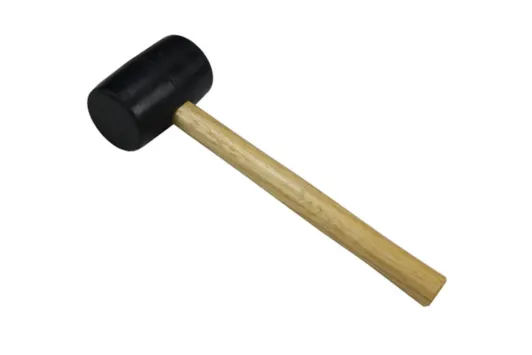
- Common Applications: Setting ceramic or porcelain tiles, adjusting interlocking floor planks, shaping thin sheet metal, and tapping wood joinery together.
- The Practical Reality: Tile installers and flooring professionals prefer a rubber mallet because the soft head compresses slightly upon impact. This action spreads the striking force across a wider surface area, allowing you to settle a tile firmly into the mortar bed without cracking its fragile edges or leaving permanent metal strike marks.
10. Wooden Mallet
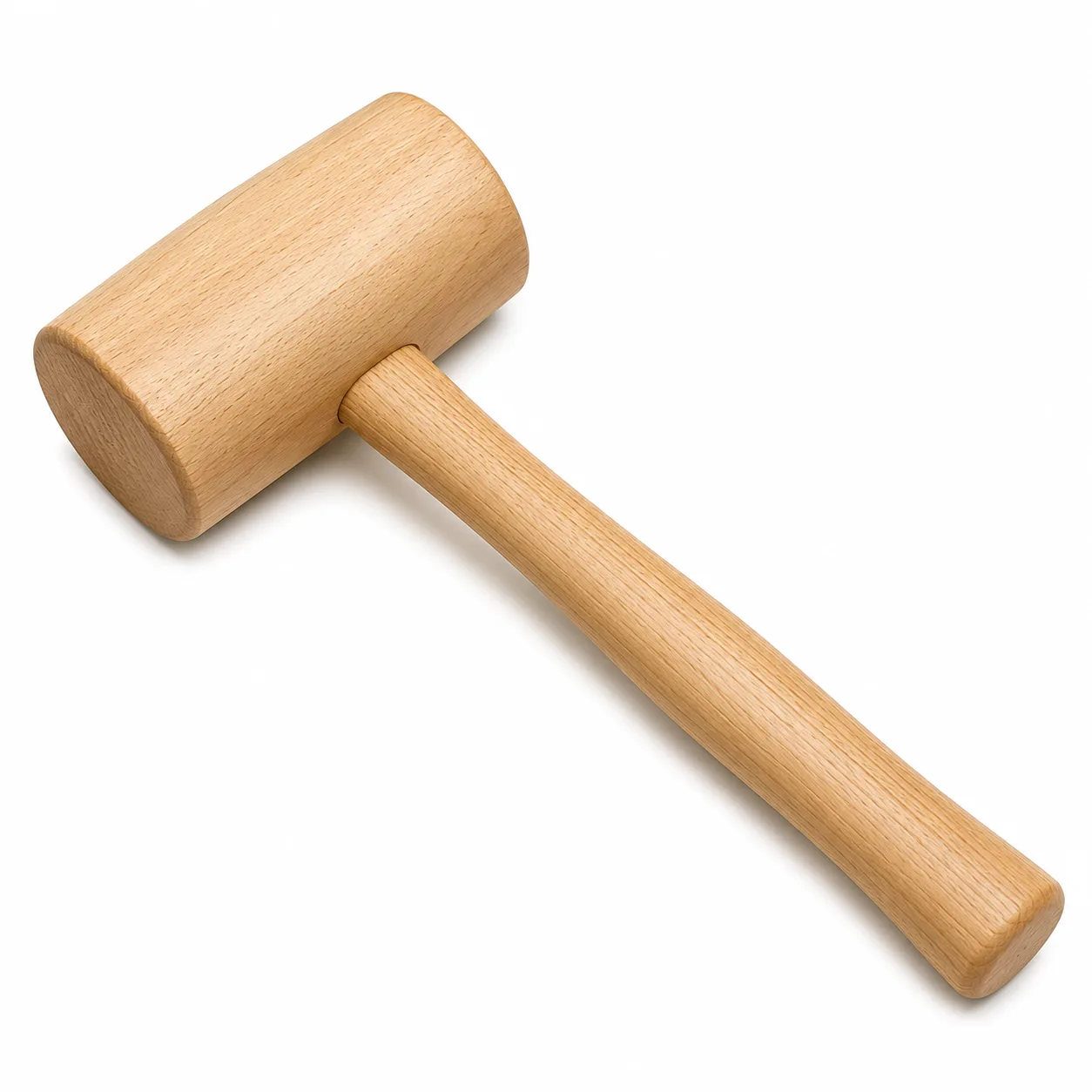
- Best For: Traditional timber joinery, striking wood-handled carving chisels, and driving dowels.
- The Practical Reality: Woodworkers use hardwood mallets because wood-on-wood contact preserves the tool’s life. Striking a premium wood-handled chisel with a steel hammer will quickly split or mushroom the handle; a wooden mallet delivers the necessary driving force while protecting your primary carving tools from premature wear.
Selection Matrix: Choosing a Hammer by Industry
When equipping a commercial garage or distributing toolkits to industrial users, refer to this professional selection framework:
| Profession | Primary Hammer Choice | Secondary / Specialty Choice | Key Selection Criteria |
| General Carpenter | 16 oz Smooth Face Claw | 20 oz Milled Face Framing Hammer | Balance, swing velocity, and clean fastener pulling capacity. |
| Stone & Brick Mason | Masonry Hammer | 3 lb Club Hammer (for chisels) | High-carbon forged steel durability and sharp scoring edges. |
| Industrial Machinist | Ball Peen Hammer | Dead Blow Hammer (for assembly) | Hardened face to prevent spalling and zero-rebound properties. |
| Sheet Metal Fabricator | Cross Peen Hammer | Rubber or Plastic Mallet | Non-marring surface protection and directional metal stretching. |
| Demolition Contractor | 12 lb Long-Handle Sledge | 4 lb Club Hammer | Total head weight and premium shock-dampening handle materials. |
Conclusion
A hammer is more than just a crude weights-and-measures tool; it is an extension of a craftsman’s hands. Forcing a standard claw hammer to manage the tasks of a dedicated metalworking ball peen or a delicate tiling mallet will inevitably lead to ruined workpieces, damaged tools, and unnecessary physical strain.
When selecting hammers for professional or industrial use, focus heavily on structural build quality, handle ergonomics, head material, and application-specific designs. Choosing your inventory from an established manufacturer can significantly improve job site safety, mechanical productivity, and long-term tool durability. Professional-grade hammers from established manufacturers are designed to withstand demanding industrial environments and repetitive daily use. Sourcing tools from catalogs like JCBL Hand Tools guarantees that your fleet carries forged striking gear engineered strictly for heavy enterprise deployment.
Frequently Asked Questions
The Claw Hammer is the most widely used hammer worldwide. Its dual-purpose design makes it the default choice for residential maintenance, basic woodworking, framing, and interior construction.
A ball peen hammer is primarily used for metalworking applications. It helps shape sheet metal, expand rivets, harden metal surfaces, and strike punches or cold chisels without damaging the hammer face.
A rubber hammer is professionally referred to as a Rubber Mallet.
A massive, heavy-duty hammer used for high-impact crushing is called a Sledge Hammer (for two-handed demolition) or a Club Hammer / Engineer’s Hammer (for heavy, one-handed workshop work).
Small, lightweight hammers used for precise, intricate tasks are generally called Tack Hammers (used in upholstery for small pins) or Jeweler’s Hammers (used for high-precision metal forming).
A brass hammer is a non-sparking, non-marring tool used in explosive environments, oil rigs, and high-precision automotive assembly. It delivers significant force but deforms slightly upon contact, completely protecting hard steel components or machinery gears from cracking or sparking.
Related Post

How to Use a Hammer Safely?
Citing the inevitability, hammers seem to be quite a basic tool that features a wide [...]
Club Hammer vs. Sledge Hammer: Key Differences & Uses
In heavy-duty demolition, masonry, and construction work, mechanical leverage and impact energy are everything. When [...]
How to Choose the Right Crow Bar: Size & Type Guide
Crowbars may seem like a basic tool, but their power, versatility, and engineering make them [...]