Claw Hammer Vs Ball Pein Hammer: A Complete Guide to Differences & Uses

Whether you are assembling furniture, setting up a carpentry workshop, or performing industrial automotive maintenance, choosing the correct striking tool determines the safety and accuracy of your work. Two of the most ubiquitous hand tools found across residential toolboxes and industrial machine shops are the claw hammer and the ball pein hammer (often spelled ball peen or ball pin).
While they might look similar at a glance, they are engineered from completely different grades of steel and serve entirely separate trades: carpentry and metalworking. Using one in place of the other is not just inefficient; it can destroy your materials or chip the tool face. This comprehensive guide details their mechanical differences, metallurgy, core applications, and selection criteria.
Tool Anatomy: Understanding the Structural Differences
To fully grasp why these tools cannot be used interchangeably, look at their core design profiles.
1. What Is a Claw Hammer?
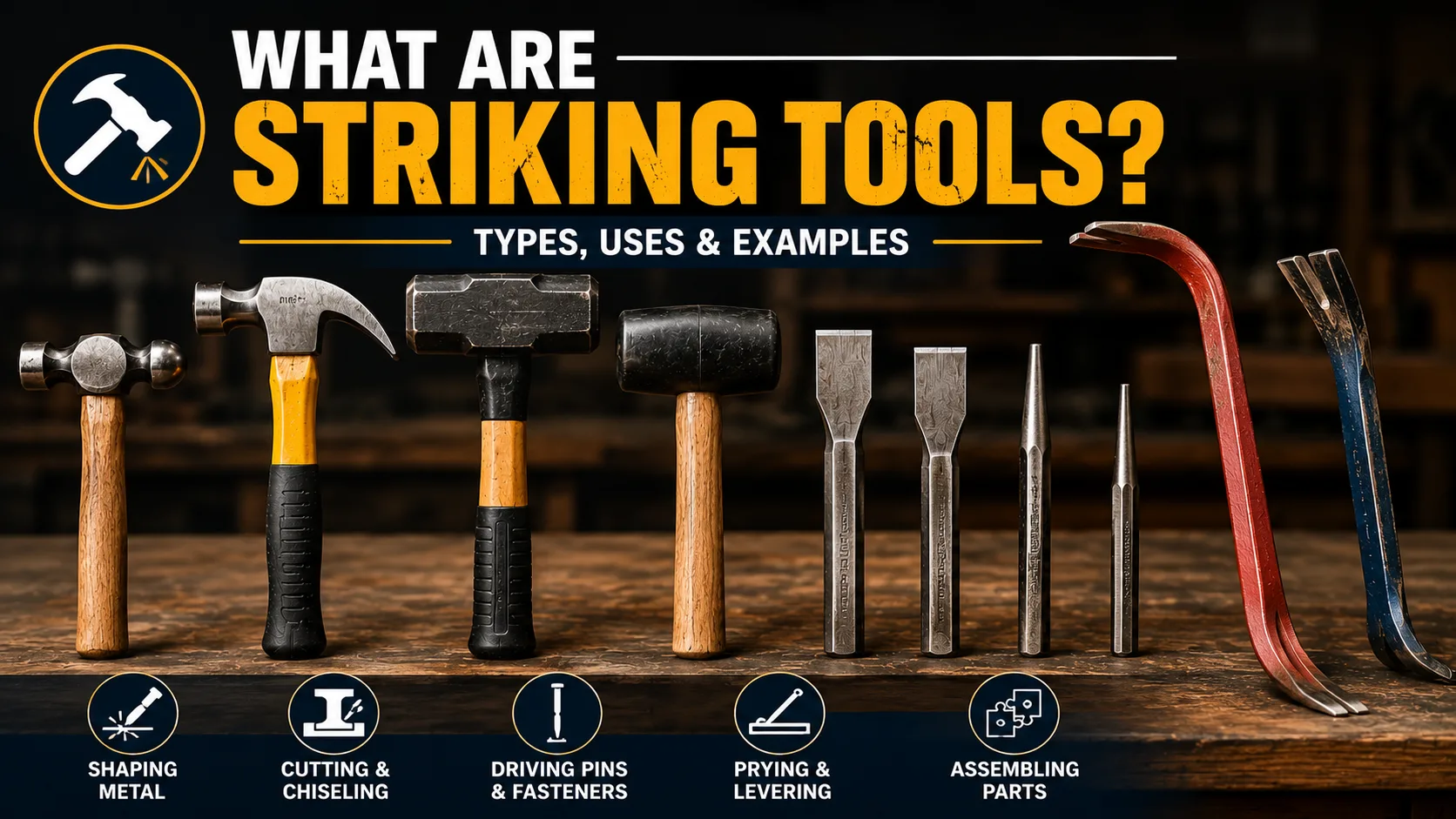
A claw hammer is the standard trade tool for woodworking and residential construction. Its forged head features a flat, smooth striking face on one side and a distinct, two-pronged curved claw on the opposite side. The primary purpose of the claw is to leverage and extract nails from timber.
2. What Is a Ball Pein Hammer?
A ball pein hammer (also classified as a machinist hammer) is an engineering tool designed exclusively for metalwork. It features a flat striking face on one side and a smooth, hemispherical rounded ball profile (the pein) on the other. This pein is designed to forge, bend, shape, and harden metal components.
Core Head-to-Head Comparison Table
| Design Feature | Woodworking Claw Hammer | Industrial Ball Pein Hammer |
| Rear Head Design | Dual-pronged curved or straight claw | Solid, rounded ball-shaped pein |
| Metallurgy / Hardness | Medium-carbon steel (optimized for nails) | Forged high-carbon steel (hardened for metal-on-metal) |
| Striking Face Shape | Slightly crowned or textured waffle-face | Slightly convex, compact, and ultra-hard |
| Primary Industry | Carpentry, DIY woodworking, framing | Automotive, machining, industrial fabrication |
| Main Functions | Driving and pulling out carbon-steel wood nails | Riveting, metal stress-relieving, striking punches/chisels |
| Safety with Chisels | Hazardous; head can fracture or chip | Safe; designed to strike high-tensile steel tools |
What Is a Claw Hammer Used For?
Claw hammers are explicitly designed to interact with wood and softer fasteners. Their primary industrial applications include:
- Driving Fasteners: Delivering high-velocity impact to sink common wire nails, finishing nails, and framing spikes smoothly into timber boards.
- Nail Extraction: Using the curved dual prongs to slide under a nail head, utilizing the head’s rockering curve as a high-leverage fulcrum to pull the shank straight out of the wood.
- Prying and Demolition: Ripping apart joined timber elements, lifting floorboards, and light-duty material dismantling.
Pro Tip: Framing hammers are specialized heavy claw hammers featuring a straight claw (rip claw) and a checkered “waffle” striking face to prevent the tool from slipping off large framing nails.
What Is a Ball Pein Hammer Used For?
Because metalworking requires reshaping materials without tearing them, the ball pein profile distributes striking forces differently:
- Riveting Operations: Flattening and expanding the solid tail end of raw metal rivet pins to create permanent structural mechanical joints.
- Metal Peening: Striking sheet metal surfaces systematically to close micro-cracks, relieve localized internal welding stresses, and mechanically harden the metal’s outer boundary.
- Driving Mechanical Tools: Striking the strike caps of cold chisels, star drills, center punches, and pin ejectors cleanly without expanding or cracking the hammer face.
- Gasket & Component Contouring: Tapping metal sheets against flanges or sharp contours to precisely punch out custom high-pressure engine gaskets.
The Metallurgy Factor: Why Interchangeability Causes Tool Failure
The hidden difference between a claw hammer and a ball pein hammer lies in their heat treatment and metallurgical carbon content.
- Claw hammers are made from steel hardened to a degree optimized for striking softer carbon-steel wood nails. If you strike a hardened tool steel chisel or a tempered steel anvil with a claw hammer, the structural face can work-harden rapidly, leading to micro-fractures, metal deformation, or dangerous flying steel shards.
- Ball pein hammers undergo specialized differential tempering. Their high-carbon steel head is intentionally hardened to be tougher than cold chisels and structural rivets, allowing safe, repeatable metal-on-metal striking without head degradation.
Conclusion
Selecting the correct striking tool prevents workspace injuries, preserves hand safety, and ensures professional-grade accuracy. For all timber framing, residential construction, and nail-pulling tasks, the carpentry claw hammer remains the absolute industry standard. Conversely, for mechanical assembly, metal component fabrication, and riveting, the hardened steel ball pein hammer is an irreplaceable workshop necessity.
For commercial fabrication shops, maintenance facilities, and industrial toolrooms looking for premium tool lifespans and exact head balance, integrating high-tensile striking lines from JCBL Hand Tools ensures complete compliance with global safety standards and peak mechanical durability under heavy operational loads.
FAQs
No, you should never use a claw hammer for metalworking tasks. Claw hammers are made from softer medium-carbon steel which can split, chip, or fracture dangerous shards when struck against hardened metals like chisels, anvils, or heavy machinery components.
The primary advantage of a ball peen hammer is its dual-purpose metalworking design: its ultra-hard high-carbon forged steel head safely handles high-impact metal-on-metal contact, while its rounded hemispherical peen allows users to expand rivets, contour sheet metal, and harden surfaces without cutting through the material.
Claw hammers are generally specified between 16 oz to 20 oz for standard carpentry, up to 24 oz for heavy framing work. Ball pein hammers feature a wider specialized range, spanning from small 4 oz and 8 oz heads for precision instrument toolmaking up to heavy 32 oz heads for structural metal fabrication.
The claw on a hammer is specifically used as a lever to extract embedded fasteners from wood. By slipping the dual-pronged V-slot under a bent or misplaced nail head and pulling the handle backward, the curved head acts as a mechanical fulcrum to pull the nail straight out.
Related Readings: