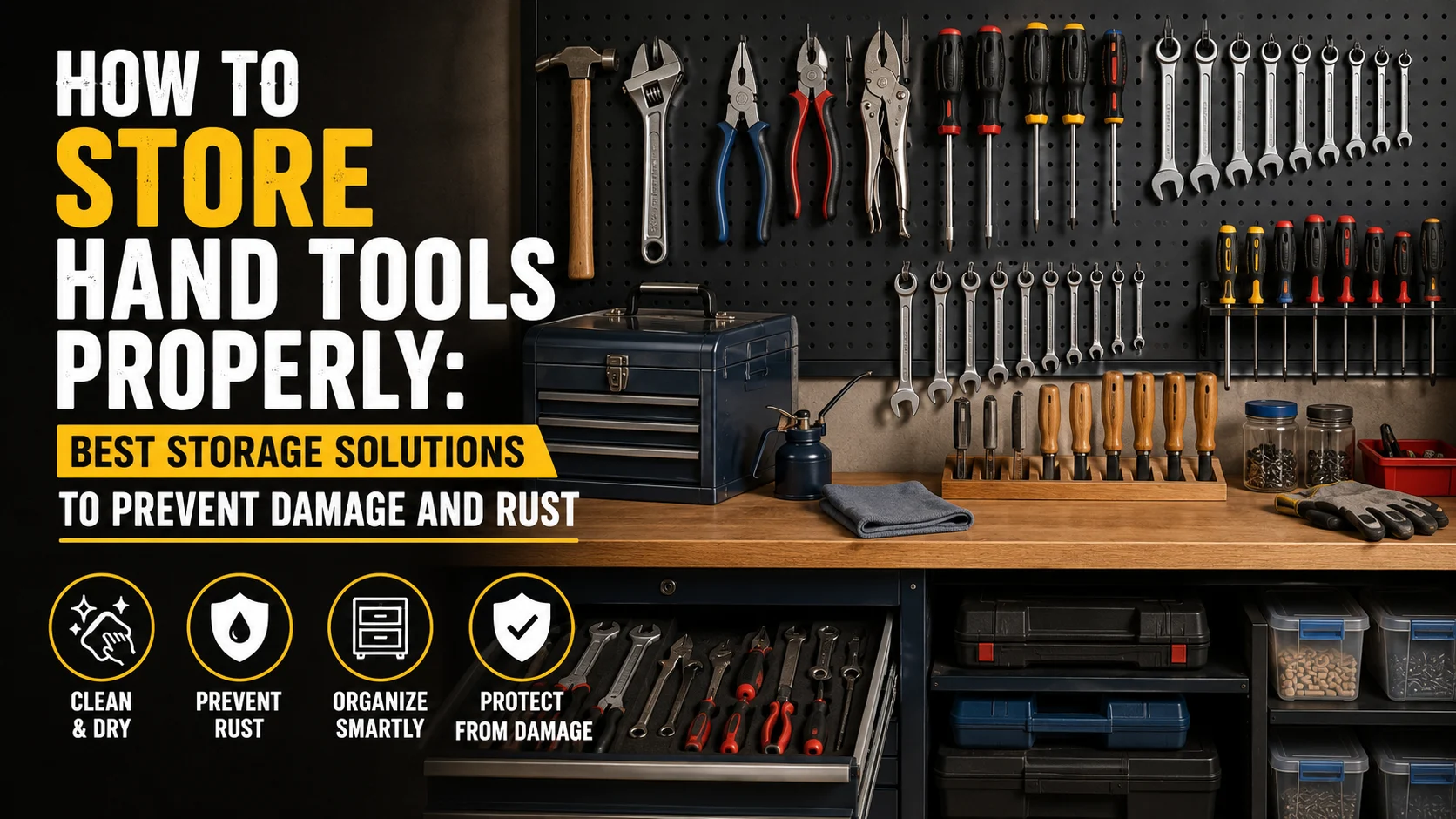
How to Store Hand Tools Properly: Best Storage Solutions to Prevent Damage and Rust
- What Is the Best Way to Store Hand Tools?
- Why Proper Hand Tool Storage Matters
- Clean and Dry Tools Before Storage
- How to Prevent Hand Tools from Rusting During Storage
- Tool-Specific Storage Matrix
- Best Hand Tool Storage Solutions
- Common Tool Storage Mistakes to Avoid
- Storage Tips for Professional Workshops and Businesses
- Conclusion
- FAQs
Hand tools are essential for construction, maintenance, manufacturing, automotive work, and everyday repairs. Whether you manage a professional workshop, maintain tools for a business, or simply handle DIY projects at home, proper tool storage plays a major role in protecting your investment.
Poor storage habits can lead to rust, damaged handles, misplaced tools, and unnecessary replacement costs. By using the right storage methods and maintaining an organized workspace, you can extend tool life, improve safety, and keep your tools ready whenever they are needed.
What Is the Best Way to Store Hand Tools?
The best way to store hand tools is to clean and dry them after use, apply rust protection when necessary, and keep them in a dry, organized storage system such as a toolbox, tool cabinet, pegboard, or tool cart. Never store tools directly on damp concrete floors, and keep sharp cutting tools isolated so their edges don’t get damaged.
Why Proper Hand Tool Storage Matters
Many people focus on buying quality tools but overlook how they are stored. Even premium hand tools can deteriorate quickly if exposed to moisture, dust, or poor storage conditions.
Proper storage helps:
- Prevent rust and corrosion: Keeps metal parts safe from damp air.
- Extend tool lifespan: Stops premature wear and tear.
- Improve workplace safety: No loose tools lying around to cause accidents.
- Reduce replacement costs: Less money spent buying the same tools again.
- Save time when locating tools: No more wasting hours searching for a missing wrench.
- Protect cutting edges: Keeps chisels, blades, and sharp teeth from getting dull.
For workshops, distributors, and retailers, organized storage also helps improve daily productivity and makes inventory management a breeze.
Clean and Dry Tools Before Storage
One of the most effective ways to protect hand tools is to clean them before putting them away. Storing dirty or damp tools can accelerate rust and shorten their service life.
Your Quick Pre-Storage Routine:
- Remove dirt and dust: Wipe away any metal shavings, sawdust, or grease.
- Dry tools completely: Sweat from your hands or moisture in the air can cause rust overnight. Wipe them down with a dry cloth.
- Pay attention to joints: Make sure moving parts (like the pivot point on pliers) are completely dry.
Cleaning tools before storage is one of the most effective maintenance practices and helps reduce rust, wear, and long-term damage.
How to Prevent Hand Tools from Rusting During Storage
Rust is the biggest enemy of any steel tool. If you operate in a humid area or an uninsulated garage, you need to be a bit proactive to keep your tools shiny and functional.
- Apply a protective oil coat: Wipe a light layer of machine oil, mineral oil, or standard anti-rust spray over the metal parts before long-term storage.
- Use moisture absorbers: Keep silica gel packs inside your closed toolboxes to absorb dampness. For even better protection, you can use VCI (Vapor Corrosion Inhibitor) brown paper sheets or chips inside your drawers. They release a clean vapor that stops rust from forming on steel.
- Avoid damp floors: Never store your toolboxes or loose tools directly on concrete floors, as concrete constantly absorbs and releases moisture from the ground.
Tool-Specific Storage Matrix
Different types of tools need different care to stay in top shape. Here is a quick guide on how to store them by category:
| Tool Type | Best Storage Solution | Rust Prevention Tip | Edge & Handle Care |
| Striking Tools (Hammers, Sledges) | Pegboard or heavy-duty drawers. | Wipe the metal head with a little oil. | Keep wooden handles away from extreme heat so they don’t dry out and crack. |
| Cutting Tools (Chisels, Saws, Files) | Slotted wooden racks or foam inserts. | Coat with mineral oil or paste wax. | Important: Never let sharp edges rub against other metal tools. Use protective caps. |
| Driving & Holding (Spanners, Pliers) | Magnetic strips or drawer dividers. | Quick wipe with an anti-rust spray. | Store them in size order so you can spot missing tools instantly. |
Best Hand Tool Storage Solutions
Different workspaces require different storage methods. The ideal solution depends on the number of tools you have, available space, and how often the tools are used.
1. Toolboxes and Tool Bags
Toolboxes and tool bags are practical options for professionals who frequently transport tools between locations. They offer great portability, organized compartments, and protection from dust and moisture. They are ideal for technicians, contractors, electricians, and maintenance professionals.
2. Tool Cabinets and Drawer Systems
For permanent workshops, garages, and retail stores, tool cabinets provide secure and organized storage. They offer better protection, higher storage capacity, and easier inventory tracking. Using drawer dividers or custom foam inserts helps keep tools separated and protected from scratching each other.
3. Wall-Mounted Storage Systems
Pegboards, hooks, and magnetic strips allow tools to be stored vertically. This solution gives you quick access to frequently used tools, better visibility, and reduces workspace clutter. This works particularly well in smaller workshops and garages where floor space is limited.
4. Roll-Around Tool Carts
Tool carts provide both storage and mobility. They are especially useful in manufacturing units, automotive workshops, and large maintenance departments where you need to move your tools with you from one machine to another.
Common Tool Storage Mistakes to Avoid
Even the most expensive storage system cannot protect your tools if used incorrectly. Avoid these common habits to keep your tools lasting longer:
- Storing tools while they are still wet: This is the fastest way to ruin a good tool.
- Leaving tools outdoors: Rain, night dew, and humidity will cause rust within days.
- Throwing tools loosely into drawers: Jumbling tools together causes sharp edges to chip and surfaces to get damaged.
- Ignoring early rust signs: If you see small red spots, clean them immediately before the rust spreads deep into the metal.
Storage Tips for Professional Workshops and Businesses
For businesses, retailers, and distributors that maintain large tool inventories, storage should be treated as part of an overall maintenance strategy.
- Assign dedicated locations: Every tool should have a fixed home (use labels or outline drawings on pegboards).
- Train your team: Ensure everyone knows the standard rule of cleaning and returning tools to their proper place after every shift.
- Perform routine inspections: Check your inventory quarterly to look for tool damage or signs of moisture in the storage room.
- Implement a tracking system: Use simple tag systems or organized storage zones to reduce tool loss and replacement costs.
Conclusion
Proper hand tool storage is about more than organization—it helps protect tool quality, improve safety, and extend service life. Whether you use a portable toolbox, a professional tool cabinet, a pegboard system, or a custom storage setup, the goal is the same: keep tools clean, dry, protected, and easy to access.
By combining smart storage practices with regular maintenance, users can reduce replacement costs, improve efficiency, and ensure their tools remain ready for reliable performance whenever needed.
FAQs
Hand tools should be cleaned, dried, and stored in a dry, organized location such as a toolbox, cabinet, pegboard, or tool cart. Proper storage protects tools from rust, damage, and unnecessary wear.
Using dedicated storage systems such as toolboxes, cabinets, and wall-mounted organizers helps prevent tools from striking each other, reducing wear and accidental damage.
Clean tools after use, keep them dry, prevent rust, inspect them regularly, and store them in appropriate storage systems. Consistent care significantly extends tool lifespan.
Store tools in low-humidity environments, keep them clean and dry, use moisture absorbers like silica gel when necessary, and apply protective oil coatings where appropriate.
Wall-mounted pegboards, magnetic strips, compact tool cabinets, and portable toolboxes are excellent storage options for workshops with limited space.