The Ultimate Beginner DIY Tool Kit: Best Tools for Home Repair & Maintenance
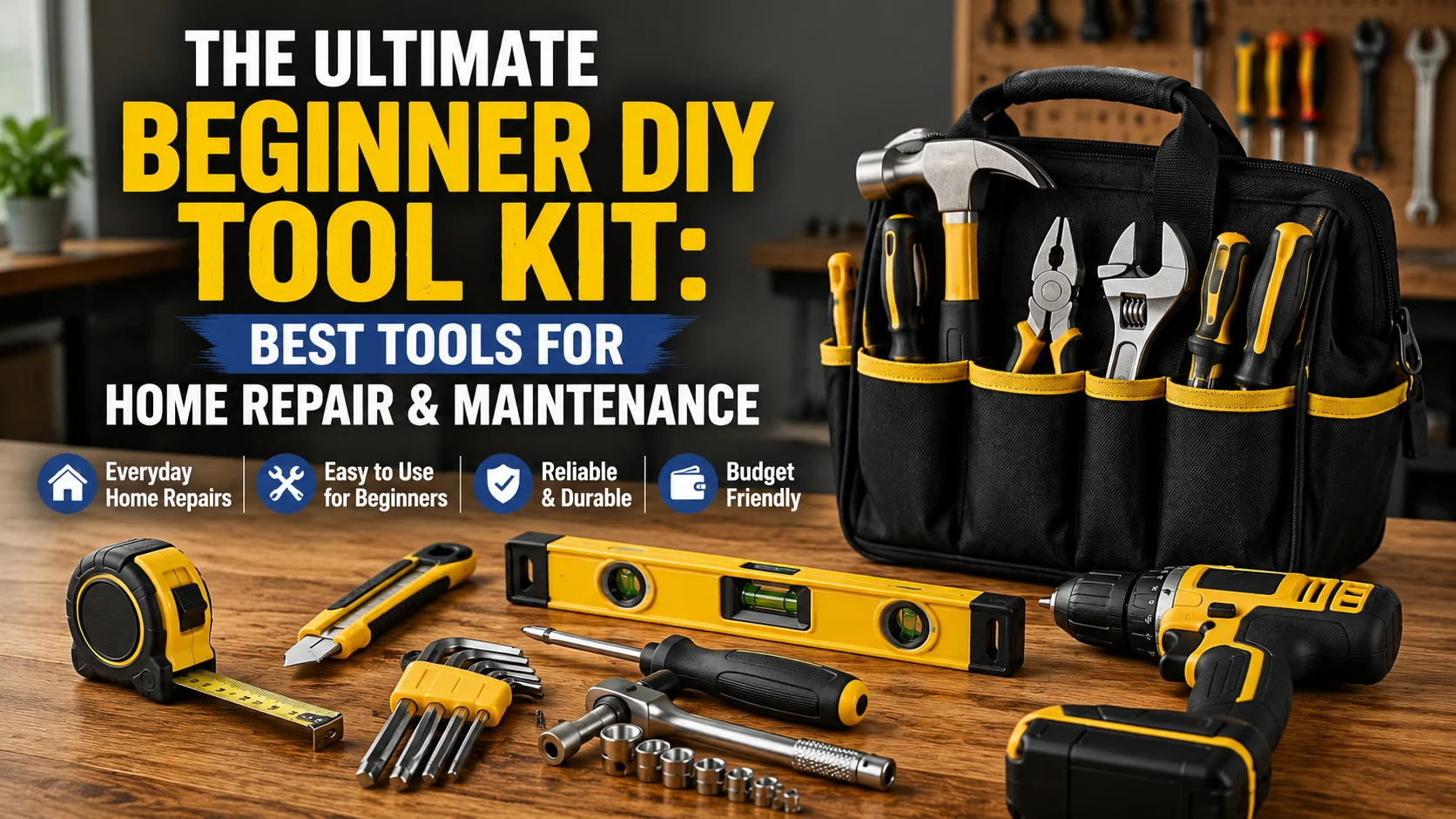
If you recently moved into a new home or are starting DIY projects for the first time, building a reliable DIY toolkit is one of the smartest decisions you can make. You do not need expensive professional equipment to handle everyday repairs. A compact collection of essential home repair tools can help you fix common household problems quickly, safely, and efficiently.
Whether you want to assemble furniture, hang shelves, tighten loose hardware, or handle small repairs, the right beginner DIY tools make home maintenance much easier.
The Essential DIY Tools Every Beginner Should Have
When building a beginner DIY toolkit, focus on versatile and durable tools that can handle everyday home repair tasks.
1. Claw Hammer
A claw hammer is one of the most important tools for beginner DIY projects. It is used for driving nails into walls, assembling furniture, and removing nails during repairs.
A comfortable grip and balanced weight make it easier to use for everyday home maintenance tasks.
2. Screwdriver Set
A screwdriver set is essential for tightening and loosening screws in furniture, cabinets, appliances, and fixtures.
Every beginner toolkit should include:
- Phillips screwdrivers
- Flathead screwdrivers
Magnetic tips can make repair work easier, especially in tight spaces.
3. Adjustable Wrench
An adjustable wrench helps tighten or loosen nuts and bolts of different sizes using a single tool.
It is useful for:
- Minor plumbing repairs
- Furniture assembly
- Bicycle adjustments
- Basic home maintenance
Choose a wrench with a smooth adjustment mechanism and comfortable grip.
4. Combination Pliers
Combination pliers are versatile tools used for gripping, twisting, bending, and cutting wires or small materials.
They are commonly used for:
- Pulling nails
- Holding small parts
- Wire cutting
- General repair work
Anti-slip handles improve comfort and safety during use.
5. Measuring Tape
A measuring tape is essential for accurate measurements during DIY projects and installations.
It helps with:
- Furniture placement
- Wall mounting
- Shelf installation
- Home improvement planning
A locking feature and clear markings make measurements easier and more accurate.
6. Utility Knife
A utility knife is useful for cutting cardboard, rope, plastic packaging, wallpaper, and other materials during repair work.
Retractable blade designs are safer and more convenient for beginners.
7. Cordless Drill
A cordless drill is one of the most practical DIY tools for beginners. It helps with drilling holes, installing shelves, assembling furniture, and fastening screws quickly.
A lightweight drill with adjustable speed settings is ideal for basic home repair tasks.
8. Hex Key Set
A hex key set, also called an Allen key set, is commonly used for assembling furniture and tightening socket-head screws.
It is especially useful for:
- Flat-pack furniture assembly
- Bicycle maintenance
- Hardware adjustments
A foldable set helps keep different sizes organized.
9. Spirit Level
A spirit level helps ensure shelves, wall frames, and mounted items are straight and properly aligned.
It is useful for:
- Hanging frames
- Shelf installation
- Wall décor projects
- DIY home improvement work
Compact spirit levels are perfect for beginner DIY toolkits.
10. Socket Set
A socket set helps tighten and remove nuts and bolts more efficiently than standard hand tools.
It is commonly used for:
- Furniture repairs
- Home maintenance
- Mechanical adjustments
- Basic automotive work
A starter socket set with common sizes is enough for most beginners.
How to Build a DIY Toolkit on a Budget
You do not need to buy every tool at once. Start with the essentials and expand your toolkit gradually as your DIY projects grow.
Budget-Friendly Tips
- Focus on versatile tools first
- Buy durable tools instead of the cheapest options
- Choose comfortable, easy-to-use designs
- Store tools properly to increase lifespan
- Add specialized tools only when needed
A small collection of reliable tools is more useful than a large collection of low-quality equipment.
Common DIY Mistakes Beginners Make
Many beginners buy unnecessary tools or use the wrong equipment for simple repairs.
Avoid these common mistakes:
- Buying too many tools initially
- Using the wrong tool for the job
- Ignoring safety equipment
- Skipping measurements before drilling
- Choosing poor-quality tools
- Buying uncomfortable tools with weak grip
Starting with practical essentials is the best way to build a reliable DIY toolkit.
Essential DIY Toolkit Checklist
Before starting home repairs, make sure your toolkit includes:
- Claw hammer
- Screwdriver set
- Adjustable wrench
- Combination pliers
- Measuring tape
- Utility knife
- Cordless drill
- Hex key set
- Spirit level
- Socket set
These tools can handle most beginner-friendly home repair and maintenance tasks.
Final Thoughts
Building a beginner DIY toolkit does not have to be expensive or complicated. Starting with essential home repair tools allows homeowners to handle everyday maintenance tasks, complete simple DIY projects, and manage small repairs confidently.
By choosing reliable and practical tools, you can build a toolkit that supports long-term home maintenance and beginner-friendly DIY work.
FAQs
Every homeowner should have a hammer, screwdriver set, pliers, adjustable wrench, measuring tape, utility knife, drill, and basic fastening tools for everyday home repairs.
The best DIY tools for beginners are versatile hand and power tools used for common home repairs, furniture assembly, and maintenance work.
Basic home repairs usually require a hammer, screwdrivers, pliers, wrench, measuring tape, utility knife, and cordless drill.
A cordless drill is one of the most useful beginner DIY tools because it helps with drilling, fastening, furniture assembly, and wall installations.
Related Readings
Related Post