What is a Ring Spanner? Types, Uses, and Benefits
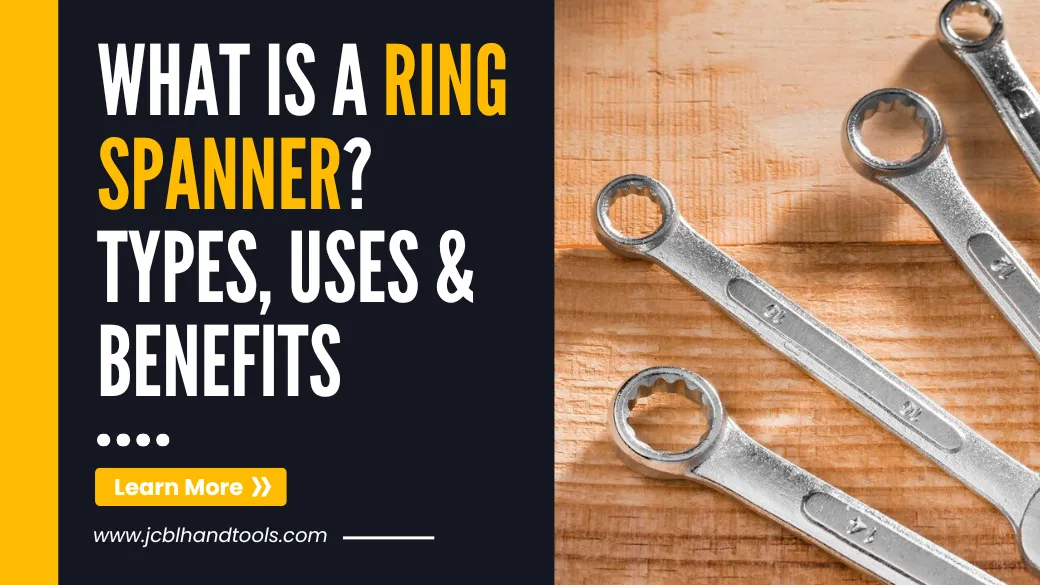
A ring spanner is a hand tool with a closed circular (ring-shaped) head that grips nuts and bolts from all sides. This design provides maximum contact, higher torque, and minimal slipping, making it ideal for precision fastening in automotive, industrial, and mechanical applications.
What Is A Ring Spanner?
A ring spanner is a precision-engineered tool used to tighten or loosen fasteners with greater control, safety, and efficiency. Unlike open-end spanners, which grip only two sides of a fastener, a ring spanner encloses the nut or bolt completely, distributing force evenly across multiple contact points.
This results in:
- Reduced risk of slipping
- Lower chances of rounding off fasteners
- Improved torque application
Most professional-grade ring spanners are manufactured using drop-forged chrome vanadium steel, which offers:
- High strength under load
- Resistance to corrosion
- Long operational life in demanding environments
Because of these properties, ring spanners are widely trusted by mechanics, engineers, technicians, and serious DIY users.
How Does a Ring Spanner Work?
A ring spanner works by encircling the fastener head, ensuring a tight and uniform grip.
Key Working Principle:
- The ring (6-point or 12-point) fits snugly over the fastener
- Force is distributed evenly across flat surfaces
- This reduces stress concentration and improves torque efficiency
This mechanism allows users to apply a higher force with better control, especially on tight or rusted bolts.
Types of Ring Spanners
Ring spanners are available in multiple designs, each engineered for specific applications, access conditions, and torque requirements. Below is a structured breakdown of the most common types.
1. Single Ring Spanner
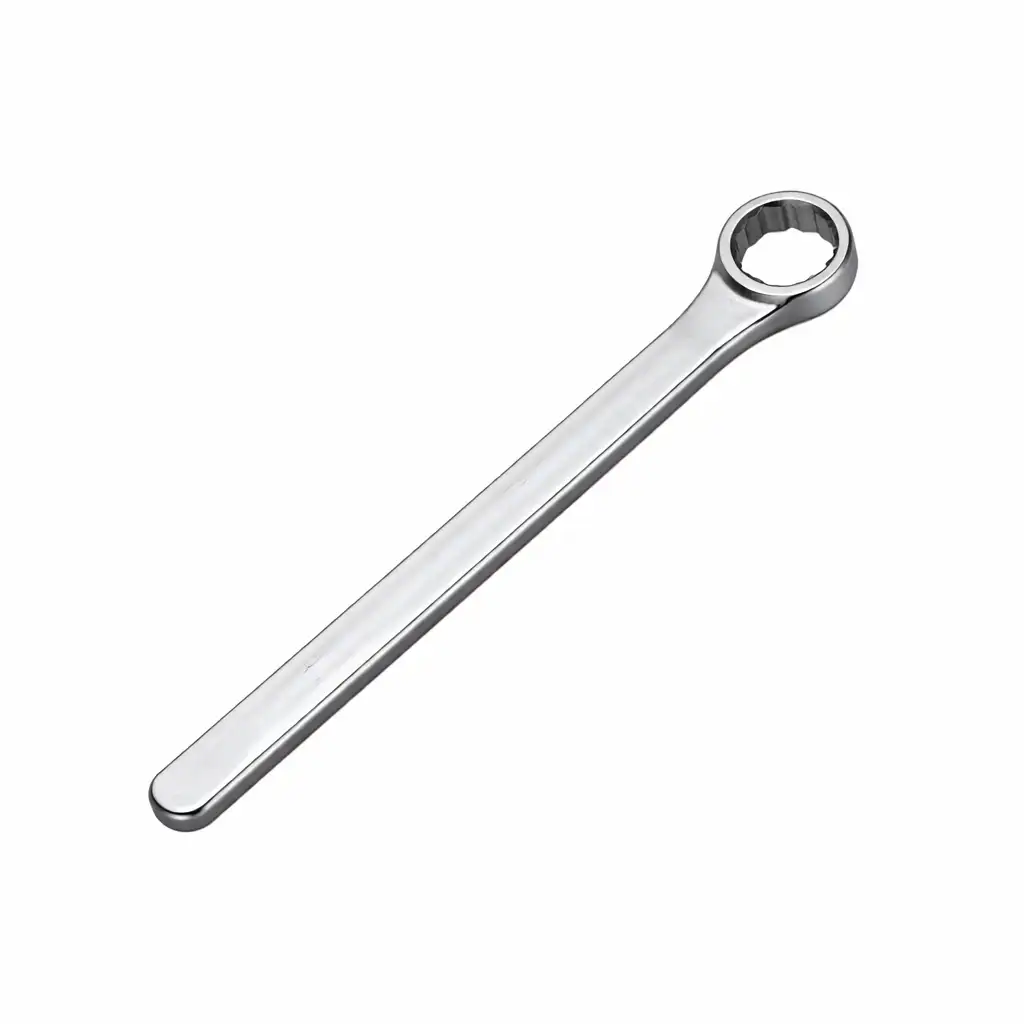
A single ring spanner features one enclosed ring head designed for precise and controlled fastening tasks.
Key Features:
- Single size configuration
- Compact and lightweight design
- Available in 6-point or 12-point ring
Best For:
- Repetitive assembly work
- Precision fastening applications
- Controlled environments
2. Double Ring Spanner
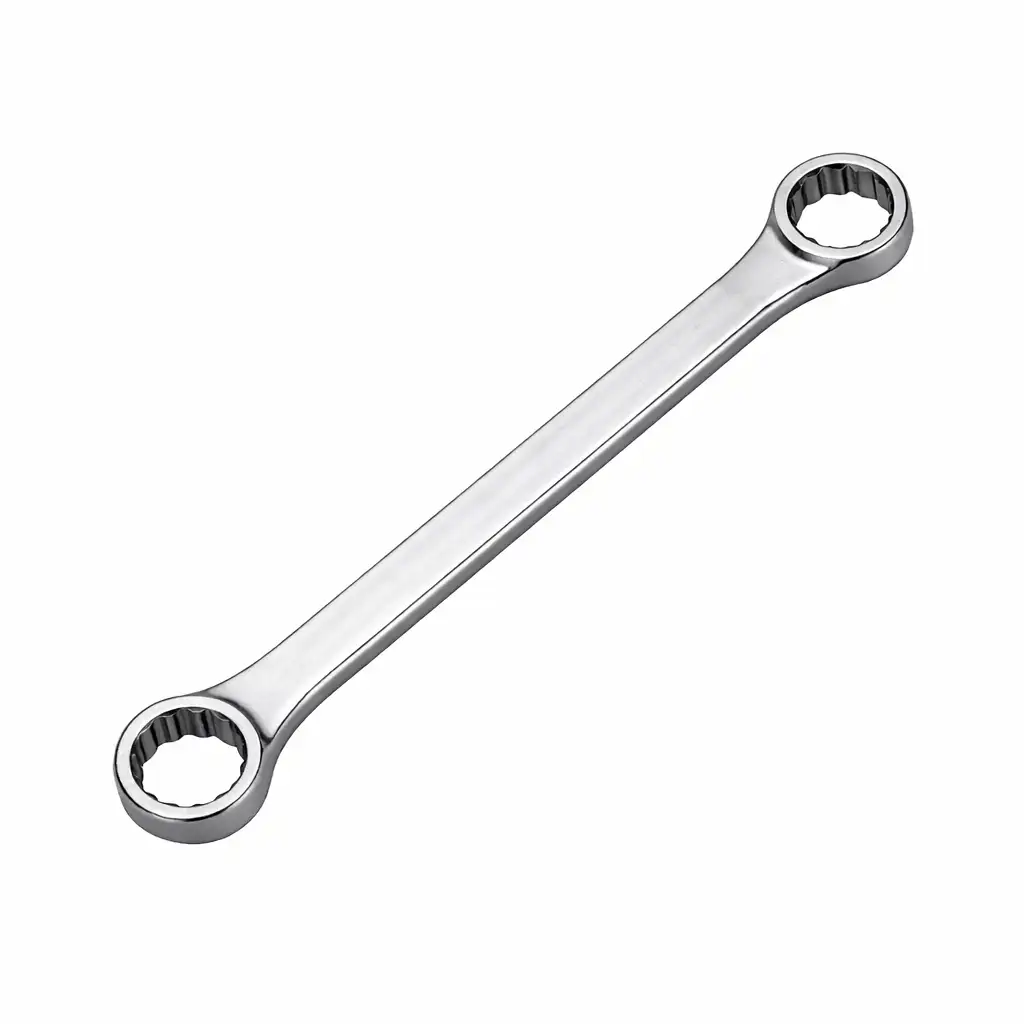
A double ring spanner has two ring ends of different sizes, making it versatile for multiple fasteners.
Key Features:
- Dual-size functionality
- Offset ends for better access
- High torque capability
Best For:
- Automotive repairs
- Workshop use
- Tasks requiring frequent size changes
3. Box-End Spanner
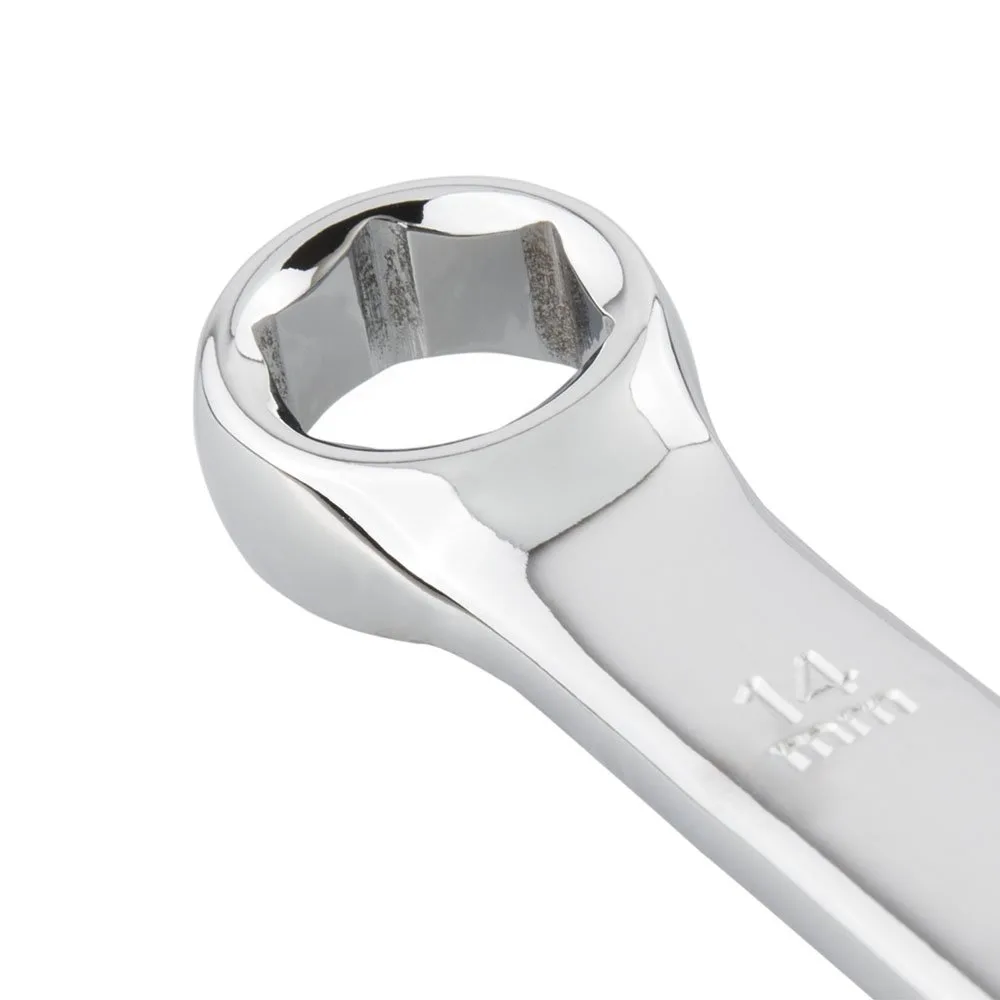
A box-end spanner is a fully enclosed ring spanner, typically with a 12-point design for easier positioning.
Key Features:
- Closed-loop head for full grip
- Multiple engagement angles
- Strong torque transmission
Best For:
- Tight or confined spaces
- Mechanical assemblies
- Situations requiring secure fastening
4. C-Type (Half Moon) Ring Spanner
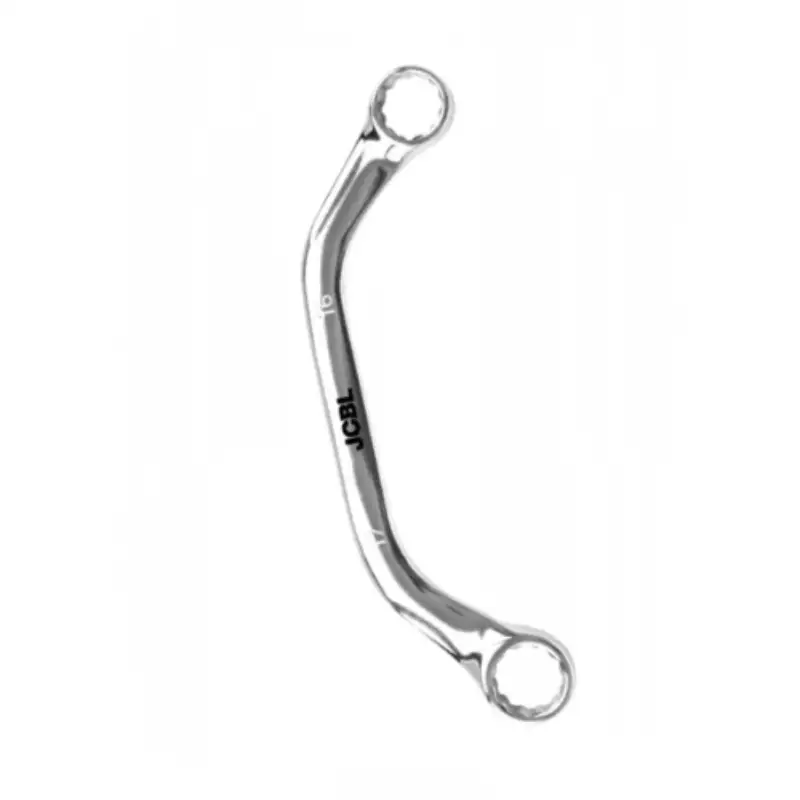
This spanner features a curved, half-moon shape that allows it to work around obstructions.
Key Features:
- Curved body design
- Ring ends on both sides
- Enhanced maneuverability
Best For:
- Engine compartments
- Obstructed mechanical setups
- Hard-to-reach fasteners
5. Ring Slugging Wrench (Striking Spanner)]
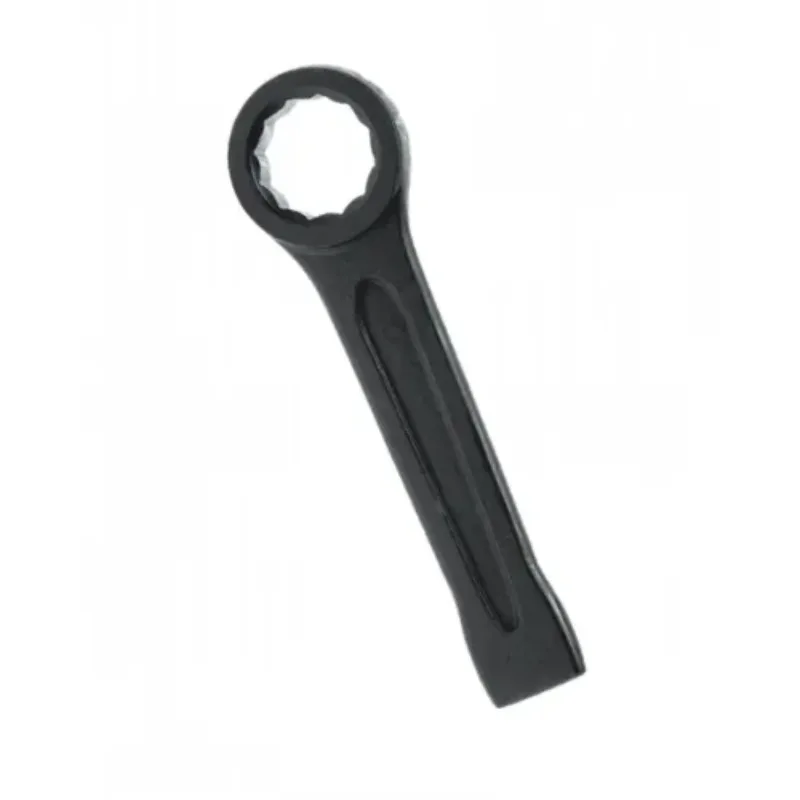
A slugging wrench is a heavy-duty ring spanner designed to be struck with a hammer for extra force.
Key Features:
- Thick, reinforced construction
- Large ring head
- Impact-resistant design
Best For:
- Industrial applications
- Large or seized fasteners
- Oil & gas, construction, and shipbuilding
6. Combination Ring Spanner
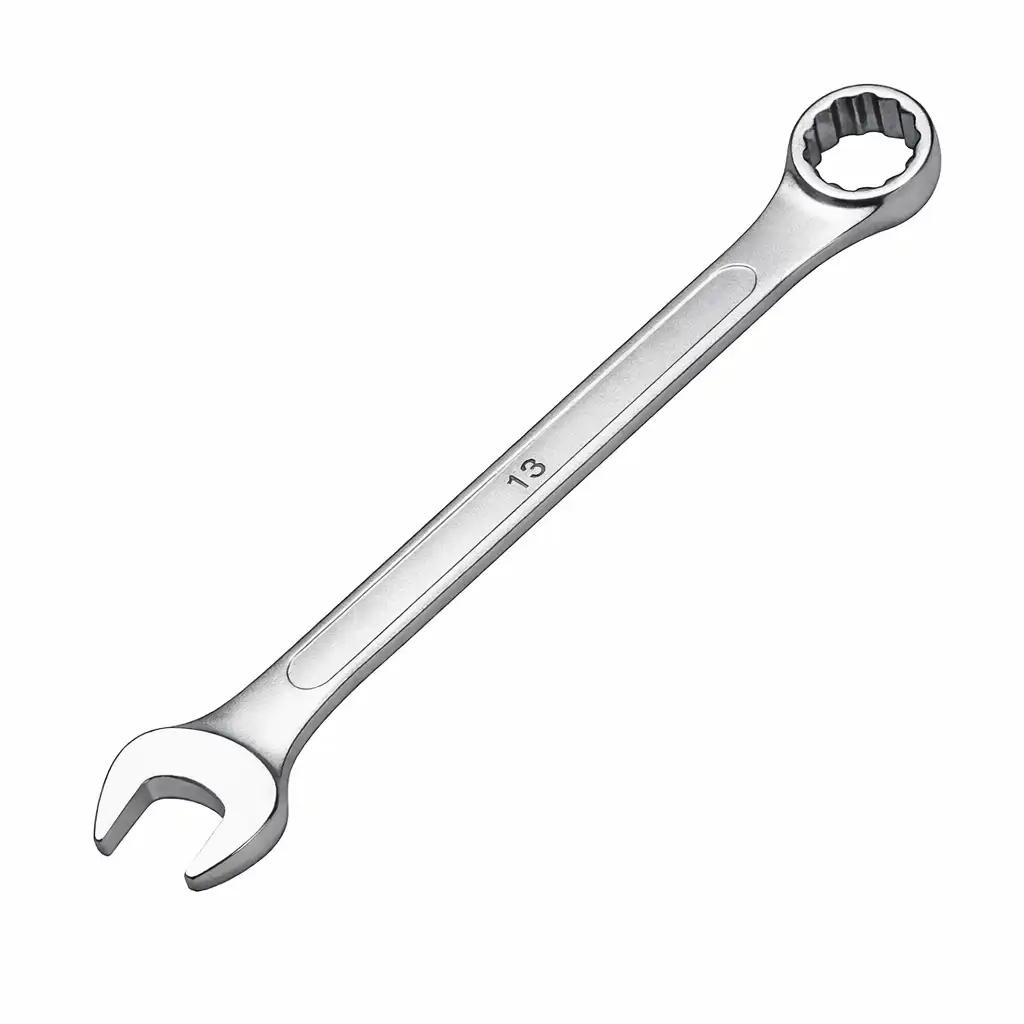
A combination spanner includes one open end and one ring end, offering flexibility in use.
Key Features:
- Dual-function design
- Quick engagement + secure grip
- Space-saving tool
Best For:
- General maintenance
- Fieldwork
- DIY applications
7. Bi-Hex (12-Point) Ring Spanner
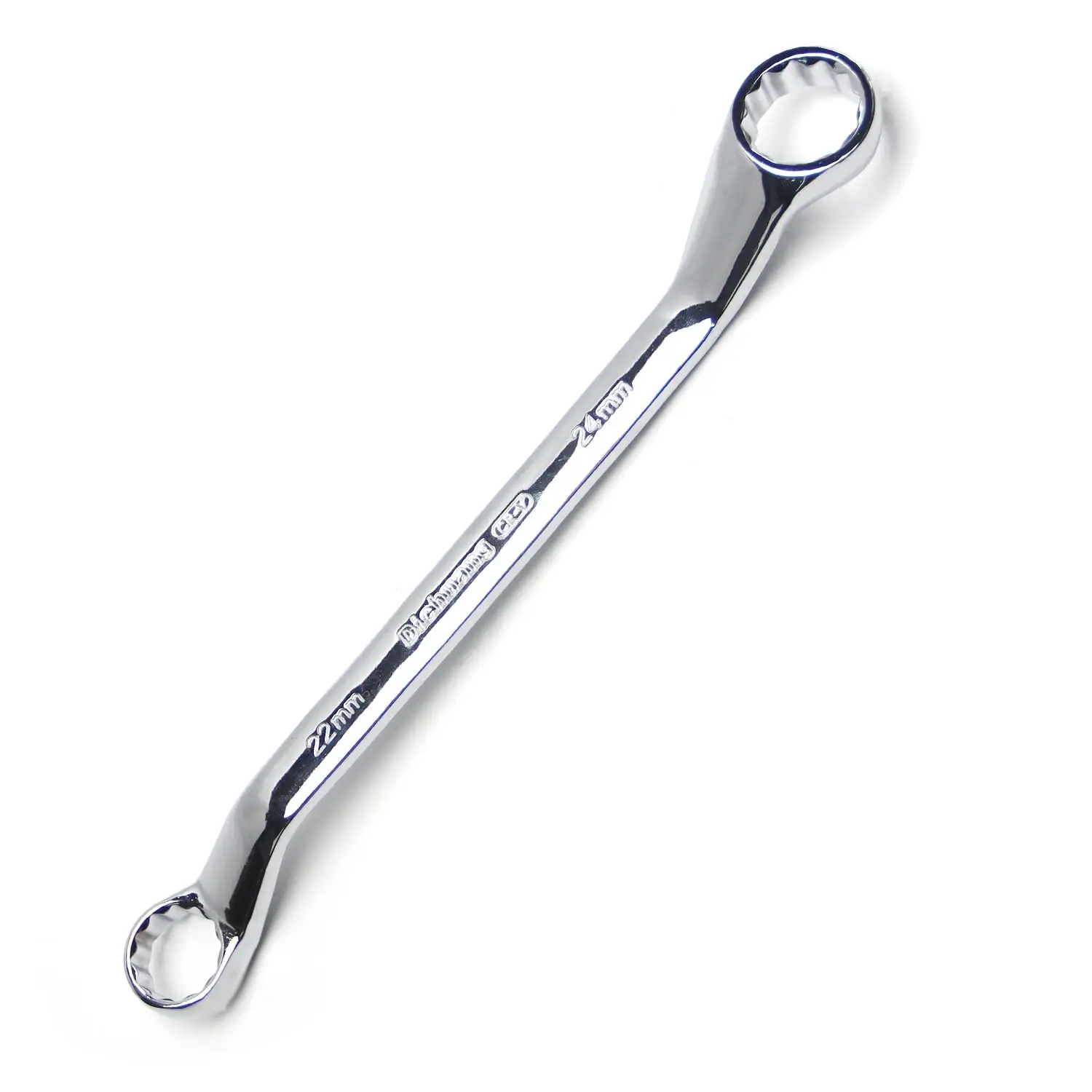
This type features a 12-point ring, allowing more angles of engagement with the fastener.
Key Features:
- Increased contact points
- Easier alignment
- Faster operation
Best For:
- Tight working spaces
- Quick fastening tasks
- Situations requiring frequent repositioning
8. Deep Offset Ring Spanner
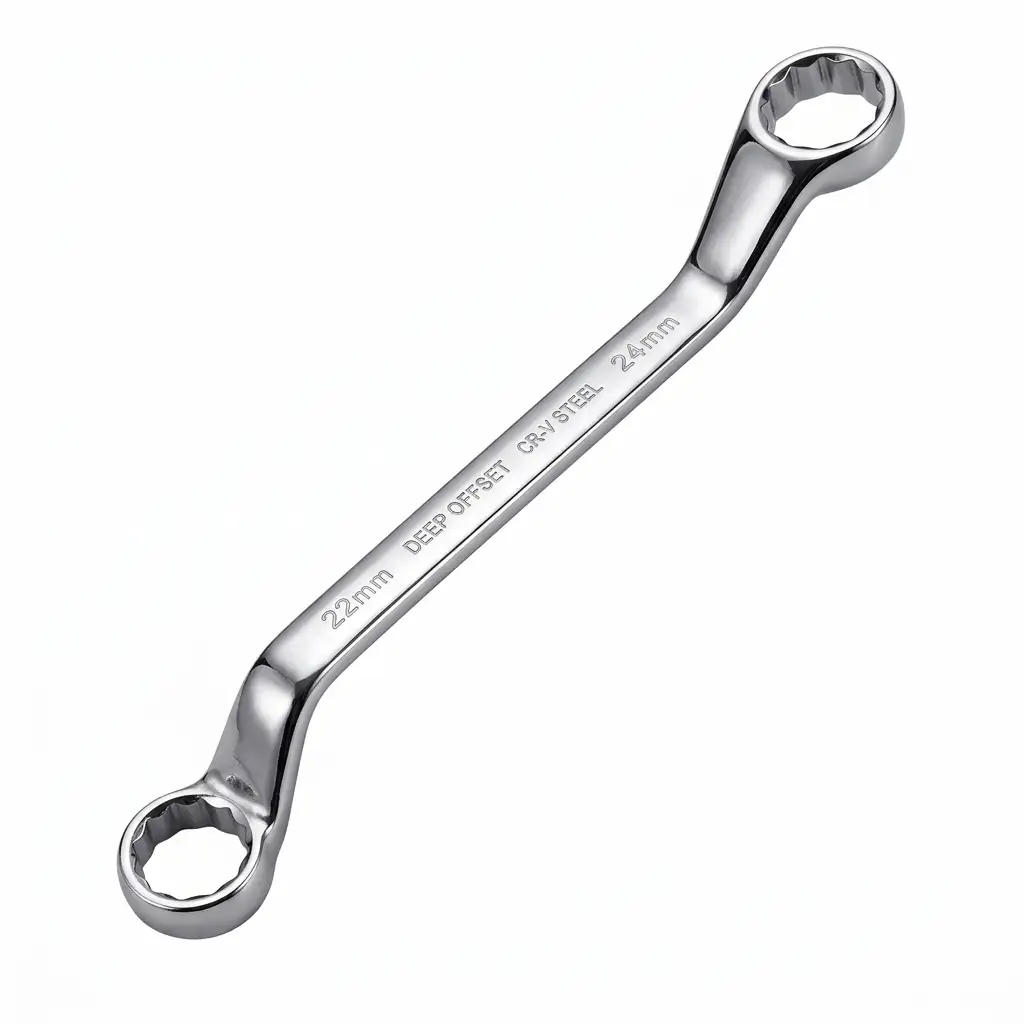
A deep offset ring spanner has an angled handle to access recessed or obstructed fasteners.
Key Features:
- Offset ring design
- Improved clearance
- Better hand positioning
Best For:
- Automotive repairs
- Deep-set bolts
- Confined or obstructed areas
If you want to know more about spanners, then read “Different Types Of Spanners and Their Uses”.
Uses Of Ring Spanners
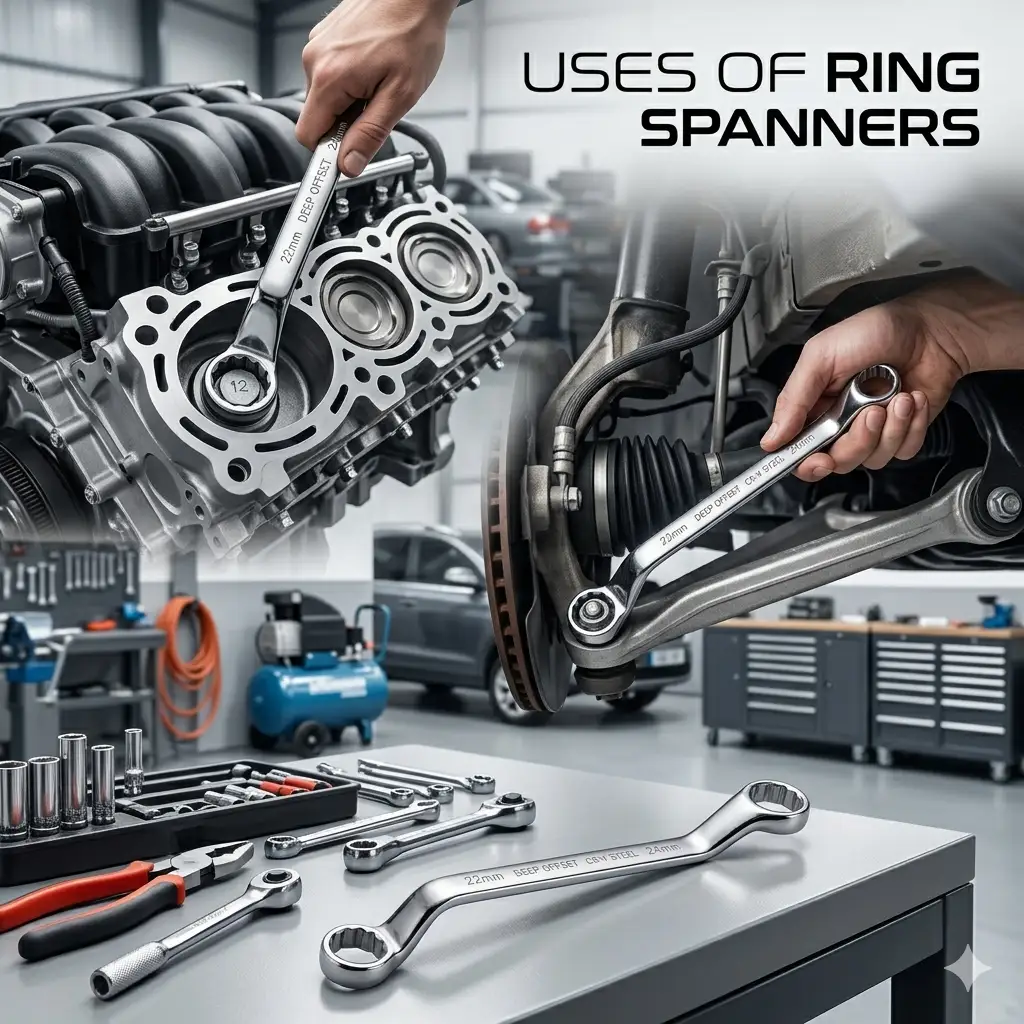
Ring spanners are essential across industries because they provide precision, strong grip, and reliable torque control, making them suitable for both light-duty and heavy-duty fastening tasks.
1. Automotive Repairs
Ring spanners are widely used in automotive work, including engine assembly, brake systems, and suspension components. Their enclosed design provides a secure grip and high torque, which is critical when working with tight or sensitive fasteners, reducing the risk of slipping or damaging essential parts.
2. Industrial Maintenance
In industrial environments, ring spanners are used for machinery servicing, equipment assembly, and preventive maintenance. They are preferred because they can withstand repetitive, high-load usage while maintaining consistent performance, making them reliable tools in demanding production settings.
3. Plumbing Work
Plumbers use ring spanners for tightening pipe fittings and installing valves, especially in confined spaces. The tool ensures even pressure distribution, which helps create tight, leak-proof connections essential for long-term plumbing reliability.
4. Electrical Installations
Ring spanners are commonly used in electrical systems such as panels, switchboards, and transformers. Their secure grip ensures that fasteners are properly tightened, helping to prevent loosening due to vibrations, which is crucial for maintaining electrical safety and system stability.
5. Construction & Infrastructure
In construction and infrastructure projects, ring spanners are used for structural assembly and working with steel frameworks. They are highly effective in handling large fasteners and high torque requirements, ensuring strong and stable connections in critical structures.
6. DIY & Home Maintenance
For DIY users, ring spanners are ideal for tasks such as furniture assembly, bicycle repairs, and general household maintenance. They offer ease of use, accuracy, and better control, allowing even beginners to perform fastening tasks efficiently without damaging components.
Benefits Of Using A Ring Spanner
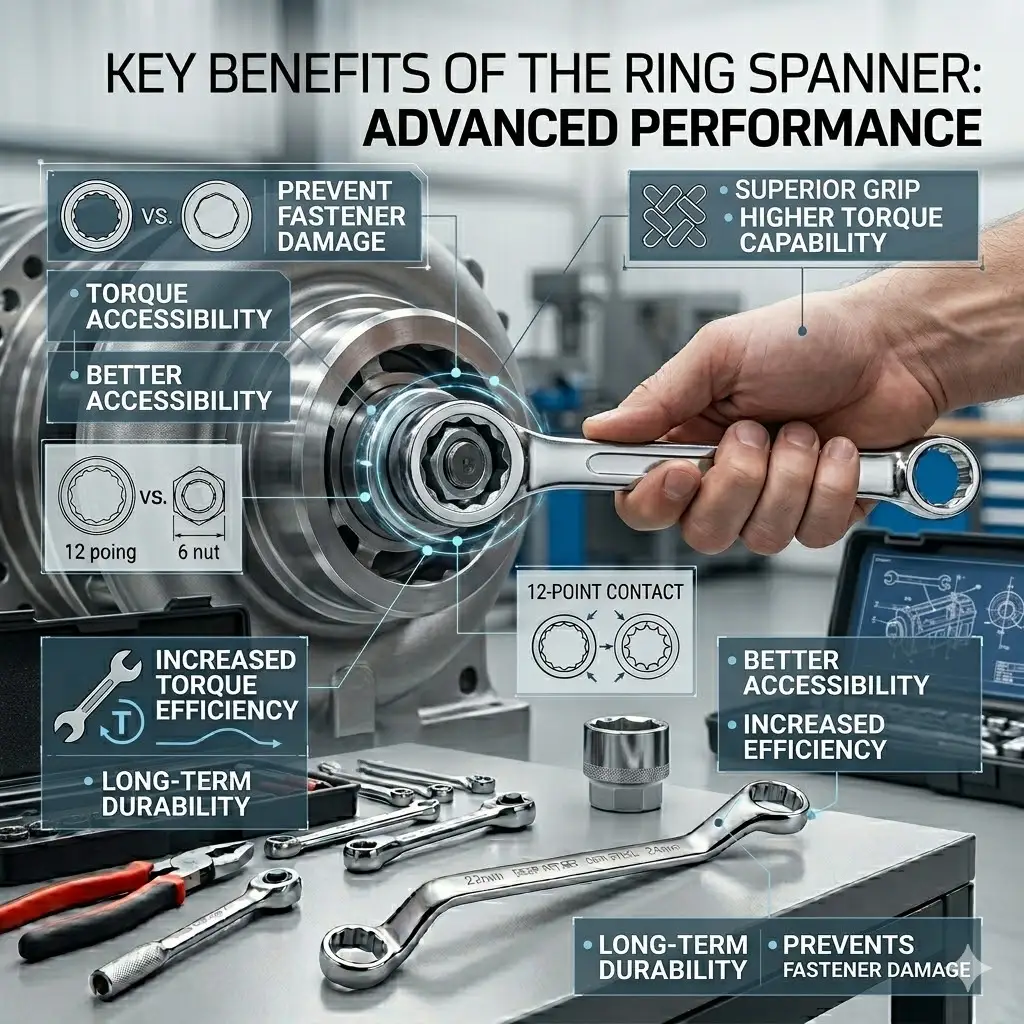
- Superior Grip: The enclosed design ensures 360° contact, minimizing slipping and improving safety.
- Higher Torque Capability: Allows users to apply greater force efficiently, especially on tight or rusted bolts.
- Prevents Fastener Damage: Even pressure distribution reduces:
- Rounding of edges
- Surface wear
- Long-Term Durability: Made from high-strength materials, ring spanners:
- Resist wear
- Perform under heavy loads
- Last longer than standard tools
- Better Accessibility: Specialized designs allow access to:
- Tight spaces
- Hidden fasteners
- Obstructed areas
- Improved Safety
- Reduced slipping
- Better control
- Lower risk of injury
- Increased Efficiency: Professionals benefit from:
- Faster work
- Fewer errors
- Better results
Ring Spanner vs Open-End Spanner
| Feature | Ring Spanner | Open-End Spanner |
| Grip | Full (360°) | Partial |
| Torque | High | Moderate |
| Slipping Risk | Very Low | Higher |
| Precision | Excellent | Moderate |
Expert Recommendation: Use a ring spanner when precision and torque matter most.
How to Choose the Right Ring Spanner
- Choose the Right Size: Always match the spanner to the fastener size to avoid slipping.
- Check Material Quality: Opt for chrome-vanadium steel for durability and performance.
- Select the Appropriate Type:
- Tight spaces → Offset / C-type
- Heavy-duty → Slugging wrench
- General use → Combination spanner
- Consider Ergonomics: Look for:
- Comfortable grip
- Balanced weight
- Slim profile
- Buy a Complete Set: Ensures readiness for different applications.
Choosing the right ring spanner ultimately comes down to quality, precision, and reliability, qualities you can confidently expect from JCBL Hand Tools, designed to deliver consistent performance across every application.
Safety Tips for Using Ring Spanners
- Use the correct size tool
- Avoid damaged or worn spanners
- Apply steady force (not jerky pressure)
- Do not extend handles for extra leverage
- Wear gloves for better grip
Conclusion
A ring spanner is an essential tool for anyone working with nuts and bolts, offering superior grip, higher torque, and precise fastening performance. Its enclosed design enhances efficiency while also protecting both the fastener and the user from damage or slippage. Whether you are a professional mechanic or a DIY enthusiast, investing in a high-quality ring spanner ensures reliable performance, safer operation, and long-term value, making it a dependable addition to any toolkit.
FAQ’s
A ring spanner is used to tighten or loosen nuts and bolts securely, especially in applications requiring high torque and precision.
Because it encloses the fastener completely, distributing force evenly and reducing slipping.
A 6-point ring spanner provides a stronger grip and is ideal for high-torque applications. On the other hand, a 12-point ring spanner allows easier positioning in tight spaces but offers slightly less grip.
Chrome vanadium steel is preferred for its strength, durability, and corrosion resistance.
Yes, for most professional applications, they offer better grip, higher torque, and improved safety.
Related Articles:
- Learn about different types of spanners and their practical uses in our complete guide:
👉 Different Types of Spanners - Also, explore how a ring spanner provides better grip and torque for heavy-duty applications:
👉 What Materials Are Spanners Made Of?