What Is an OEM Hand Tool Manufacturer? A Complete Guide for Importers
- What Is an OEM Hand Tool Manufacturer?
- What Does an OEM Hand Tool Manufacturer Do?
- How OEM Hand Tool Manufacturing Works
- OEM vs ODM vs Private Label Hand Tools
- Why Importers Choose OEM Hand Tool Manufacturers
- What Can Be Customized in OEM Hand Tools?
- How to Choose the Right OEM Hand Tool Manufacturer
- Common Questions Importers Should Ask Before Choosing an OEM Manufacturer
- Common Mistakes Importers Should Avoid
- Why Many Importers Source OEM Hand Tools from India
- Conclusion
- FAQs
Whether you’re launching a new hand tool brand or expanding your product portfolio, choosing the right manufacturing partner is one of the most important decisions you’ll make. Many global buyers work with OEM hand tool manufacturers to create products that meet their exact quality, branding, and performance requirements.
This blog explains what an OEM hand tool manufacturer is, how the OEM process works, how it differs from ODM and private label manufacturing, and what importers should evaluate before selecting a supplier.
What Is an OEM Hand Tool Manufacturer?
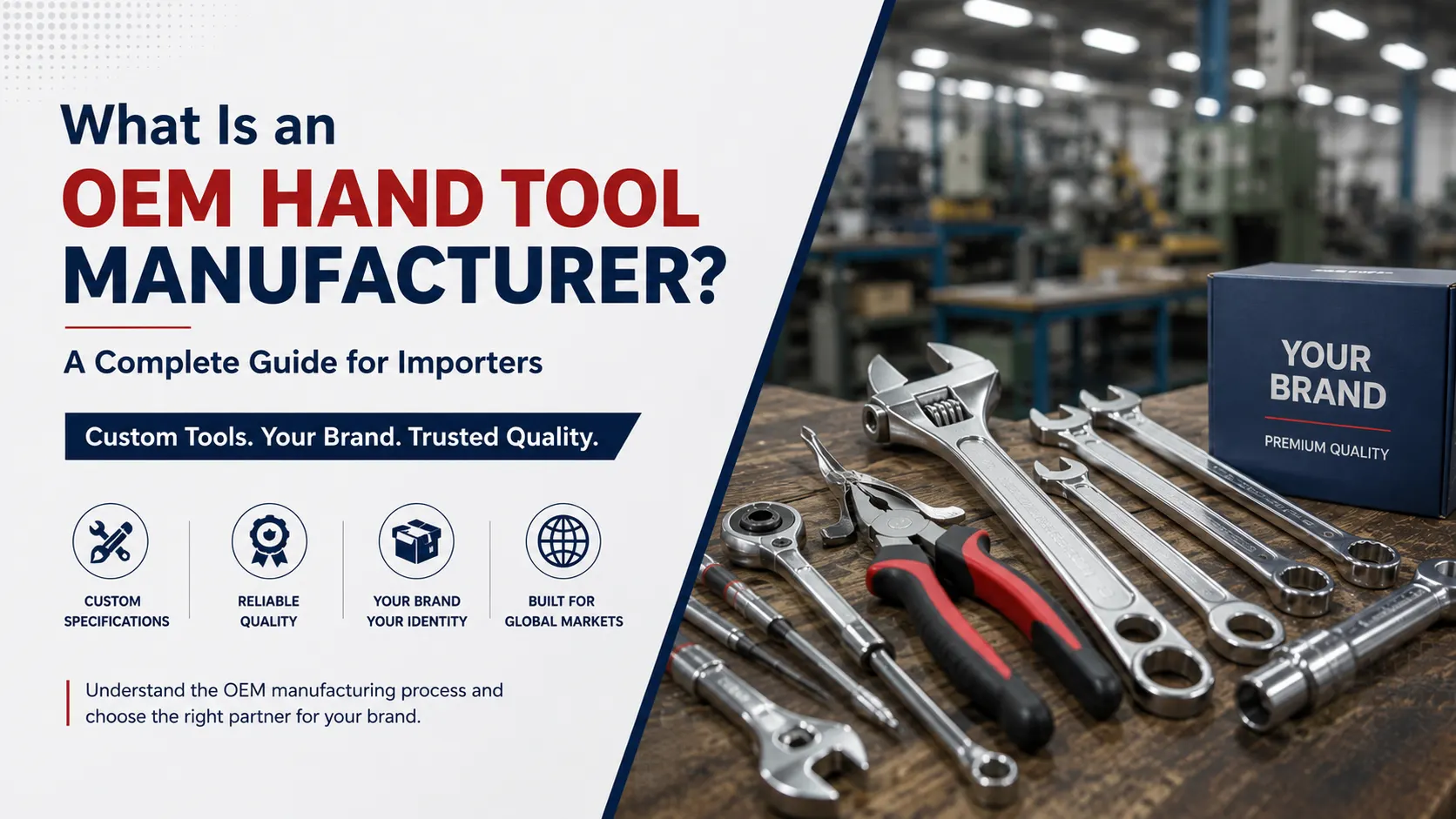
An OEM (Original Equipment Manufacturer) hand tool manufacturer produces hand tools according to a buyer’s custom specifications. Instead of selling standard products, the manufacturer develops and produces tools tailored to the importer’s requirements, including design, materials, dimensions, finish, branding, packaging, and quality standards.
OEM manufacturing allows businesses to market products under their own brand while maintaining greater control over product specifications and consistency.
What Does an OEM Hand Tool Manufacturer Do?
An OEM manufacturer manages the complete production process, from product development to export-ready packaging. Depending on the project, services may include the following:
- Understanding product specifications and technical drawings
- Selecting suitable raw materials
- Developing prototypes or samples
- Manufacturing and assembly
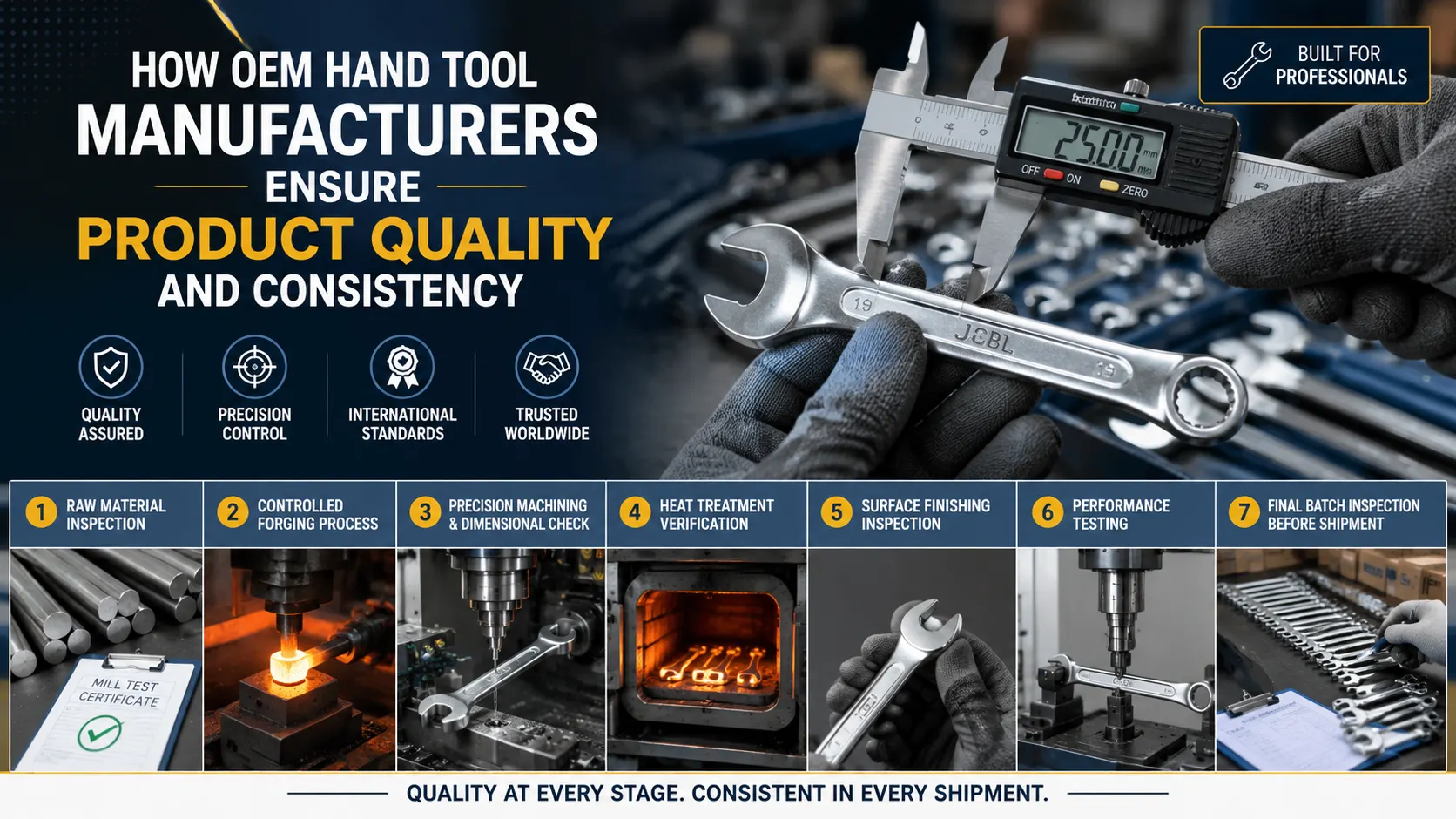
- Heat treatment and surface finishing
- Quality inspection and performance testing
- Custom logo marking and packaging
- Export documentation and shipment preparation
This integrated approach helps ensure every production batch meets the agreed specifications.
How OEM Hand Tool Manufacturing Works
Although every project varies, most OEM partnerships follow a structured workflow.
1. Product Requirement Discussion
The buyer shares essential details such as:
- Tool type and application
- Technical drawings or specifications
- Target market
- Material preferences
- Branding requirements
- Expected order quantity
Clear specifications at this stage reduce production errors later.
2. Product Design and Sampling
If the product requires customization, the manufacturer develops engineering drawings or prototypes for evaluation. Samples allow buyers to verify dimensions, finish, functionality, and overall quality before mass production begins.
3. Production Planning
Once the sample is approved, the manufacturer schedules production, procures raw materials, and prepares tooling, machinery, and quality checkpoints.
4. Manufacturing
The production process typically includes machining, forging or casting (depending on the tool), heat treatment, grinding, polishing, coating, assembly, and finishing.
Standardized production procedures help maintain consistency across large-volume orders.
5. Quality Inspection
Reliable OEM manufacturers perform inspections throughout production rather than only at the end. Common checks include:
- Dimensional accuracy
- Hardness verification
- Surface finish inspection
- Functional testing
- Final visual inspection
Consistent quality control helps reduce defects and supports long-term supplier reliability.
6. Branding, Packaging, and Export
After inspection, products are prepared according to buyer requirements with custom logos, labels, cartons, instruction manuals, and shipping documentation before export.
OEM vs ODM vs Private Label Hand Tools
Understanding these manufacturing models helps importers select the right business approach.
| Feature | OEM | ODM | Private Label |
| Product design | Buyer provides specifications | Manufacturer develops design | Standard product |
| Product customization | High | Moderate | Limited |
| Branding | Buyer’s brand | Buyer’s brand | Buyer’s brand |
| Design ownership | Buyer | Usually manufacturer | Manufacturer |
| Best suited for | Custom product development | Faster product launch | Entry-level branding |
For businesses seeking unique products with complete control over specifications, OEM manufacturing is generally the preferred option.
Why Importers Choose OEM Hand Tool Manufacturers
OEM manufacturing offers advantages beyond simply producing tools.
- Greater Product Customization: Importers can define dimensions, materials, handle designs, finishes, packaging, and branding to match their market requirements.
- Better Brand Differentiation: Custom-designed tools help businesses establish a distinct identity instead of competing with identical off-the-shelf products.
- Consistent Manufacturing Standards: Documented production processes and quality inspections improve consistency across multiple production batches.
- Flexible Packaging Options: Many OEM manufacturers provide customized retail packaging, private labeling, instruction manuals, and barcode integration for different markets.
- Long-Term Supply Partnerships: Working with the same OEM manufacturer simplifies repeat orders, product improvements, and future product expansion.
What Can Be Customized in OEM Hand Tools?
OEM manufacturing allows buyers to customize several aspects of a product, including:
- Tool dimensions
- Material grade
- Hardness specifications
- Handle shape and grip material
- Surface finish and coating
- Color options
- Laser engraving or logo marking
- Packaging design
- Product labels
- User manuals
- Barcode and retail packaging
The level of customization depends on the product category and production requirements.
How to Choose the Right OEM Hand Tool Manufacturer
Selecting a manufacturer involves more than comparing prices. Consider these factors before placing an order.
- Manufacturing Experience: Look for manufacturers with experience producing hand tools for international markets and handling OEM projects.
- Quality Management System: A structured quality management system helps maintain consistent production and documented inspection procedures.
- Production Capacity: Ensure the manufacturer can meet your current order volume while supporting future growth.
- Engineering and Customization Capability: An experienced engineering team can assist with product modifications, tooling, prototypes, and design improvements.
- Testing Facilities: Manufacturers with in-house testing capabilities can verify product quality before shipment.
- Export Experience: Experienced exporters are generally familiar with international packaging requirements, documentation, and shipping processes.
- Communication and Technical Support: Clear communication during sampling, production, and delivery helps avoid costly misunderstandings.
Common Questions Importers Should Ask Before Choosing an OEM Manufacturer
Before finalizing a supplier, ask questions such as:
- Do you manufacture products in-house?
- Can you develop products from technical drawings?
- What quality inspections are performed during production?
- Can you provide prototypes before mass production?
- What materials do you use?
- What is your standard production lead time?
- Do you offer custom branding and packaging?
- Which export markets do you currently serve?
- How do you handle quality issues if they arise?
The answers provide valuable insight into the manufacturer’s capabilities and processes.
Common Mistakes Importers Should Avoid
Many sourcing challenges can be avoided with better planning.
- Selecting suppliers based only on the lowest price
- Providing incomplete technical specifications
- Skipping prototype approval
- Ignoring quality inspection procedures
- Failing to define packaging requirements
- Not confirming production timelines before placing large orders
Addressing these points early helps reduce production delays and unexpected costs.
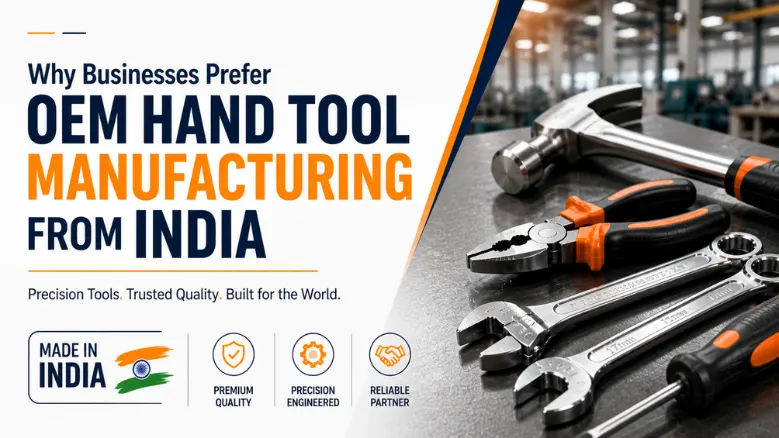
Why Many Importers Source OEM Hand Tools from India
India has become an important manufacturing destination for OEM hand tools due to its established engineering ecosystem and export-oriented production capabilities.
Many manufacturers offer:
- Skilled engineering and manufacturing expertise
- Competitive production costs
- Custom OEM manufacturing capabilities
- Wide product range across industrial sectors
- Compliance with international quality requirements
- Experience serving buyers across North America, Europe, the Middle East, Africa, and Asia
Manufacturing clusters in regions such as Punjab have developed strong capabilities in forging, machining, finishing, and export of hand tools, making India a preferred sourcing destination for many international buyers.
Conclusion
An OEM hand tool manufacturer helps importers develop products tailored to their brand, technical requirements, and target markets. From prototype development and production to quality inspection and custom packaging, OEM manufacturing offers greater control than standard sourcing models. By evaluating manufacturing expertise, quality systems, customization capabilities, and export experience, importers can build reliable supply partnerships that support consistent product quality and long-term business growth.
FAQs
An OEM hand tool manufacturer produces tools according to a buyer’s specifications, allowing businesses to sell customized products under their own brand.
OEM manufacturing follows the buyer’s product specifications, while ODM manufacturers offer products they have already designed, with limited customization options.
Yes. Most OEM manufacturers provide custom branding, logo engraving, labeling, and packaging based on buyer requirements.
Provide product drawings or specifications, material requirements, dimensions, branding details, packaging preferences, target market, and expected order quantity.
Yes, provided the importer has clear product specifications and works with a manufacturer capable of supporting sampling, customization, and quality assurance throughout the project.