10 Benefits of Working Directly with a Hand Tool Manufacturer Instead of a Trading Company
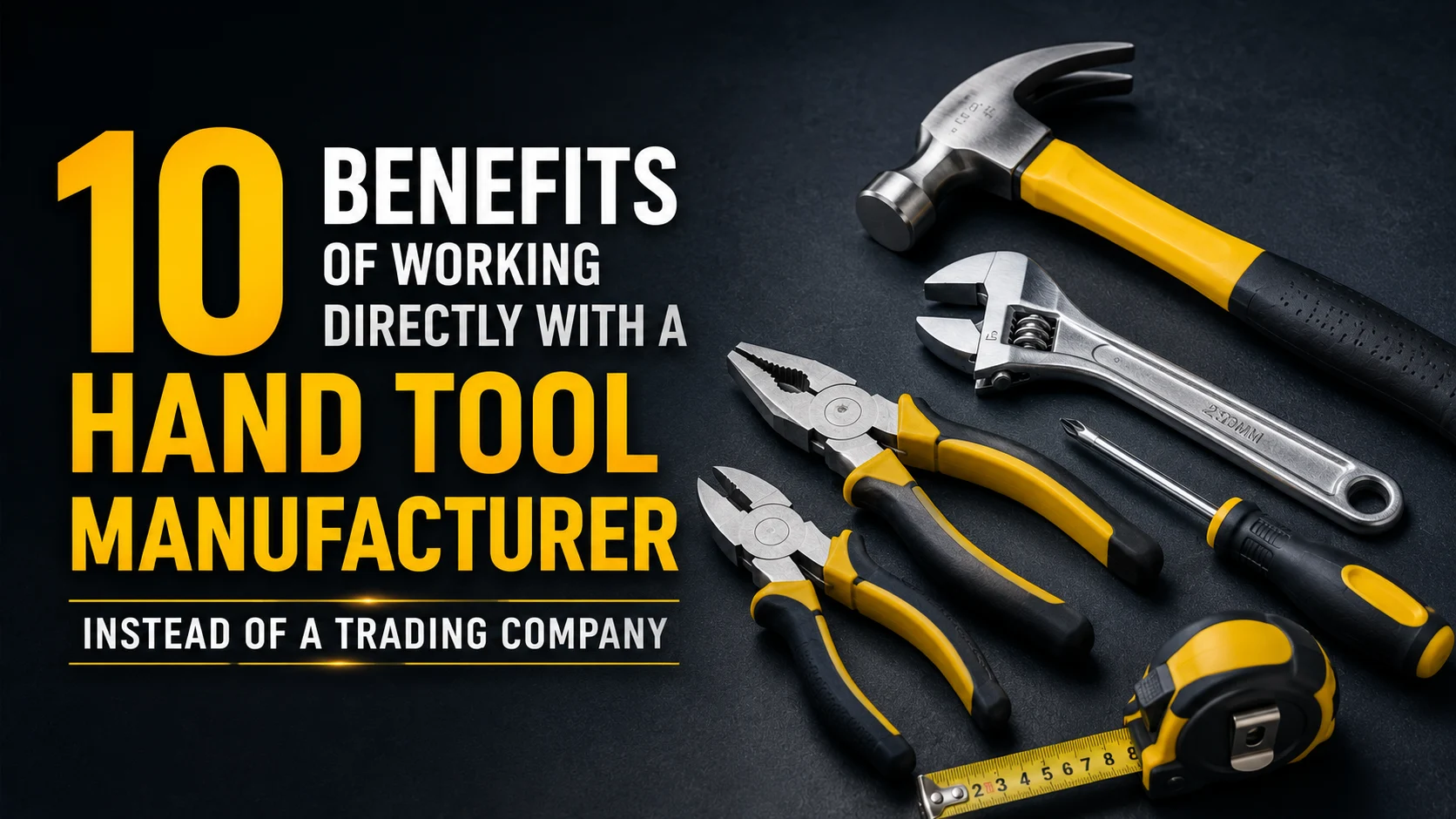
When sourcing hand tools for wholesale, retail, or private labeling, one of the first decisions businesses face is whether to work directly with a hand tool manufacturer or purchase through a trading company. While trading companies can simplify sourcing in certain situations, partnering directly with a manufacturer often provides greater control over pricing, product quality, customization, and long-term supply chain reliability.
For importers, distributors, industrial buyers, and OEM brands, understanding these differences can help reduce costs, improve product consistency, and build stronger supplier relationships.
Why Should You Work Directly with a Hand Tool Manufacturer?
Working directly with a hand tool manufacturer offers several advantages over sourcing through a trading company. Businesses can benefit from factory-direct pricing, better quality control, faster communication, greater customization, transparent production, reliable manufacturing capacity, technical expertise, compliance support, consistent product quality, and stronger long-term partnerships. These advantages make direct sourcing a preferred choice for businesses focused on quality, scalability, and long-term growth.
Top 10 Benefits of Working Directly with a Hand Tool Manufacturer
1. Lower Product Costs by Eliminating Middlemen
One of the biggest advantages of buying directly from a manufacturer is cost savings. Trading companies typically add their own markup before selling products to buyers.
Working with the factory allows you to:
- Access factory-direct pricing
- Reduce procurement costs
- Improve wholesale profit margins
- Negotiate better pricing for repeat or bulk orders
Over time, even small savings per unit can have a significant impact on your overall purchasing budget.
2. Better Quality Control Throughout Production
Manufacturers oversee every stage of production—from raw material selection to final inspection.
Direct access to the factory enables buyers to:
- Understand quality inspection procedures
- Request production updates
- Review testing reports
- Address quality concerns before shipment
This level of visibility helps reduce defects and ensures products consistently meet your specifications.
3. Faster Communication and Problem Resolution
When sourcing through a trading company, information often passes through multiple parties before reaching the factory.
Working directly with a manufacturer allows you to communicate with the team responsible for production, making it easier to:
- Clarify technical requirements
- Resolve issues quickly
- Confirm production schedules
- Reduce misunderstandings
Faster communication often results in smoother projects and shorter decision-making cycles.
4. Greater Product Customization and OEM/ODM Support
Many businesses require products that reflect their own brand or customer requirements.
A hand tool manufacturer can typically provide the following:
- Private labeling
- Logo engraving
- Custom packaging
- Product modifications
- OEM and ODM solutions
Direct collaboration also makes it easier to develop products that align with your target market instead of relying on standard catalog items.
5. Greater Transparency Across the Manufacturing Process
Supply chain transparency is increasingly important for global buyers.
Manufacturers can provide greater visibility into:
- Production timelines
- Material sourcing
- Factory capabilities
- Manufacturing processes
- Order progress
This transparency helps businesses make informed purchasing decisions and better manage delivery expectations.
6. Reliable Production Capacity for Growing Businesses
As your business grows, your supplier must be able to meet increasing demand.
Established manufacturers generally offer:
- Higher production capacity
- Better production planning
- Consistent lead times
- Scalable manufacturing for bulk orders
This reliability is particularly valuable for distributors and brands managing seasonal demand or expanding into new markets.
7. Direct Access to Technical Expertise
Manufacturers possess in-depth knowledge of their products, materials, and production methods.
Instead of relying on second-hand information, buyers can consult directly with technical teams regarding the following:
- Material selection
- Product performance
- Design improvements
- Manufacturing feasibility
- Application recommendations
This expertise supports better purchasing decisions and more successful product development.
8. Easier Compliance with International Standards
Many global buyers require products that comply with international quality and safety standards.
Working directly with manufacturers simplifies access to:
- Product testing reports
- Quality certifications
- Compliance documentation
- Inspection records
Having direct access to these documents can speed up procurement while helping businesses meet customer and regulatory requirements.
9. More Consistent Product Quality Across Every Order
Consistency matters just as much as quality.
Manufacturers use standardized production processes to ensure repeat orders maintain the same specifications, materials, and performance.
This consistency helps businesses:
- Build customer trust
- Reduce product returns
- Maintain brand reputation
- Deliver reliable performance across every shipment
10. Stronger Long-Term Business Partnerships
Direct relationships often lead to stronger collaboration over time.
Manufacturers are more likely to support long-term partners with:
- Stable pricing
- Priority production scheduling
- Early access to new products
- Joint product development
- Continuous process improvements
These partnerships create greater value than simply purchasing products through an intermediary.
Hand Tool Manufacturer vs. Trading Company
| Factor | Hand Tool Manufacturer | Trading Company |
| Pricing | Factory-direct pricing | Includes middleman markup |
| Quality Control | Direct oversight of production | Limited visibility into manufacturing |
| Communication | Direct access to factory teams | Communication through intermediaries |
| Customization | Extensive OEM/ODM capabilities | Often depends on the supplier network |
| Production Transparency | High | Limited |
| Technical Support | Direct engineering expertise | Basic product knowledge |
| Production Capacity | Controlled by manufacturer | Depends on partner factories |
| Long-Term Partnership | Strong collaboration opportunities | More transaction-focused |
Is Working Directly with a Manufacturer Always the Right Choice?
Not necessarily.
Trading companies can still provide value for businesses purchasing small quantities, sourcing products from multiple manufacturers, or those with limited importing experience. They often simplify supplier coordination by acting as a single point of contact.
However, for businesses placing recurring orders, developing private-label products, or building long-term supplier relationships, working directly with a hand tool manufacturer typically offers greater control over pricing, quality, customization, and production planning.
The right choice ultimately depends on your purchasing volume, product requirements, and long-term business objectives.
Conclusion
Choosing between a hand tool manufacturer and a trading company depends on your sourcing priorities. While trading companies can simplify purchasing for certain buyers, working directly with a manufacturer generally offers greater value for businesses focused on long-term growth. Factory-direct pricing, stronger quality control, transparent production, customization capabilities, and reliable manufacturing capacity all contribute to a more efficient and dependable supply chain.
For importers, distributors, OEM brands, and wholesale buyers, partnering with the right hand-tool manufacturer can help reduce sourcing costs, improve product consistency, and build a stronger foundation for sustainable business growth.
FAQs
In most cases, yes. Buying directly from a manufacturer eliminates intermediary markups, making factory pricing more competitive for wholesale and bulk orders.
Yes. Many manufacturers provide OEM and ODM services, including private labeling, custom packaging, logo engraving, and product modifications based on customer requirements.
Wholesale buyers often choose manufacturers for better pricing, consistent product quality, higher production capacity, direct technical support, and stronger long-term supply relationships.
A trading company may be a suitable option when purchasing smaller quantities, sourcing different product categories from multiple factories, or when you need a single supplier to manage procurement.