How to Choose the Right OEM Hand Tool Manufacturer for Your Business
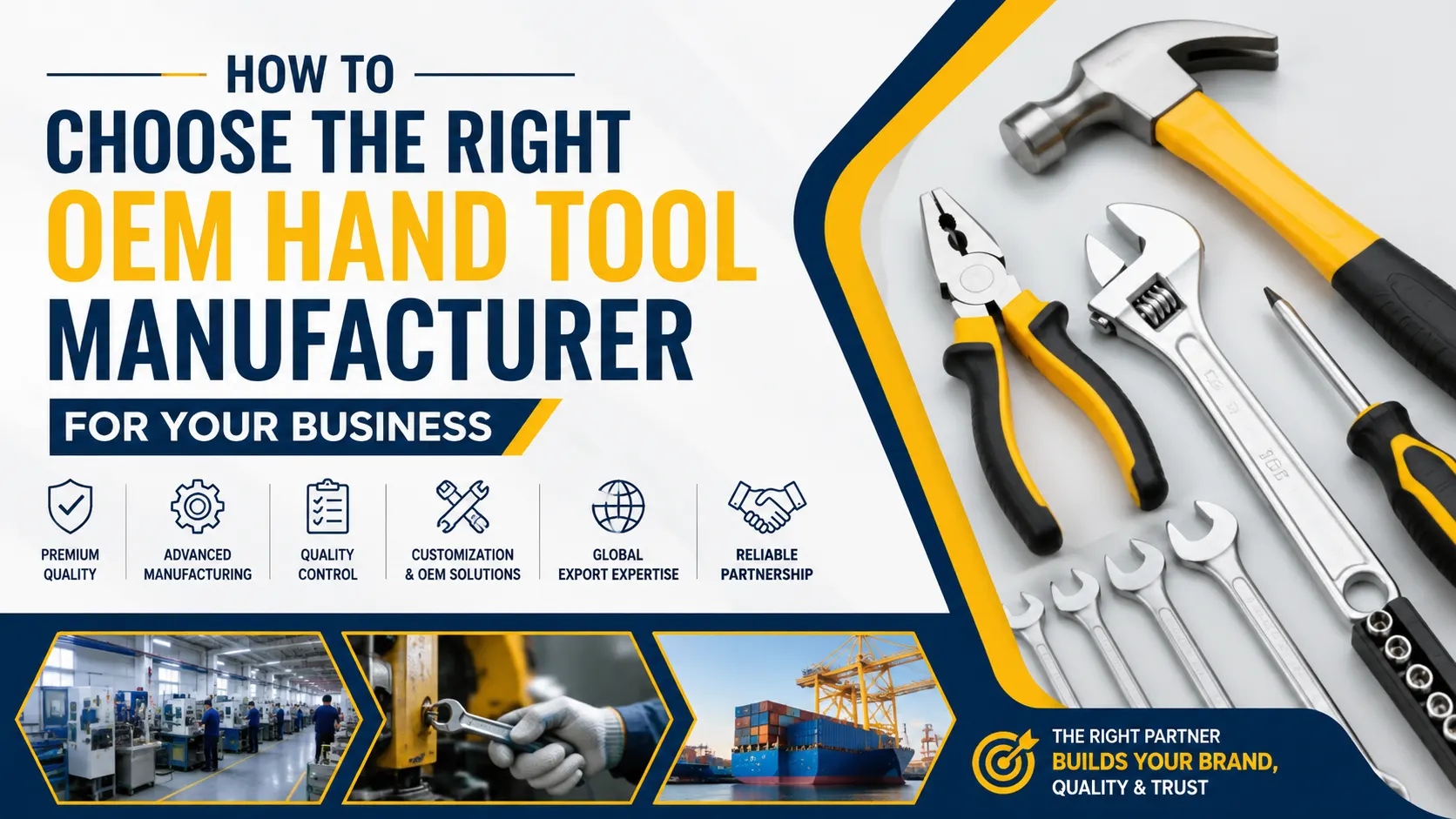
Choosing the right OEM hand tool manufacturer is one of the most important decisions for importers, distributors, wholesalers, and private-label brands. A reliable manufacturing partner helps ensure consistent product quality, timely deliveries, and the flexibility to grow as market demand changes. On the other hand, selecting the wrong supplier can lead to quality inconsistencies, delayed shipments, and increased procurement costs.
This blog explains the key factors to evaluate before partnering with an OEM hand tool manufacturer, helping you make an informed business decision.
Why Choosing the Right OEM Manufacturer Matters
Your OEM partner directly influences the products your customers receive. Beyond manufacturing, they play a role in maintaining your brand reputation and ensuring consistent supply.
A dependable manufacturer helps you:
- Maintain consistent product quality
- Reduce production and supply chain risks
- Meet delivery commitments
- Support product customization and private labeling
- Scale production as your business grows
- Build long-term customer confidence
10 Factors to Consider When Choosing an OEM Hand Tool Manufacturer
1. Evaluate Manufacturing Experience and Industry Expertise
Experience often reflects a manufacturer’s ability to manage production challenges and maintain quality across different product lines.
Look for manufacturers that:
- Have several years of OEM manufacturing experience
- Produce a wide range of hand tools
- Understand international buyer requirements
- Have experience serving distributors, wholesalers, and industrial brands
2. Assess Manufacturing Capabilities
Not all manufacturers offer the same production capabilities. A strong OEM partner should have the infrastructure to produce consistent, high-quality products at scale.
Evaluate:
- In-house manufacturing processes
- Product range
- Material sourcing standards
- Precision manufacturing equipment
- Ability to develop customized products
A broader manufacturing capability also simplifies future product expansion.
3. Review Quality Control Systems
Consistent quality depends on systematic inspections throughout production—not just final product checks.
Ask about:
- Raw material inspection
- In-process quality checks
- Final product testing
- Product traceability
- Inspection documentation
Reliable quality systems help minimize defects and maintain consistency across production batches.
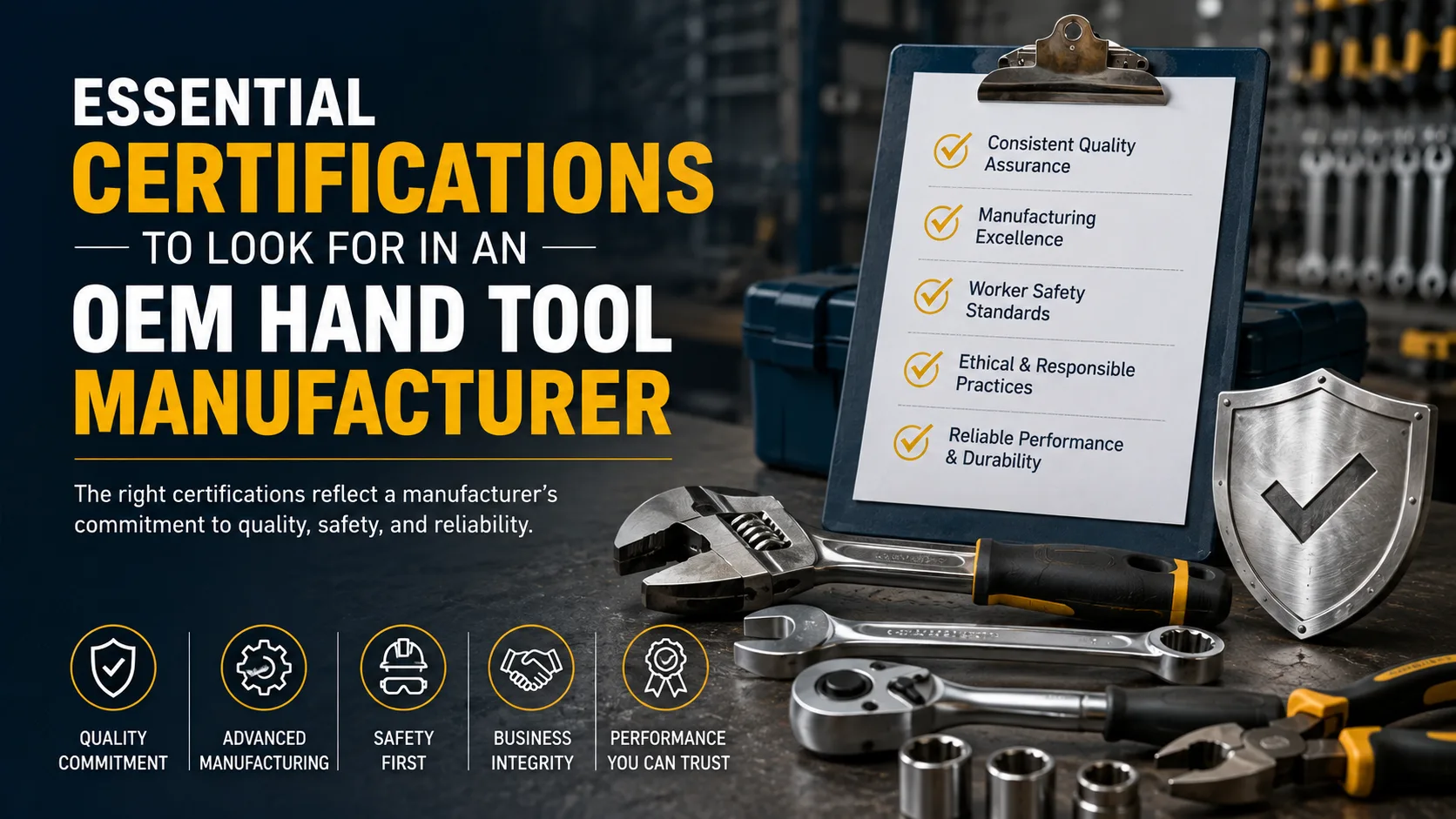
4. Verify Certifications and Compliance
Certifications demonstrate that a manufacturer follows recognized quality management practices.
Common certifications and compliance requirements may include:
- ISO 9001
- RoHS compliance
- Customer-specific quality requirements
5. Check Customization and Private Label Capabilities
Many businesses require products tailored to their brand identity rather than standard catalog items.
A capable OEM manufacturer should offer:
- Logo branding
- Product customization
- Private labeling
- Custom packaging
- Product design support
- Retail-ready packaging solutions
Choosing a manufacturer with flexible OEM services makes it easier to differentiate your products in competitive markets.
6. Evaluate Production Capacity and Scalability
Your production requirements today may differ significantly from future demand.
Before finalizing a supplier, understand:
- Monthly production capacity
- Lead times
- Ability to handle bulk orders
- Capacity expansion plans
- Manufacturing flexibility during seasonal demand
A scalable manufacturer reduces the need to switch suppliers as your business grows.
7. Consider Export Experience
Exporting hand tools involves more than manufacturing. Documentation, logistics, packaging standards, and market-specific compliance all affect successful international shipments.
Manufacturers with export experience are often better prepared to serve buyers across:
- North America
- Europe
- Middle East
- Africa
- Asia-Pacific
They are generally familiar with export documentation, international packaging requirements, and shipping coordination.
8. Look Beyond Product Pricing
The lowest quotation doesn’t always represent the best overall value.
Consider the total procurement cost, including:
- Product quality
- Tooling charges
- Minimum order quantity (MOQ)
- Packaging costs
- Shipping coordination
- Product consistency
A transparent pricing structure helps buyers plan long-term procurement more effectively.
9. Evaluate Communication and Customer Support
Clear communication helps prevent misunderstandings and production delays.
An efficient OEM manufacturer should provide:
- Timely responses
- Dedicated sales or account support
- Production updates
- Technical assistance
- Transparent issue resolution
Strong communication becomes especially valuable during product development and repeat production cycles.
10. Verify Reputation and Buyer References
Before entering a long-term partnership, verify the manufacturer’s credibility.
Consider:
- Customer testimonials
- Export markets served
- Product samples
- Factory audits (where feasible)
- Repeat business from existing clients
Requesting samples allows you to assess product quality before placing larger orders.
Common Mistakes Buyers Should Avoid
Many procurement challenges can be avoided with proper supplier evaluation.
Avoid these common mistakes:
- Selecting a manufacturer based solely on price
- Skipping product sample evaluation
- Overlooking quality management systems
- Failing to verify certifications
- Ignoring production capacity limitations
- Not assessing communication responsiveness
- Choosing suppliers without relevant export experience
A structured evaluation process reduces long-term procurement risks.
Why Many Global Buyers Source OEM Hand Tools from India
India has become an established manufacturing destination for OEM hand tools, supported by skilled labor, modern production facilities, and a strong engineering ecosystem. Manufacturing hubs in Punjab, particularly Jalandhar and Ludhiana, are recognized for producing a wide range of industrial and professional hand tools for global markets.
Indian OEM manufacturers are increasingly serving buyers across Europe, North America, the Middle East, Africa, and Asia-Pacific by offering competitive manufacturing, customization capabilities, and adherence to international quality standards. For businesses seeking reliable OEM partnerships, India continues to be a strategic sourcing destination.
Conclusion
Choosing the right OEM hand tool manufacturer requires more than comparing prices. A dependable partner should demonstrate manufacturing expertise, consistent quality control, recognized certifications, customization capabilities, scalable production, export experience, and transparent communication. Evaluating these factors before placing an order helps build a reliable supply chain, supports long-term business growth, and strengthens your brand’s reputation in competitive global markets.
FAQs
The most important factor is the manufacturer’s ability to consistently produce quality products. This includes reliable quality control systems, manufacturing expertise, and the capacity to meet delivery commitments.
Review their quality control process, certifications, production standards, inspection methods, product samples, and customer references to evaluate their manufacturing consistency.
The required certifications depend on your market, but quality management certifications such as ISO 9001 and compliance with applicable international standards are commonly considered during supplier evaluation.
Yes. Many OEM manufacturers provide logo branding, private labeling, product customization, and custom packaging to meet specific branding and market requirements.
Businesses often source from Indian OEM hand tool manufacturers because of their manufacturing expertise, competitive production capabilities, skilled workforce, export experience, and ability to deliver customized hand tool solutions for global markets.