What Materials Are Spanners Made Of? (Complete Guide)
Spanners are hand tools designed to tighten or loosen nuts and bolts, and they are typically manufactured from high-strength metals such as Chrome Vanadium Steel (Cr-V), Carbon Steel, Stainless Steel (SS), Brass, or Aluminum Alloys. Most professional spanners are made of Chrome Vanadium Steel (Cr-V) because it offers superior strength, durability, and corrosion resistance for demanding mechanical applications.
The material used in a spanner determines its torque capacity, wear resistance, lifespan, and suitability for specific industries, including automotive repair, industrial maintenance, and manufacturing.
Summary: Common Spanner Materials
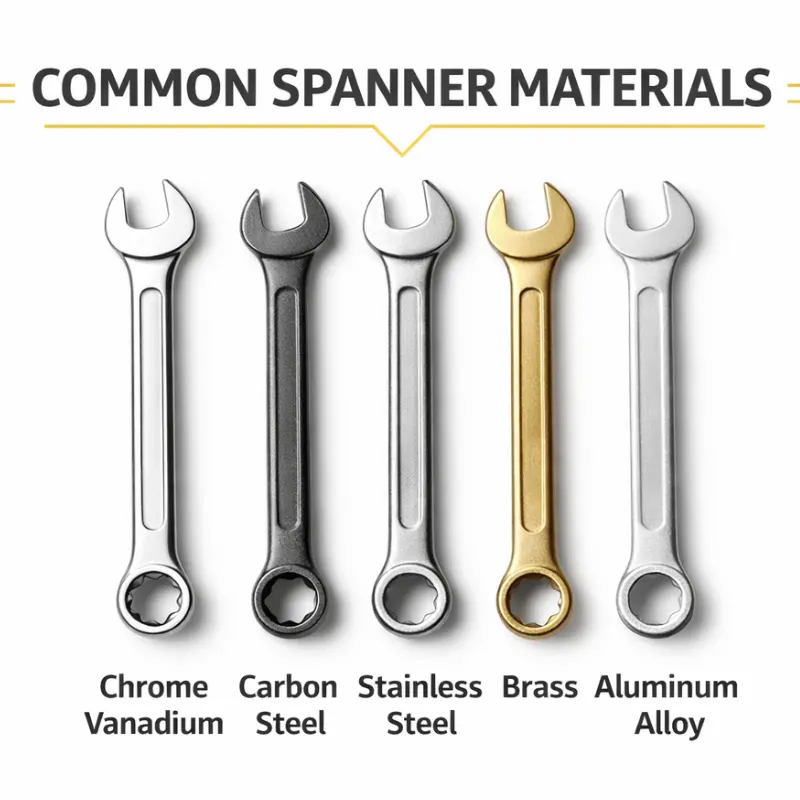
- Chrome Vanadium (Cr-V): High-strength, industry standard for professional tools.
- Carbon Steel: Cost-effective material for general DIY and home maintenance.
- Stainless Steel (SS): Rust-resistant material ideal for marine or humid environments.
- Brass / Beryllium Copper: Non-sparking tools used in oil, gas, and hazardous industries.
- Aluminum Alloy: Lightweight option used for precision applications.
Why the Material of a Spanner Matters
The performance and reliability of a spanner depend heavily on the metal alloy used during manufacturing. High-quality spanners are designed to withstand mechanical stress while maintaining dimensional accuracy.
The material influences several important factors:
- Strength and Torque Handling: A stronger material can tolerate higher torque without bending or breaking.
- Durability and Wear Resistance: Industrial-grade metals maintain their shape and performance even after repeated use.
- Corrosion Resistance: Spanners used outdoors or in humid environments must resist rust and oxidation.
- Weight and Ergonomics: Lighter materials reduce user fatigue during prolonged mechanical tasks.
- Lifespan and Maintenance Costs: High-quality alloys significantly extend the operational life of the tool.
Mechanic’s Tip: Using a low-quality spanner can cause the tool to slip under pressure, which may round off bolt heads and damage mechanical components.
Carbon Steel Spanners (CS)
Carbon steel spanners are widely used because they offer good strength at a relatively low cost. The material is composed mainly of iron and carbon, making it strong enough for general mechanical tasks.
Advantages
- Affordable and widely available
- Suitable for household repairs
- Moderate strength and durability
- Easy to manufacture
Limitations
- Lower corrosion resistance
- Can rust if not coated or plated
- Not ideal for heavy industrial torque loads
Best Applications
- DIY home repairs
- Light mechanical maintenance
- Household toolkits
Stainless steel spanners
Stainless steel spanners are popular for corrosion resistance. The stainless steel contains chromium that protects the metal from rust and corrosion. Also, these spanners have attractive finishes and can be used in wet and humid environments. They are a little more expensive than carbon steel spanners. However, they are not very durable in high-stress conditions. They are less strong than chrome vanadium steel and cannot handle high tensile stress, thus less suitable for heavy-duty tasks.
Chrome Vanadium Steel Spanners (Cr-V)
Chrome Vanadium Steel (Cr-V) is widely considered the industry standard material for professional spanners. This alloy contains chromium (Cr) and vanadium (V), which significantly enhance hardness, corrosion resistance, and fatigue strength.
Typical alloy composition in high-quality Cr-V tools:
- Chromium: ~0.80%
- Vanadium: ~0.15%
These elements improve the metal’s ability to resist deformation under high torque loads.
Most professional spanners are also drop-forged from Cr-V steel, a manufacturing process that increases the density and structural strength of the metal.
Key Properties
- High tensile strength
- Excellent wear resistance
- Superior torque capacity
- High corrosion resistance
Professional tools are often manufactured to meet DIN 3113 and ISO standards, ensuring precision and durability.
Common Applications
- Automotive repair workshops
- Industrial maintenance
- Mechanical engineering
- Manufacturing plants
Mechanic’s Advice: Chrome-vanadium spanners are less likely to deform when high torque is applied, which makes them safer and more reliable for professional mechanics.
Stainless Steel Spanners (SS)
Stainless steel spanners are designed for environments where corrosion resistance is critical. Stainless steel contains chromium, which forms a protective oxide layer that prevents rust formation.
Advantages
- Excellent corrosion resistance
- Suitable for wet or marine environments
- Easy to clean and maintain
Limitations
- Lower tensile strength compared to Cr-V
- Higher manufacturing cost
Best Applications
- Marine maintenance
- Outdoor mechanical work
- Food processing equipment
Aluminum Alloy Spanners
Aluminum alloy spanners are used when weight reduction and ergonomic handling are priorities.
These tools are significantly lighter than steel spanners, making them easier to handle during long repair sessions.
Advantages
- Lightweight
- Corrosion resistant
- Reduced operator fatigue
Limitations
- Lower torque capacity
- Less durable than steel alloys
Best Applications
- Precision mechanical work
- Aerospace maintenance
- Extended usage tasks
Brass Spanners (Non-Sparking Tools)
Brass spanners are designed for hazardous environments where sparks can pose serious safety risks. Because brass is a non-ferrous metal, it does not generate sparks when struck against other surfaces.
Advantages
- Non-sparking safety
- Corrosion resistance
- Suitable for hazardous areas
Limitations
- Lower strength than steel alloys
- Higher wear rate under heavy torque
Industries Using Brass Spanners
- Oil and gas facilities
- Mining operations
- Chemical plants
- Fuel storage environments
Comparison of Spanner Material Properties
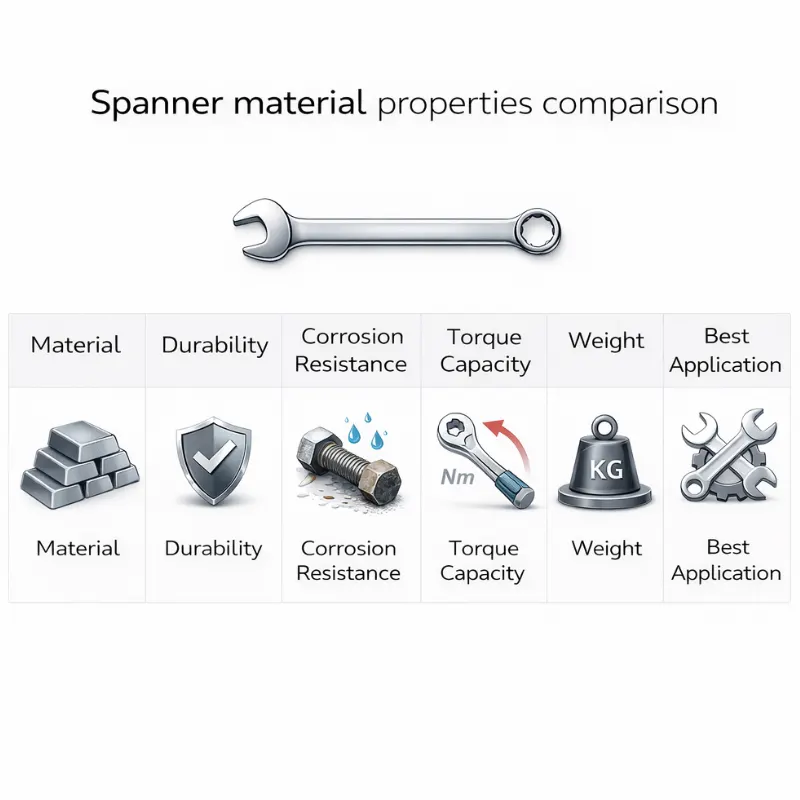
| Material | Durability | Corrosion Resistance | Torque Capacity | Weight | Best Application |
|---|---|---|---|---|---|
| Carbon Steel (CS) | Medium | Low | Medium | Medium | DIY repairs |
| Chrome Vanadium (Cr-V) | Very High | High | Very High | Medium | Automotive & industrial |
| Stainless Steel (SS) | Medium | Very High | Medium | Medium | Marine environments |
| Aluminum Alloy | Medium | High | Low | Light | Precision work |
| Brass | Low | High | Low | Medium | Hazardous environments |
Surface Coatings Used on Spanners
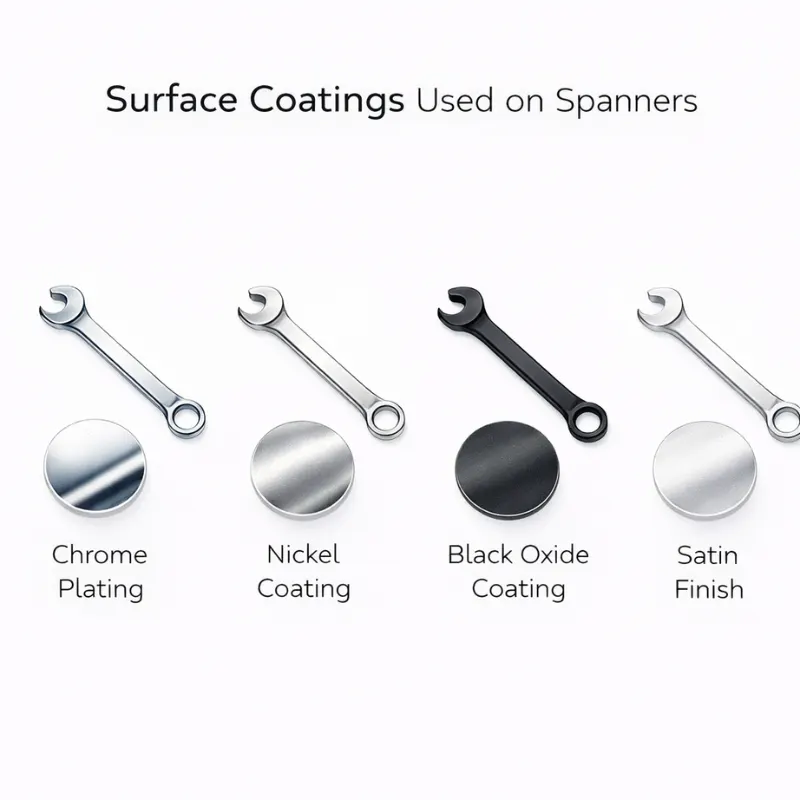
Besides the base material, manufacturers apply protective coatings to improve durability and corrosion resistance.
- Chrome Plating: Chrome plating creates a smooth and corrosion-resistant surface that improves both durability and aesthetics.
- Nickel Coating: Nickel coatings provide strong protection in marine or high-humidity environments.
- Black Oxide Coating: Black oxide coatings reduce glare and improve rust resistance, making them suitable for professional workshop tools.
- Satin Finish: Satin finishes improve grip and reduce reflection from bright workshop lighting.
How to Choose the Right Spanner Material in 3 Steps
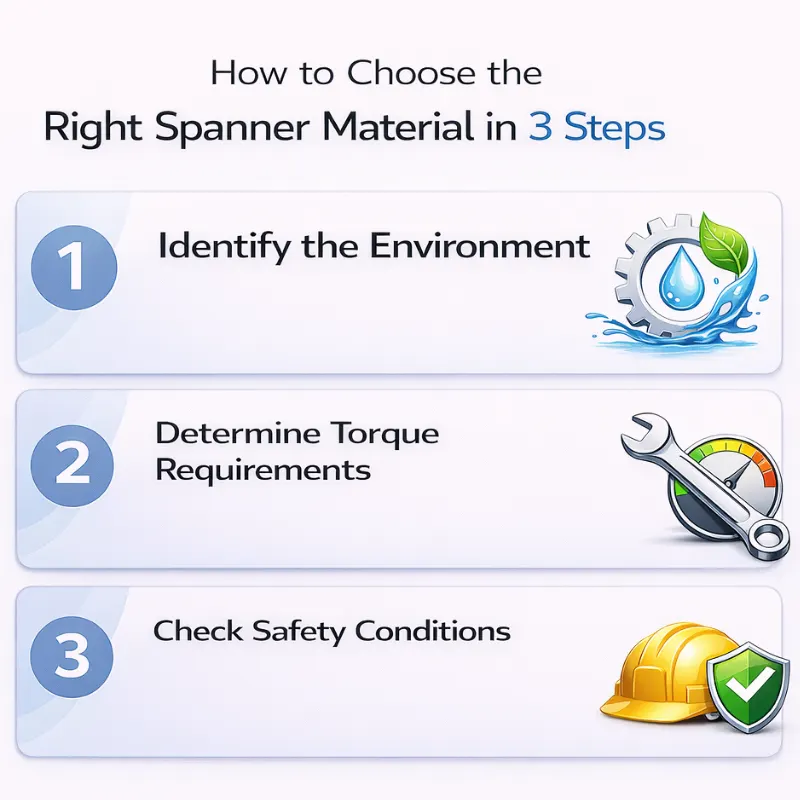
Selecting the right spanner material becomes easier when you follow a simple decision process.
Step 1: Identify the Environment
Wet or marine environments require corrosion-resistant materials such as stainless steel.
Step 2: Determine Torque Requirements
Heavy mechanical work requires high-strength alloys like chrome vanadium steel.
Step 3: Check Safety Conditions
Hazardous environments such as oil or gas facilities require non-sparking brass tools.
Why Chrome Vanadium Spanners Are the Industry Standard
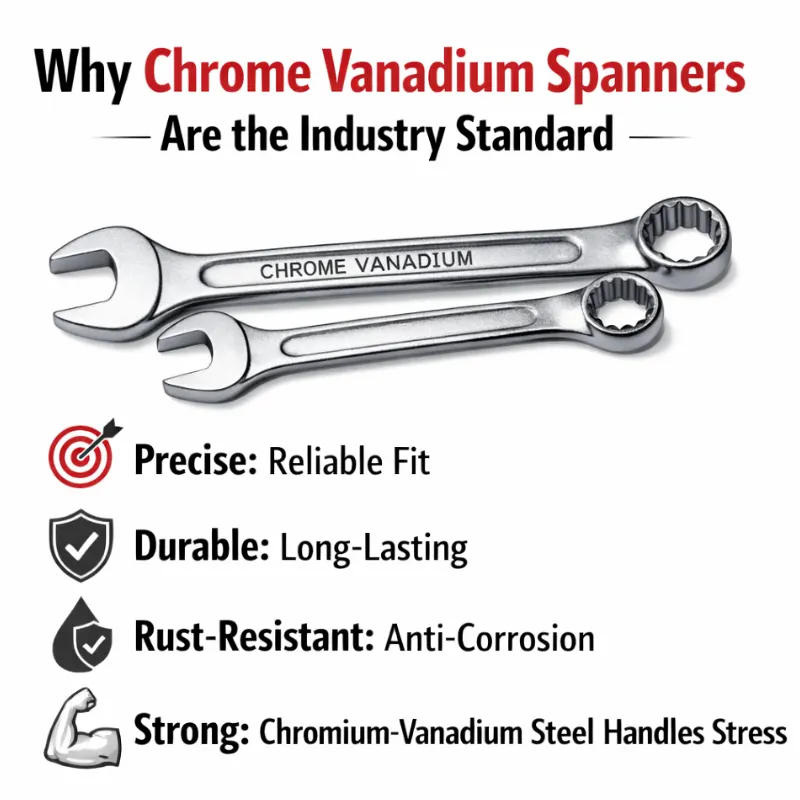
Chromium-vanadium steel remains the preferred material for professional hand tools because it provides the best balance of strength, durability, and corrosion resistance.
Spanners made from drop-forged Cr-V steel can withstand repeated mechanical stress while maintaining precise dimensions.
For automotive technicians, engineers, and maintenance professionals, Cr-V tools provide long service life and reliable performance.
About JCBL Hand Tools
JCBL Hand Tools produces professional-grade hand tools designed for industrial reliability and durability. The company manufactures spanners using drop-forged chrome vanadium steel that meets international standards for strength and precision.
The brand is part of the JCBL Group, a diversified engineering organization with decades of expertise in automotive manufacturing and mobility solutions.
JCBL tools are engineered to meet the requirements of automotive workshops, industrial maintenance teams, distributors, and OEM partners. The company also supports bulk manufacturing and customized tool kits for manufacturers, fleet operators, and professional service centers.
Conclusion
The material used to manufacture a spanner plays a crucial role in determining its strength, durability, torque capacity, and resistance to corrosion. While materials such as carbon steel, stainless steel (SS), aluminum alloy, and brass serve specific applications, chrome-vanadium steel (Cr-V) remains the preferred choice for most professional and industrial spanners due to its superior strength and long service life.
Understanding the properties of different spanner materials helps users select the right tool for their work environment, torque requirements, and safety conditions. For automotive workshops, industrial maintenance teams, and professional technicians, choosing high-quality, standards-compliant spanners ensures reliable performance, improved safety, and a longer tool lifespan.
FAQs
Chrome vanadium steel (Cr-V) is widely considered the strongest material used in standard spanners because it offers high tensile strength, excellent durability, and resistance to corrosion.
Yes. Chrome vanadium spanners provide higher strength, better wear resistance, and greater durability than carbon steel tools, making them ideal for professional mechanical work.
Brass spanners are non-sparking tools, which means they do not generate sparks when struck against other metals. This makes them safer for industries such as oil, gas, and chemical processing.
Yes. Protective coatings such as chrome plating, nickel plating, and black oxide help prevent corrosion and improve the lifespan of spanners.
Related Articles:
- Want to explore all types of spanners used in workshops and industries? Check out:
👉 Different Types of Spanners - Curious about what materials make spanners strong and durable? Read:
👉 What Is a Ring Spanner?
Related Post
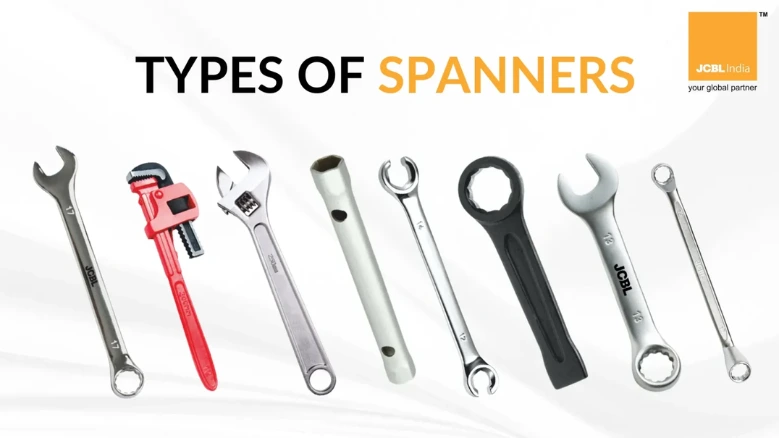
Different Types Of Spanners and Their Uses
Spanners are essential tools for various mechanical and DIY tasks. These versatile tools come in [...]
What is a Box Spanner? Types, Uses & Benefits
A box spanner is a tubular tool used to tighten or loosen nuts and bolts, [...]
Spanner Manufacturer and Supplier From India – A Leading Supplier
Spanners are widely used from regular home maintenance to a mechanic’s garage. Industries including manufacturing, [...]