What Are Striking Tools? Types, Uses, & Examples
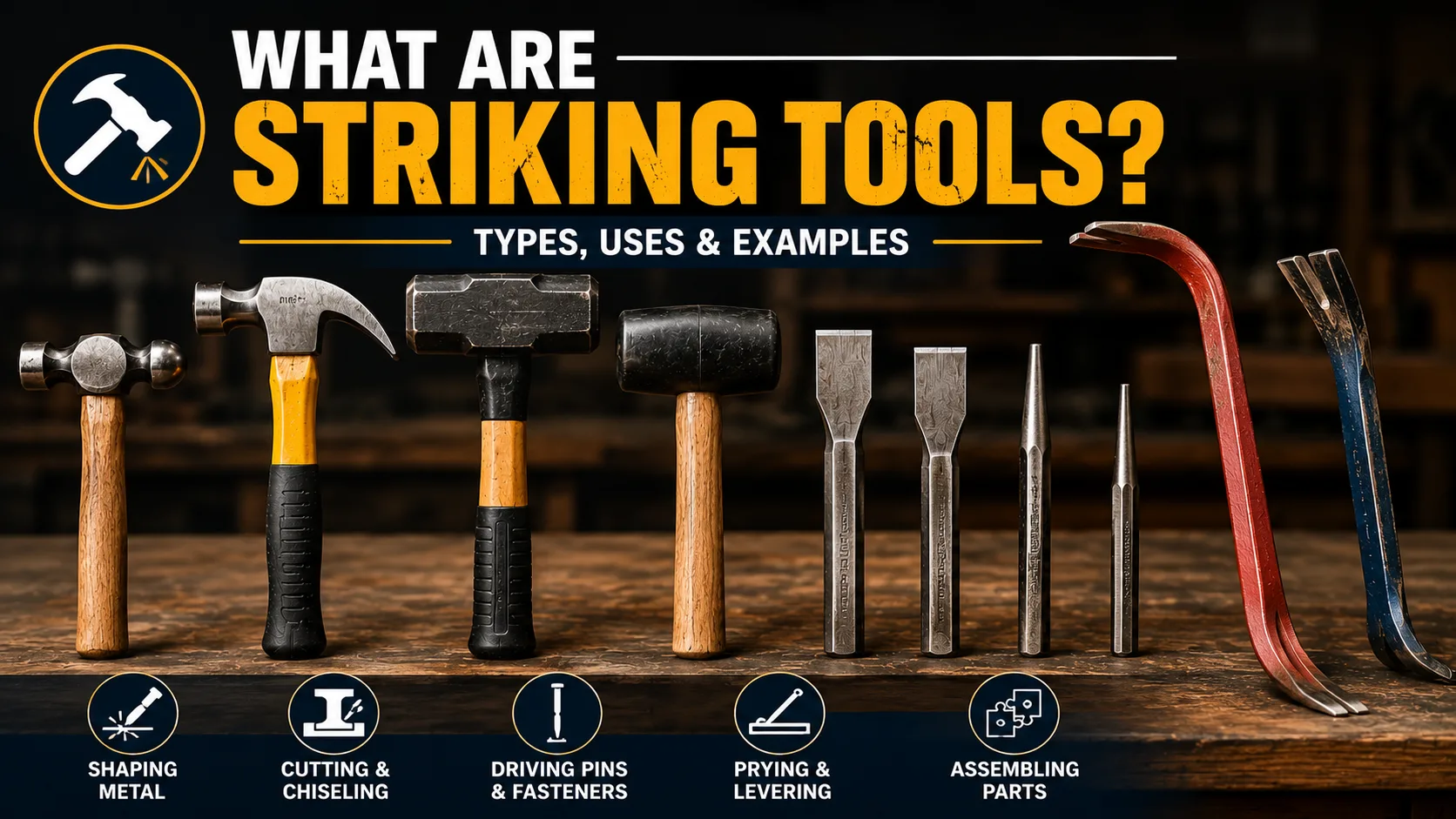
Striking tools are among the most commonly used hand tools in workshops, construction sites, automotive garages, fabrication units, and carpentry projects. These tools are designed to deliver force through impact, making them essential for shaping materials, driving objects, loosening components, or performing demolition work.
From a simple claw hammer to a heavy-duty sledgehammer, professional striking tools are used across multiple industries because of their efficiency, durability, and versatility.
In this guide, you will learn:
- What striking tools are (Definition & Meaning)
- Types of striking tools and their uses
- Common examples and industrial applications
- Uses in workshop, carpentry, and automotive fields
- Crucial striking tool safety precautions
- Difference between striking and driving tools
What Are Striking Tools?
A striking tool is any hand tool designed to deliver a high impact force or repeated blows to an object, surface, or another tool to shape, drive, break, or adjust it.
Most industrial striking tools consist of:
- A striking head made from hardened steel, rubber, wood, brass, or composite material.
- A handle designed for ergonomics, secure grip, balance, and shock absorption (fiberglass, wood, or steel).
Simple Definition & Mechanics
In percussive tools definition types, these instruments are categorized by how they deliver kinetic energy. Essentially, a striking tool or striking hammer converts the swinging motion of the user into raw hitting power upon impact.
Where Professionals Often Confuse:
Which tool transfers the force of a hammer strike into a small area?
A chisel or a punch (specifically classified as struck tools) is used to transfer and concentrate the massive force of a hammer strike into a small, localized area for clean cutting, carving, or precise marking.
Types of Striking Tools
Different types of striking tools are engineered for specific mechanical and vocational applications. Choosing the correct strike tool improves workspace efficiency, personal safety, and work precision.
Striking Hand Tools Architecture
| Metal-Faced Tools | Soft-Faced / Mallets | Struck & Companion Gear |
|---|---|---|
| Claw Hammer – Carpentry & DIY | Rubber Mallet – Surface-Sensitive Assembly | Chisels (Cold/Wood/Masonry) – Material Cutting |
| Ball Peen Hammer – Metalworking & Punches | Dead Blow Hammer – Anti-Rebound Alignment | Punches (Pin/Center) – Precise Marking & Drifts |
| Sledge & Crack Hammers – Heavy Demolition | Plastic & Nylon Face – Fine Machining Finish | Crowbars & Pry Bars – Leverage & Teardowns |
1. Claw Hammer
A claw hammer is one of the most common striking hand tools used globally in carpentry and everyday household work.
- Common Uses: Driving nails into wood, removing stubborn nails, light demolition tasks, and furniture assembly.
- Key Features: Hardened steel striking face, curved claw for nail extraction, and a balanced handle.
2. Ball Peen Hammer
The ball peen hammer is a staple striking gear mainly used in metalworking and mechanical workshops.
- Common Uses: Shaping metal sheets, riveting, driving pin punches, and striking cold chisels.
- Why It Is Popular: The rounded ball peen allows engineers to expand and shape metal surfaces without causing structural cracks. Learn more about how it differs from other specialized variations in this detailed guide on different types of hammers.
3. Sledgehammer & Club Hammers
A sledgehammer is a heavy-duty pounding tool designed for extreme high-impact applications.
- Vocational Context: In industrial fields, workers often utilize types of striking tools to crack chisel sledge setups. This involves using a short-handled club hammer or heavy sledge to strike heavy demolition chisels.
- Common Uses: Breaking concrete, masonry demolition work, driving large stakes, and heavy industrial maintenance.
4. Rubber Mallet
A rubber mallet delivers a softer, broader impact compared to traditional steel-faced tools like hammers.
- Common Uses: Shaping delicate sheet metal, installing floor tiles, woodworking, and tight tolerance assembly work.
- Advantages: Minimizes marks, dents, and surface damage on sensitive materials.
5. Dead Blow Hammer
A specialized striking instrument designed to eliminate rebound and bounce-back after impact.
- Common Uses: Automotive chassis repair, precision equipment alignment, and machinery assembly.
- Benefits: Filled with steel shot inside the head, it provides maximum impact control, stops dead on the surface, and significantly reduces operator fatigue.
In my workshop experience, using a dead blow hammer during suspension repair saves your wrists from heavy vibration fatigue.
6. Brass Hammer
Brass hammers are non-sparking striking tools commonly mandatory in hazardous, volatile environments.
- Common Uses: Oil and gas environments, industrial chemical maintenance, and precision mechanical gear adjustments.
- Why Brass Is Used: Brass creates a softer impact than steel and lowers the risk of catastrophic friction sparks around flammable gasses.
7. Soft-Face Hammer
Soft-face hammers utilize interchangeable, replaceable striking faces made from nylon, plastic, copper, or rawhide.
- Common Uses: Fine finishing work, tool and die making, and surface-sensitive industrial operations where metal-on-metal contact must be avoided.
8. Chisels (The Essential Struck Tools)
While chisels do not apply force on their own, they are the most critical “Struck Tools” designed specifically to work in tandem with striking hammers. They accept the kinetic energy of a hammer blow to cut or shape hard materials.
- Cold Chisels: Made from hardened high-carbon steel, these are struck with a ball peen hammer to cut rivets, split rusted nuts, or chip away sheet metal in fabrication workshops.
- Wood Chisels: Used in carpentry for cutting precise joinery, mortising, and shaving wood surfaces when tapped with a wooden or rubber mallet.
- Masonry/Crack Chisels: Heavy-duty struck tools used alongside heavy club hammers or sledgehammers in the construction field (crack chisel sledge tools types field) to fracture brick, score stone, or execute clean concrete demolition.
9. Crowbars & Pry Bars (The Complementary Demolition Gear)
Though crowbars and pry bars function through leverage rather than manual swinging, they are the vital companion tools to heavy striking gear during extraction and demolition jobs.
- The Structural Connection: Once heavy-duty striking tools like sledgehammers break concrete or loosen dense structural framing, crowbars and pry bars step in to pry apart components, lift heavy machinery, or pull out deeply embedded industrial fasteners.
- Common Industrial Types: Wrecking bars (essential for structural construction teardowns), aligner pry bars (used for precision mechanical alignment in automotive shops), and heavy pinch bars for industrial material handling.
10. Punches (Precision Struck Tools)
Just like chisels, punches are essential high-carbon steel struck tools that cannot function without a direct blow from a striking hammer (usually a ball peen hammer). They are used to transfer force to a highly concentrated point.
- Center Punches: Used to create a distinct dimple or indentation in metal surfaces before drilling, preventing the drill bit from walking or skating.
- Pin & Drift Punches: Engineered with a straight, narrow shaft to safely drive out mechanical pins, split pins, and retaining keys from workshop assemblies.
- Prick Punches: Featuring a sharper point than a center punch, these are struck lightly to layout precise markings and scribe lines on sheet metals.
Examples of Striking Tools
If you are listing the examples of striking tools used across the industrial and vocational trade field, here is the definitive list:
- Claw hammer (Carpentry & general use)
- Ball peen hammer (Metalworking & riveting)
- Sledgehammer (Heavy demolition)
- Rubber mallet (Tile setting & shaping)
- Dead blow hammer (Automotive & assembly)
- Brass hammer (Non-sparking industrial maintenance)
- Soft-face hammer (Finishing work)
- Cross peen hammer (Blacksmithing & panel beating)
- Club hammer / Imperial crack hammer (Masonry striking)
- Framing hammer (Heavy-duty construction framing)
- Chisels (The Essential Struck Tools)
- Crowbars & Pry Bars (The Complementary Demolition Gear)
- Punches (Precision Struck Tools)
Uses of Striking Tools Across Industries
Industrial Striking Gear Uses
| Carpentry | Workshop & Engineering | Automotive |
| Claw Hammers | Ball Peen Hammers | Dead Blow Hammers |
| Wood Mallets | Struck Tools (Chisels/Punches) | Non-Sparking Brass Heads |
| Framing Tools | Pin Punches & Alignment Drift | Seized Hub Removal Tools |
| Woodworking Chisels | Cape & Diamond Point Chisels | Heavy-Duty Crowbars & Pry Bars |
1. Striking Tools in Workshop Applications
General maintenance units rely heavily on pounding tools for daily fabrication tasks. Typical workshop uses include driving pin punches, setting alignment pins, breaking rusted parts loose, and riveting sheet metals.
2. Striking Tools in Carpentry
Woodworking requires highly controlled striking force to avoid splitting materials. Carpentry applications involve flush-driving nails, seating tight wooden mortise joints, and striking wood-carving chisels.
3. Striking Tools in Automotive Industry
Automotive technicians use striking hand tools daily during chassis repair, suspension overhaul, and component installation. Dead blow and brass hammers are preferred here to remove seized wheel hubs or brake rotors without damaging the delicate mechanical bearings.
Striking Tool Safety Tips
Using percussive hand tools incorrectly can lead to serious workshop injuries. Always implement these industrial safety protocols:
- Inspect Struck Tools & Hammers: Check for cracked handles, loose tool heads, or split fiberglass. Never use a tool with a wobbly head.
- Avoid Mushroomed Heads: Over time, tools like chisels develop a flattened, curled edge called a mushroomed head. Always grind these smooth; otherwise, a hammer strike can cause dangerous metal fragments to shatter and fly off.
- Wear Proper PPE: Always wear impact-rated safety goggles, heavy-duty work gloves, and steel-toe safety shoes.
- Match Tool Hardness: Never strike a hardened steel surface with a hardened steel hammer face (e.g., striking a file with a ball peen). It can cause structural fracturing. Use a soft-faced, brass, or dead blow option instead.
I always tell my readers: never skip safety goggles. A tiny metal chip from a mushroomed chisel head can cause serious injury.
Difference Between Striking Tools and Driving Tools
While often grouped together as “striking and driving tools” in tool taxonomy, they serve different operational roles.
| Feature | Striking Tools | Driving Tools |
| Main Purpose | Delivers sudden kinetic impact force. | Applies continuous, direct force to seat fasteners. |
| Common Examples | Hammers, Mallets, Sledges, Hand Clubs. | Screwdrivers, Nut Drivers, Hex Wrenches. |
| Motion Used | Swinging kinetic impact. | Rotational twisting or manual linear force. |
| Interaction | Hits an object or hits a struck tool (chisel). | Directly mates inside or around a fastener head. |
Maintenance & Long-Term Care
- Clean After Use: Wipe off oil, grease, and metal shavings to prevent slippery handles.
- Rust Prevention: Apply a micro-layer of light machine oil to carbon steel heads.
- Dry Storage: Store tools in an organized tool chest away from high humidity to protect structural integrity.
Conclusion
Striking tools are the backbone of daily operations across carpentry, mechanical workshops, and automotive garages. Understanding how to choose the right tool and pair it correctly with a struck tool (like a chisel) ensures both maximum efficiency and job-site safety.
Expert Pro-Tip: For heavy-duty industrial or professional use, always invest in trusted brands like JCBL Hand Tools. Their advanced shock-absorption tech and strict safety standards drastically reduce user fatigue and tool failure compared to cheap alternatives.
Whether you are handling precision automotive adjustments or heavy demolition, always match the hammer to the material, inspect for mushroomed heads, and never compromise on wearing your safety goggles.
FAQ
They are hand tools engineered to apply massive impact force to shape, break, loosen, drive, or adjust components and work surfaces.
Yes. A sledgehammer is classified as a heavy-duty industrial striking tool designed for high-impact masonry crushing and demolition work.
A hammer typically features a hardened metal face meant for high-force applications, while a mallet utilizes softer compounds (rubber, wood, plastics) to deliver force without marring or damaging delicate finishes.
Ball peen hammers are preferred for metalworking because they are specifically engineered for shaping, riveting, and striking metal surfaces without causing excessive structural damage.
A struck tool is any tool (like a cold chisel, punch, or star drill) that does not deliver the blow itself, but is designed to be hit by a striking tool. In industrial work, striking tools and struck tools always work together to transfer high impact force into a precise, targeted area.
Related Readings: