Checklist for Importing Hand Tools from India
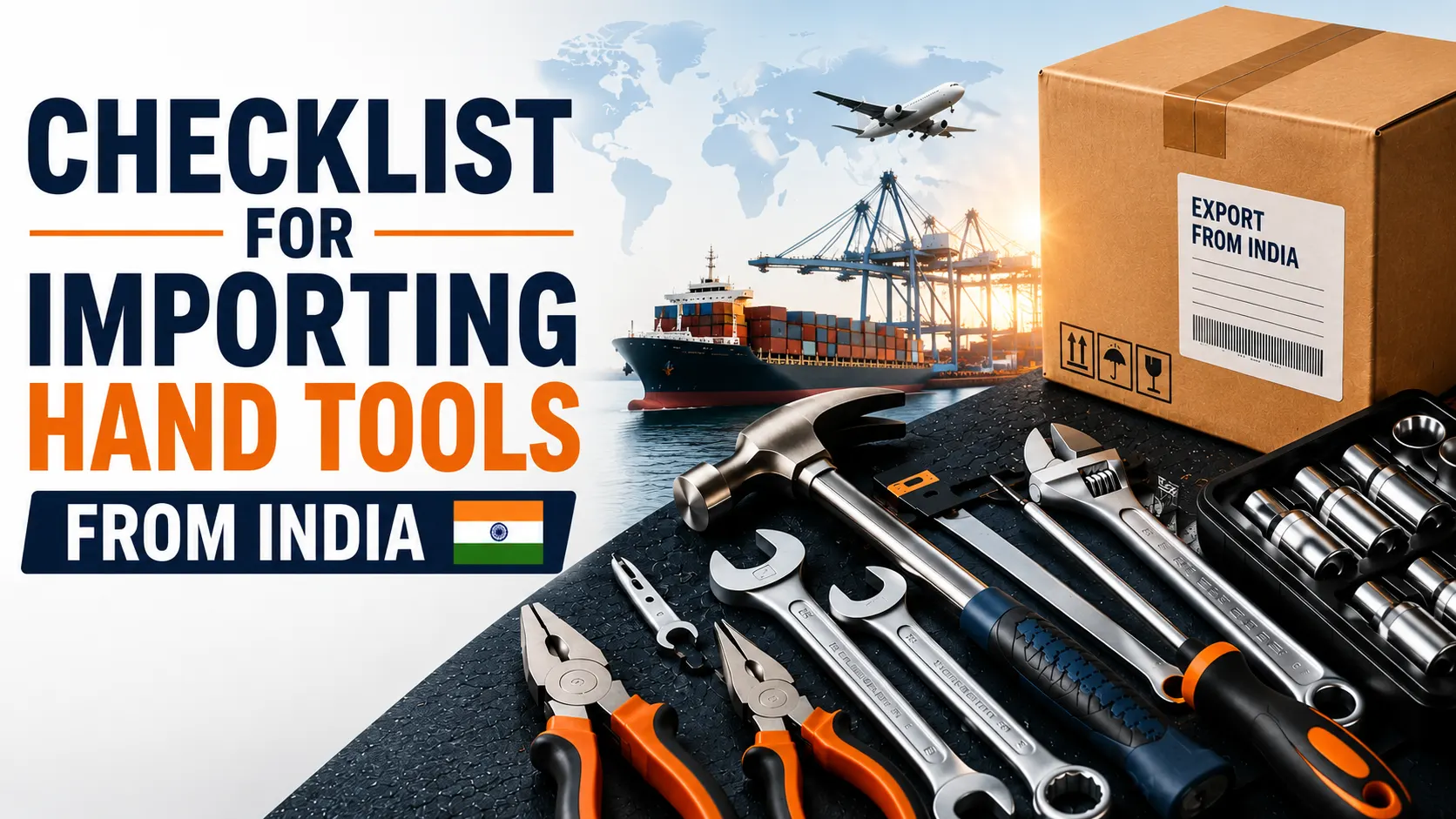
India is one of the leading sourcing destinations for industrial hand tools because of its strong manufacturing base, competitive pricing, and export-focused production. Buyers across the USA, Europe, the Middle East, and Africa import Indian hand tools for industrial supply, distribution, and OEM manufacturing.
However, importing hand tools is not only about finding the lowest price. Buyers must verify suppliers, check product quality, confirm compliance requirements, and review shipping documents before placing bulk orders.
Quick Checklist for Importing Hand Tools from India
- Verify supplier credentials and export certifications
- Confirm product specifications and steel grades
- Request samples before bulk production
- Inspect products through third-party quality checks
- Classify products under the correct HS Code Chapter 82
- Review export packaging and labeling standards
- Finalize shipping terms and export documents
Why Buy Hand Tools from India Instead of China?
India has become a preferred sourcing alternative for industrial hand tools because of its engineering capabilities, flexible production, and competitive manufacturing costs.
Indian manufacturers commonly produce tools according to DIN, ANSI, and ISO standards for export markets.
Key advantages include:
- Competitive pricing
- OEM and private-label manufacturing
- Strong forging infrastructure
- Flexible order quantities
- Export-focused production systems
Essential Checklist for Importing Hand Tools from India
1. Verify Supplier Credentials
Supplier verification is the first step in reducing import risks.
Before placing an order, buyers should check:
- IEC (Import Export Code)
- GST registration
- ISO certification
- Export experience
- International buyer references
IEC details can be verified through the DGFT (Directorate General of Foreign Trade) portal.
2. Confirm Product Specifications & Steel Grades
Clear product specifications help avoid shipment disputes and inconsistent quality.
Buyers should also confirm compliance with:
- DIN standards
- ANSI standards
- ISO specifications
All technical specifications should be documented before manufacturing begins.
3. Request Samples Before Bulk Orders
Product samples help buyers evaluate quality before confirming large-volume orders.
Pre-production samples should be checked for:
- Tool finish
- Grip quality
- Rust resistance
- Weight balance
- Functional performance
- Packaging quality
For OEM orders, buyers should also approve branding and packaging during the sampling stage.
4. Conduct Third-Party Quality Inspection
Third-party inspections help buyers identify quality issues before shipment.
Pre-shipment inspections usually check:
- Manufacturing defects
- Hardness consistency
- Dimension accuracy
- Coating quality
- Packaging standards
Common testing methods include:
- Rockwell hardness testing
- Torque testing
- Salt spray testing
- AQL inspections
Independent inspection reports also improve sourcing transparency.
5. Classify Products Under the Correct HS Code
Correct HS classification is important for customs clearance and import compliance.
Most industrial hand tools fall under:
- HS Code Chapter 82: Base metal hand tools and industrial tools
HS codes affect:
- Import duties
- Customs procedures
- Compliance requirements
- Shipping documents
Buyers should confirm HS codes with freight forwarders or customs brokers before shipment.
6. Review Export Packaging & Labeling Standards
Improper packaging can damage tools during shipping.
Export packaging should include:
- Rust-protection wrapping
- Moisture-resistant cartons
- Barcode labels
- Product labels
- Country-of-origin markings
Retail buyers may also require custom branding and multilingual packaging.
7. Finalize Shipping Terms & Export Documents
Shipping terms define logistics responsibility and shipment costs.
Common Incoterms 2020 used in hand tool exports include:
- FOB (Free on Board)
- CIF (Cost, Insurance & Freight)
- EXW (Ex Works)
Importers should also verify export documents before shipment.
All shipping documents should be reviewed carefully before cargo dispatch.
Common Mistakes Buyers Should Avoid
Common importing mistakes include:
- Choosing suppliers based only on price
- Skipping third-party inspections
- Ignoring packaging quality
- Not confirming specifications in writing
- Using incorrect HS codes
- Not clarifying Incoterms before shipment
Even small documentation or quality errors can lead to customs delays and supply chain issues.
Conclusion
India continues to be a reliable sourcing destination for industrial hand tools because of its manufacturing expertise, export capabilities, and competitive pricing. The safest way to import hand tools from India is to work with verified manufacturers, conduct third-party inspections, confirm HS classifications, and review all shipping documents before dispatch.
Following a structured sourcing checklist helps buyers reduce risks, improve product consistency, and build reliable long-term supplier relationships.
Buyers looking to strengthen their procurement strategy should also learn how to evaluate hand tool manufacturers and sourcing partners before placing large-volume orders.
FAQs
Indian hand tool exporters commonly maintain ISO certifications and manufacture products according to DIN, ANSI, or ISO standards depending on export market requirements.
Industrial hand tools are commonly manufactured using Chrome Vanadium Steel (Cr-V), Chrome Molybdenum (Cr-Mo), and High Carbon Steel.
HS Code Chapter 82 covers base metal hand tools, industrial tools, and related mechanical implements used in international trade.
Ludhiana and Jalandhar are known for forged spanners and wrenches, while Rajkot specializes in pliers and precision-machined tools.
Buyers can reduce sourcing risks by verifying suppliers, approving samples, conducting third-party inspections, and documenting specifications before production.