Choosing the Right Spanner Supplier for Global Distribution
- What Should You Look for in a Spanner Supplier?
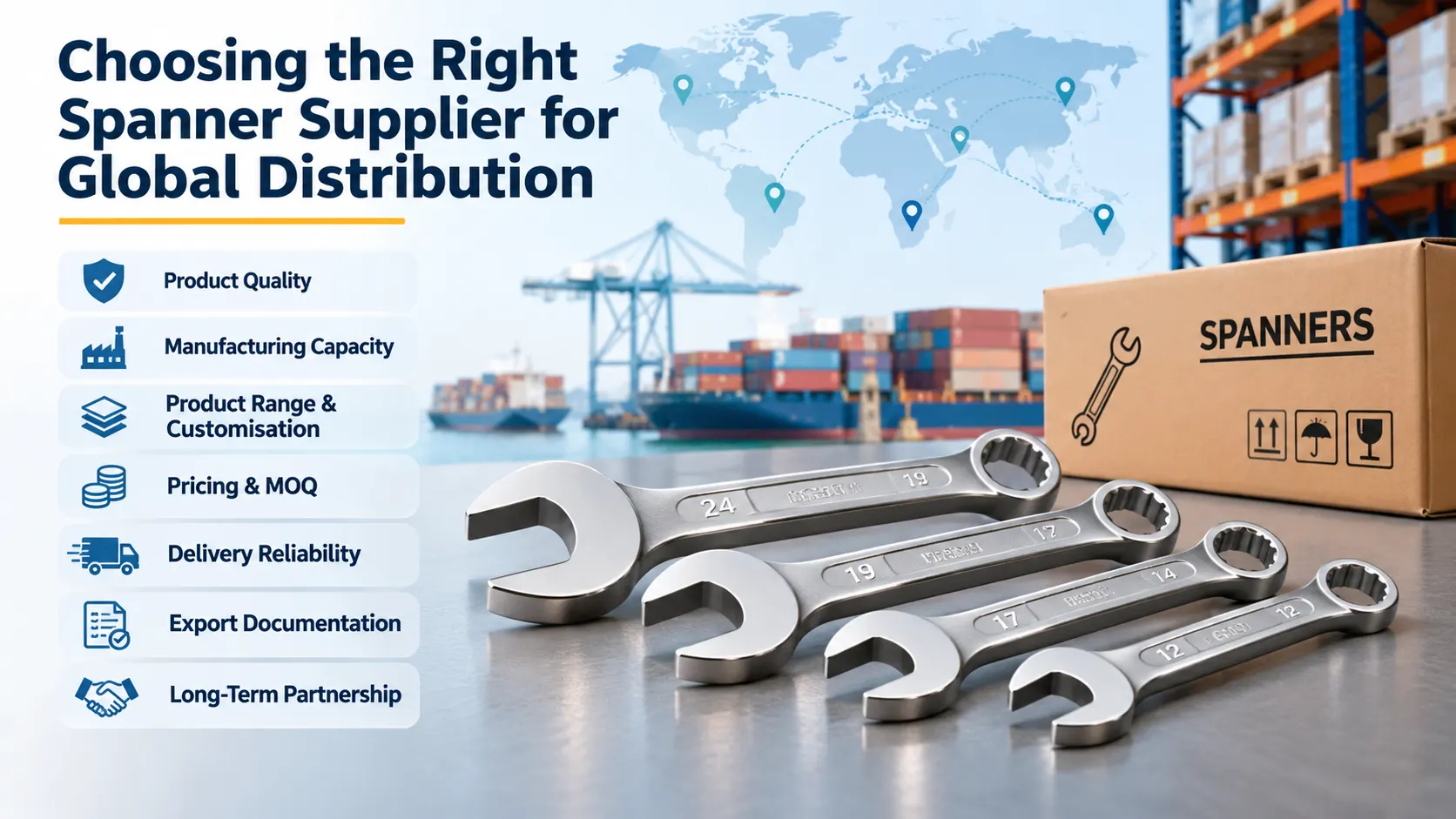
- 7 Factors to Consider When Choosing a Spanner Supplier
- Manufacturer vs. Spanner Distributor: Which Should You Choose?
- Questions to Ask a Spanner Supplier Before Placing a Bulk Order
- How to Identify a Reliable Spanner Supplier for Global Distribution
- Conclusion
- Frequently Asked Questions (FAQs)
Choosing the right spanner supplier for global distribution requires evaluating product quality, manufacturing capacity, pricing, delivery reliability, and export readiness. For importers, wholesalers, and industrial distributors, a dependable supplier should meet agreed product specifications, fulfil bulk orders consistently, and provide the documentation required for international shipments. Evaluating these factors before placing an order helps buyers reduce sourcing risks, maintain inventory availability, and build sustainable supplier relationships.
What Should You Look for in a Spanner Supplier?
A reliable spanner supplier should offer consistent product quality, documented technical specifications, adequate order fulfilment capacity, transparent pricing, dependable lead times, and appropriate export support. Buyers should verify these capabilities through product samples, quality records, written quotations, and confirmed delivery terms before committing to a bulk order.
7 Factors to Consider When Choosing a Spanner Supplier
1. Verify Spanner Quality and Technical Specifications
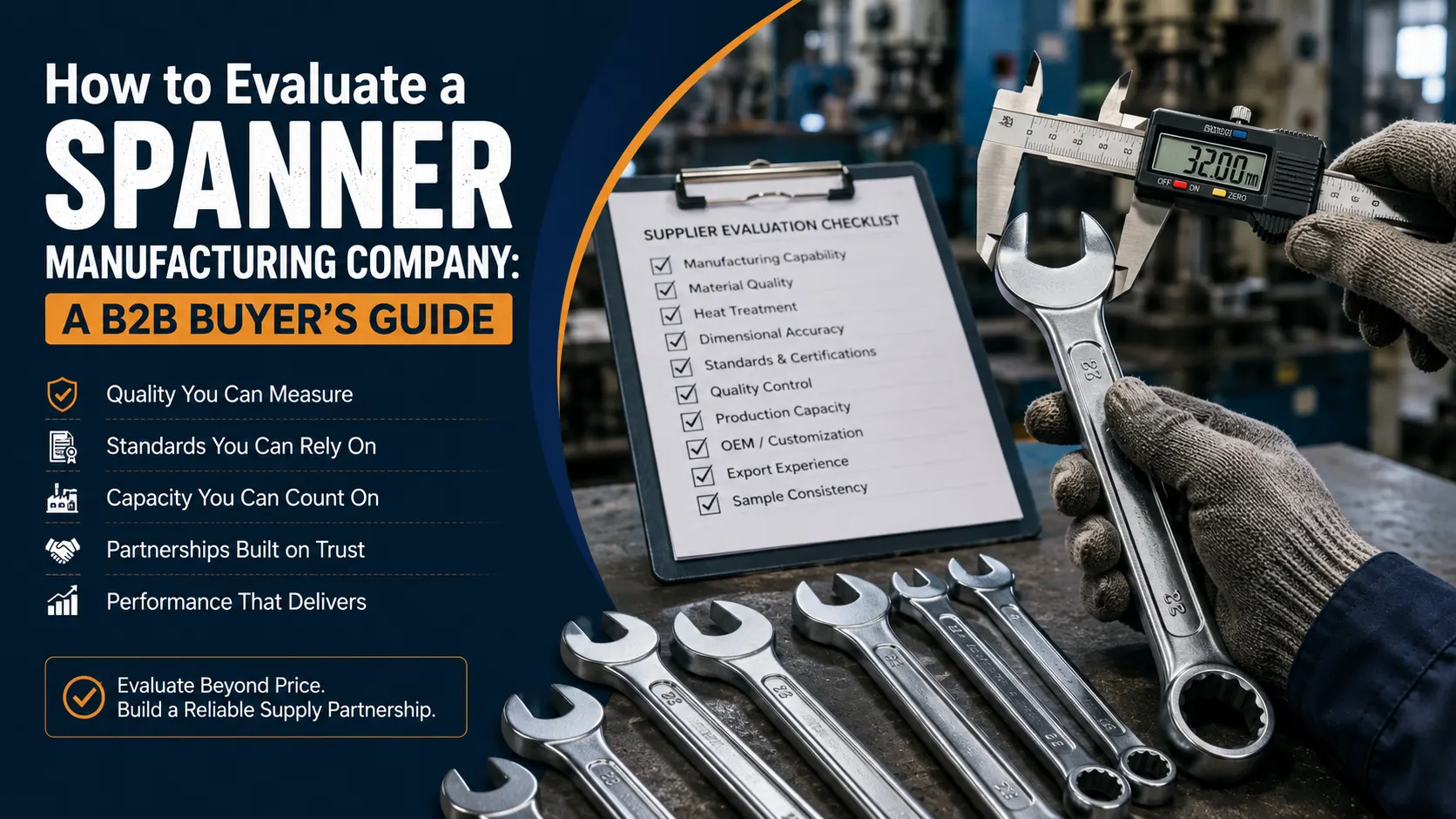
Consistent quality is essential for tool performance and minimizing product returns. Before selecting a supplier, verify:
- Material and manufacturing: Material grade and manufacturing process.
- Dimensions and finish: Accuracy, tolerances, and surface finish.
- Mechanical properties: Applicable hardness and strength requirements.
- Quality documentation: Inspection reports, test records, and traceability.
- Standards compliance: Relevant product standards and destination-market requirements.
Request samples and verify them against agreed specifications. Arrange independent testing where necessary before approving bulk orders.
2. Assess Manufacturing Capacity and Bulk Order Fulfilment
Choose a supplier that can fulfil bulk orders consistently and support repeat purchases without compromising quality or delivery schedules.
- Verify production capacity and current order commitments.
- Confirm lead times and flexibility to handle demand fluctuations.
- For distributors, check stock availability and replenishment capabilities.
- Establish quality acceptance criteria to maintain consistency across batches.
3. Evaluate Product Range and Customisation Options
A suitable product range helps distributors meet diverse customer requirements while simplifying procurement. Check availability of:
- Open-end, ring, combination, and adjustable spanners.
- Metric and imperial sizes.
- Individual spanners and sets.
- Private-label branding and customised packaging.
- Products made to specific requirements.
Confirm MOQs, customisation costs, and available options. Approve specifications and packaging artwork before production.
4. Compare Pricing, MOQ, and Total Landed Cost
The lowest unit price does not always deliver the lowest overall cost. Compare supplier quotations based on equivalent specifications, quantities, and delivery terms.
Consider:
- Unit prices and minimum order quantities (MOQs).
- Tooling, customisation, and packaging charges.
- Freight, insurance, and applicable import duties and taxes.
- Payment terms and quotation validity.
Calculate the estimated landed cost per unit and confirm the applicable Incoterms® rule to clarify delivery responsibilities, costs, and risk allocation.
5. Check Lead Times and Supply Chain Reliability
Reliable deliveries help distributors maintain inventory and avoid stockouts. Before committing, confirm:
- Production, dispatch, and estimated transit times.
- Delivery schedules based on order volume and destination.
- Procedures for delays, shipping disruptions, and urgent replenishment.
- Availability of scheduled orders or buffer stock, where feasible.
Prioritise suppliers that provide realistic timelines and timely updates when delivery schedules change.
6. Confirm Export Documentation and Global Distribution Support
International shipments require accurate documentation and compliance with applicable destination-market requirements.
Verify whether the supplier can provide:
- Commercial invoices and packing lists.
- Certificates of origin, where required.
- Applicable product testing or conformity documents.
- Required packaging and labelling.
- Coordination with freight forwarders, where necessary.
Confirm responsibility for export clearance, freight, insurance, and import formalities before placing the order. Requirements vary by destination, so verify them in advance.
7. Evaluate Communication and Long-Term Partnership Potential
Effective communication helps prevent order discrepancies and resolve issues quickly. Assess the supplier’s ability to:
- Provide clear quotations and accurate order confirmations.
- Respond promptly to technical queries and specification changes.
- Share timely production and shipping updates.
- Handle defects, complaints, and corrective actions through a defined process.
Agree on quality expectations, communication procedures, and issue-resolution terms to support consistent, long-term supply.
Manufacturer vs. Spanner Distributor: Which Should You Choose?
The right sourcing model depends on order volume, product variety, customisation requirements, and stock availability.
| Factor | Manufacturer | Distributor |
| Order volume | May suit large or recurring production orders | May accommodate smaller or mixed orders |
| Customisation | May offer direct production customisation | Depends on supplier arrangements |
| Product range | Depends on its manufacturing portfolio | May offer products from multiple brands |
| Availability | Depends on production schedules and stock | May offer readily available inventory |
| Best suited for | Production-scale or customised requirements | Mixed-product sourcing and flexible quantities |
Neither option is automatically cheaper or faster. Compare actual capabilities, availability, and total purchasing costs against your requirements.
Questions to Ask a Spanner Supplier Before Placing a Bulk Order
Use these questions to evaluate prospective suppliers:
- ✓What spanner types, sizes, materials, and specifications do you offer?
- ✓What are your MOQs and volume-based prices?
- ✓Can you provide samples and relevant quality documentation?
- ✓What production capacity and lead times can you commit to?
- ✓Do you offer private-label branding or customised packaging?
- ✓Which export documents can you provide for the destination market?
- ✓What payment, delivery, and quality-claim terms apply?
Request written answers and compare suppliers against the same criteria to support an objective procurement decision.
How to Identify a Reliable Spanner Supplier for Global Distribution
Before finalising a supplier, complete these verification steps:
- ✓Verify its business identity and manufacturing or sourcing capabilities.
- ✓Check samples against the agreed technical specifications.
- ✓Review relevant quality records and compliance documentation.
- ✓Compare quotations using total landed cost rather than unit price alone.
- ✓Confirm production schedules, delivery terms, and shipping responsibilities in writing.
- ✓Where practical, start with a manageable order and evaluate fulfilment before scaling.
Maintain a supplier evaluation record so your procurement team can compare performance and reassess suppliers as demand changes.
Conclusion
Choosing the right spanner supplier for global distribution involves more than comparing quotations. Product quality, bulk fulfilment capacity, total landed cost, delivery reliability, and export readiness all influence whether a supplier can meet your distribution requirements.
JCBL Hand Tools is the brand to consider when evaluating spanner sourcing options for your business. Review the available product range and relevant specifications, then contact the company to discuss your required quantities, customisation needs, and destination markets.
A well-informed supplier decision starts with verified product information, clear commercial terms, and a supply arrangement aligned with your long-term distribution objectives.
Frequently Asked Questions (FAQs)
1. How do you choose a reliable spanner supplier?
Evaluate product quality, technical specifications, production or sourcing capacity, pricing, lead times, export documentation, and complaint-handling procedures. Verify important claims through samples, records, and written commitments before placing a bulk order.
2. What should a bulk spanner supplier provide?
A bulk spanner supplier should provide products that meet agreed specifications, transparent pricing, confirmed order quantities, realistic delivery commitments, appropriate packaging, relevant quality documentation, and the shipment paperwork required for the transaction.
3. Is it better to buy spanners directly from a manufacturer?
Direct manufacturing may suit large-volume orders, recurring production, or customised products. A distributor may be more suitable for mixed product ranges, smaller quantities, or readily available stock. Compare actual capabilities and costs before deciding.
4. What documents should you request from an international spanner supplier?
Depending on the destination and transaction, relevant documents may include a commercial invoice, packing list, certificate of origin, and applicable testing or conformity records. Verify the importing country’s requirements before shipment.
5. How can distributors compare spanner supplier quotations?
Compare equivalent products and quantities, including unit prices, MOQs, customisation, packaging, freight, insurance, applicable import costs, payment terms, and delivery responsibilities. This provides a more accurate comparison than unit pricing alone.