What Is CNC Machining in Hand Tools Manufacturing?
- CNC Machining in Hand Tools Manufacturing
- How CNC Machining Works in Hand Tool Production
- Types of CNC Operations Used in Hand Tools Manufacturing
- Materials Used for CNC-Machined Hand Tools
- Benefits of CNC Machining in Hand Tools Manufacturing
- Common Hand Tools Manufactured Using CNC Machines
- CNC Machining vs Traditional Hand Tool Manufacturing
- Quality Control in CNC Tool Manufacturing
- Why CNC Machining Matters for OEM and Export Hand Tools
- Conclusion
- FAQs
Modern hand tools manufacturing depends heavily on precision, consistency, and scalable production. CNC machining has become one of the most important manufacturing technologies for producing industrial-grade hand tools with tight tolerances and repeatable quality.
From wrenches and sockets to pliers and ratchets, CNC machining helps manufacturers produce durable and dimensionally accurate tools for automotive, industrial, construction, and export markets.
CNC Machining in Hand Tools Manufacturing
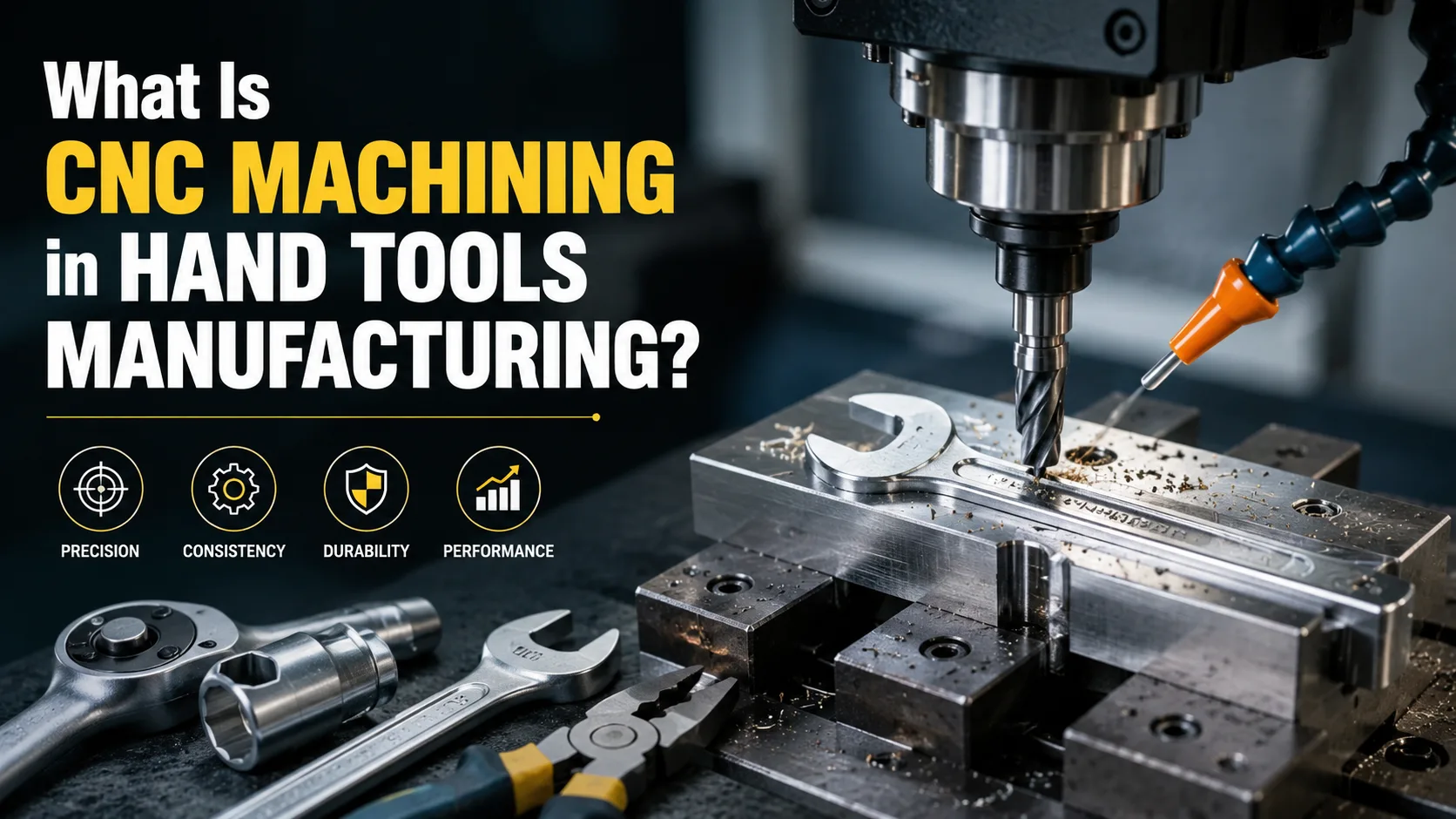
CNC machining in hand tools manufacturing is a computer-controlled production process used to cut, shape, mill, drill, and finish metal tool components with high precision. Manufacturers use CNC machines to produce consistent hand tools with accurate dimensions, smooth finishes, and reliable performance for industrial and commercial applications.
CNC stands for Computer Numerical Control. The process uses programmed software instructions to automate machining operations on metals such as chrome vanadium steel, carbon steel, alloy steel, and stainless steel.
In the hand tools industry, CNC machining is widely used for:
- wrench manufacturing
- socket production
- plier components
- ratchet mechanisms
- screwdriver shafts
- torque tool parts
- precision industrial tools
Because CNC systems are automated, manufacturers can maintain batch consistency and dimensional accuracy across large production volumes.
How CNC Machining Works in Hand Tool Production
In hand tools manufacturing, CNC machining begins with a digital CAD design of the tool or component. The design is converted into machine instructions through CAM software, allowing CNC equipment to perform highly precise machining operations automatically.
The manufacturing process typically includes:
- Raw material selection
- CAD/CAM programming
- CNC machining operations
- Heat treatment
- Surface finishing
- Quality inspection
- Final assembly and packaging
Manufacturers use CNC machining to achieve repeatable accuracy during high-volume production while minimizing manual errors.
For industrial-grade hand tools, even small dimensional variations can affect tool performance, fitment, and durability. CNC machining helps maintain precise tolerances throughout production.
Types of CNC Operations Used in Hand Tools Manufacturing
Different CNC machining operations are used in hand tools manufacturing depending on the tool design, material specifications, precision requirements, and production scale.
1. CNC Milling
CNC milling uses rotating cutting tools to remove material from metal components. Manufacturers commonly use this process for shaping wrench profiles, plier jaws, ratchet housings, and complex tool bodies.
2. CNC Turning
CNC turning rotates the metal workpiece while cutting tools shape cylindrical components. This operation is widely used for screwdriver shafts, socket bodies, extension bars, and precision tool connectors.
3. CNC Drilling
CNC drilling creates precise holes and internal openings required for fastening points, assembly alignment, and internal mechanisms in industrial hand tools and precision-engineered tool components.
4. CNC Grinding
CNC grinding improves dimensional accuracy and surface finish after primary machining. It is commonly used for hardened surfaces, cutting edges, precision fitments, and final finishing operations.
5. Surface Finishing Operations
After machining, manufacturers apply finishing processes such as polishing, chrome plating, black phosphate coating, and sandblasting to improve corrosion resistance, durability, and overall tool appearance.
Materials Used for CNC-Machined Hand Tools
Material selection plays a critical role in hand tools manufacturing because it directly affects tool strength, durability, wear resistance, and long-term performance.
1. Chrome Vanadium Steel
Chrome vanadium steel is widely used in CNC-machined hand tools because of its high strength, toughness, and corrosion resistance. Manufacturers commonly use it for spanners, sockets, ratchets, and torque tools.
2. Chrome Vanadium Steel
Carbon steel offers good hardness and cost efficiency for standard industrial hand tools. It is commonly used in the production of pliers, screwdrivers, and general-purpose maintenance tools.
3. Alloy Steel
Alloy steel provides enhanced durability, impact resistance, and mechanical strength for heavy-duty industrial applications that require high-performance and long-lasting hand tools.
4. Alloy Steel
Stainless steel is preferred for hand tools used in marine, chemical, food processing, and medical environments because of its excellent corrosion and moisture resistance.
High-quality materials improve CNC machining performance and help manufacturers produce reliable, durable, and precision-engineered hand tools.
Benefits of CNC Machining in Hand Tools Manufacturing
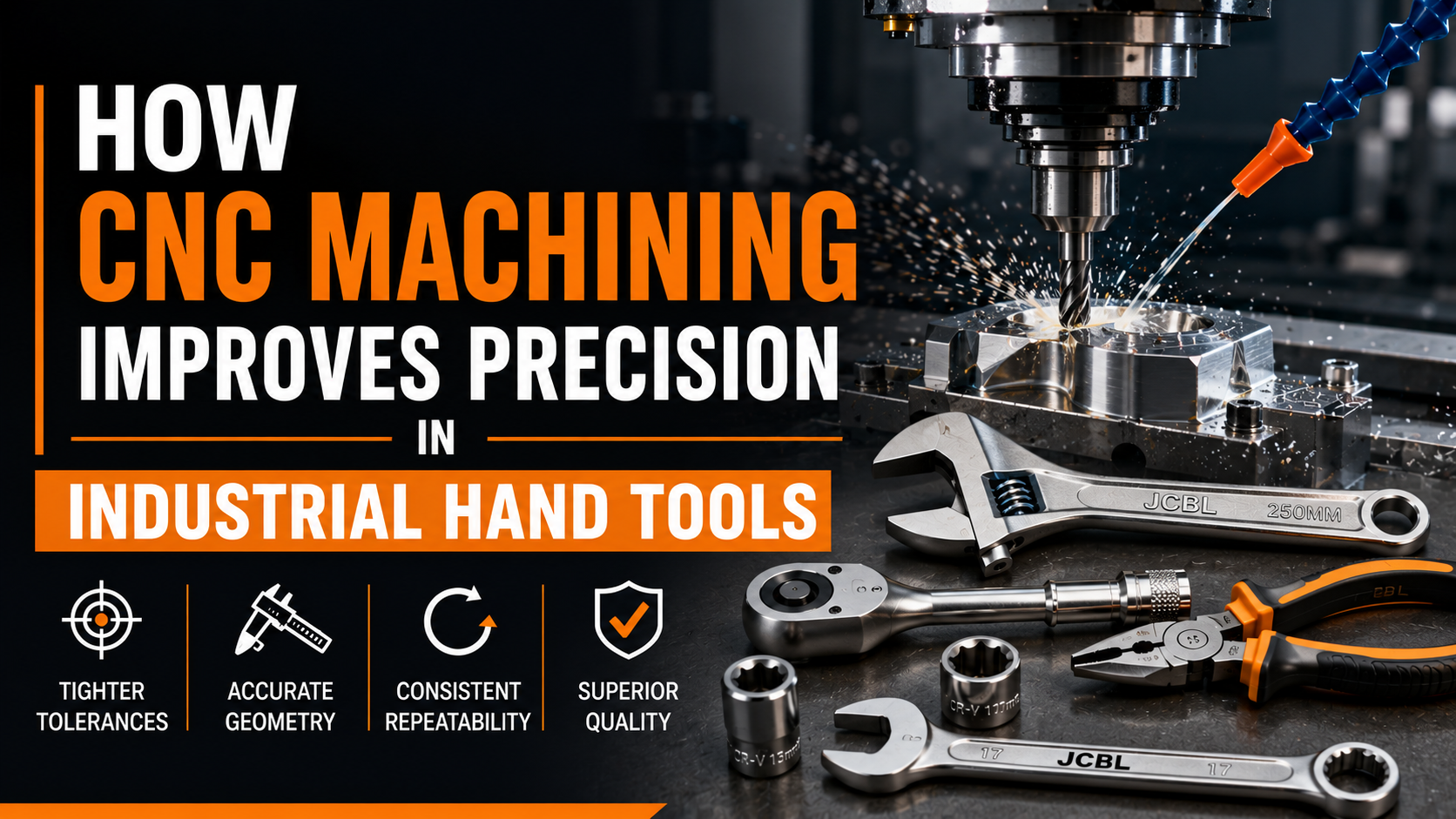
- High Precision and Accuracy: CNC machining allows manufacturers to maintain tight tolerances and dimensional consistency across production batches. This is essential for tools requiring precise fitment and reliable mechanical performance.
- Consistent Product Quality: Automated machining reduces human error and improves repeatability during mass production. Consistent quality is especially important for OEM manufacturing and export-grade hand tools.
- Faster Production Efficiency: CNC machines can operate continuously with minimal downtime, helping manufacturers increase productivity and reduce lead times.
- Reduced Material Waste: Computer-controlled cutting paths optimize material usage and minimize production waste. This improves manufacturing efficiency and cost control.
- Complex Tool Design Capability: CNC machining supports intricate geometries and advanced tool designs that are difficult to achieve with manual machining methods.
- Better Surface Finish: Precision machining improves surface quality, which enhances tool appearance, functionality, and durability.
Common Hand Tools Manufactured Using CNC Machines
CNC machining is widely used in the production of industrial and professional hand tools, including:
- combination wrenches
- socket tools
- pliers
- ratchets
- hex keys
- torque wrenches
- screwdriver components
- adjustable spanners
- impact tool accessories
- industrial maintenance tools
Manufacturers often combine CNC machining with forging, heat treatment, and surface finishing to achieve high-performance tool standards.
CNC Machining vs Traditional Hand Tool Manufacturing
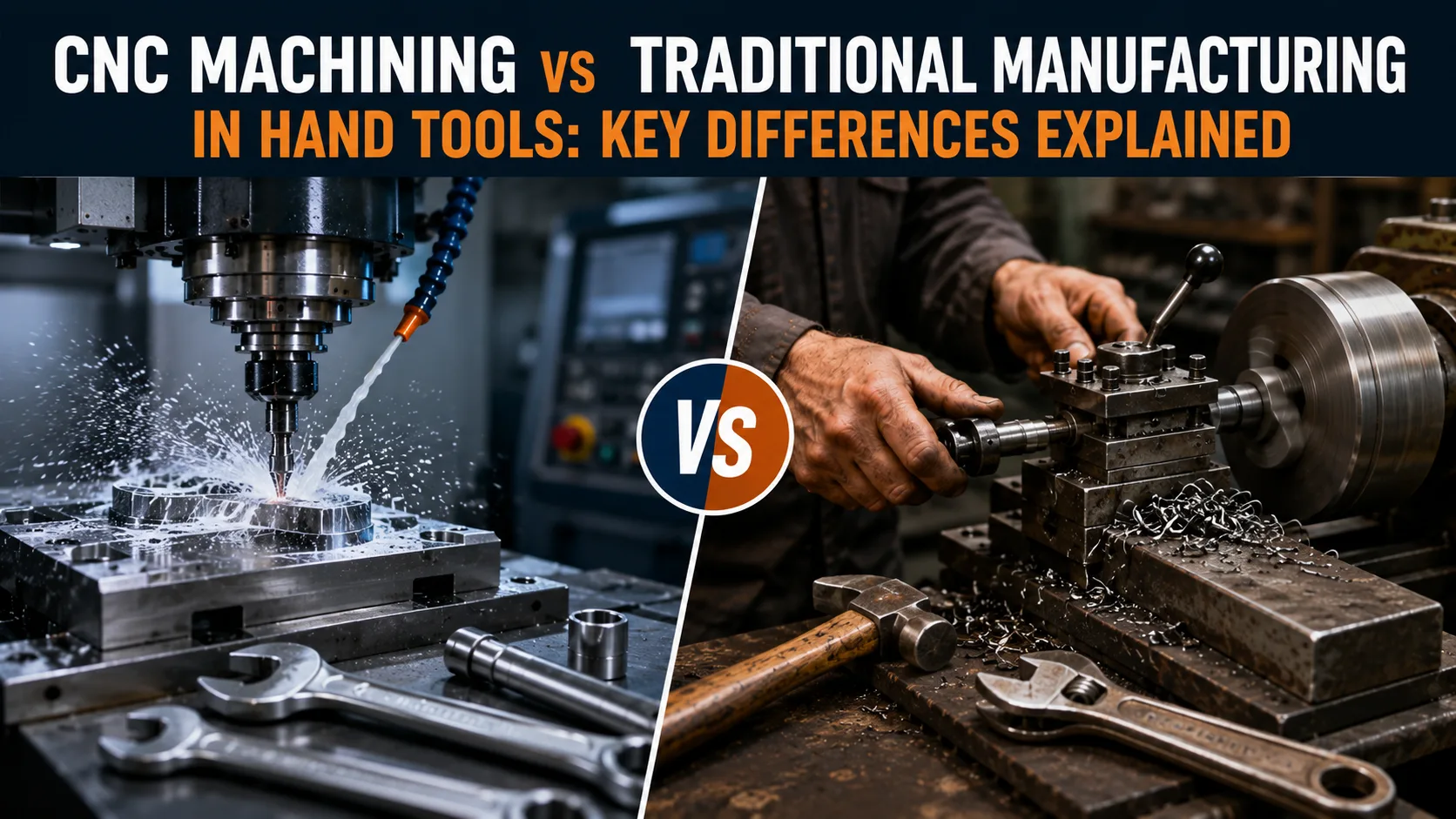
Compared to traditional manufacturing methods, CNC machining offers higher precision, better consistency, faster production, and improved scalability for industrial-grade hand tools manufacturing.
Quality Control in CNC Tool Manufacturing
Quality control is critical in hand tool manufacturing because tool performance depends on precision and material integrity.
Manufacturers typically use:
- dimensional inspection
- hardness testing
- torque testing
- surface finish inspection
- tolerance verification
- durability testing
Advanced CNC manufacturing facilities may also use:
- coordinate measuring machines (CMM)
- digital inspection systems
- automated quality monitoring
Consistent quality control helps ensure compliance with industrial and export standards.
Why CNC Machining Matters for OEM and Export Hand Tools
OEM buyers and international distributors require:
- dimensional consistency
- large-scale production capability
- reliable product quality
- repeatable manufacturing standards
CNC machining helps manufacturers meet these requirements efficiently.
For export-oriented hand tools manufacturing, CNC technology supports:
- consistent global quality standards
- scalable production volumes
- faster turnaround times
- customized tool manufacturing
- precision engineering requirements
Manufacturers serving automotive, industrial, construction, and infrastructure sectors rely on CNC machining to produce dependable hand tools for demanding applications.
Conclusion
CNC machining has become a core manufacturing process in the hand tools industry because it delivers precision, consistency, scalability, and production efficiency.
By using advanced CNC machining operations such as milling, turning, drilling, and grinding, manufacturers can produce durable and high-performance hand tools that meet industrial and export-quality standards.
For OEM manufacturing, industrial supply chains, and global export markets, CNC machining plays a critical role in ensuring reliable tool quality and repeatable production performance.
FAQs
CNC machining is used to cut, shape, drill, mill, and finish metal tool components with high precision during hand tools production.
CNC machining improves accuracy, production consistency, manufacturing efficiency, and scalability for industrial-grade hand tools.
Common materials include chrome vanadium steel, carbon steel, alloy steel, and stainless steel.
Yes. CNC machining provides tighter tolerances and better dimensional consistency compared to traditional manual machining methods.
Manufacturers use CNC machines to produce wrenches, sockets, ratchets, pliers, screwdrivers, torque tools, and other industrial hand tools.