How Ring Spanners Are Made: A Step-by-Step Manufacturing Process
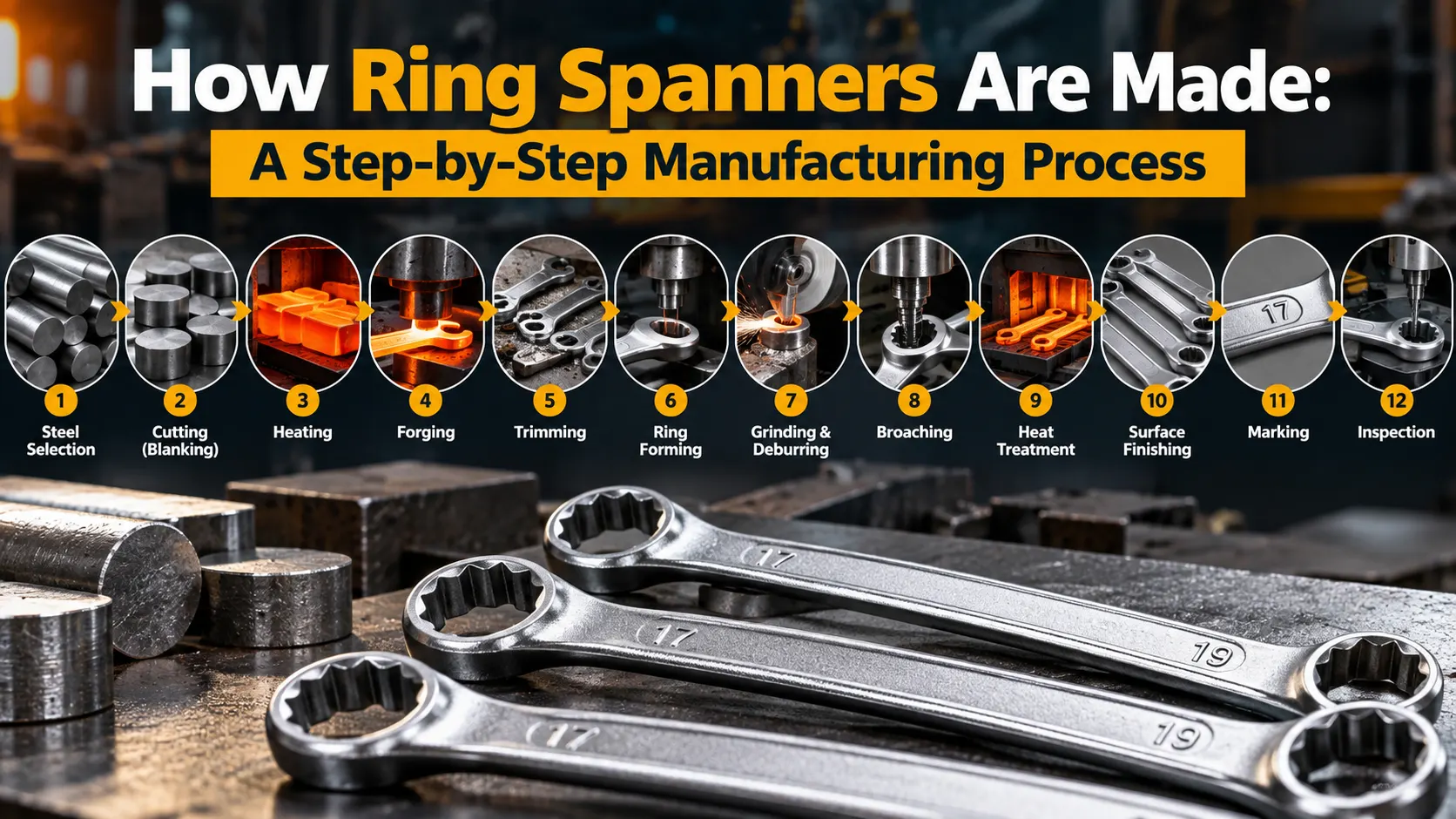
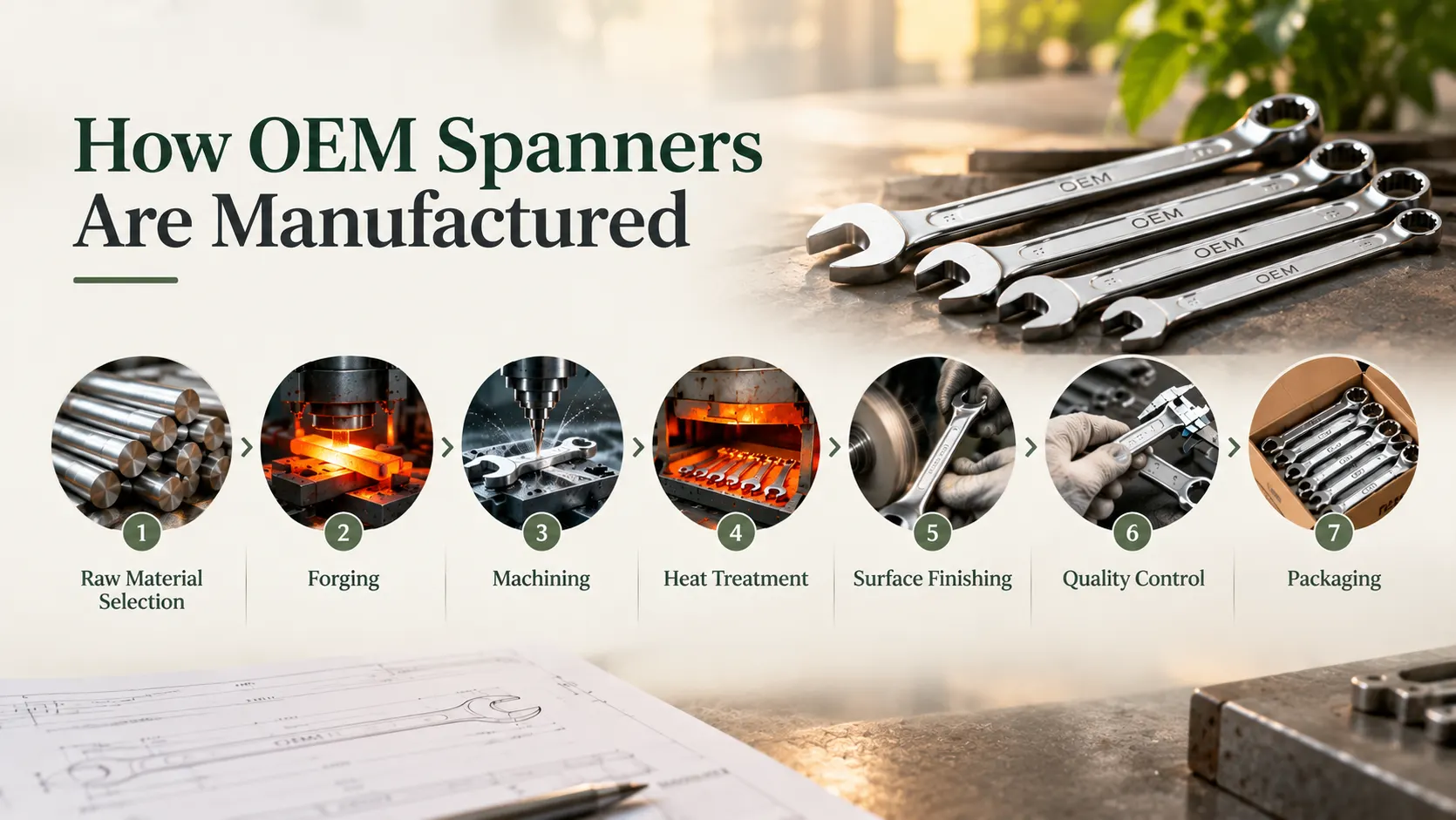
Ring spanners are typically made by cutting alloy-steel stock into blanks, heating and hot-forging the blanks into shape, forming and broaching the ring opening, then heat-treating, finishing, marking, and inspecting the finished tools. The exact production sequence varies by manufacturer, steel grade, spanner design, and applicable specifications.
Although a ring spanner is a relatively simple-looking hand tool, producing one requires controlled forging, machining, heat treatment, surface finishing, and quality inspection. Each stage contributes to the finished tool’s dimensions, strength, hardness, and durability.
How Are Ring Spanners Made?
Ring spanners are typically made from alloy steel through cutting, heating, forging, machining, heat treatment, finishing, and quality testing.
The typical manufacturing process is:
| Manufacturing stage | What happens |
| Steel selection | Suitable alloy steel is selected |
| Blanking | Steel is cut into production blanks |
| Heating | Blanks are heated for forging |
| Hot forging | Dies form the basic spanner shape |
| Flash removal | Excess forged material is trimmed |
| Ring forming | The ring opening is created |
| Grinding & deburring | Edges and surface irregularities are removed |
| Broaching | The internal ring profile is machined accurately |
| Heat treatment | Hardness and mechanical properties are controlled |
| Surface finishing | The required finish and protection are applied |
| Marking | Size and identification information is added |
| Inspection | Dimensions, hardness, strength, and finish are checked |
The exact sequence can vary by manufacturer, steel grade, and spanner design.
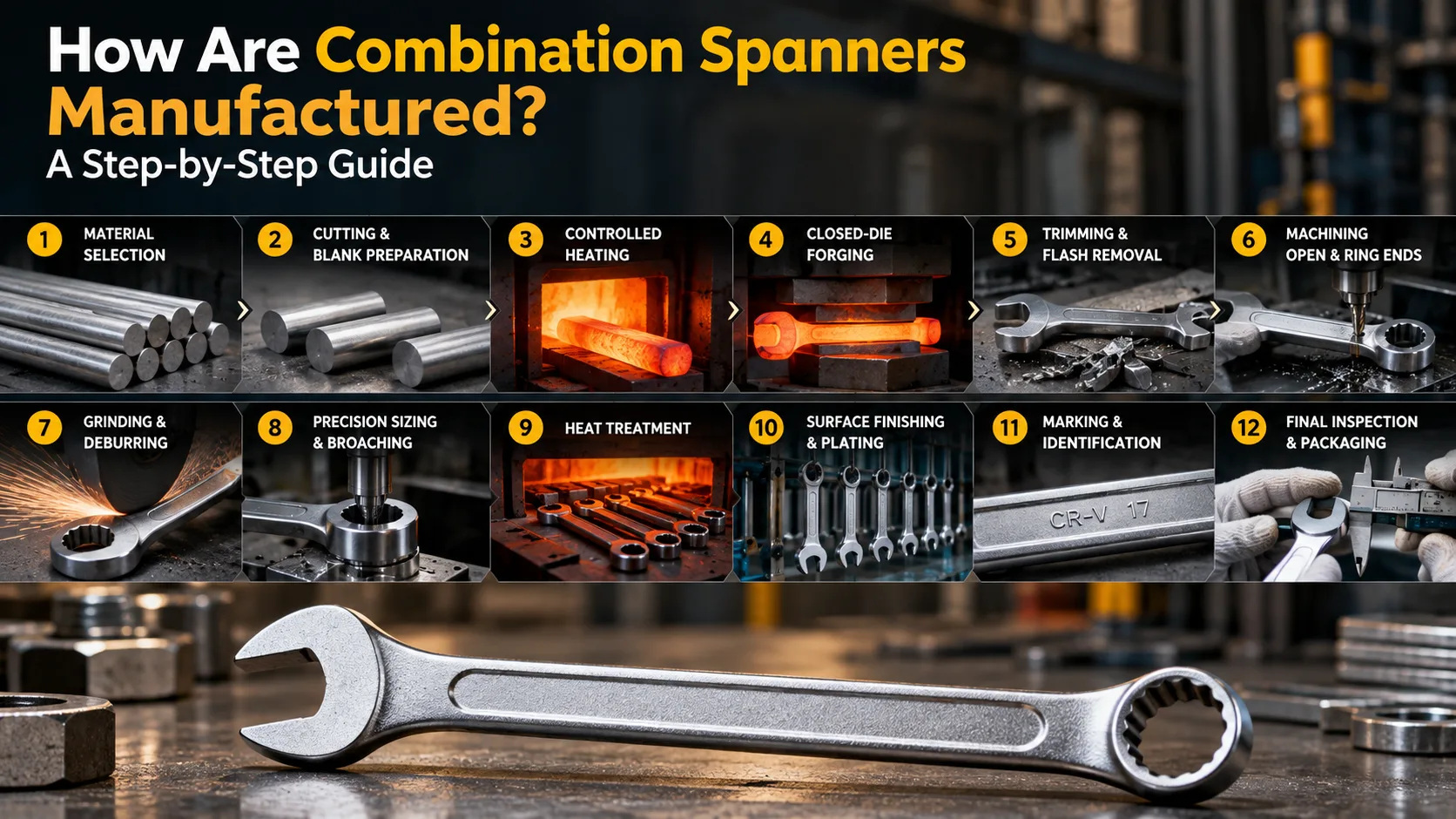
1. Steel Selection
Manufacturers first select a suitable alloy steel for the ring spanner. Chrome vanadium steel is commonly used for hand tools because it offers a useful combination of strength, hardness, toughness, and machinability. ELORA, for example, uses Chrome Vanadium 31CrV3/1.2208 steel in its documented spanner production process.
2. Cutting
The steel stock is cut into correctly sized pieces called blanks. Each blank contains enough material to form the required spanner during forging.
3. Heating
The steel blank is heated to a controlled temperature suitable for hot forging. Heating makes the steel easier to shape under high pressure while maintaining consistent production quality.
4. Forging
The heated blank is placed between shaped forging dies and formed under high pressure. This creates the basic shape of the ring spanner, including its head and handle.
Hot or drop forging is a common forming method for forged hand tools. ELORA, for example, uses drop forging in its documented spanner manufacturing process.
5. Trimming
Forging can leave excess metal, known as flash, around the edges of the spanner. A trimming operation removes this excess material and brings the forged part closer to its final shape.
6. Ring Forming
The opening at the ring end is then created. This may involve punching, machining, or a combination of forming operations; ELORA’s documented process uses hole punching at this stage.
7. Grinding and Deburring
The forged spanner is ground to remove unwanted material and surface irregularities. Deburring then removes sharp edges and small metal projections, preparing the tool for precision machining.
8. Broaching
The ring opening is machined to its required internal profile using broaching or another suitable machining process. A broaching tool progressively removes material to create an accurate ring shape and dimension for proper fastener engagement.
9. Heat Treatment
The spanner is hardened and tempered to achieve the required mechanical properties. Hardening increases hardness and strength, while tempering helps balance strength with toughness.
The exact heat-treatment cycle depends on the steel grade and product specification. ISO 1711-1:2019 specifies minimum hardness and torsional-strength requirements for hand-operated wrenches and sockets within its scope.
10. Surface Finishing
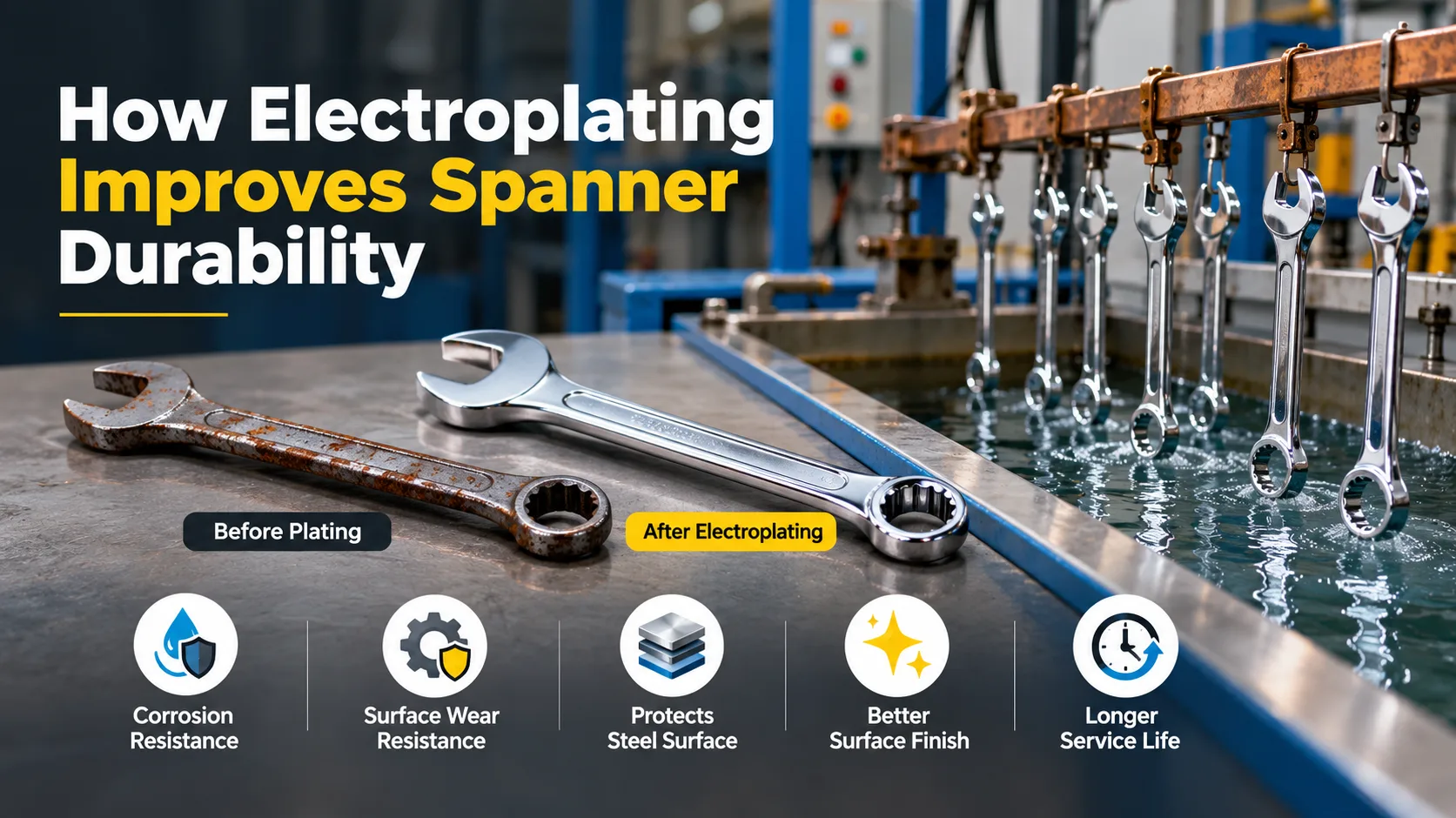
The spanner is given its specified surface finish. Depending on the product, this may include grinding, polishing, blasting, vibratory finishing, nickel plating, or chrome plating.
Surface finishing can improve appearance, smooth the surface, and provide corrosion protection when a suitable protective coating is applied.
11. Marking
The finished spanner is marked with identification information such as its size, manufacturer, product code, or required specification markings.
Clear markings help manufacturers, distributors, and industrial buyers identify and manage tools accurately.
12. Testing
The final ring spanner undergoes quality inspection and, where required, mechanical testing.
Manufacturers may check dimensions, ring profile, hardness, torsional strength, surface finish, and markings to verify that the tool meets its product specification and applicable standards.
In short, ring spanner manufacturing combines forging for the basic shape, precision machining for the ring profile, heat treatment for mechanical properties, and inspection to verify the finished tool.
Why Is Forging Used to Make Ring Spanners?
Forging is widely used in hand-tool manufacturing because it allows alloy steel to be formed into durable, repeatable tool shapes under controlled pressure. In a documented spanner manufacturing process, ELORA uses high-pressure drop forging to form its spanners.
The main advantages of forging include:
- Repeatable geometry: Forging dies help produce consistent tool shapes across large production volumes.
- Efficient material forming: The process forms the steel close to the required tool geometry before finishing operations.
- Suitable for alloy steel: Common hand-tool steels, including chrome vanadium grades, can be forged and subsequently heat treated.
- Potential structural benefits: Hot forging can produce a grain flow that follows the general shape of the forged component, which can support its mechanical performance when combined with appropriate material selection and heat treatment.
However, forging is only one part of manufacturing quality. The finished ring spanner also depends on the selected material, dimensional accuracy, heat treatment, surface finishing, and quality control. ISO 1711-1:2019, for example, specifies minimum Rockwell hardness and torsional-strength values for hand-operated wrenches and sockets within its scope.
In short, forging provides an efficient and repeatable way to form the tool, while subsequent manufacturing and quality-control processes determine whether the finished ring spanner meets its required specifications.
What Determines the Quality of a Ring Spanner?
For manufacturers and B2B buyers, important quality factors include:
- Steel grade: Influences the material’s mechanical properties and suitability for heat treatment.
- Forging quality: Affects consistency of the basic tool geometry.
- Dimensional accuracy: Ensures the ring corresponds to the specified fastener size.
- Ring profile: Determines how accurately the tool engages the fastener.
- Heat treatment: Establishes the required hardness and mechanical characteristics.
- Surface finish: Influences appearance and, depending on the treatment, corrosion protection.
- Quality testing: Confirms that the finished product meets defined dimensional and mechanical requirements.
Conclusion
Ring spanner manufacturing combines steel selection, blanking, hot forging, trimming, ring forming, broaching, heat treatment, surface finishing, marking, and quality inspection.
For B2B manufacturers and buyers, understanding this production process provides a clearer view of what goes into a consistent finished tool. The most important consideration is not one individual operation but control across the entire manufacturing chain, from the steel grade and forging process to dimensional accuracy, heat treatment, finishing, and final testing.
FAQs
Ring spanners are commonly made from alloy steel, including chrome vanadium steel. The exact grade depends on the manufacturer’s product specification and required mechanical properties.
They can involve both processes. A typical production route uses hot forging to create the basic shape, followed by machining such as broaching to achieve the required ring profile and dimensions.
Heat treatment modifies the steel’s mechanical properties. Hardening increases hardness and strength, while tempering helps provide an appropriate balance of strength and ductility.
The opening can initially be formed by punching and then accurately machined through broaching or another suitable process. The exact method varies by manufacturer and design.
Broaching is a machining process in which a toothed cutting tool progressively removes material to create an accurate internal profile. In ring spanners, it can be used to produce the specified ring geometry.
Manufacturers may inspect dimensions, ring profile, surface condition, hardness, torsional strength, and markings. Applicable standards and individual product specifications determine the required tests and acceptance criteria.