Safety Rules for Handling Striking Tools
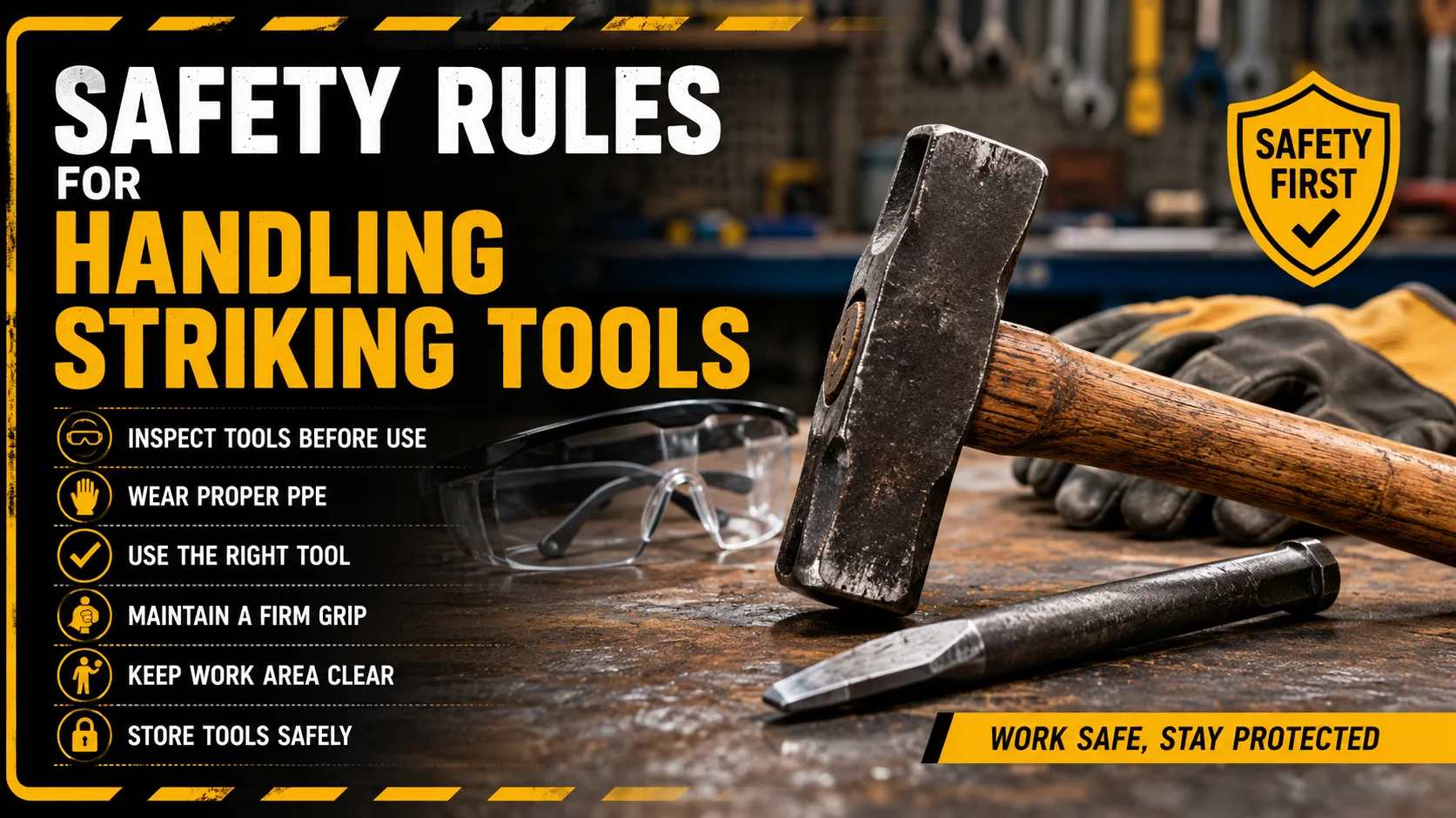
Striking tools are widely used in industrial workshops, automotive repair, construction, fabrication, and maintenance applications. Since these tools are designed to deliver forceful impact, improper handling can lead to serious workplace injuries such as cuts, eye injuries, bruises, and flying debris accidents.
Following proper safety practices helps improve workplace safety, reduce tool damage, and ensure safer operations during daily industrial tasks.
Quick Safety Tip: The golden rule for striking tool safety is Inspect, Protect, and Control. Always check for cracked handles or mushroomed heads before use, wear ANSI-approved safety goggles, maintain a dry grip, and strike with a controlled angle to prevent flying debris accidents.
For a better understanding of different tool categories and their specific applications, you can also read our comprehensive guide on the types of striking tools.
Why Safety Matters When Using Striking Tools
Striking tools are exposed to repeated impact and heavy-duty usage. Over time, damaged striking surfaces, loose handles, or improper handling can increase the risk of catastrophic workplace accidents.
Common workplace hazards associated with striking tools include:
- Flying metal fragments from deformed tool edges.
- Slipping during impact due to poor body posture or oily handles.
- Cracked or loose handles causing the tool head to fly off.
- Hand and finger injuries from missed strikes.
- Eye injuries caused by high-velocity projectile debris.
- Loss of tool control due to wet or oily grips.
Using proper safety procedures can drastically reduce these risks and improve operational efficiency in industrial environments.
Essential Safety Rules for Handling Striking Tools
1. Inspect Tools Before Use
Always thoroughly inspect striking tools before starting any shift. Damaged tools should be immediately tagged and removed from service.
Check specifically for:
- Cracked or splintered handles (especially wood or fiberglass).
- Loose hammer heads or loose wedging.
- Mushroomed striking surfaces (edges flattened out and curled).
- Rust, deep pitting, or corrosion on steel parts.
- Chipped edges on the striking face.
- Bent or deformed parts.
2. Wear Proper Personal Protective Equipment (PPE)
Using the correct PPE is your last line of defense when handling striking tools.
Recommended protective equipment includes:
- Safety goggles or face shields (Must be impact-resistant to protect against flying fragments).
- Industrial safety gloves (Heavy-duty leather or anti-vibration gloves to improve grip).
- Steel-toe safety shoes (To protect against dropped heavy tools).
- Protective helmets (Hard hats) in active industrial work zones.
- Hearing protection in high-impact or enclosed environments.
3. Use the Right Tool for the Right Task
Every striking tool is engineered for a specific material and application. Misusing a tool can cause immediate tool failure or severe injury.
- Never use a screwdriver or pry bar as a chisel.
- Do not strike hardened surfaces with a tool not rated for that specific hardness (e.g., striking a hardened steel tool with a hardened hammer can cause shattering).
- Select the appropriate size and weight to maintain absolute striking control.
4. Maintain a Firm and Dry Grip
Tool handles must remain clean, dry, and free of lubricants. Oily or wet handles drastically increase the risk of the tool slipping out of the operator’s hand mid-swing. Always clean your hands and the tool grip before starting operations.
5. Keep the Work Area Clear
A cluttered workspace increases the risk of ricochet and accidental impact injuries. Before swinging any striking tool, ensure you have clear clearance, stable footing, and that nearby co-workers are kept at a safe distance outside the “swing radius.”
6. Strike With Controlled Force
Excessive, uncontrolled force reduces accuracy and increases tool slippage. Focus on a clean, square strike where the tool face hits the target at a 90-degree parallel angle. Controlled striking minimizes flying debris and lowers the risk of repetitive strain injuries.
7. Store Tools Properly After Use
Proper storage prevents atmospheric corrosion and accidental damage. Clean your tools to remove dirt and grease, apply a light coat of rust protection oil if necessary, and store them orderly in dry racks or toolboxes rather than throwing them loosely into bins.
Common Hazards & Preventive Actions
| Striking Tool Hazard | Possible Risk | Preventive Action |
| Mushroomed tool heads | Metal fragment projection, severe eye injuries | Grind off the deformed burrs or replace the tool. |
| Loose hammer heads | Complete loss of control, flying tool head | Discontinue use immediately; re-wedge or replace. |
| Slippery/Oily handles | Hand slips, accidental self-injury | Wipe handles clean with a degreasing cloth before use. |
| Excessive striking force | Muscle strain, missed strikes, workpiece damage | Use a heavier tool instead of swinging a light tool harder. |
| Poor storage conditions | Rust, material degradation, structural weakness | Store in moisture-free, dedicated tool racks. |
How to Conduct a Pre-Use Tool Inspection
To maximize industrial workshop safety, perform this quick 3-point check before handling any striking tool:
- Handle Condition: Verify there are no cracks, splits, or structural plays. The handle must be securely bonded/wedged to the tool head.
- Striking Surface: Ensure the face is smooth, clean, and free from mushrooming, chips, sharp burrs, or severe wear.
- Alignment and Balance: Check that the tool head is perfectly aligned with the axis of the handle to ensure predictable impact trajectories.
Recommended PPE for Striking Tool Operations
| PPE Component | Industrial Safety Purpose |
| Safety Goggles / Glasses | Protects eyes from high-velocity flying particles and metal chips. |
| Heavy-Duty Leather Gloves | Protects hands from abrasive wear, friction burns, and minor misstrikes. |
| Steel-Toe Safety Shoes | Prevents crush injuries from heavy falling striking tools or workpieces. |
| Hard Hat / Protective Helmet | Required in construction and industrial sites against rebounding objects. |
Common Mistakes to Avoid
- Using a striking tool with a loose head or damaged handle.
- Striking two hardened steel tools together (e.g., striking one hammer head against another).
- Ignoring eye protection during high-impact tasks.
- Using incorrect, glancing striking angles instead of clean perpendicular hits.
- Using a lightweight tool for heavy-duty applications, leading to over-exertion.
Conclusion
Proper handling of striking tools is essential for maintaining workplace safety and reducing the risk of industrial injuries. Regular inspection, correct PPE usage, controlled striking techniques, and proper storage practices all contribute to safer and more efficient operations.
By following these recommended safety rules and maintenance guidelines, industrial facilities can significantly improve tool performance while creating an accident-free environment for daily operations.
FAQs
Pre-use inspection helps detect hidden cracks, loose components, and structural defects before they fail under load. This prevents sudden tool breakage, which is a leading cause of workshop injuries.
Mushrooming is caused by repeated high-impact striking on hard surfaces. Over time, the metal on the perimeter of the striking face deforms, flattens, and rolls over, creating brittle edges that can easily break off as high-speed sharp fragments.
No. A mushroomed head is highly dangerous because the brittle, curled edges can shatter upon the next impact. The burrs must be ground off safely using a bench grinder to restore the original bevel, or the tool must be replaced.
Operators should maintain a balanced, shoulder-width stance with secure footing. Always look directly at the striking point, ensure a clear clearance path behind and ahead of your swing, and never strike while off-balance.
Related Readings: