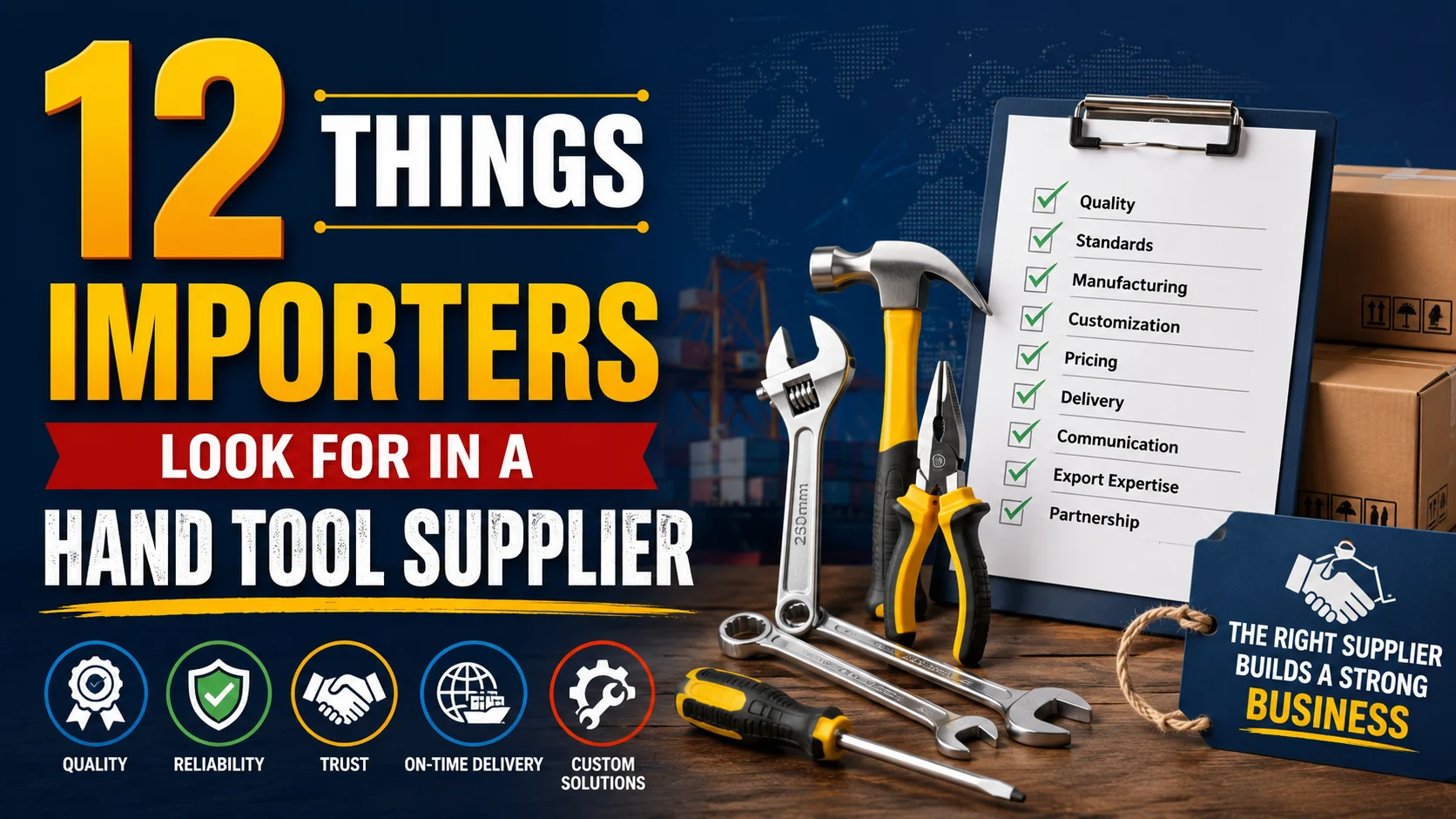
12 Things Importers Look for in a Hand Tool Supplier
Choosing the right hand tool supplier is one of the most important decisions an importer can make. The quality of the tools you sell, your ability to meet customer demand, and even your brand reputation depend heavily on the manufacturer you partner with.
While pricing often influences purchasing decisions, experienced importers know that selecting a supplier based on cost alone can lead to quality issues, delayed shipments, and long-term business challenges. Instead, they evaluate suppliers based on a combination of manufacturing expertise, product quality, reliability, and service capabilities.
In this article, we’ll explore the 12 key factors importers look for when choosing a hand tool supplier and why each one matters.
Why Importers Carefully Evaluate Hand Tool Suppliers
A hand tool supplier plays a critical role in an importer’s supply chain. The right manufacturing partner helps ensure consistent product quality, dependable deliveries, and smooth business operations. The wrong supplier can lead to customer complaints, inventory shortages, and increased costs.
This is why successful importers assess suppliers thoroughly before placing bulk orders or entering long-term agreements.
12 Things Importers Look for in a Hand Tool Supplier
- Consistent Product Quality
Quality is often the first factor importers evaluate. Customers expect hand tools to perform reliably, withstand repeated use, and maintain their functionality over time.
Suppliers that consistently deliver high-quality products help importers reduce returns, warranty claims, and customer complaints.
- Compliance with International Standards
Importers supplying products to global markets often prefer manufacturers that produce according to recognized standards such as DIN and ANSI.
Compliance demonstrates a commitment to quality and helps buyers meet market requirements in different regions.
- Strong Manufacturing Capabilities
Production infrastructure directly impacts a supplier’s ability to meet order requirements.
Importers typically assess manufacturing facilities, machinery, workforce expertise, and production capacity to ensure the supplier can support both current and future demand.
- Experience in the Hand Tool Industry
Manufacturers with extensive industry experience often have a deeper understanding of quality requirements, production challenges, and customer expectations.
A proven track record can provide buyers with greater confidence in a supplier’s capabilities.
- High-Quality Raw Materials
The performance and durability of hand tools depend heavily on the materials used during production.
Importers frequently evaluate the quality of steel, forging processes, and heat treatment methods to ensure tools meet performance expectations.
- Robust Quality Control Systems
Consistent quality requires more than good materials—it requires effective quality control.
Importers look for suppliers that conduct inspections throughout the manufacturing process, from raw material verification to final product testing.
- OEM and Customization Capabilities
Many distributors and retailers require tools that reflect their own brand identity.
Suppliers offering OEM manufacturing, private labeling, customized specifications, and packaging solutions provide greater flexibility and market differentiation.
- Transparent and Competitive Pricing
Pricing remains an important consideration, but importers look beyond the lowest quote.
They prefer suppliers that provide transparent pricing structures with clear information about production costs, tooling charges, packaging, and order requirements.
- Reliable Delivery Performance
Late shipments can disrupt inventory planning and impact customer relationships.
Importers often evaluate lead times, production planning systems, and supply chain management capabilities before choosing a supplier.
- Responsive Communication
Effective communication is essential throughout the sourcing process.
Importers value suppliers that provide timely updates, answer technical questions promptly, and respond quickly when issues arise.
- Export Expertise
International trade involves documentation, compliance requirements, logistics coordination, and customs procedures.
Suppliers with export experience can help ensure smoother transactions and reduce potential shipping complications.
- Long-Term Partnership Potential
The best supplier relationships extend beyond individual purchase orders.
Importers often seek manufacturers that can support business growth through product innovation, expanded production capabilities, customization services, and ongoing technical support.
Common Mistakes Importers Make When Choosing a Hand Tool Supplier
Even experienced buyers can make sourcing mistakes. Some of the most common include:
- Choosing suppliers solely based on price
- Ignoring manufacturing capabilities
- Failing to verify certifications and standards
- Overlooking quality control processes
- Not assessing delivery reliability
- Underestimating the importance of communication
Avoiding these mistakes can significantly reduce sourcing risks and improve long-term business outcomes.
What Makes a Hand Tool Supplier a Reliable Long-Term Partner?
Reliable hand tool suppliers share several characteristics. They maintain consistent quality standards, invest in manufacturing technology, communicate transparently, and continuously improve their production processes.
Most importantly, they view customer relationships as long-term partnerships rather than one-time transactions. This commitment often results in better service, greater flexibility, and stronger business growth opportunities for importers.
Conclusion
Finding the right hand tool supplier involves much more than comparing prices. Successful importers evaluate product quality, manufacturing capabilities, industry experience, quality control systems, customization options, delivery performance, and export expertise before making a decision.
By focusing on these 12 factors, importers can identify suppliers that not only meet immediate sourcing needs but also support long-term business success. Choosing a reliable manufacturing partner ultimately leads to better products, stronger customer relationships, and sustainable growth in competitive markets.
FAQs
Importers evaluate suppliers based on product quality, manufacturing capabilities, industry certifications, quality control systems, delivery reliability, and export experience. A reliable supplier should consistently meet quality and delivery expectations while supporting long-term business growth.
The certifications and standards depend on the target market, but importers commonly look for compliance with DIN and ANSI standards, as well as other relevant quality and safety certifications that demonstrate adherence to recognized manufacturing practices.
Quality control helps ensure product consistency, reduces defects, and minimizes warranty claims and returns. Suppliers with robust inspection and testing procedures are better equipped to maintain consistent quality across production batches.
Yes. Many hand tool manufacturers offer OEM and private label services, including custom branding, product modifications, packaging customization, and labeling solutions to help importers build and differentiate their brands.
No. While competitive pricing is important, experienced importers also consider quality, manufacturing capacity, certifications, delivery performance, communication, and long-term reliability. The lowest-cost supplier may not always provide the best overall value.
Related Post