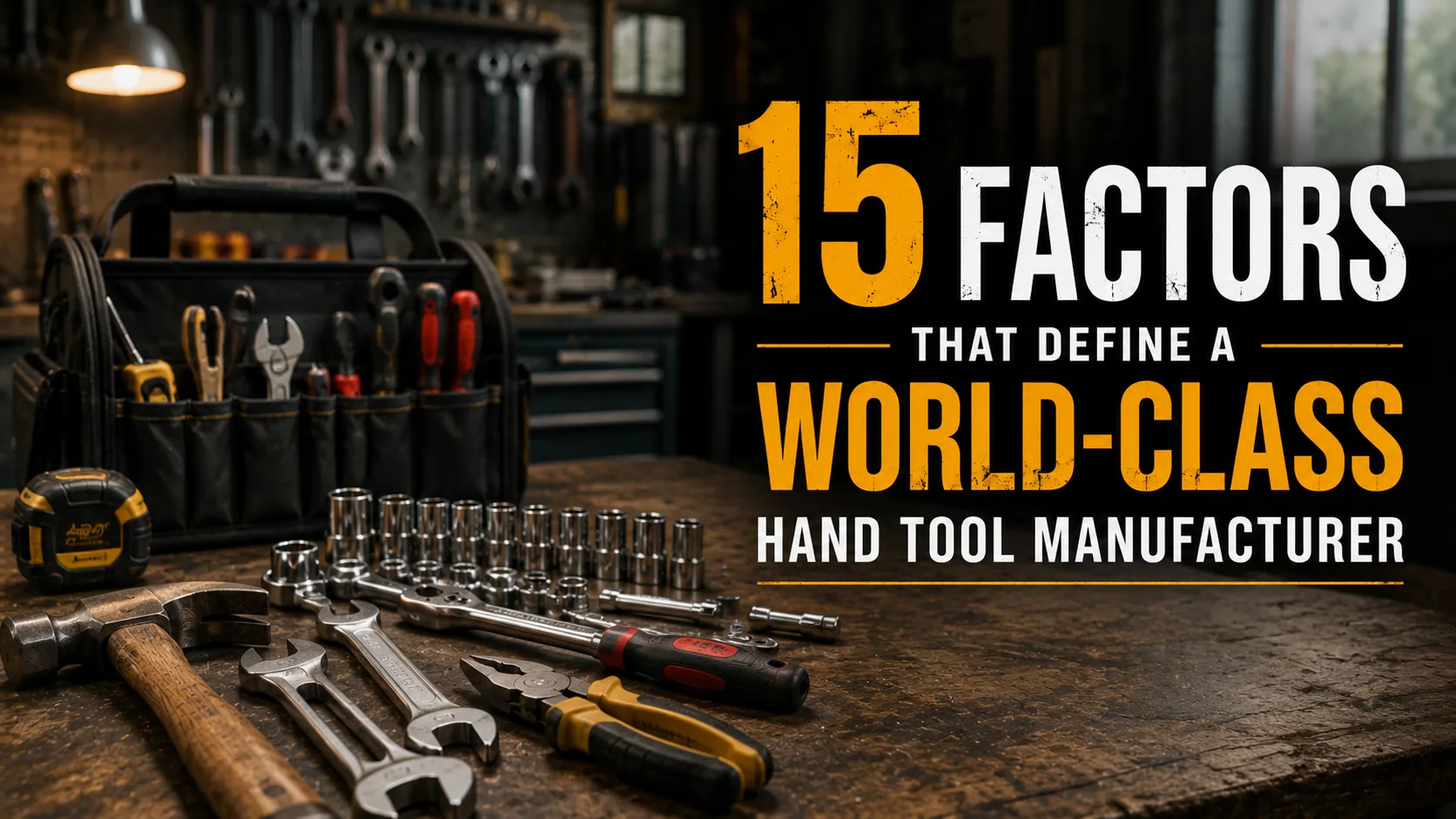
15 Factors That Define a World-Class Hand Tool Manufacturer
Choosing a hand tool manufacturer is one of the most important decisions for distributors, retailers, importers, and industrial buyers. While pricing often receives the most attention, experienced procurement teams know that supplier selection affects much more than product cost.
A manufacturer with inconsistent quality, limited production capabilities, or weak quality control can lead to product failures, customer complaints, delayed shipments, and increased warranty claims. On the other hand, a reliable manufacturing partner helps ensure product consistency, supply chain stability, and long-term business growth.
This guide explores the 15 factors that separate world-class hand tool manufacturers from ordinary suppliers and explains what buyers should evaluate before making a sourcing decision.
Why Choosing the Right Hand Tool Manufacturer Matters
Selecting a hand tool manufacturer is about more than finding a supplier that can produce tools at a competitive price. The manufacturer you choose directly affects product quality, customer satisfaction, inventory planning, warranty costs, and brand reputation.
For distributors, retailers, and industrial buyers, a reliable manufacturing partner helps ensure consistent product performance, timely deliveries, and long-term business growth. On the other hand, working with the wrong supplier can result in quality issues, delayed shipments, and increased operational costs.
Understanding what separates leading manufacturers from average suppliers is the first step toward making a smarter sourcing decision.
Top 15 Factors That Define a World-Class Hand Tool Manufacturer
Choosing the right hand tool manufacturer involves more than comparing prices. Product quality, manufacturing expertise, testing standards, and supply reliability all play a major role in long-term business success. The following factors can help buyers identify manufacturers capable of delivering consistent quality and dependable performance.
1. Consistent Product Quality
Consistent product quality is one of the strongest indicators of a reliable hand tool manufacturer. While many suppliers can produce quality samples, leading manufacturers maintain the same standards across every production run. This consistency helps reduce product failures, warranty claims, and customer complaints while strengthening brand trust.
Key Evaluation Point: Consistent quality helps ensure reliable product performance and customer satisfaction.
2. High-Quality Raw Materials
The durability and performance of a hand tool largely depend on the quality of the raw materials used during manufacturing. Premium materials contribute to greater strength, wear resistance, and overall product lifespan.
Key Evaluation Point: High-quality materials directly influence tool strength, durability, and reliability.
3. Advanced Manufacturing Capabilities
Modern manufacturing facilities help ensure precision, consistency, and production efficiency. Manufacturers with advanced capabilities are better equipped to maintain quality standards while meeting large-scale production requirements.
Key Evaluation Point: Advanced manufacturing improves product accuracy and production consistency.
4. Strong Quality Control Systems
Quality control helps ensure that every tool meets established performance and safety standards before reaching the market. Leading manufacturers monitor quality throughout the production process rather than relying only on final inspections.
Key Evaluation Point: Strong quality control minimizes defects and improves product reliability.
5. International Certifications and Compliance
Certifications demonstrate that a manufacturer follows recognized quality management and operational standards. They also provide buyers with greater confidence when evaluating suppliers.
Key Evaluation Point: Certifications help verify manufacturing credibility and process consistency.
6. Product Testing and Performance Validation
Testing helps verify that tools can withstand real-world working conditions and perform as intended. Manufacturers that invest in testing are often better positioned to deliver dependable products.
Key Evaluation Point: Comprehensive testing helps ensure product safety and long-term performance.
7. Engineering and Product Development Expertise
Strong engineering capabilities allow manufacturers to improve product designs, enhance performance, and adapt to changing market requirements. Engineering support is also valuable for custom product development.
Key Evaluation Point: Engineering expertise drives innovation and product improvement.
8. OEM and Private Label Manufacturing Capabilities
Many distributors and retailers require customized products that can be sold under their own brand. Manufacturers with OEM and private label capabilities can support branding, packaging, and product customization requirements.
Key Evaluation Point: OEM capabilities help businesses build stronger and more differentiated brands.
9. Production Capacity and Scalability
A manufacturer should be able to support both current demand and future business growth. Sufficient production capacity helps ensure reliable supply during peak demand periods and expansion phases.
Key Evaluation Point: Scalable production supports long-term business growth and supply stability.
10. Reliable Supply Chain Management
Reliable supply chain management helps manufacturers maintain consistent production and on-time deliveries. Supply disruptions can negatively affect inventory levels and customer commitments.
Key Evaluation Point: A strong supply chain reduces delays and improves operational reliability.
11. Comprehensive Product Portfolio
Manufacturers that offer a wide range of hand tools can simplify sourcing and procurement processes. Buyers can often source multiple product categories from a single supplier, improving efficiency.
Key Evaluation Point: A diverse product range helps streamline procurement and supplier management.
12. Commitment to Innovation
Innovation helps manufacturers stay competitive and respond to changing customer expectations. Continuous improvement often leads to better-performing, more durable, and user-friendly tools.
Key Evaluation Point: Innovation helps manufacturers deliver better products and remain competitive.
13. Global Export Experience
Manufacturers serving international markets must understand export regulations, shipping requirements, and compliance standards. Export experience often contributes to smoother transactions and more reliable deliveries.
Key Evaluation Point: Export expertise reduces logistical challenges and supply chain risks.
14. Customer Support and Technical Assistance
Strong customer support can significantly improve the overall sourcing experience. Manufacturers that provide responsive communication and technical assistance are often easier to work with over the long term.
Key Evaluation Point: Good customer support strengthens business relationships and improves operational efficiency.
15. Industry Reputation and Proven Track Record
A manufacturer’s reputation is often built through years of consistent performance and customer satisfaction. A proven track record can provide valuable insight into a supplier’s reliability and long-term capabilities.
Key Evaluation Point: A strong reputation indicates reliability, consistency, and long-term business stability.
Common Mistakes When Choosing a Hand Tool Manufacturer
Many sourcing problems occur because buyers focus on price while overlooking critical evaluation factors.
Common mistakes include:
- Selecting suppliers based solely on cost
- Ignoring testing and quality control procedures
- Failing to verify production capacity
- Overlooking export experience
- Not requesting product samples
- Skipping supplier audits
- Assuming certifications guarantee product quality
Avoiding these mistakes can significantly improve sourcing outcomes and reduce long-term risks.
Which Factors Matter Most?
While all 15 factors contribute to manufacturing excellence, buyers should prioritize the following five areas first:
- Product Quality
- Quality Control Systems
- Manufacturing Capabilities
- Production Capacity
- Export Experience
Manufacturers that perform strongly in these categories are generally better positioned to deliver consistent quality, reliable supply, and long-term business value.
Conclusion
A world-class hand tool manufacturer is defined by much more than competitive pricing. Consistent quality, advanced manufacturing capabilities, rigorous testing standards, strong quality management systems, OEM expertise, and dependable supply chain performance all contribute to manufacturing excellence.
Businesses that evaluate suppliers using these 15 factors are more likely to identify reliable manufacturing partners capable of supporting long-term growth, customer satisfaction, and market success. At JCBL Hand Tools, we are committed to delivering high-quality hand tools backed by advanced manufacturing, strict quality control, and global supply capabilities to meet the evolving needs of distributors, wholesalers, and industrial buyers worldwide.
FAQs
A world-class hand tool manufacturer consistently delivers high-quality products while maintaining strong quality control, advanced manufacturing capabilities, testing standards, and reliable supply chain performance.
Quality control helps identify defects early, improves product consistency, reduces warranty claims, and ensures customer satisfaction.
Many leading manufacturers hold certifications related to quality management, environmental responsibility, and workplace safety to demonstrate compliance with international standards.
OEM capabilities allow businesses to create customized products, private-label solutions, and branded tool lines without investing in their own manufacturing facilities.
Review product quality, manufacturing infrastructure, testing procedures, certifications, production capacity, export experience, customer support, and overall industry reputation before making a sourcing decision.
Related Post