Top Agricultural Hand Tools And Their Uses
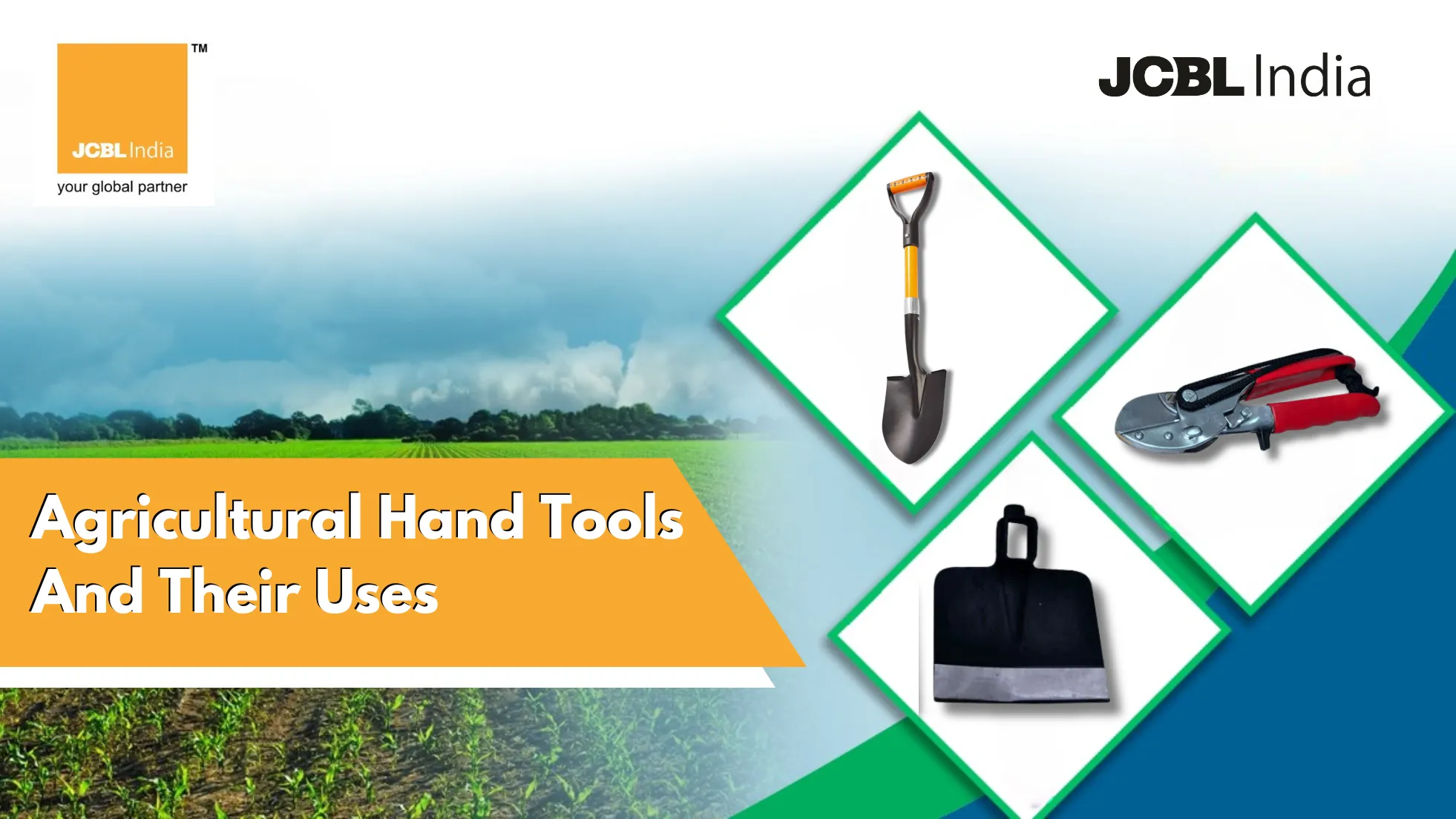
Agricultural hand tools are manual tools used in farming for soil preparation, planting, weeding, and pruning. They are essential for small-scale farming, precision work, and areas where large machinery is not practical.
For centuries, these tools have helped farmers manage crops efficiently and improve productivity, especially in regions with limited landholdings where heavy machinery is not feasible.
Top 10 Agricultural Hand Tools:
- Shovel
- Garden Fork
- Hoe
- Rake
- Pruning Shears
- Hand Trowel
- Wheelbarrow
- Hand Cultivator
- Weeding Knife
- Hand Saw
Agriculture Hand Tools – Uses and Types
Below is a detailed breakdown of agricultural hand tools along with their uses and types to help you choose the right tools for your farming needs.
1. Shovel:
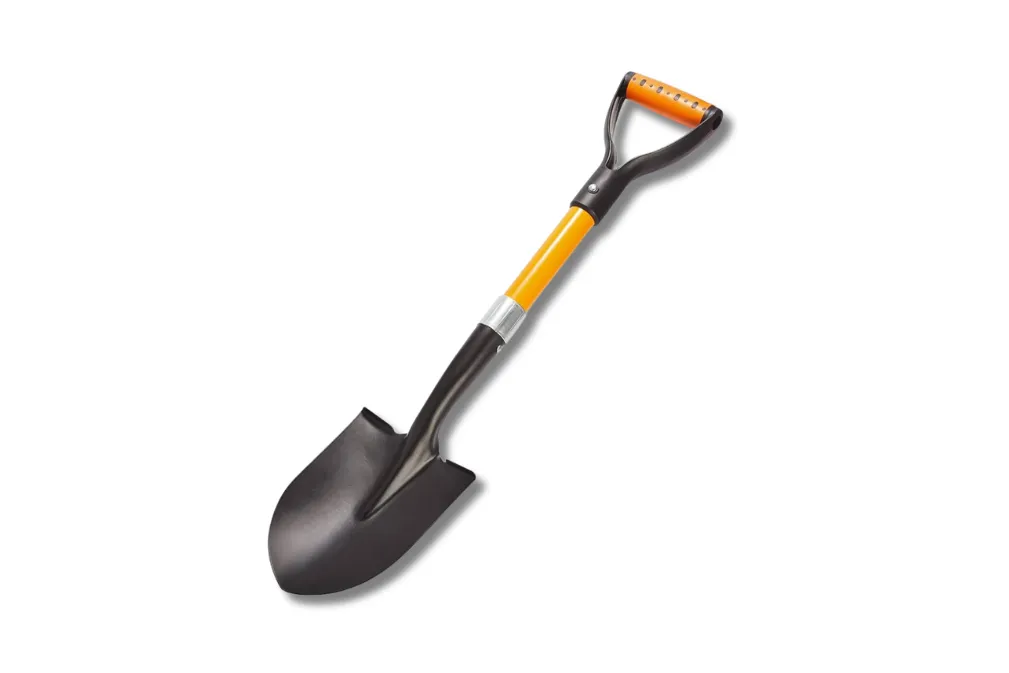
A shovel is a hand tool used for digging, lifting, and moving soil and materials.
Shovels are versatile tools used for digging, lifting, and moving soil, compost, and other materials. They are essential for planting, trenching, and clearing debris.
Uses:
- Digging pits and trenches
- Moving soil, manure, and fertilizer
- Preparing irrigation channels
Types:
- Round-point shovel – general digging
- Square-point shovel – moving loose material
- Trenching shovel – narrow digging
- Drain spade – deep digging
- Long-handle shovel – better leverage
Why it matters: Almost every farming activity starts with a shovel.
2. Garden Fork:
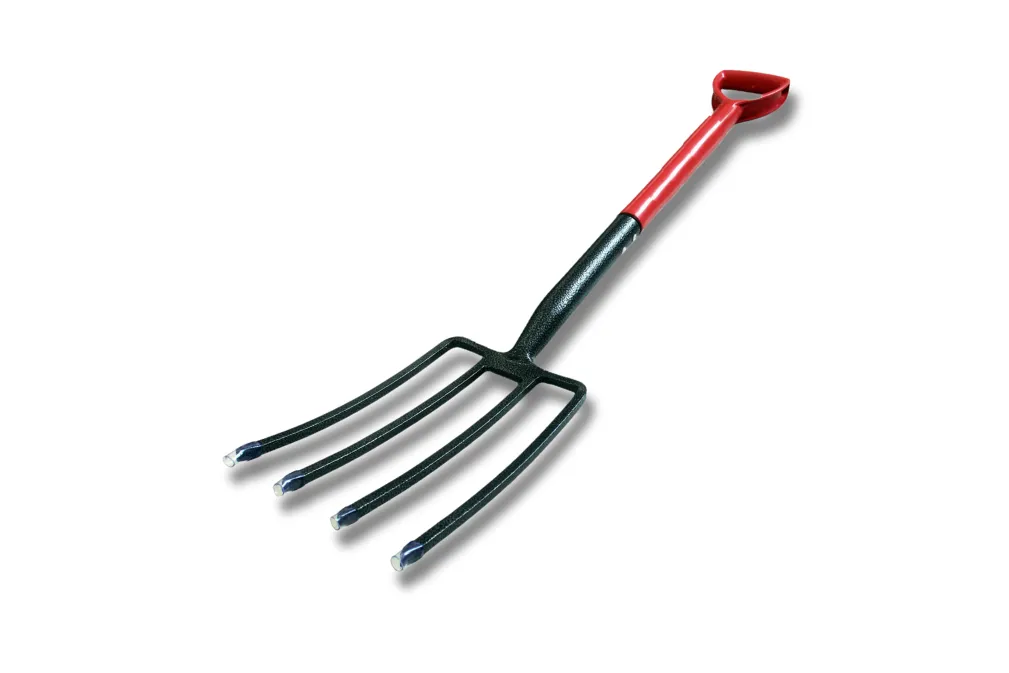
A garden fork is used for lifting, turning, and aerating soil or compost.
Garden forks are ideal for turning compost, aerating soil, and improving soil structure.
Uses:
- Aerating compact soil
- Turning manure and compost
- Improving soil structure
Types:
- Digging fork – for hard soil
- Manure fork – for compost and hay
- Border fork – small garden use
- Broad fork – deep aeration
3. Hoe:
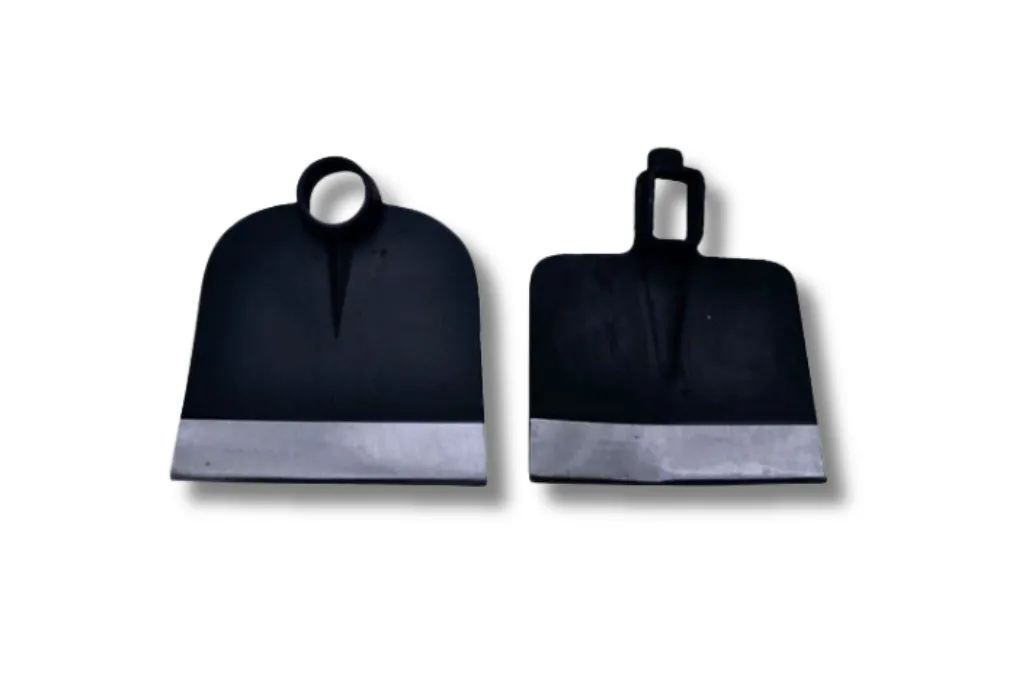
A hoe is used for breaking soil, removing weeds, and shaping planting beds.
Hoes are essential for soil preparation and weed control in farming.
Uses:
- Removing weeds
- Loosening soil
- Making ridges and beds
Types:
- Garden hoe – general use
- Scuffle hoe – slicing weeds
- Warren hoe – precision work
- Dutch hoe – push–pull action
- Draw hoe – pulling soil
Common Indian name: Khurpa
4. Rake:
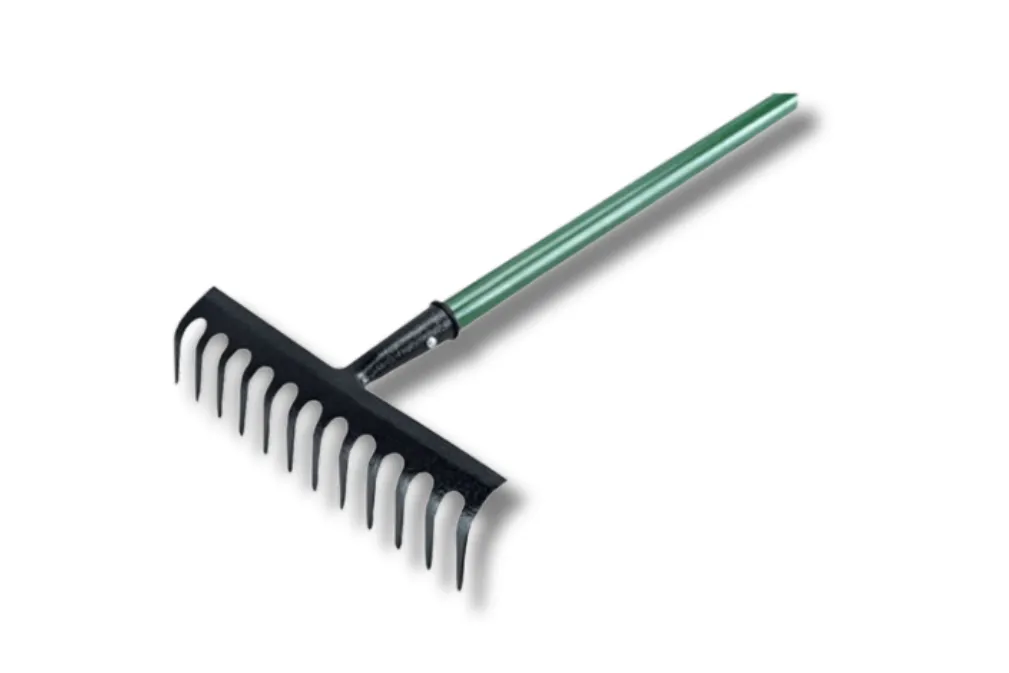
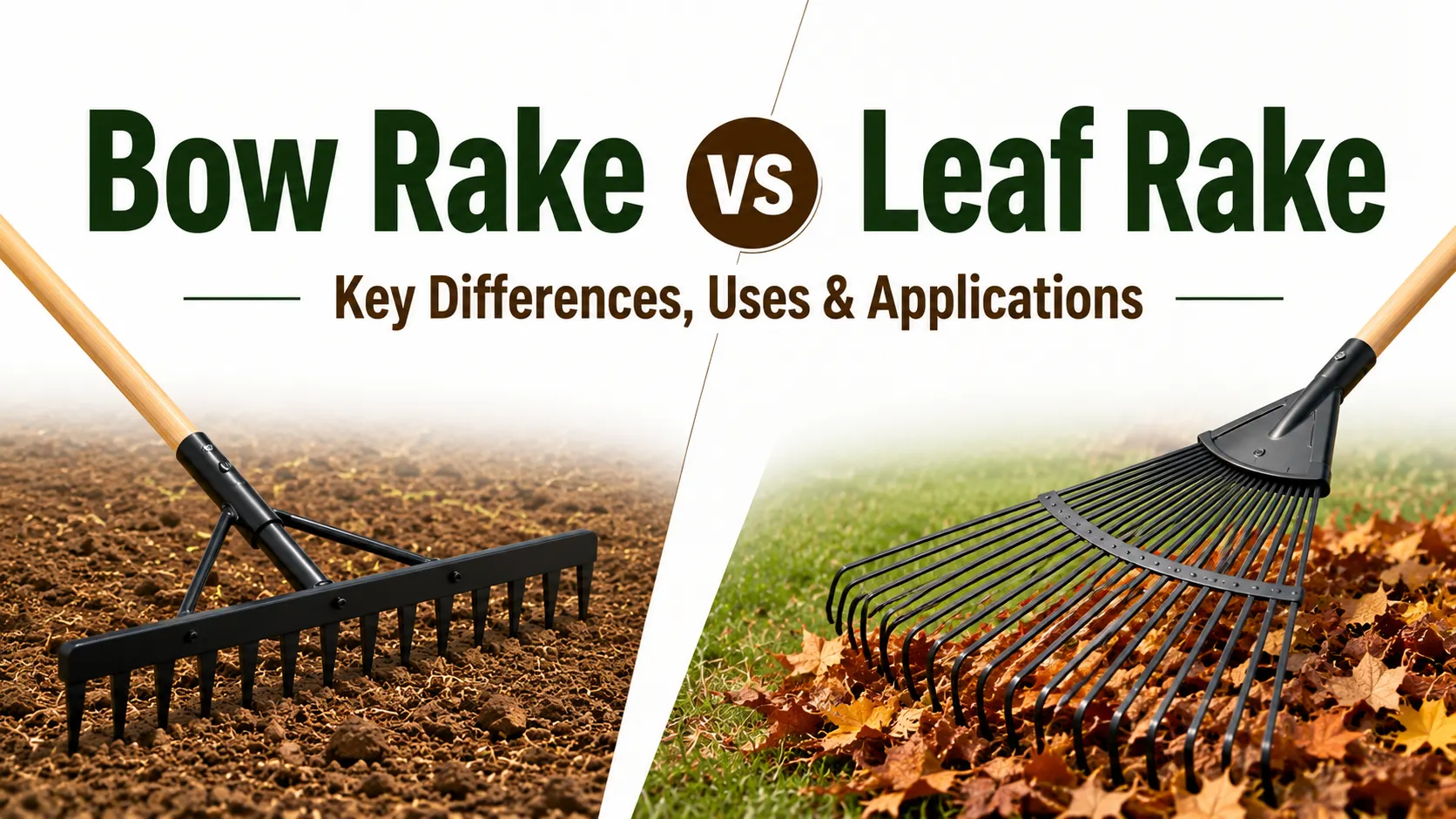
A rake is used for leveling soil and collecting debris.
Rakes help in preparing seedbeds and clearing fields.
Uses:
- Preparing seedbeds
- Gathering leaves and stones
- Spreading mulch
Types:
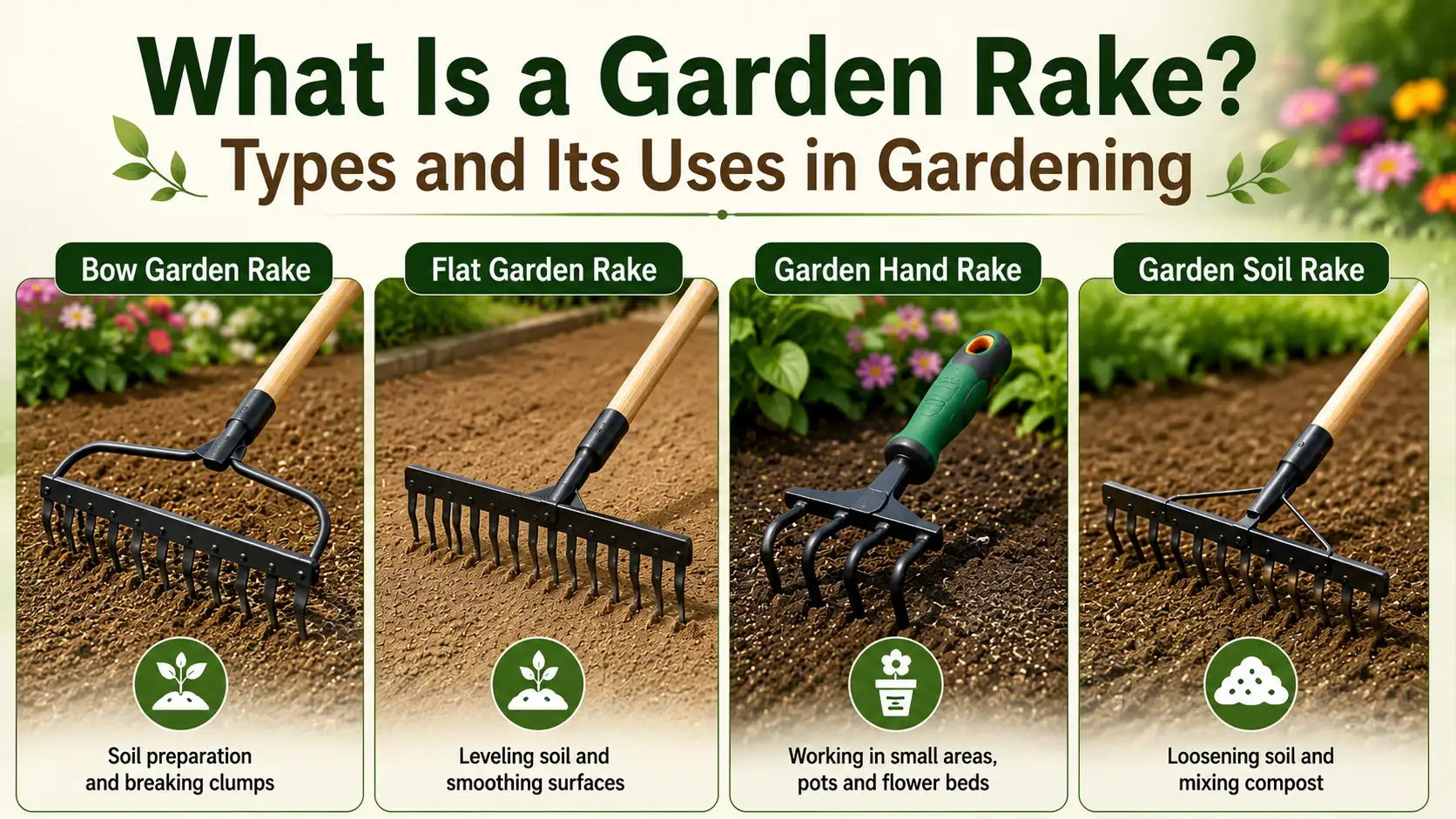
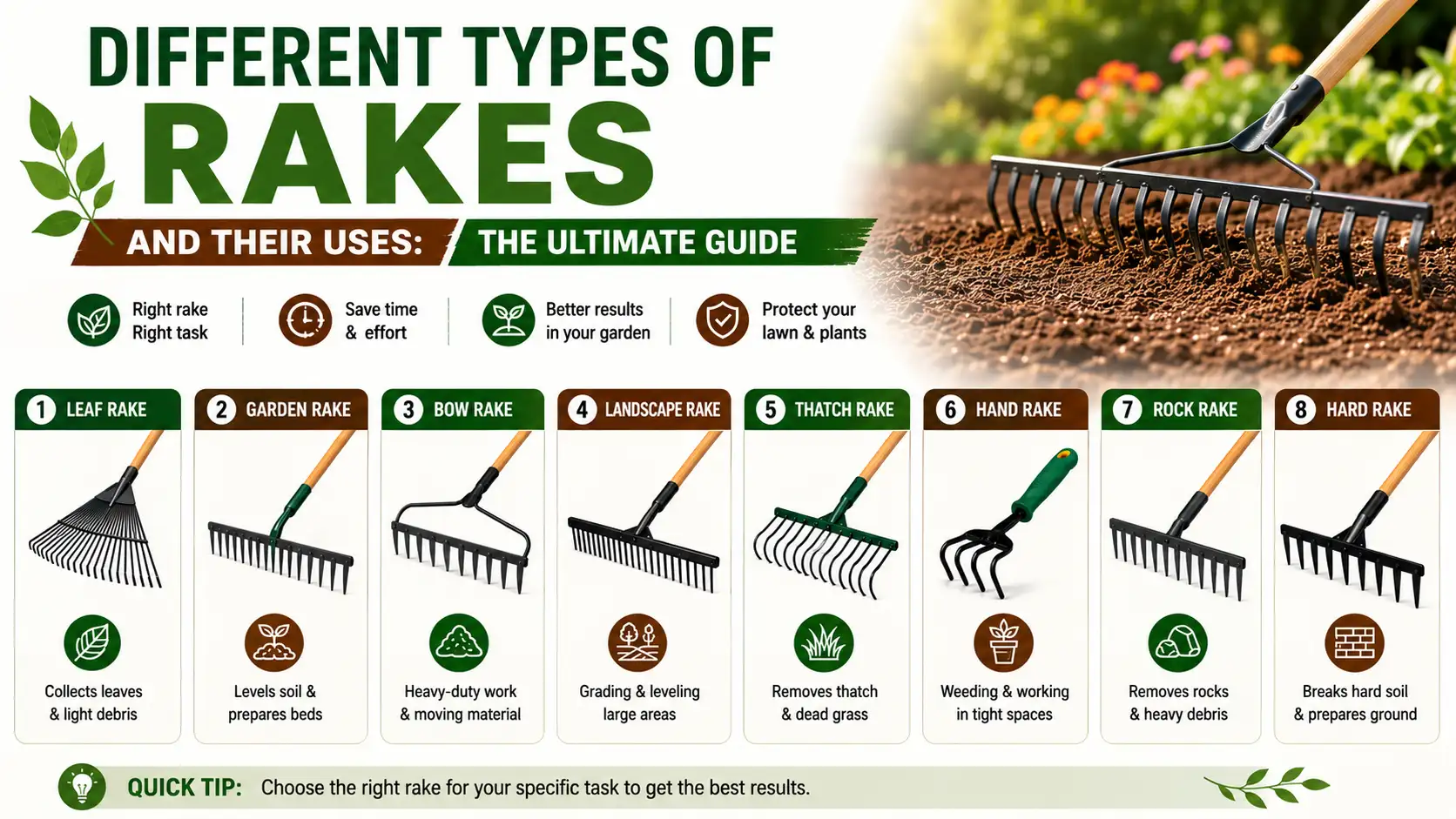
- Garden rake – soil leveling
- Leaf rake – light debris
- Landscape rake – gravel work
- Thatch rake – removing dead grass
5. Pruning Shears:
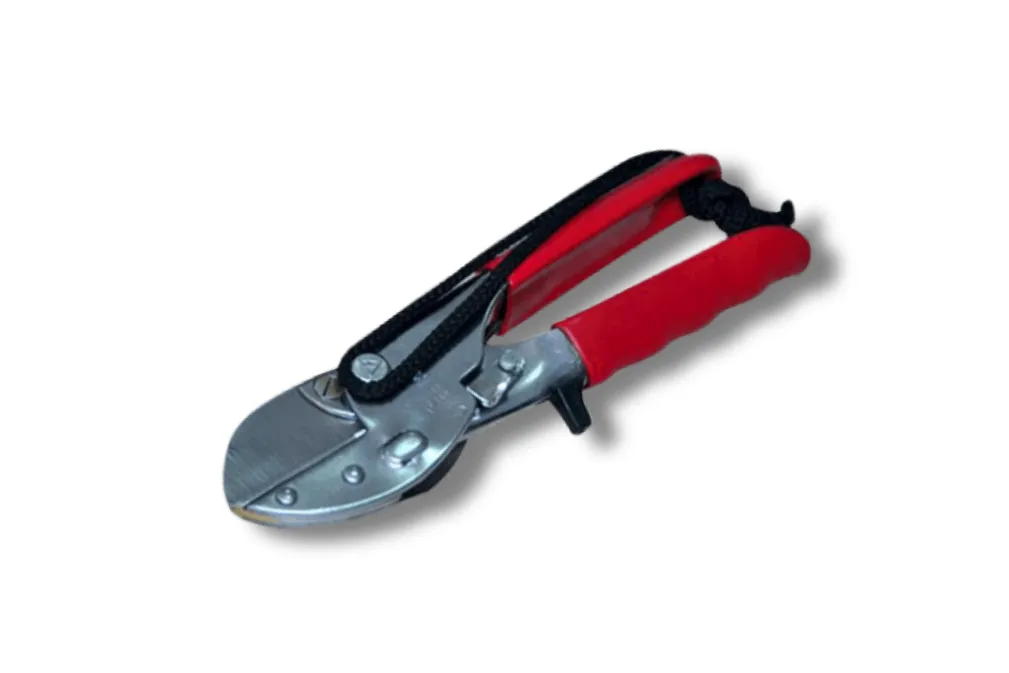
Pruning shears are used for trimming and cutting plant parts.
They help maintain plant health and shape.
Uses:
- Trimming branches
- Removing diseased stems
- Harvesting fruits and flowers
Types:
- Bypass pruners – live plants
- Anvil pruners – dry branches
- Ratchet pruners – extra power
- Loppers – thick branches
6. Hand Trowel:
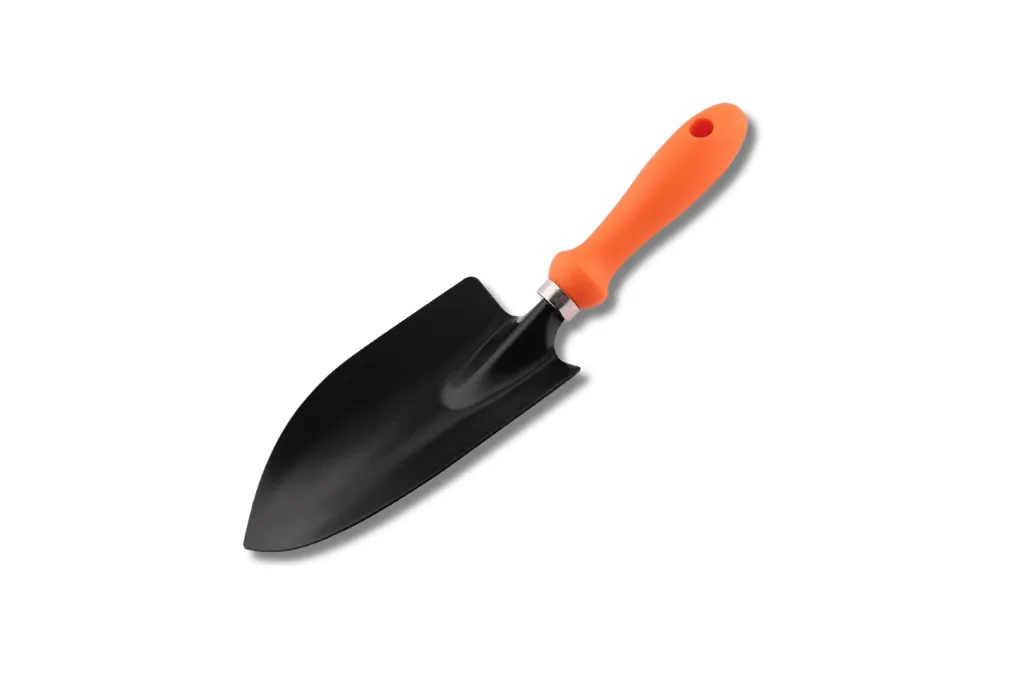
A hand trowel is used for small digging and planting tasks.
It is ideal for precision gardening.
Uses:
- Planting seedlings
- Digging small holes
- Removing weeds
Types:
- Steel trowel – general use
- Narrow-blade – tight spaces
- Wide-blade – scooping soil
- Ergonomic – comfortable grip
Best for: kitchen gardens, nurseries, and container farming.
7. Wheelbarrow:

A wheelbarrow is used for transporting materials on farms.
It reduces manual effort in carrying loads.
Uses:
- Carrying soil and compost
- Transporting harvested crops
- Moving tools and materials
Types:
- Single-wheel – better balance
- Double-wheel – more stability
- Steel – heavy-duty
- Plastic – lightweight
8. Hand Cultivator:

A hand cultivator is used for loosening soil and removing weeds.
It is useful for maintaining garden beds.
Uses:
- Soil aeration
- Weed control
- Mixing fertilizers
Types:
- Three-prong – compact soil
- Five-prong – wider coverage
- Adjustable – depth control
- Ergonomic – easy handling
9. Weeding Knife:
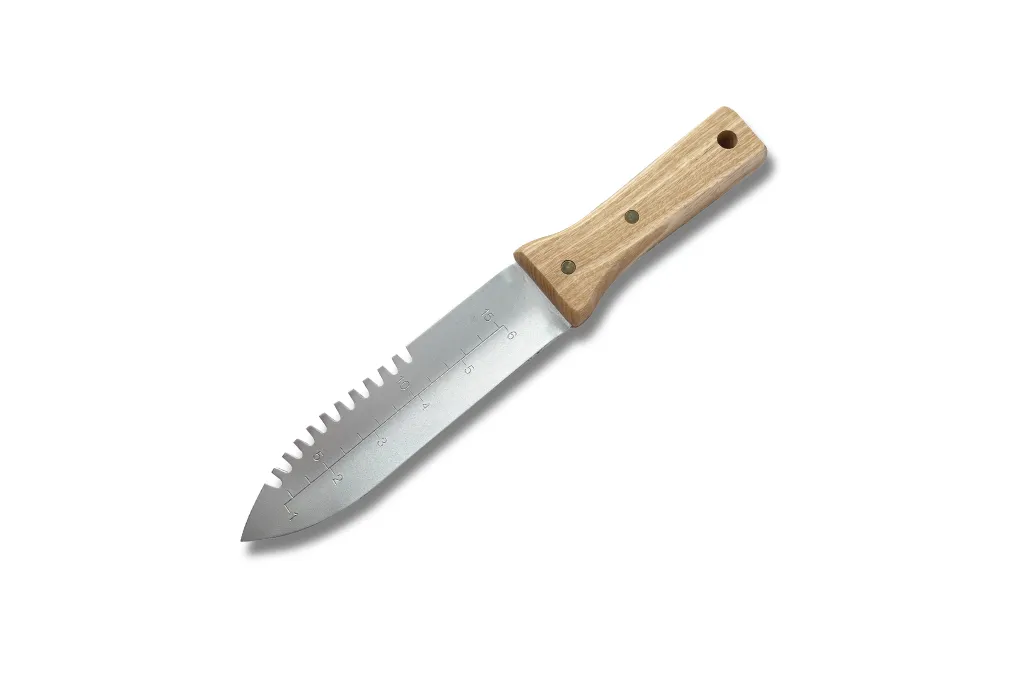
A weeding knife is used for cutting weeds and transplanting plants.
It is ideal for precision work.
Uses:
- Cutting deep-rooted weeds
- Transplanting seedlings
- Dividing plants
Types:
- Serrated edge – tough roots
- Smooth edge – clean cuts
- Stainless steel – rust-resistant
- Carbon steel – sharper edge
10. Hand Saw:
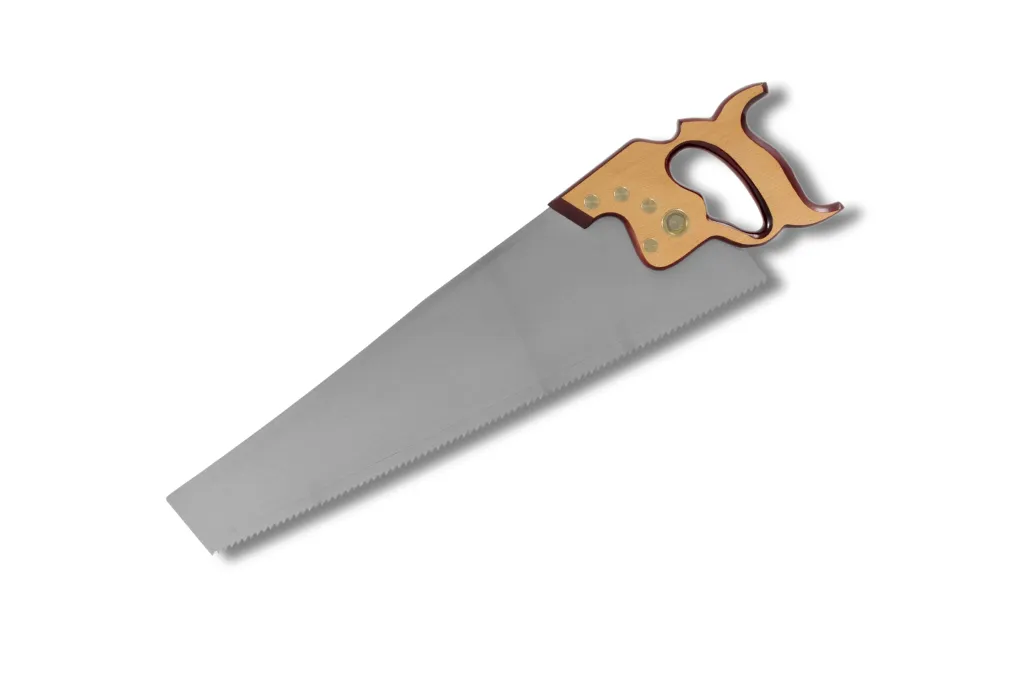
A hand saw is used for cutting wood and pruning thick branches.
It is essential for farm maintenance.
Uses:
- Pruning thick branches
- Cutting wooden supports
- Farm maintenance
Types:
- Folding saw – portable
- Curved blade – tight spaces
- Straight blade – general use
- Pruning saw – garden use
Best Agriculture Hand Tools for Beginners
- Shovel
- Hoe
- Rake
- Hand Trowel
- Pruning Shears
Frequently Asked Questions (FAQs)
The hoe and shovel are the most commonly used tools for soil preparation and weeding.
Yes, they are essential for small farms, gardening, and precision-based tasks.
Basic tools include shovel, hoe, rake, hand trowel, and pruning shears.
They help farmers perform essential tasks efficiently, especially where machinery is not practical.
Conclusion:
Agricultural hand tools are the backbone of farming, enabling farmers and gardeners to cultivate the land, nurture crops, and maintain landscapes with precision and care. Whether you’re tending to a small garden or managing a larger farm, having the right tools for the job is essential for success and productivity in agriculture.
👉 Further Reading: Discover how agricultural hand tools improve productivity in small farms.