Bulk Hand Tools for Construction Projects: Source Directly from an Indian Manufacturer
Procuring bulk hand tools for construction projects requires careful evaluation of product specifications, material quality, manufacturing capabilities and order fulfilment. Construction companies, infrastructure contractors, distributors and wholesalers need tools suited to their applications and procurement requirements. Sourcing directly from an Indian hand tools manufacturer allows buyers to discuss product specifications, bulk quantities, quality requirements and delivery schedules with the manufacturing source.
What Hand Tools Are Required for Construction Projects?
Construction projects use different hand tools for fastening, striking, gripping, cutting, shaping and finishing operations. The required selection depends on the nature of the work and the materials being handled.
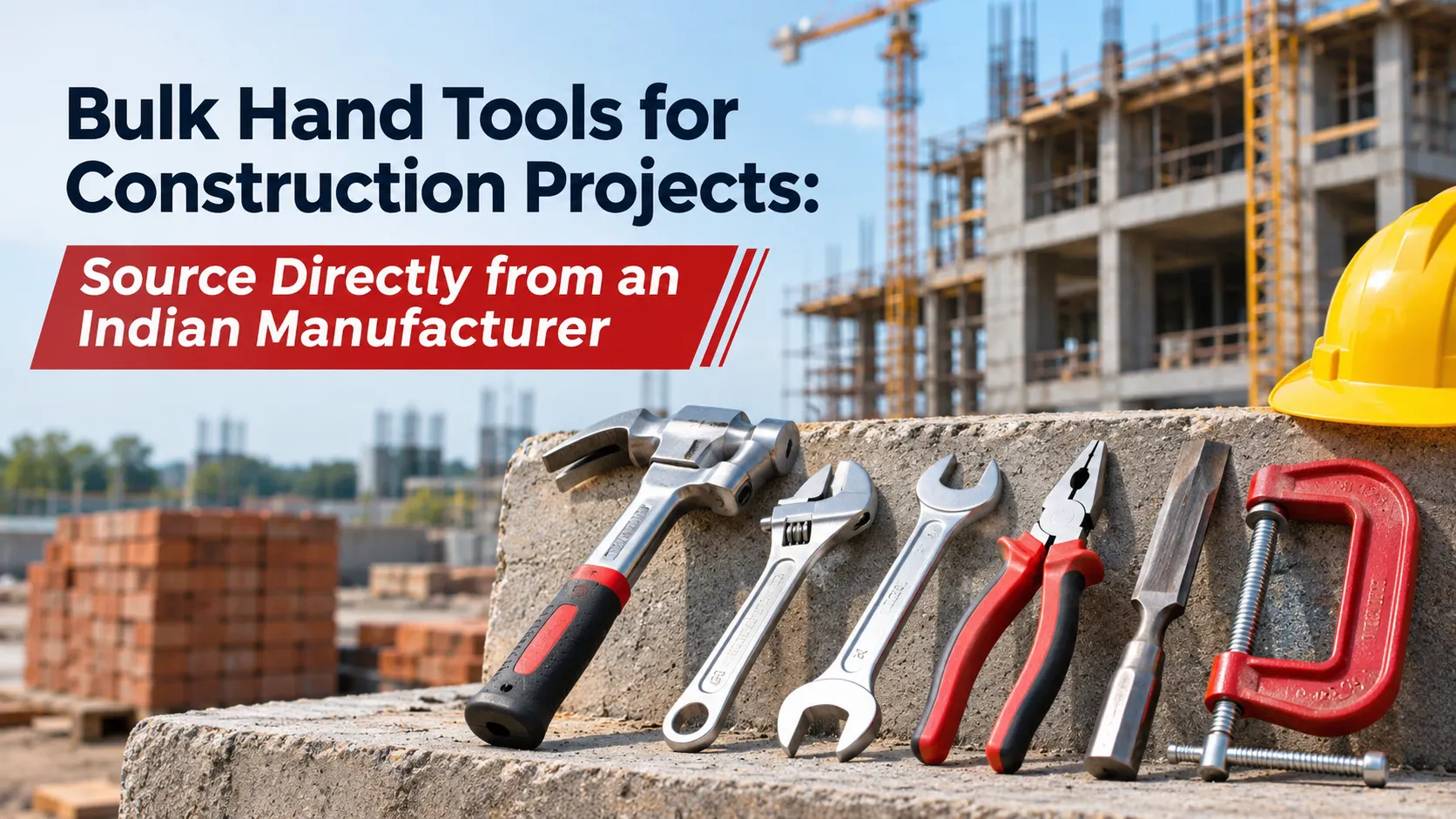
Common hand tool categories include:
Hammers:
Used for driving nails, fitting components, striking surfaces and carrying out light demolition, depending on the hammer design.
Spanners and Wrenches:
Used for tightening and loosening nuts, bolts, pipe fittings and other fasteners.
Pliers:
Used for gripping, holding, bending and cutting wires or smaller components.
Chisels:
Used for cutting, shaping and removing materials in masonry and metalworking applications.
Clamps:
Used to secure workpieces during cutting, fitting, joining and assembly.
For bulk procurement, buyers should select tools according to their intended applications, required dimensions and technical specifications. The final product list should also match the manufacturer’s actual range.
Why Source Bulk Hand Tools Directly from an Indian Manufacturer?
Direct sourcing connects construction businesses and distributors with the manufacturing source, making it easier to discuss product requirements before finalising procurement.
Key considerations include:
1. Product Specification Control:
Buyers can communicate requirements for tool dimensions, material grades, finishes and intended applications. This helps ensure that the quoted products match the purchase specifications.
2. Bulk Order Planning:
Direct coordination allows buyers to discuss product-wise quantities, order combinations, production schedules and dispatch requirements for upcoming projects.
3. Quality Requirement Coordination:
Manufacturers can clarify their material specifications, manufacturing processes, inspection procedures and applicable product standards. Buyers can evaluate these details before confirming an order.
4. Repeat Procurement:
A direct supplier relationship can simplify future orders, particularly when construction companies or distributors require the same product specifications across multiple procurement cycles.
5. Commercial Clarity:
Buyers can evaluate quotations against product specifications, order quantities, packaging, delivery schedules and agreed commercial terms rather than comparing prices in isolation.
How to Choose a Bulk Hand Tools Manufacturer in India
The right manufacturer should be evaluated on documented production capabilities, product specifications and quality-control procedures.
Before selecting a supplier, procurement teams should assess:
- Manufacturing capabilities:
Confirm whether the manufacturer produces the required hand tool categories and can accommodate the proposed order quantities.
- Material specifications:
Check the steel grade, material composition and technical requirements applicable to each tool.
- Manufacturing processes:
Ask about relevant forging, machining, heat-treatment and surface-finishing processes.
- Quality inspection:
Understand how the manufacturer conducts dimensional checks, functional testing and final product inspections.
- Product certification:
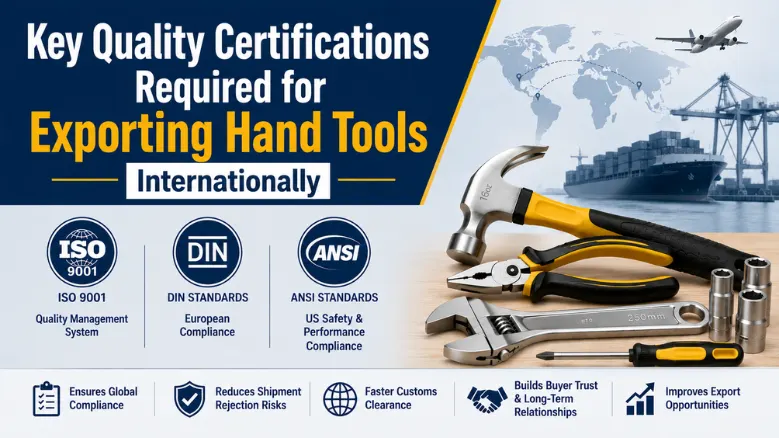
Verify applicable BIS standards and mandatory certification requirements for the specific tool category.
- Production and dispatch:
Confirm manufacturing lead times, order fulfilment arrangements, packaging and delivery schedules.
- Export capabilities:
International buyers should check export documentation, destination-market compliance and packaging requirements.
A supplier’s capabilities should be supported by relevant product specifications, inspection records, certifications and other verifiable documentation.
What Should Buyers Check Before Placing a Bulk Hand Tools Order?
A detailed purchase specification helps prevent product mismatches, quotation discrepancies and avoidable procurement delays.
| Evaluation parameter | What buyers should verify |
| Product category | Tool type, model and intended application |
| Dimensions | Size, length, weight and tolerances |
| Material | Steel grade and material specifications |
| Manufacturing | Relevant forging, machining and finishing requirements |
| Performance | Functional requirements and test criteria |
| Quality control | Inspection methods and test documentation |
| Certification | Applicable BIS standards and compliance documents |
| Order quantity | Product-wise quantities and repeat-order needs |
| Packaging | Bulk packaging, labelling and product protection |
| Delivery | Production lead time and dispatch schedule |
For large orders, buyers can also request samples or pre-production approval, where available, to assess product dimensions, finish and workmanship before proceeding with the full order.
Why Consider India for Bulk Hand Tools Sourcing?
India has an established hand tools manufacturing base, with industrial capabilities and manufacturing activity supporting domestic and international markets.
NITI Aayog’s April 2025 report, Unlocking $25+ Billion Exports: India’s Hand & Power Tools Sector, examines the country’s manufacturing ecosystem, export opportunities and industry challenges. It also recommends developing specialised hand tool manufacturing clusters by 2035, including a proposed cluster in Punjab.
For international importers, wholesalers and construction businesses, India is a manufacturing market worth evaluating when diversifying sourcing arrangements. However, the choice of supplier should depend on verified production capabilities, product compliance, quality documentation, commercial terms and delivery performance.
Conclusion
Sourcing bulk hand tools for construction projects requires careful consideration of product specifications, material quality, manufacturing capabilities and supply reliability. Working directly with an Indian manufacturer can help businesses establish clear procurement requirements, streamline bulk ordering and build consistent sourcing relationships for current and future projects.
FAQs
1. Which hand tools are commonly purchased in bulk for construction projects?
Common procurement categories include hammers, spanners, wrenches, pliers, chisels, and clamps. The selection depends on project activities, tool specifications and the manufacturer’s available product range.
2. How can construction companies source hand tools directly from Indian manufacturers?
Companies can approach manufacturers with a product list, technical specifications, required quantities and delivery expectations. They should evaluate manufacturing capabilities, quality documentation and commercial quotations before placing an order.
3. What factors affect the cost of bulk hand tools?
Pricing depends on tool type, material grade, dimensions, manufacturing processes, surface finish, order quantity, packaging and delivery requirements. Buyers should compare quotations for products with equivalent specifications.
4. Are BIS certifications mandatory for all hand tools in India?
No. Mandatory certification applies to products covered under the relevant Quality Control Order. The Hand Tools (Quality Control) Order, 2025 specifies particular tool categories and corresponding Indian Standards. Buyers should verify the latest applicable BIS requirements for each product rather than assuming that every hand tool requires the same certification.
5. Can Indian hand tools manufacturers supply international buyers?
Manufacturers with established export capabilities can serve international distributors, wholesalers and bulk buyers. Importers should confirm product specifications, export documentation, destination-market compliance, packaging and delivery terms before ordering.