What Is a Hand Rake Tool? Uses, Benefits and Applications
Gardening often involves working in tight spaces where large, long-handled tools can be difficult to use effectively. Flower beds, raised planters, container gardens, and areas around delicate plants require greater precision and control. This is where a hand rake becomes one of the most useful tools in a gardener’s toolkit.
Compact, lightweight, and easy to handle, a hand rake tool is designed for small-scale gardening tasks that require accuracy rather than force. Whether you are loosening soil, removing weeds, mixing compost, or maintaining flower beds, a hand rake helps make routine gardening tasks faster and more efficient.
What Is a Hand Rake Tool?
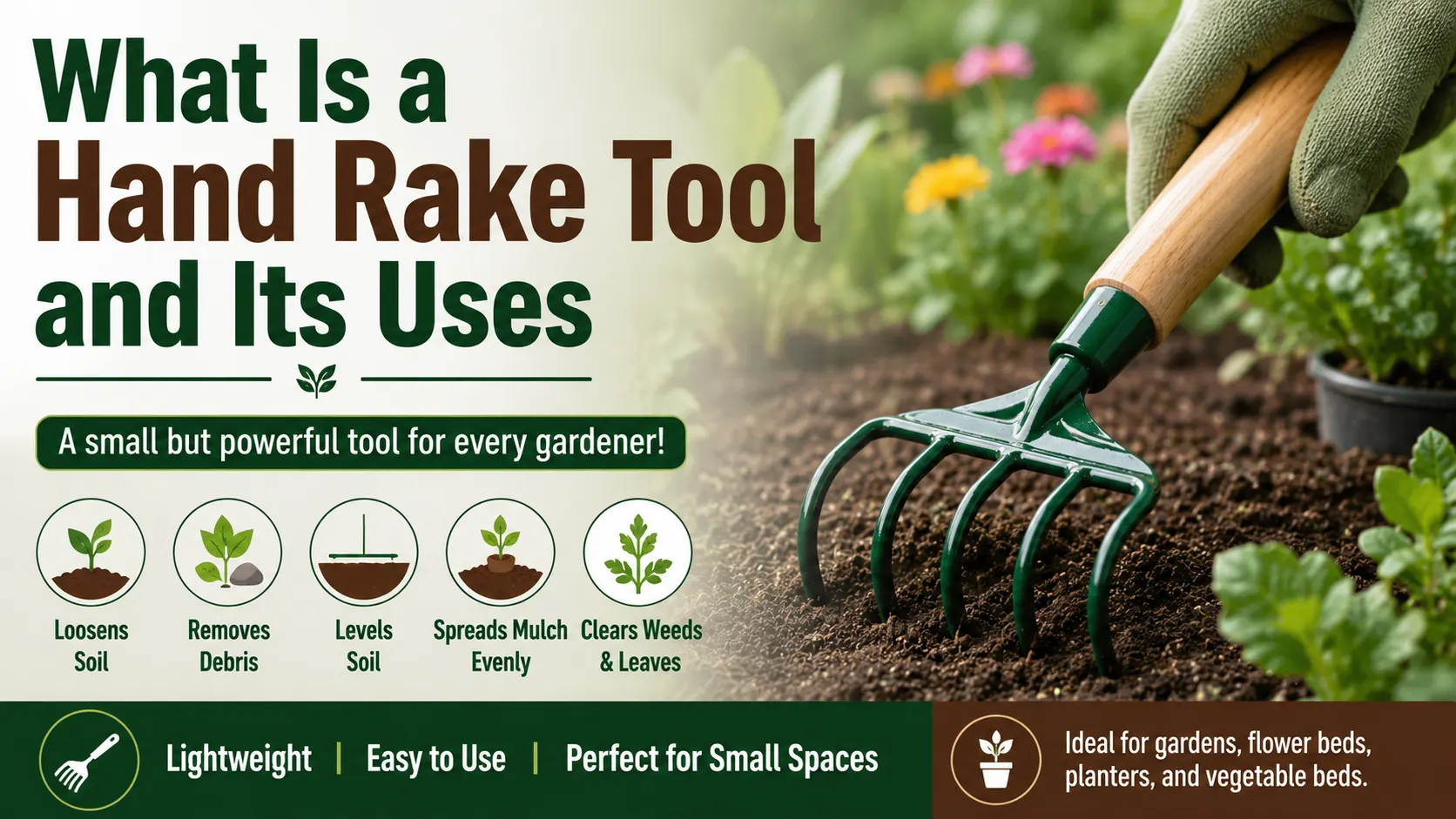
A hand rake is a small gardening tool with a short handle and metal tines used for loosening soil, removing weeds, mixing compost, and spreading mulch in flower beds, raised planters, and container gardens.
Because of its small size, it is particularly useful in flower beds, vegetable gardens, raised planters, container gardens, and other confined spaces where larger tools are difficult to maneuver.
Parts of a Hand Rake
A typical hand rake consists of three main components:
Handle
A short grip made from wood, fiberglass, or rubber-coated material that allows comfortable one-handed operation.
Head Socket
The connection point that securely joins the handle to the rake head and provides stability during use.
Tines
Curved metal teeth that loosen soil, remove weeds, and move small amounts of mulch, compost, or debris.
Common Uses of a Hand Rake
A hand rake is commonly used for loosening compacted soil, removing shallow weeds, mixing compost or fertilizer, spreading mulch, and maintaining raised beds, flower beds, and container gardens.
Loosening Soil
Hand rakes help break up compacted soil around plants, improving airflow and water penetration to the roots.
Removing Weeds
The metal tines can easily pull out shallow-rooted weeds before they spread throughout the garden.
Mixing Compost and Fertilizer
A hand rake helps blend compost, organic matter, and granular fertilizers evenly into the top layer of soil.
Spreading Mulch
Gardeners often use hand rakes to distribute mulch around plants while maintaining a neat and even appearance.
Maintaining Raised Beds and Containers
Its compact size makes it ideal for cultivating soil inside raised beds, window boxes, and plant containers.
Hand Rake vs Garden Rake
While both tools perform similar functions, they are designed for different working areas.
| Feature | Hand Rake | Garden Rake |
| Size | Compact | Large |
| Operation | One-handed | Two-handed |
| Best For | Flower beds, containers, raised beds | Lawns, garden beds, landscaping |
| Precision | High | Moderate |
| Soil Coverage | Small areas | Large areas |
A hand rake offers greater precision, while a garden rake is better suited for covering larger spaces efficiently.
Benefits of Using a Hand Rake
- Provides excellent control in tight spaces
- Reduces the risk of damaging nearby plants
- Lightweight and easy to handle
- Ideal for container gardening and raised beds
- Versatile enough for soil preparation, weeding, and mulch spreading
How to Choose a Quality Hand Rake
When buying a hand rake, look for the following features:
Strong Steel Tines
Steel tines provide better durability and resist bending when working in compacted soil.
Comfortable Grip
Choose a handle with a non-slip or ergonomic grip for improved comfort during extended gardening sessions.
Secure Construction
A strong connection between the handle and rake head helps prevent loosening over time.
Rust Resistance
Protective coatings or rust-resistant materials help extend the lifespan of the tool.
Common Mistakes to Avoid
Using a Hand Rake for Heavy-Duty Tasks
Hand rakes are designed for light gardening work. Using them to move rocks, gravel, or heavy materials may damage the tines.
Applying Excessive Force
Avoid stepping on the rake or forcing it deep into hard ground, as this can bend the metal teeth.
Ignoring Tool Maintenance
Failing to clean and store the tool properly can shorten its lifespan and increase the risk of rust.
Simple Maintenance Tips
Clean After Use
Remove soil, compost, and plant debris from the tines after every gardening session.
Store in a Dry Location
Keep the tool in a shed, garage, or covered storage area to prevent moisture damage.
Apply Protective Oil
Occasionally apply a light coating of oil to the metal parts to help prevent rust and corrosion.
Conclusion
A hand rake is an essential gardening tool for working in flower beds, raised planters, containers, and other confined spaces. Its compact size and precise control make it ideal for loosening soil, removing weeds, spreading mulch, and mixing compost without disturbing nearby plants.
Whether you are a home gardener or a landscaping professional, a durable hand rake can make routine garden maintenance faster, easier, and more efficient.
For homeowners, landscapers, nurseries, and gardening retailers seeking dependable gardening tools, JCBL Hand Tools offers durable hand rakes designed for comfort, precision, and long-lasting performance across a variety of gardening applications.
FAQs
A hand rake is a compact gardening tool with a short handle and metal tines used for soil preparation, weeding, and plant care in small spaces.
It is used for loosening soil, removing weeds, mixing compost, spreading mulch, and maintaining flower beds, raised planters, and containers.
Yes. Its compact size and precise control make it ideal for working around flowers without damaging nearby plants.
A hand rake is designed for precision gardening in small spaces, while a garden rake is designed for preparing and maintaining larger garden areas.
Yes. Hand rakes are one of the most effective tools for loosening soil and maintaining container gardens because they fit easily into small planting spaces.
Related Readings:
- What Is a Rake? Definition, Functions and Important Uses
- Best Heavy-Duty Garden Rake: Features, Materials and Buying Guide
- What Is a Landscape Rake? Uses, Benefits and Applications
- Gardening Tools and Their Uses
- What Is a Garden Rake? Types and Its Uses in Gardening
- Different Types of Rakes and Their Uses