What Is a Garden Rake? Types and Its Uses in Gardening
A garden rake is one of the most important gardening tools used for preparing soil, leveling planting beds, removing debris, and maintaining healthy garden spaces. Whether you are growing vegetables, planting flowers, or creating a new lawn, a rake for garden prep helps improve soil conditions and makes daily yard tasks easier and more efficient.
Unlike leaf rakes that are mainly designed to collect leaves and lightweight debris, garden rakes are built with strong, rigid metal tines that can handle heavy soil preparation, stone removal, and bed leveling. This durability makes them an essential tool for both home gardeners and professional landscapers.
What Is a Garden Rake?
A garden rake is a long-handled gardening tool with rigid metal tines used for leveling soil, removing debris, breaking soil clumps, and preparing seedbeds before planting.
A garden rake is a long-handled gardening tool with rigid metal tines used for leveling soil, removing debris, breaking soil clumps, and preparing seedbeds before planting.
Garden Rake Meaning and Purpose
A garden rake is designed to prepare and maintain planting areas by working on the top layer of soil. Unlike a leaf rake that sweeps debris from lawns, a garden rake helps loosen soil, remove stones, clear weeds, and create smooth planting surfaces.
It is commonly used in vegetable gardens, flower beds, nurseries, and landscaping projects where proper soil preparation is important for healthy plant growth.
Main Components of a Garden Rake
Most garden rakes consist of four basic parts:
Handle
The long shaft that allows comfortable use while standing. Handles are commonly made from wood, steel, or fiberglass.
Head
The horizontal metal bar attached to the handle that supports the tines.
Tines
The rigid metal teeth that break soil clumps, gather debris, remove stones, and level surfaces.
Socket
The connection point between the handle and rake head that provides strength and stability during use.
Key Features of a Garden Rake
A quality garden rake typically includes:
- Strong steel tines for durability and effective soil preparation
- A sturdy handle for improved control and comfort
- A secure head-to-handle connection for long-term reliability
- A flat rake head that helps level soil evenly
- Proper tine spacing for removing debris while allowing loose soil to pass through
What Is a Garden Rake Used For?
A garden tools rake performs multiple vital roles during ground preparation. Here is a breakdown of the primary uses of rake in gardening setups:
1. Preparing Planting Beds
Before sowing seeds, you draw the rake across the ground to create a loose, fine-textured top layer. This process creates a uniform surface that helps new seeds take root easily.
2. Breaking Down Tough Soil Clumps
After digging or tilling the earth with a spade, the ground often contains large, hard blocks of dirt. The rigid metal teeth of gardening tools rake shatter these blocks into small, workable soil particles.
3. Removing Stones and Loose Weeds
As you pull the rake for gardening rows, the teeth act as a manual screen. The tines trap small rocks, weed roots, and wood scraps while allowing clean, rich soil to pass through.
For larger areas that require stone removal, grading, and surface cleanup, a landscape rake is commonly used alongside traditional garden rakes.
4. Spreading Compost and Mulch
Gardeners frequently use this tool to distribute compost, organic matter, and bark mulch across their planting beds. The rigid teeth chop up matted mulch sheets and spread them into a smooth, even protective layer.
Different Types of Garden Rakes
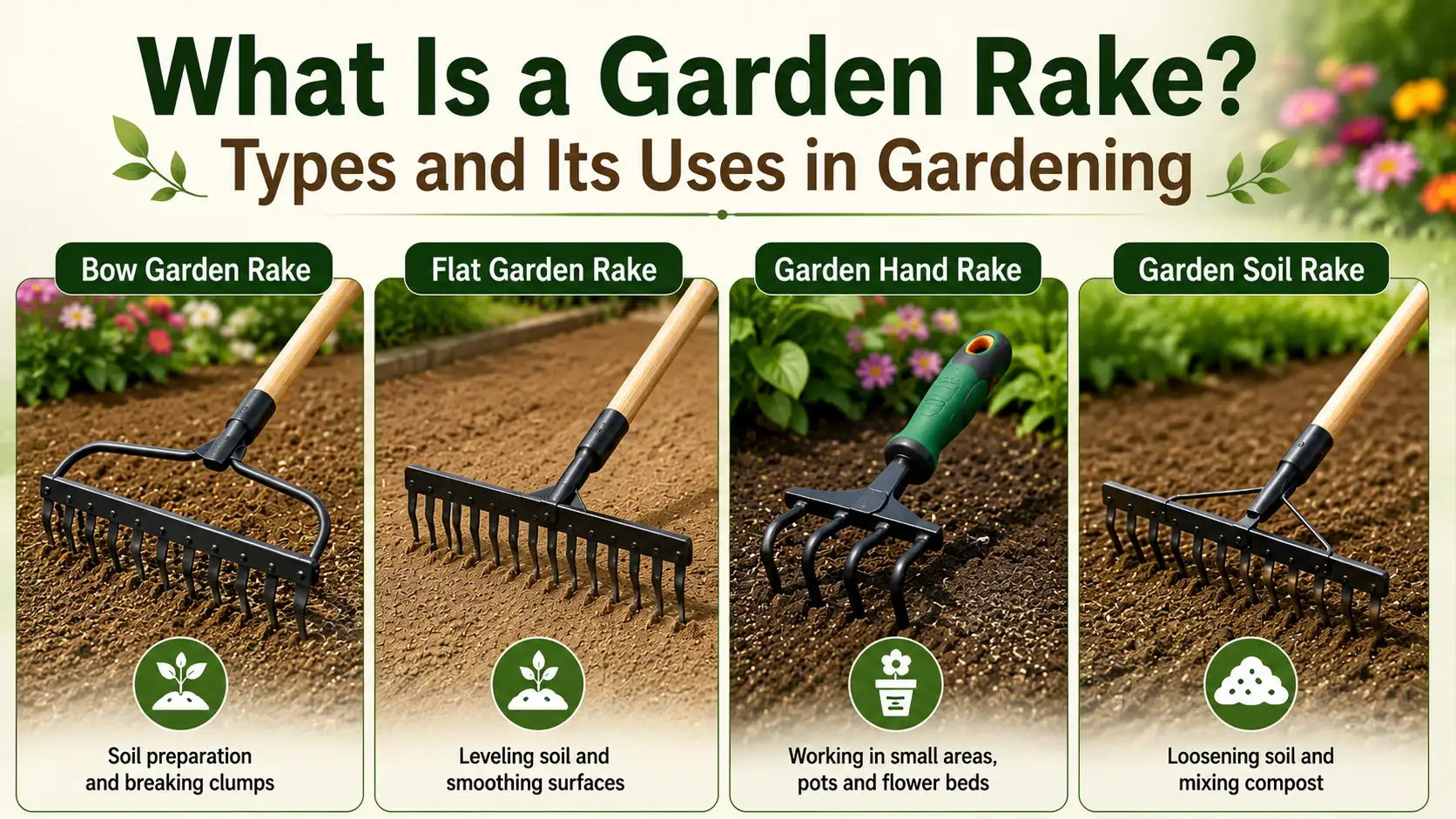
Different gardening tasks require different rake styles. Understanding the most common garden rake types helps you choose the right tool for the job.
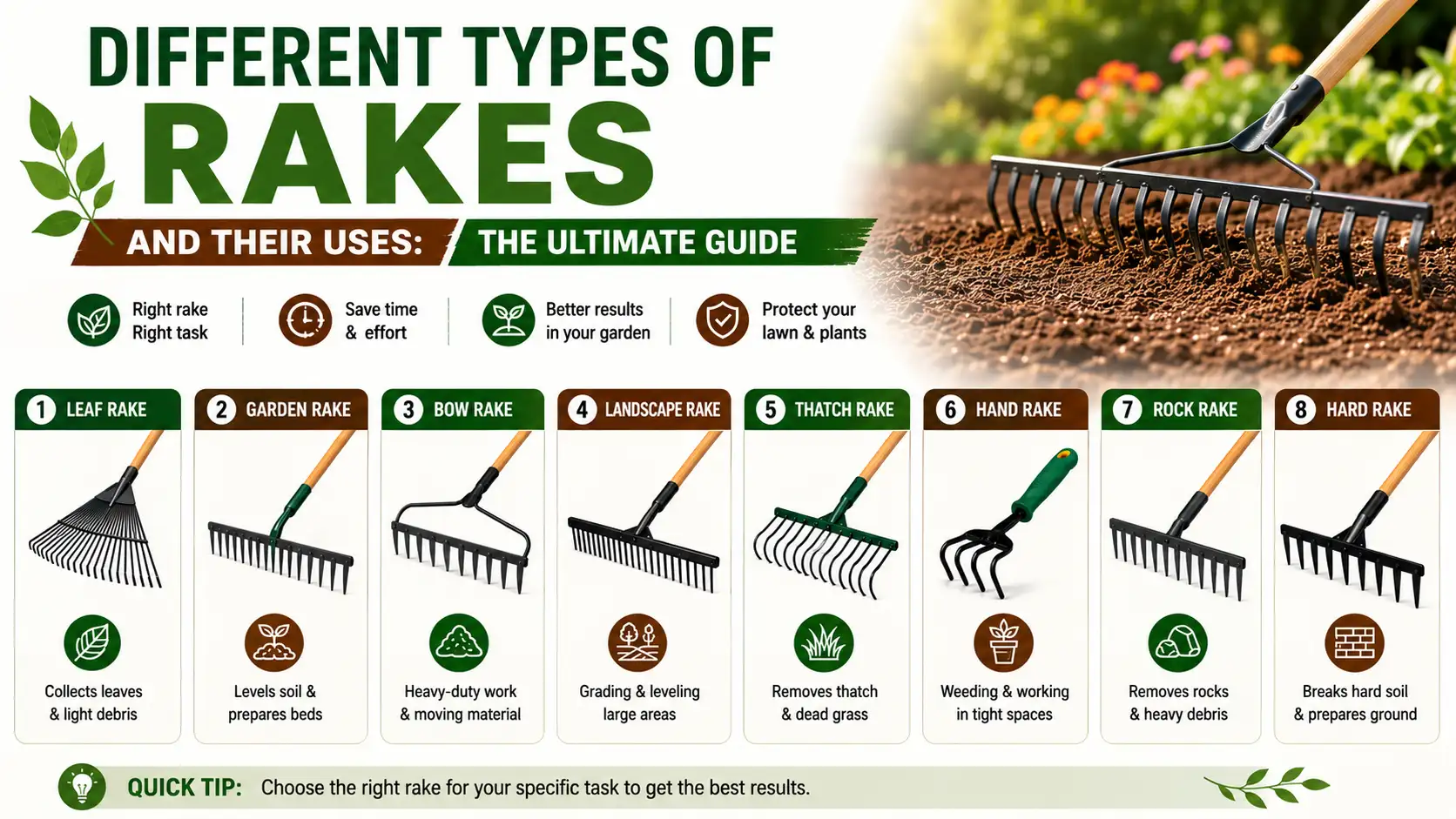
If you’d like to explore a broader range of rake designs beyond gardening applications, read our guide on different types of rakes and their uses.
Bow Garden Rake
A bow rake features rigid steel tines attached to a frame supported by curved metal arms. Its strong construction makes it suitable for demanding gardening and landscaping work.
Best Uses: Breaking soil clumps, preparing planting beds, moving gravel, and leveling rough ground.
Flat Garden Rake
A flat garden rake features a straight-edged head designed for precise surface finishing and soil leveling.
Best Uses: Fine grading, smoothing seedbeds, and preparing planting areas.
Garden Hand Rake
A garden hand rake is a compact version of a traditional rake designed for close-up work in small spaces.
Best Uses: Container gardening, flower beds, raised planters, and precision weeding.
Related Reading: What Is a Hand Rake Tool? Uses, Benefits and Applications
Garden Soil Rake
A garden soil rake is designed specifically for conditioning soil and preparing planting rows.
Best Uses: Mixing compost, loosening soil, removing debris, and preparing seedbeds.
Similar soil-conditioning techniques are also used in farming operations, where larger agricultural rakes help prepare fields and manage crop residue. Learn more about what is a rake in agriculture.
Garden Rake vs Leaf Rake: Quick Comparison
Many beginners mistake general rake gardening options for simple leaf sweeps. However, their use cases are entirely distinct:
| Task / Feature | Heavy-Duty Garden Rake | Flexible Leaf Rake |
| Build Material | Forged Iron or Stiff Steel | Light Plastic, Wire, or Bamboo |
| Tine Flexibility | 100% Rigid & Stiff | Highly Flexible & Springy |
| Soil Tilling & Prep | Excellent | Not Recommended (Tines will break) |
| Leveling Surfaces | Yes (Using the flat back ridge) | No |
| Spreading Mulch | Excellent | Limited |
| Fallen Leaf Clearing | Basic (Can move heavy wet piles) | Excellent (Clears wide lawns fast) |
While both tools are called rakes, they are designed for completely different tasks. Learn more about their differences in our detailed comparison of Bow Rake vs Leaf Rake: Key Differences, Uses and Applications.
Common Mistakes to Avoid with Garden Rakes
- Raking Excessively Wet Soil: Dragging a heavy rake through wet, muddy earth ruins the soil texture, creates clumping, and clogs the metal teeth with heavy mud.
- Forcing the Head Over Large Rocks: Forcing the rigid teeth against large, deeply buried stones can bend individual tines out of alignment or crack the handle socket.
- Using a Leaf Rake for Dirt Preparation: Attempting to break up soil or move mulch with a flexible plastic leaf sweep will warp or snap the fan head instantly.
How to Maintain a Garden Rake
Applying a few simple tool maintenance routines preserves the strength of your equipment and prevents premature wear:
- Clean the Head After Use: Wash away stuck-on mud, wet soil, and plant sap from between the prongs immediately after finishing your yard work.
- Store in a Dry Location: Never leave your metal tools lying out in damp grass or exposed to rain. Always dry the rake with a clean cloth and hang it off the floor inside a dry garage or tool shed.
- Apply a Light Layer of Oil: Clean the metal components occasionally and wipe them down with a little machine oil to protect the steel from damp air and rust.
- Inspect Handle Connections: Regularly check the handle socket. If any mounting screws or rivets come loose over time, tighten them immediately to prevent wobble.
Conclusion
A garden rake is one of the most important tools for soil preparation, debris removal, and general garden maintenance. Whether you are creating a new flower bed, preparing a vegetable patch, spreading compost, or leveling soil, using the right type of garden rake can improve efficiency and deliver better gardening results.
Understanding the different garden rake types and following basic maintenance practices will help you get the most value from your tool while keeping your garden healthy and productive.
For landscapers, retailers, distributors, and gardening professionals looking for dependable outdoor tools, JCBL Hand Tools offers durable garden rakes designed for performance, comfort, and long-term reliability.
Related Readings: