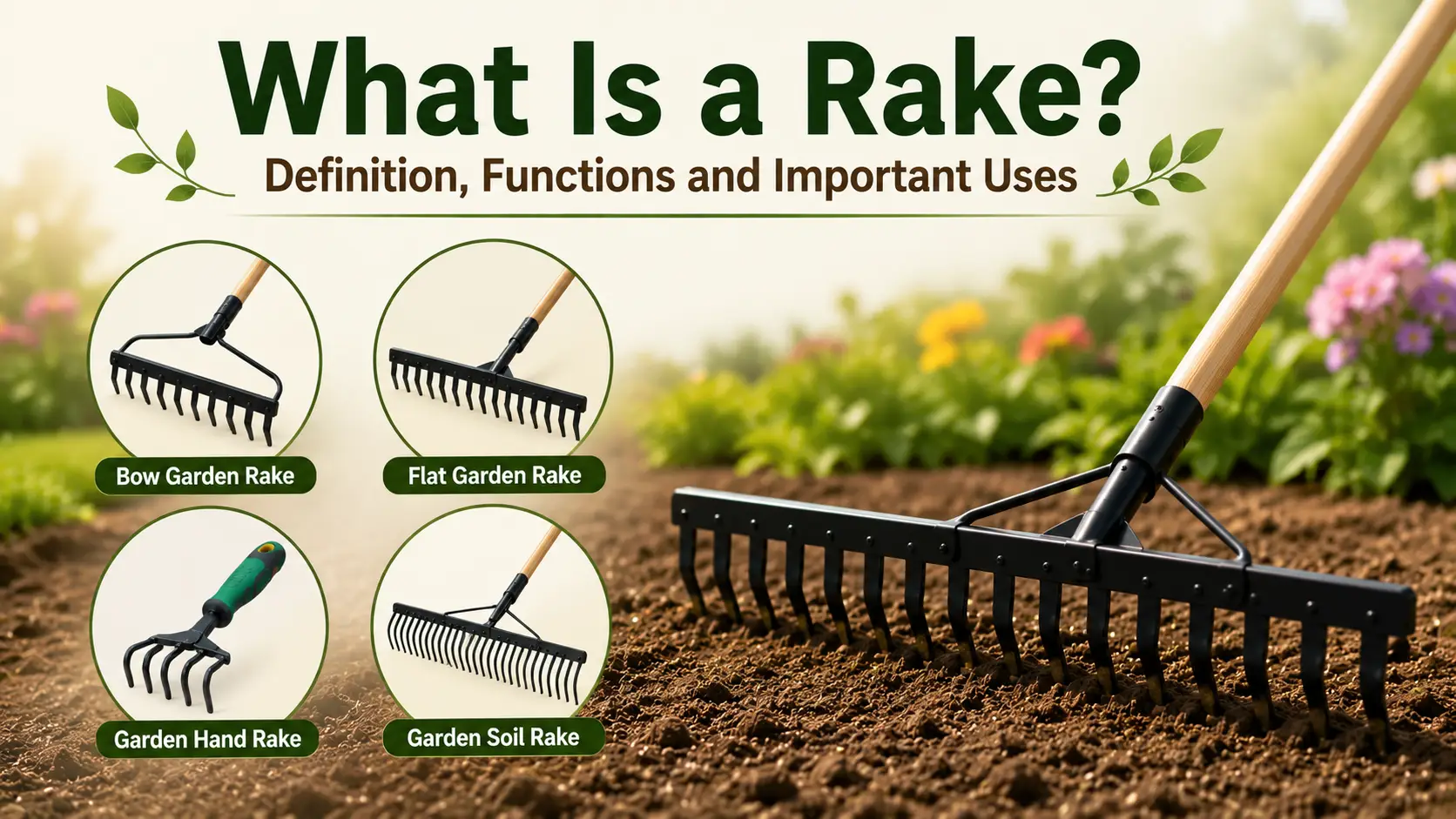
What Is a Rake? Definition, Functions and Important Uses
A rake is one of the most common and helpful hand tools used in gardening, lawn care, farming, and landscaping. It acts as an essential cleaning and leveling tool, making it easy to manage outdoor spaces without bending down or straining your body.
Whether you are cleaning up a backyard lawn, clearing a harvest field, or prepping fresh soil for planting, a good rake helps keep your outdoor areas clean, neat, and well-organized.
What Is a Rake?
A rake is a long-handled tool with a row of teeth (tines) used for gathering leaves, removing debris, leveling soil, spreading mulch, and preparing seedbeds for planting.
What Is the Definition of a Rake?
The definition of a rake refers to a hand tool fitted with a toothed head designed to gather, move, or smooth loose materials on the ground surface.
Most rakes consist of three basic parts:
- The Head (Crossbar): A long shaft made from wood, fiberglass, or metal that allows comfortable use while standing.
- The Tines (Teeth): The horizontal section attached to the handle that supports the tines.
- The Handle: The teeth or prongs that collect debris, break up soil, or move materials depending on the rake type.
What Is the Function of a Rake?
The primary function of a rake is to collect loose materials and improve surface conditions without digging deeply into the soil.
A rake is commonly used to:
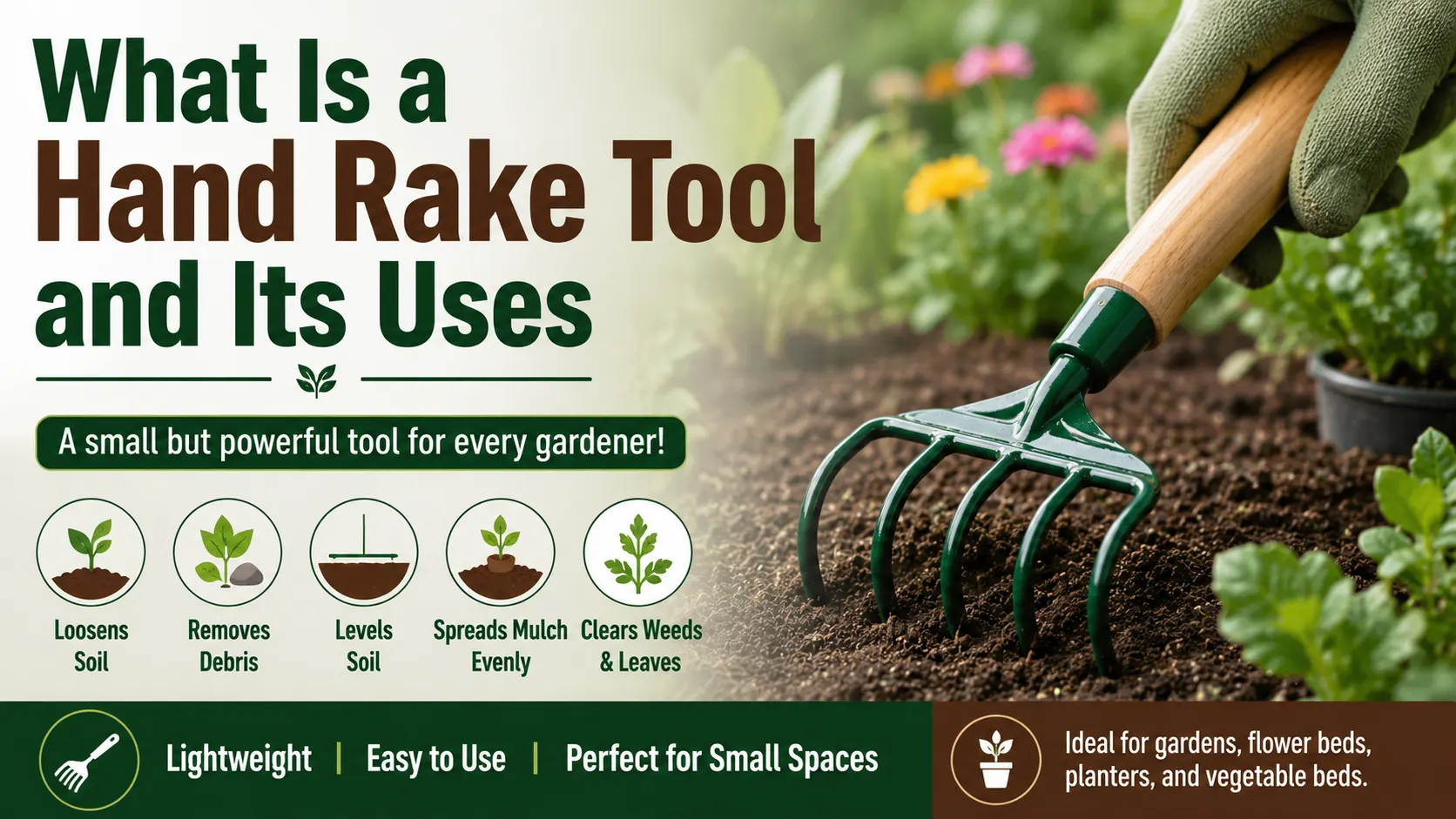
- Gather leaves, grass clippings, and yard debris
- Level soil before planting
- Remove stones and weeds from garden beds
- Spread mulch, compost, or topsoil
- Prepare smooth seedbeds for flowers, vegetables, and lawns
Why Is a Rake Important?
A rake helps reduce manual effort and improves efficiency during gardening and landscaping tasks.
- Saves Time and Energy: It speeds up routine garden maintenance, allowing you to clean a yard in minutes.
- Improves Plant Growth: It creates a smooth, loose soil bed that makes it easier for new seeds to take root and grow.
- Keeps Lawns Healthy: It clears away layers of dead matted grass (thatch) that can suffocate your lawn and block sunlight.
Different Types of Rakes at a Glance
Different types of rakes are designed for specific gardening, landscaping, and lawn-care tasks. Choosing the right rake improves efficiency and helps prevent damage to the tool.
Different rake designs are created for different outdoor tasks:
| Rake Type | Best For | Primary Feature |
| Leaf Rake | Leaves, lightweight thatch, and dry grass clippings | Wide, fan-shaped head with highly flexible prongs. |
| Bow Rake | Soil preparation, breaking dirt clumps, and moving gravel | Rigid steel teeth with a curved frame for heavy tilling. |
| Garden Rake | General gardening, breaking small soil blocks, and styling beds | Traditional flathead design with stiff metal teeth. |
| Landscape Rake | Large-area leveling, grading sand, and path construction | Extra-wide aluminum head built for wide spaces. |
| Hand Rake | Small garden beds, flower pots, and close-up weeding | Compact, single-handed mini tool with claw-like teeth. |
What Is a Rake Used For?
The scope of rake usage covers a wide variety of tasks around the house, garden, or farm field. Here are the most common ways a rake is used:
1. Collecting Leaves and Lawn Trimmings
The most popular use of rake tools is cleaning up yard waste. A flexible rake sweeps smoothly across the grass to gather fallen autumn leaves, pinecones, and freshly cut grass clippings into piles for easy removal.
2. Leveling Soil and Sand
Before planting fresh seeds or laying down grass turf, the ground must be completely flat. Flipping a metal rake upside down allows you to use its flat back edge to scrape down high dirt ridges and fill in low hollows.
3. Cleaning Up Post-Harvest Fields
In small farms and vegetable patches, a heavy-duty rake is used after a harvest to pull up leftover crop residues, dry stalks, and old weeds. This clears the ground pathways so planting new crops is much easier next season.
Agricultural rakes are commonly used for hay management, crop residue collection, and field preparation across farms of all sizes.
4. Spreading Mulch and Compost
To keep plants healthy, organic compost or wood mulch needs to be distributed evenly. A rake quickly breaks up thick manure clumps and spreads the material across garden beds, ensuring an even layer of nutrients.
Tips for Choosing a Quality Rake
- Match the Material to the Job: Choose strong steel rakes for heavy soil tilling and gravel leveling. Pick lightweight plastic or springy metal rakes for gentle leaf sweeping.
- Check the Handle Connection: Ensure the rake head is firmly connected to the handle with a strong welded socket or heavy-duty rivets so it doesn’t wobble under weight.
- Prioritize Comfort: Select a handle length that fits your height comfortably, and look for soft rubber end grips to protect your hands from blisters.
Common Mistakes When Using a Rake
- Using a Leaf Rake on Heavy Soil: Light plastic or thin wire tines will bend or snap immediately if forced into hard clay or gravel. Always use a rigid bow or garden rake for heavy dirt.
- Raking at a Deep, Steep Angle: Holding the handle too high forces the teeth to dig into the ground and get stuck. Keep the handle at a lower, shallow angle so the head glides smoothly.
- Leaving Rakes Out in the Rain: Leaving steel tools exposed to wet weather causes quick rusting and ruins wooden handles.
How to Maintain a Rake for a Long Life
- Clean the Teeth After Use: Quickly wash or scrape off wet mud, grass, and sticky dirt from the tines after finishing your yard work.
- Dry Before Storing: Always dry the tool with a cloth before putting it away to protect it from rust and wood decay.
- Apply a Light Layer of Oil: Clean the metal components occasionally and wipe them down with a little machine oil to protect the steel from damp air.
- Store in a Dry Space: Hang your rake off the floor in a clean, covered garage or garden tool shed.
Conclusion
A rake remains one of the most vital implements across gardening, commercial landscaping, and agriculture, valued for its mechanical simplicity and sheer versatility. From clearing lightweight thatch to executing critical soil leveling, using the correct type of rake helps improve efficiency, maintain cleaner outdoor spaces, and support healthy plant growth. Understanding the design parameters and maintenance routines of these everyday tools enables operators to achieve professional field results with minimized time and physical stress.
For homeowners, landscapers, retailers, and distributors looking for dependable, long-lasting tools, JCBL Hand Tools offers a wide selection of durable options. Built with strong steel frames, rust protection, and comfortable ergonomic handles, their tools deliver the reliability and long life required to handle any outdoor task successfully.
FAQs
A rake is a long-handled hand tool with a row of teeth on the head, used mainly to gather loose leaves, clear yard debris, and level loose soil surfaces.
A rake is used to sweep up fallen autumn leaves, clear out weeds, break up small dirt clumps, spread compost mulch, and smooth out seedbeds before planting.
It saves physical effort, keeps outdoor properties neat, and prepares the ground properly so new seeds can easily grow in healthy soil conditions.
In home gardens, rakes help prepare smooth rows for vegetable planting, clear away loose stones, distribute top dressing mulch, and remove old crop waste.
The core function of a rake is to pull loose surface materials together, smooth out uneven dirt tracks, and support daily lawn maintenance.
Related Readings: