Different Types of Rakes and Their Uses: The Ultimate Guide
Rakes are among the most versatile hand tools used in gardening, landscaping, lawn care, and agricultural work. While many people think of a rake as a simple tool for gathering grass or leaves, there are actually several different types of rakes built for specific tasks. These include soil preparation, lawn clearing, surface grading, spreading compost mulch, and moving heavy debris.
Using the right rake design can save hours of time, reduce body fatigue, and drastically improve the quality of your outdoor work. Understanding these different kinds of rakes and their uses helps homeowners, professional landscapers, and wholesale distributors choose the most suitable tool head for each job.
What Are the Main Types of Rakes?
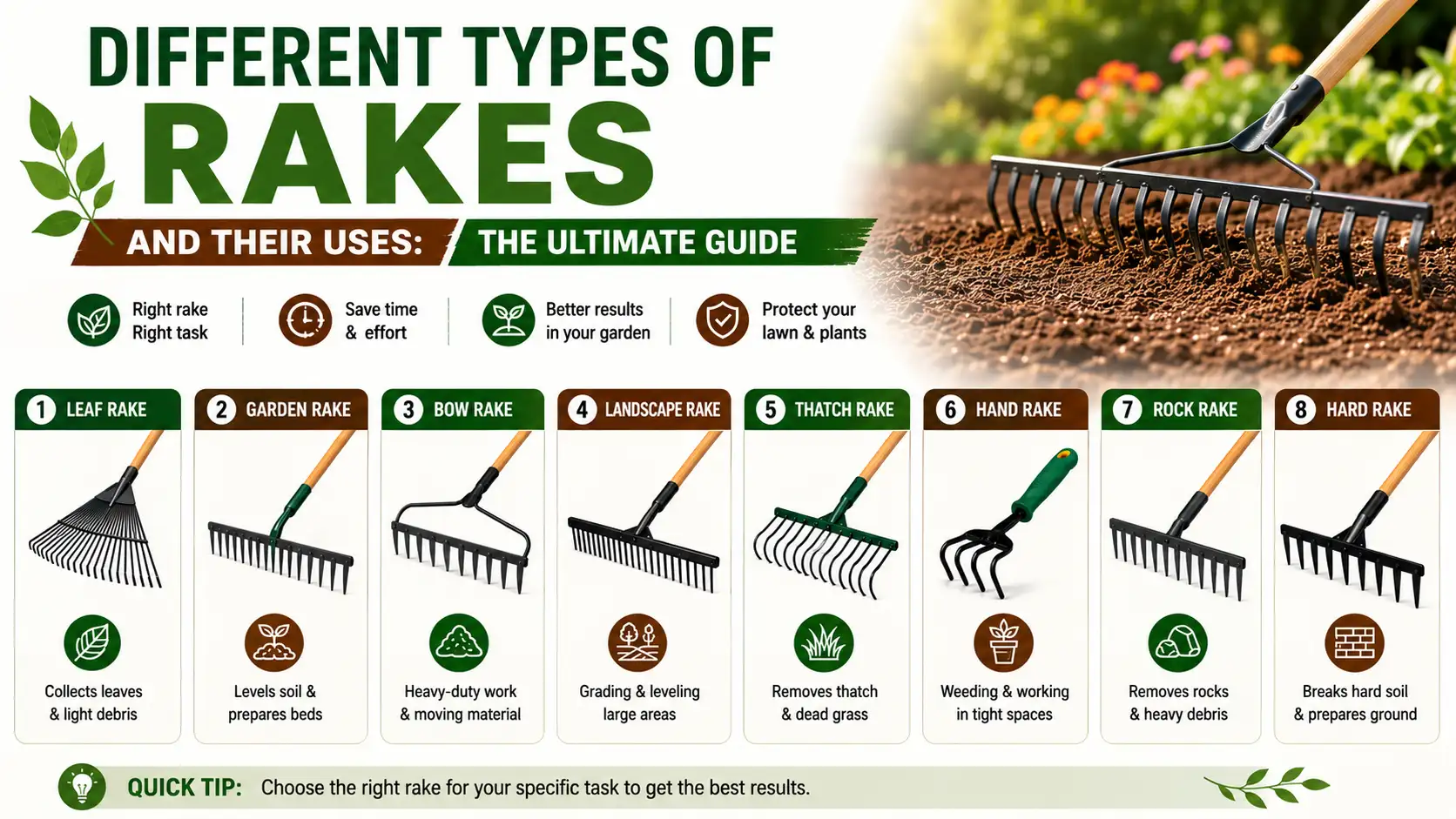
The most common types of rakes include leaf rakes, bow rakes, garden rakes, landscape rakes, lawn rakes, hand rakes, road rakes, flat rakes, and mud rakes. Each type is designed for a specific gardening, landscaping, lawn care, or agricultural application.
Different Types of Rakes at a Glance
| Rake Type | Best Used For | Primary Material / Feature |
| Leaf Rake | Gathering leaves, lightweight thatch, and dry grass | Wide, fan-shaped head with flexible plastic or wire tines. |
| Bow Rake | Breaking hard dirt, leveling gravel, and soil work | Stiff steel teeth backed by heavy-duty curved bow bars. |
| Garden Rake | Leveling small planting beds and mixing compost | Traditional flathead design with rigid metal teeth. |
| Landscape Rake | Wide grading, paving prep, and spreading mulch | Extra-wide aluminum head built for wide spaces. |
| Lawn Rake | Dethatching turf and clearing fine lawn clippings | Wire spring-teeth that glide safely through grass roots. |
| Hand Rake | Working in flower pots, containers, and close weeding | Compact, short-handled tool with 3 to 5 claw-like prongs. |
| Road Rake | Spreading gravel, asphalt, and construction base | Ultra-durable steel head built for heavy paving work. |
| Flat Rake | Precise soil leveling and surface smoothing | Straight-edged flat head designed for clean finishing. |
| Mud Rake | Scooping wet soil, heavy mud, and trench clearing | Reinforced thick steel head with deep, wide teeth rows. |
Why Are There Different Types of Rakes?
Different outdoor tasks require different rake designs. The width of the head, tine shape, flexibility, and overall construction determine how a rake performs.
For example, a leaf rake is designed to collect lightweight debris without damaging grass, while a bow rake is built to handle soil preparation, gravel movement, and heavier landscaping work.
Using the correct rake helps improve efficiency, reduces physical effort, and prevents unnecessary wear on the tool.
Deep Dive: Essential Types of Rakes and Their Uses
1. Leaf Rake
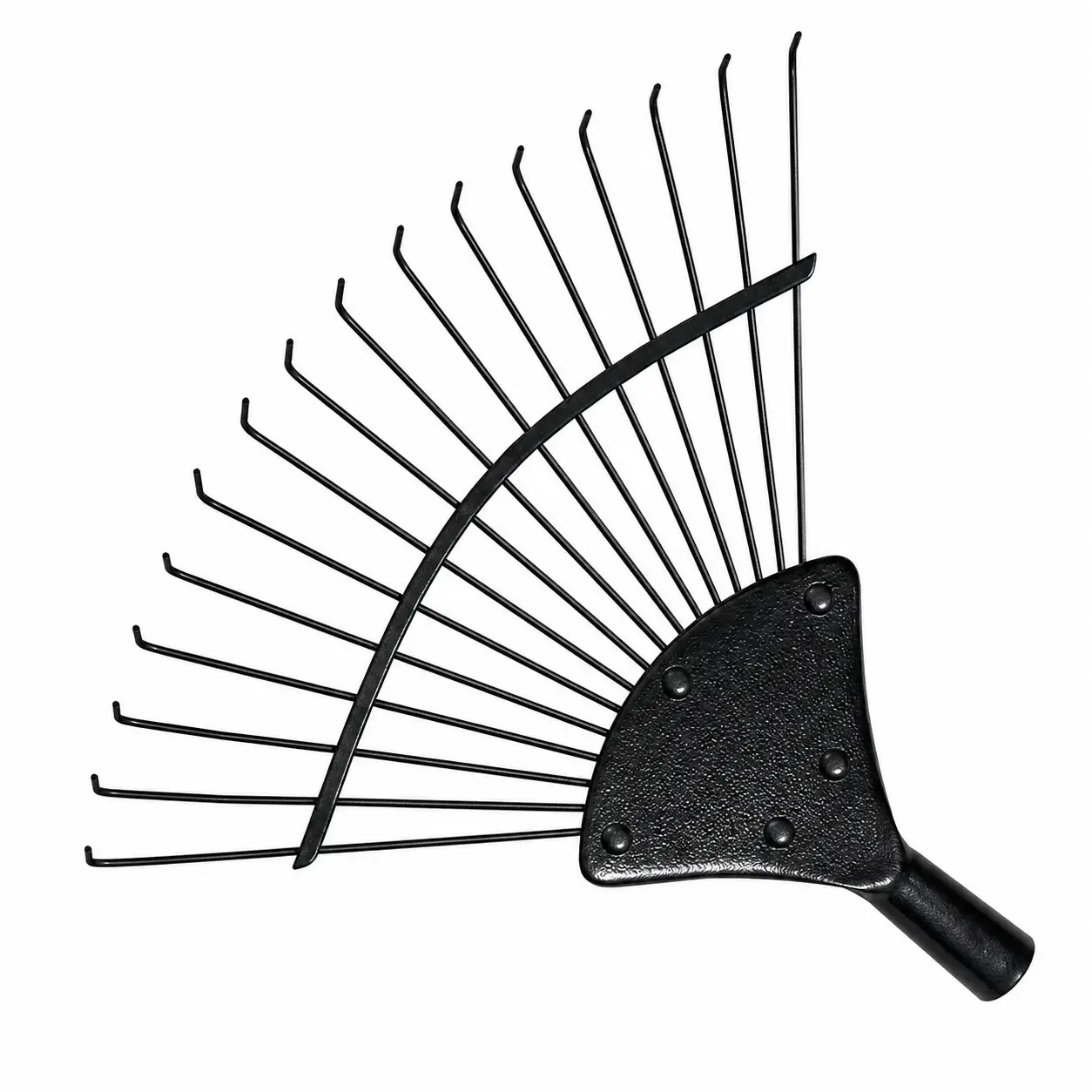
A leaf rake is the most recognizable rake used in residential lawns and gardens. It features a wide, fan-shaped head with flexible tines that glide across grass surfaces.
- Common Uses: Collecting fallen leaves, grass clippings, pine needles, and other lightweight lawn debris.
2. Bow Rake (Heavy-Duty Garden Rake)
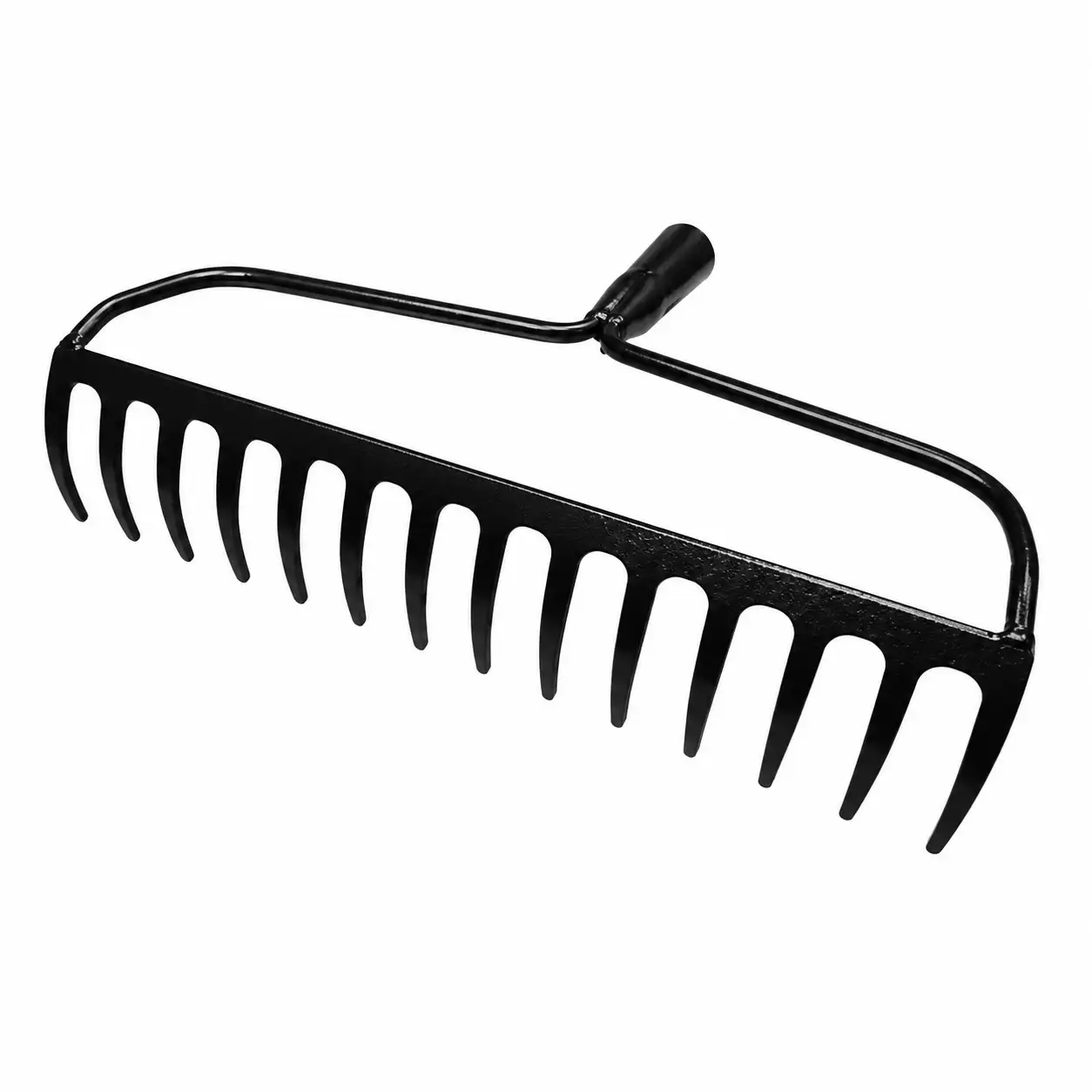
A bow rake is a heavy-duty tool designed for ground preparation and landscaping work. Its rigid metal teeth allow it to handle tougher materials than a leaf rake.
- Common Uses: Breaking soil clumps, leveling ground, spreading gravel, moving soil, and preparing planting beds.
3. Garden Rake (Flathead Style)
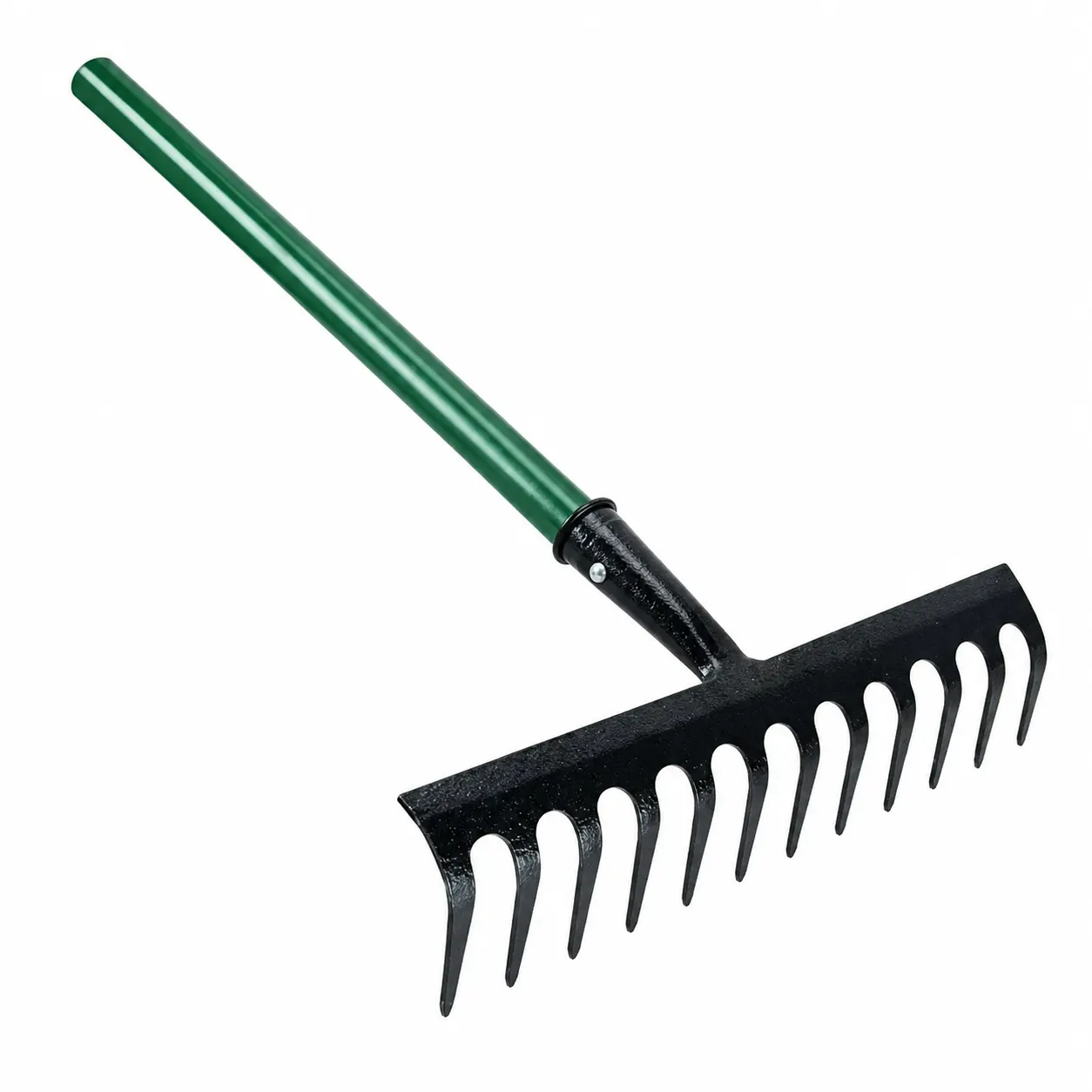
A garden rake features a straight metal head with rigid tines designed for general gardening tasks. It is one of the most commonly used tools in vegetable gardens and flower beds.
- Common Uses: Preparing seedbeds, removing stones, mixing compost, leveling soil, and maintaining planting areas.
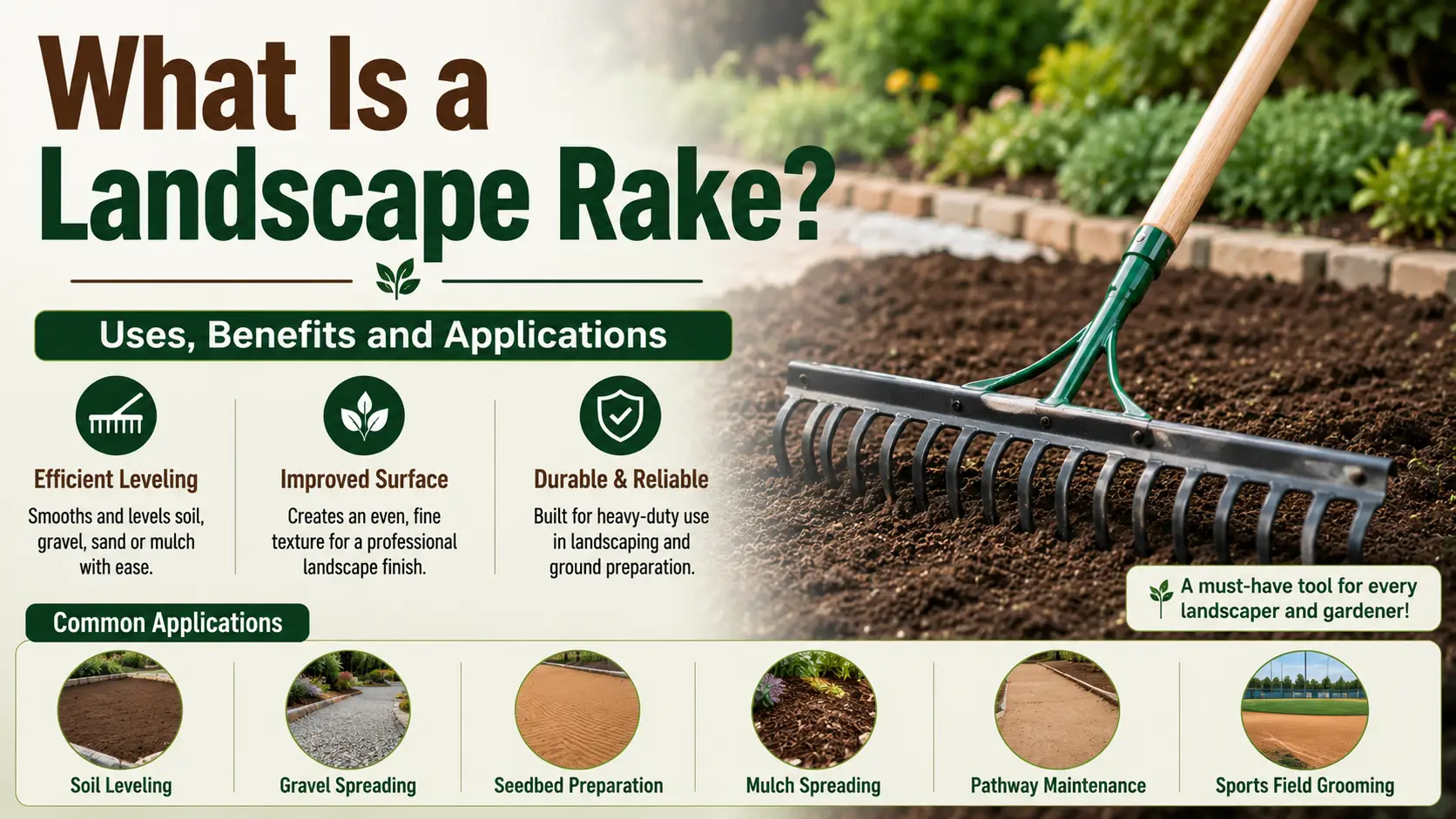
4. Landscape Rake (Topsoil & Mulch Rake)
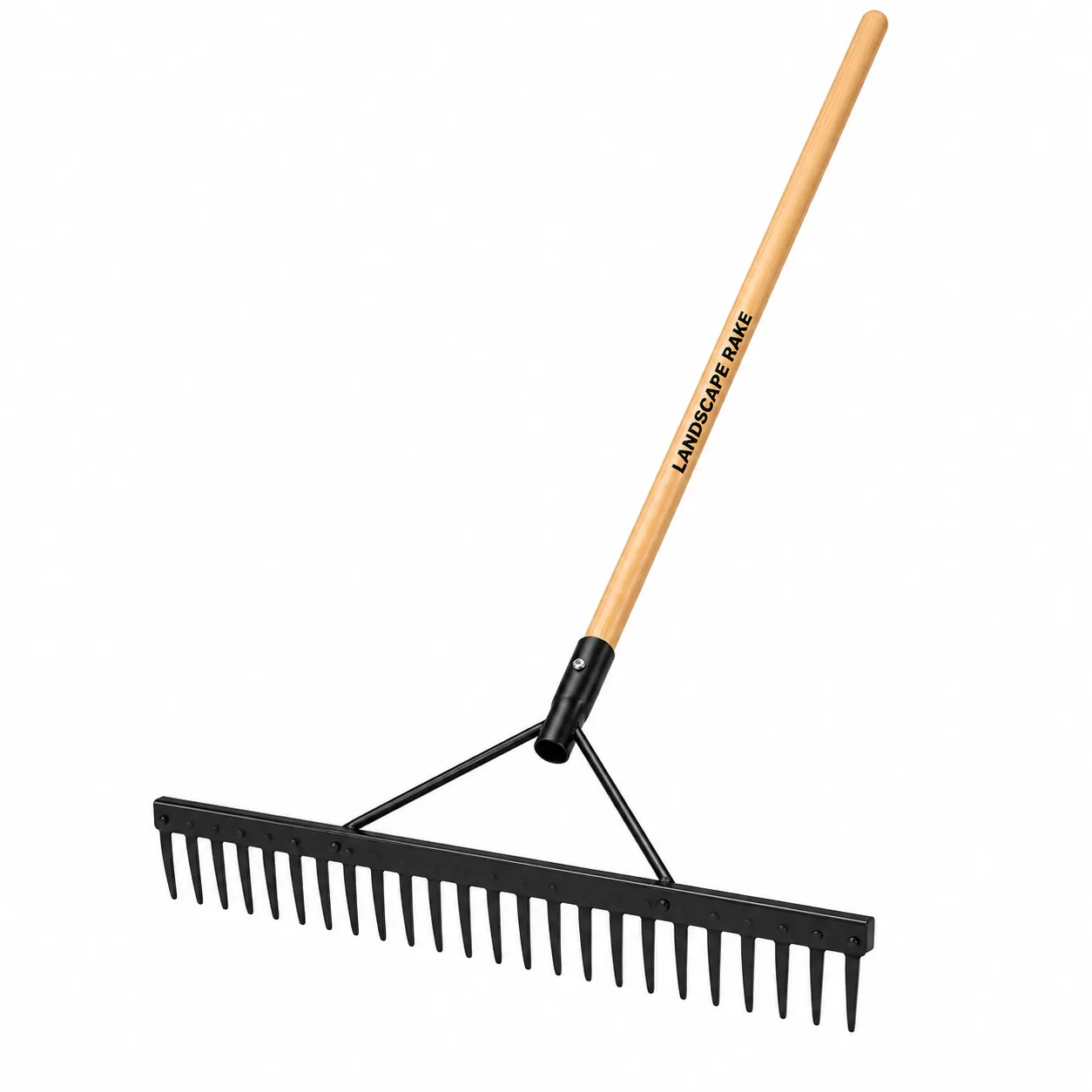
A landscape rake typically has a wider head than standard garden rakes, allowing users to cover larger areas more efficiently.
- Common Uses: Leveling topsoil, spreading mulch, grading sand, preparing lawns, and landscaping projects.
5. Lawn Rake (Dethatching Rake)
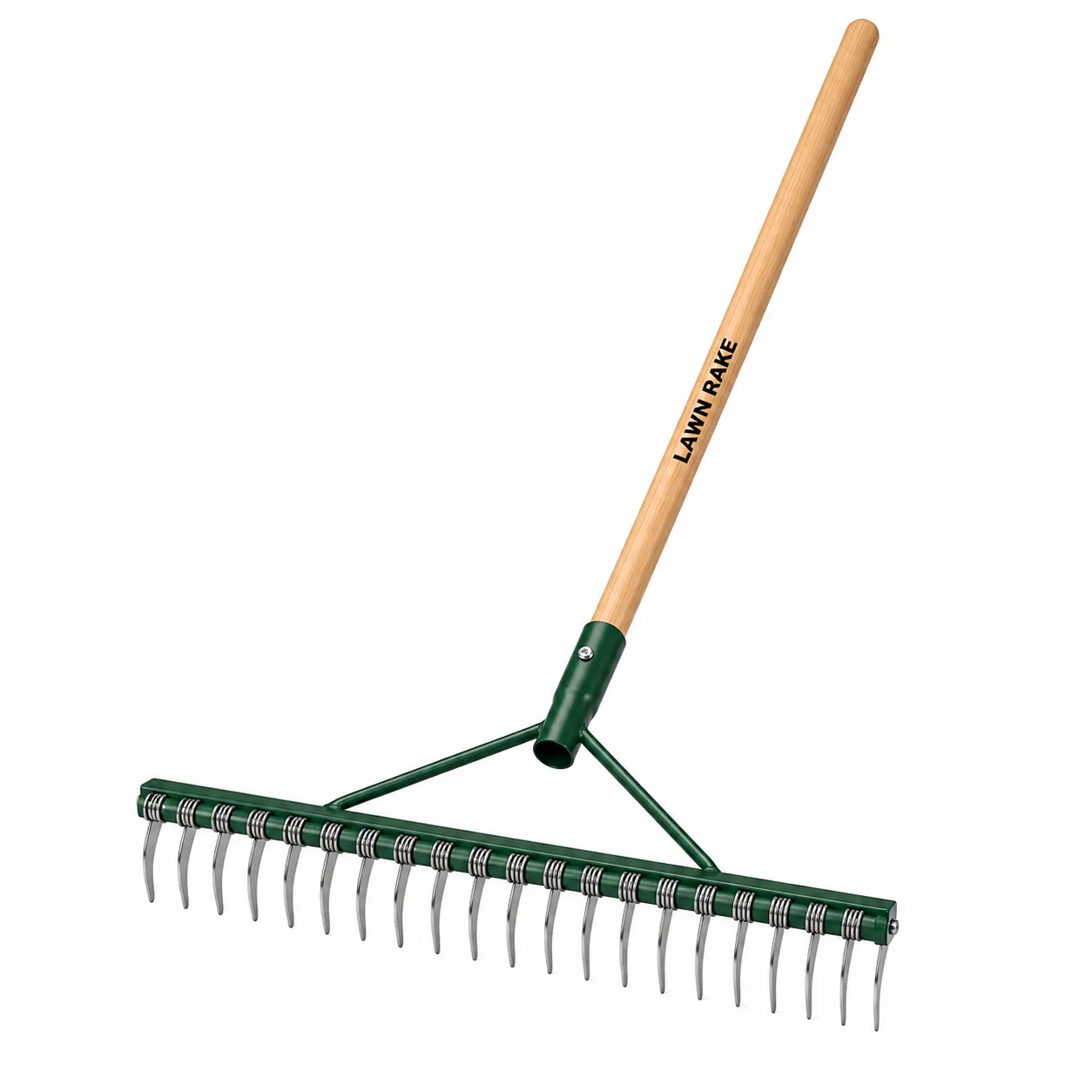
A lawn rake, also known as a dethatching rake, is designed specifically for turf maintenance. Its specialized tines help remove dead organic material from lawns.
- Common Uses: Removing thatch buildup, lifting matted grass, improving airflow, and preparing lawns for overseeding.
6. Hand Rake (Mini Cultivator)
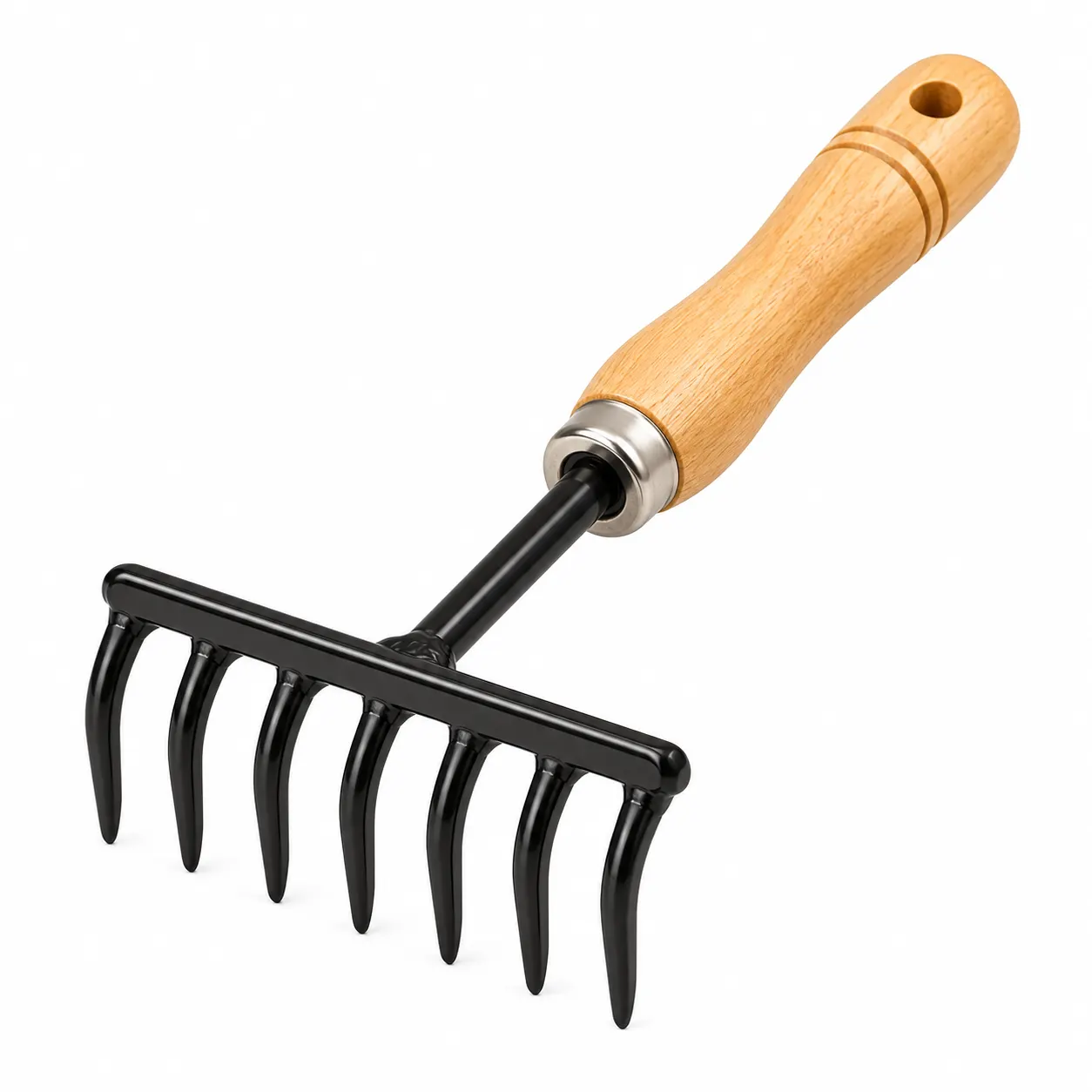
A hand rake is a compact gardening tool designed for close-up work in small spaces where larger rakes are difficult to use.
- Common Uses: Loosening soil, removing weeds, mixing compost, and maintaining flower beds, raised planters, and containers.
Related Reading: What Is a Hand Rake Tool? Uses, Benefits and Applications
7. Road Rake
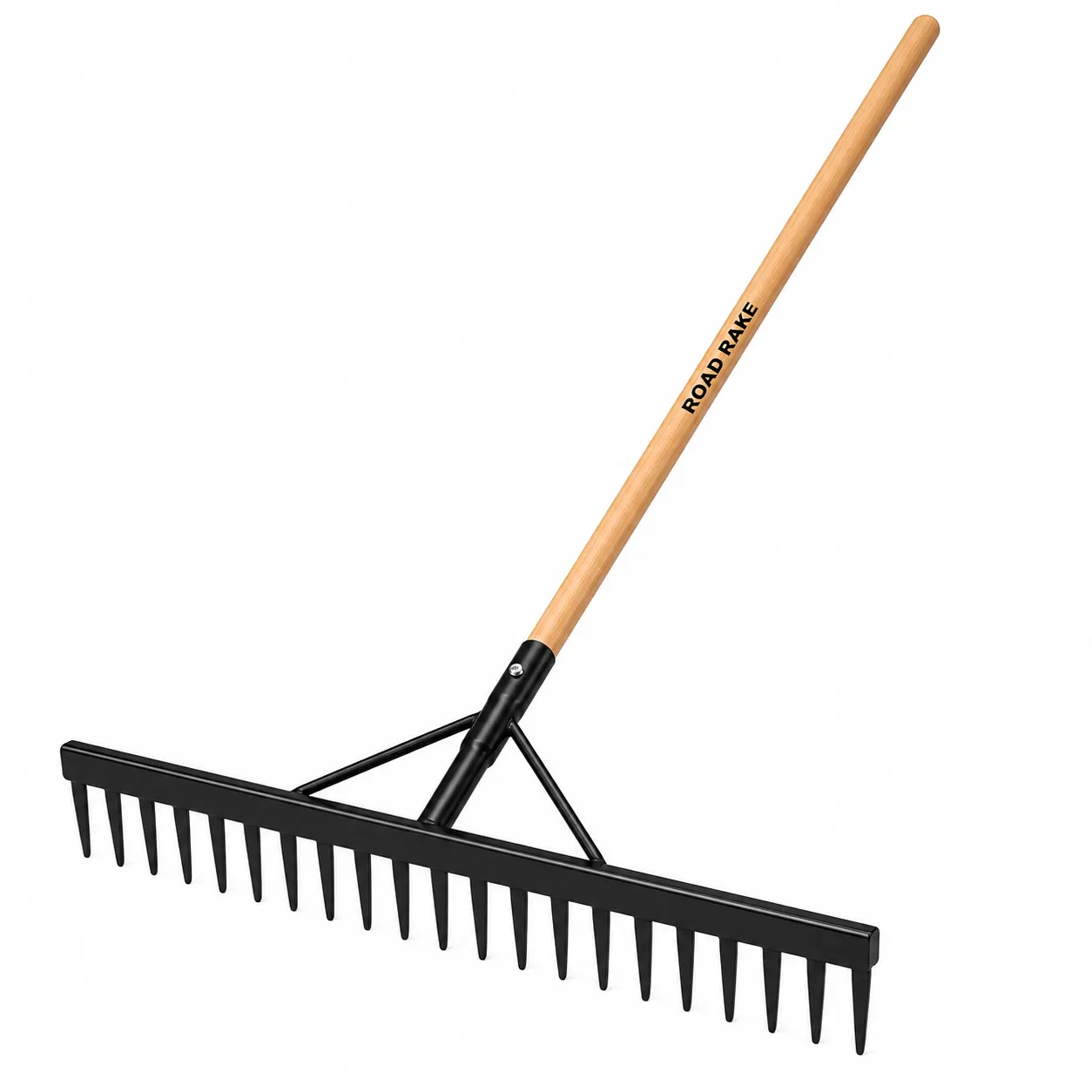
A road rake is a heavy-duty tool commonly used in construction and road maintenance applications. It is built to handle demanding materials and rough conditions.
- Common Uses: Spreading gravel, leveling crushed stone, distributing asphalt, and preparing construction surfaces.
8. Flat Rake
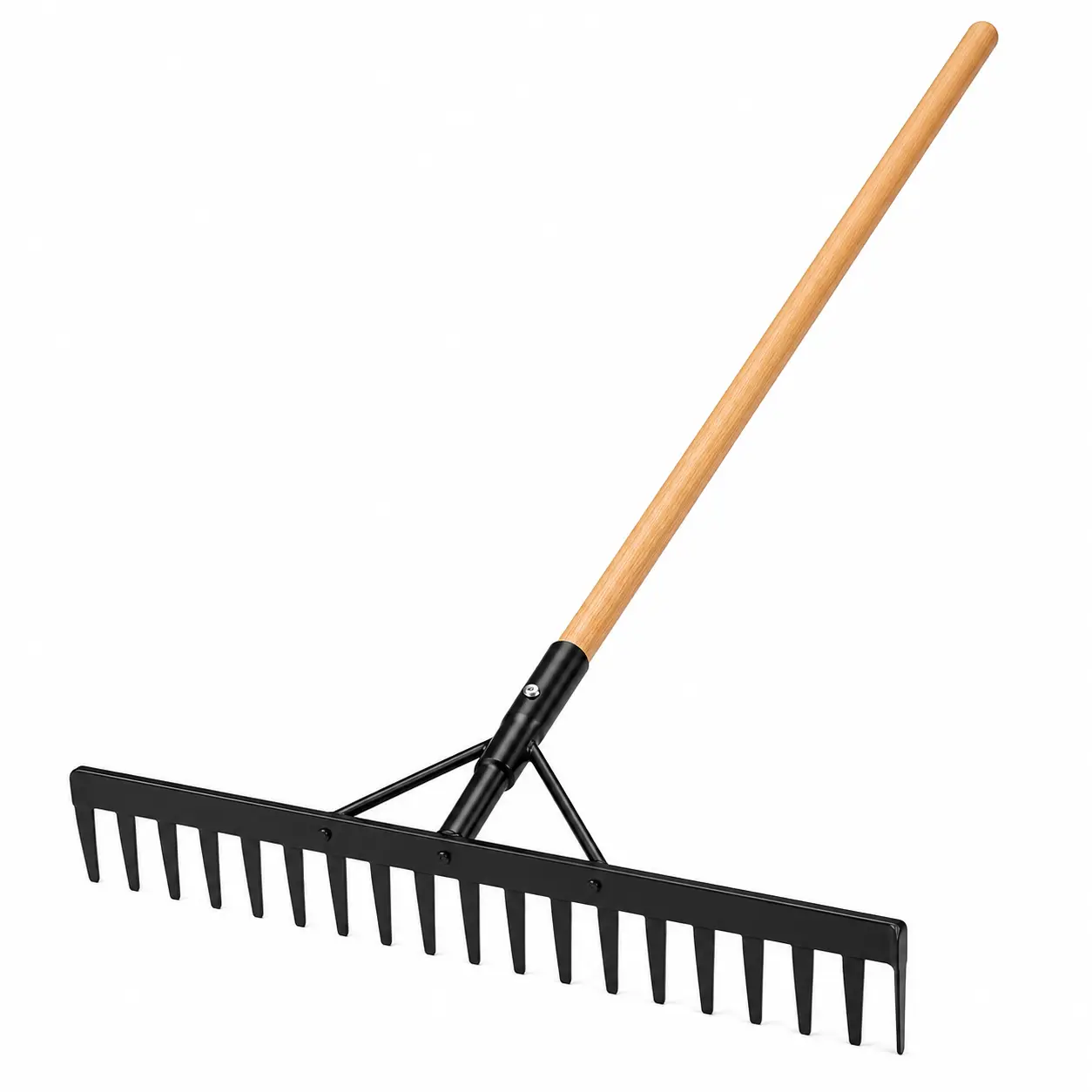
A flat rake features a straight-edged head design with flat, uniform teeth. It is engineered specifically for precise soil leveling, fine surface scraping, and clean finishing work where curved tines might gouge the ground.
- Common Uses: Fine grading, smoothing topsoil, leveling sand, and creating even landscaping surfaces.
9. Mud Rake
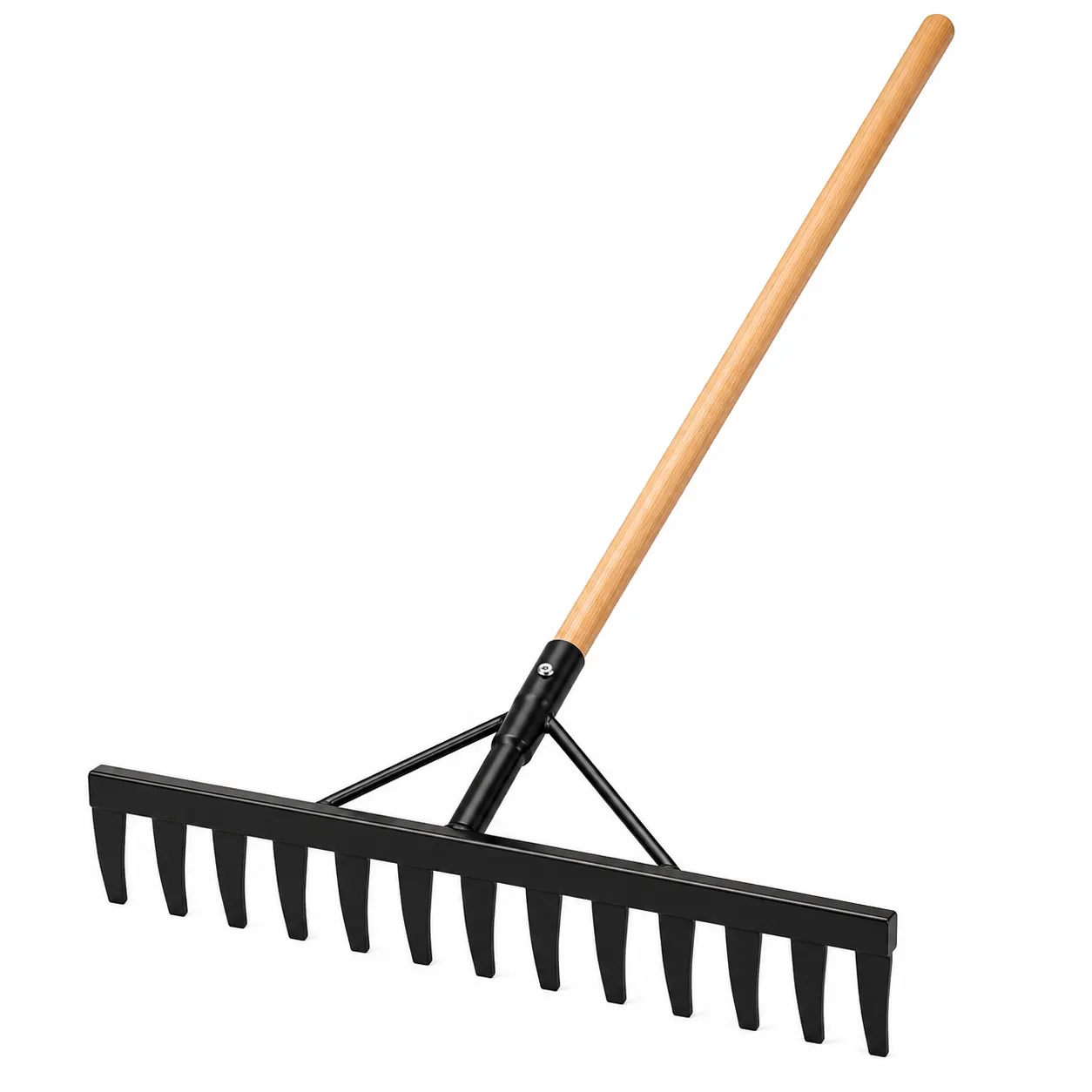
A mud rake is designed to move wet, heavy materials that would clog or damage standard rakes.
- Common Uses: Removing mud, clearing drainage channels, cleaning trenches, and handling wet soil conditions.
Practical Rake Selection Guide
Match your specific property maintenance task to the recommended tool head below:
| Specific Yard Task | Recommended Rake Choice | Why It Works Best |
| Clearing Fallen Foliage | Leaf Rake | Wide head covers space quickly; flexible tines protect lawn grass. |
| Spreading Decorative Wood Chips | Mulch / Landscape Rake | Wide aluminum profile distributes bulk mulch uniformly. |
| Breaking Up Sunny Clay Crusts | Bow Rake | Rigid steel tines apply heavy downward force without bending. |
| Detailing Tight Flower Beds | Hand Rake | Small size allows precise weeding inside crowded containers. |
| Dethatching Mossy Turf | Lawn / Spring-Steel Rake | Loops pull up dead grass while letting healthy leaves slip through. |
| Clearing Drainage Ditches | Mud Rake | Open, heavy-duty tines move wet muck easily without clogging. |
Gardeners looking for durability and long-term performance can also explore our guide on Best Heavy-Duty Garden Rake: Features, Materials and Buying Guide.
Common Mistakes When Choosing and Using Rakes
- Using a Leaf Rake for Soil Prep: Forcing thin plastic or wire fan tines into dense soil or gravel will snap or warp the tool head instantly. Always switch to a rigid bow rake for soil work.
- Ignoring Handle Comfort: Handles that are too short force unnecessary spine bending, leading to back fatigue. Select a handle length that lets you maintain an upright posture.
- Raking at a Deep, Aggressive Angle: Slamming the rake head down into the ground causes the teeth to lock up and damage plant roots. Keep the handle low and steady, pulling with uniform, smooth horizontal strokes.
Maintenance Tips for Different Types of Rakes
Routine tool maintenance prevents premature wear and ensures reliable performance across multiple gardening seasons:
- Clean After Every Use: Wash or scrape off wet soil, sap, mud, and organic lawn waste from between the tines immediately after use.
- Thoroughly Dry Before Storage: Wipe down all metal heads and wood shafts with a dry rag to prevent rust spots and handle decay.
- Apply Rust Protection Layers: Periodically coat steel tool frames and prongs with a light layer of machine or mineral oil to seal the metal against air moisture.
- Inspect and Tighten Joints: Check the connection points where the tool head meets the handle socket. Tighten any loose rivets or screws to eliminate handle wobble.
Agricultural applications often require specialized rake designs for hay collection, residue management, and field maintenance. Learn more in What Is a Rake in Agriculture? Functions and Uses Explained.
Conclusion
Different types of rakes are meticulously designed to handle highly specific gardening, landscaping, lawn care, and agricultural chores. From lightweight leaf sweeps and wire lawn groomers to heavy-duty steel bow rakes and extra-wide aluminum landscape graders, using the correct tool style helps improve efficiency, maintain cleaner outdoor spaces, and support healthy plant growth. Understanding how handle lengths, tines flexibility, and head width impact your work allows users to achieve professional field results with minimized time and body strain.
For professional landscaping crews, retail stores, and commercial bulk distributors who require reliable field gear, JCBL Hand Tools offers a comprehensive portfolio of high-grade options. Manufactured with robust steel tool heads, advanced anti-corrosion treatments, and comfortable, shock-absorbing shafts, selecting this professional hardware ensures your inventory features the strength and long service life demanded by modern outdoor maintenance projects.
FAQs
While there are dozens of custom variations, the lawn care industry recognizes 8 to 9 core styles, including leaf rakes, bow rakes, garden rakes, landscape rakes, lawn rakes, road rakes, flat rakes, hand rakes, and mud rakes.
The lightweight leaf rake (for clearing leaves) and the rigid bow rake (for soil prep and leveling) are the two most commonly used tools for home gardening and land care.
A bow rake features rigid steel teeth built to till soil and move gravel, while a leaf rake utilizes a wide fan of flexible plastic or wire prongs designed exclusively to collect lightweight surface leaves and grass.
A heavy-duty steel bow rake or flat rake is the premium choice for breaking down clods, while a wide aluminum landscape rake is ideal for fine grading and smoothing out wide ground areas.
Related Readings: