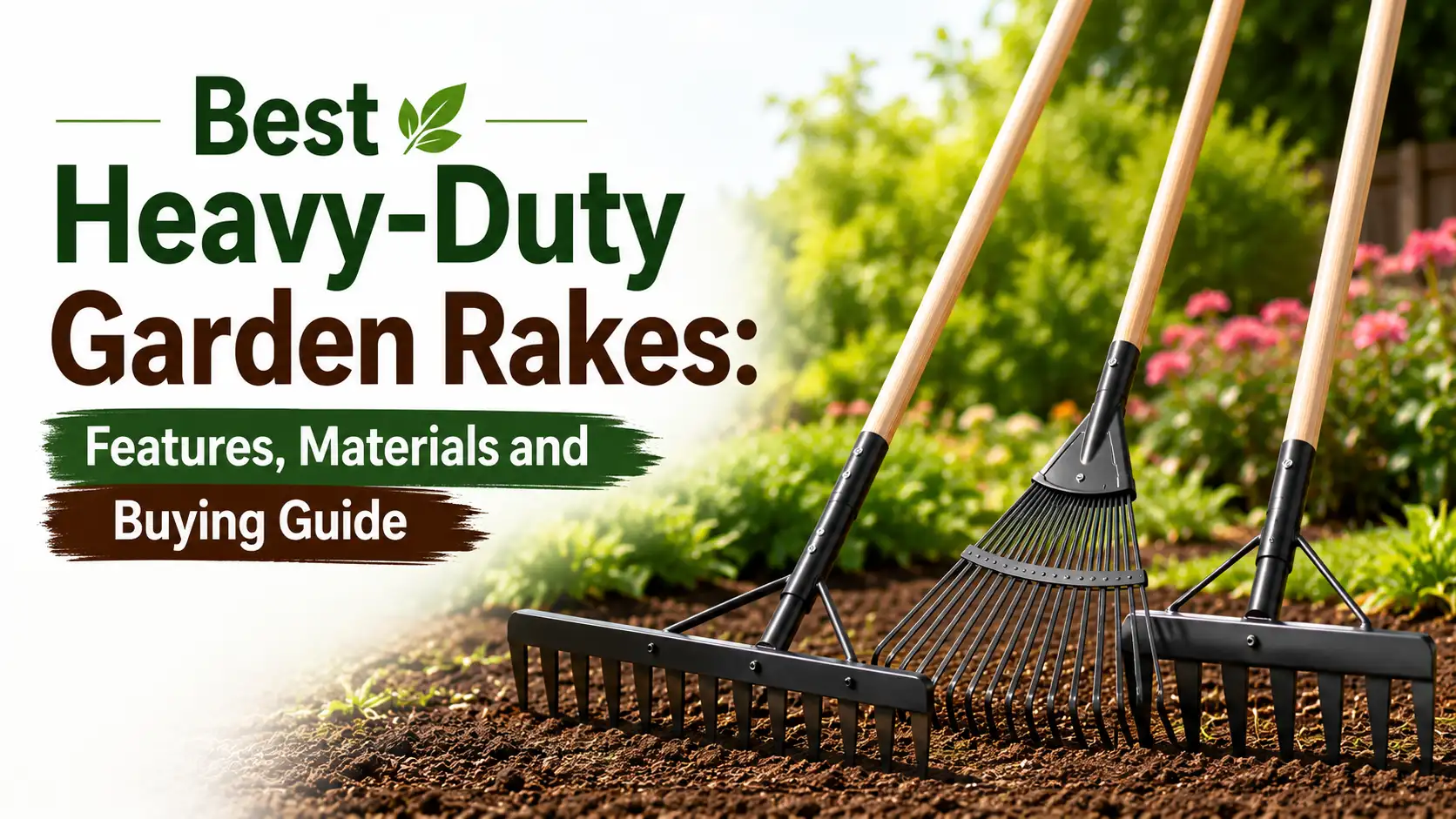
Best Heavy-Duty Garden Rakes: Features, Materials and Buying Guide
- What Is the Best Heavy-Duty Garden Rake?
- What Makes a Good Heavy-Duty Garden Rake?
- Heavy-Duty Garden Rake vs Standard Garden Rake
- Key Features of High-Quality Garden Rakes
- Understanding Rake Materials
- Best Garden Rake by Task
- How to Choose the Best Garden Rake for Your Yard
- Best Rake for Dead Grass Removal
- Are Used Garden Rakes Worth Buying?
- Common Mistakes to Avoid When Buying a Garden Rake
- Maintenance Tips for Longer Tool Life
- Conclusion
- FAQs
Choosing the right garden rake can make a significant difference in how efficiently you maintain your garden, lawn, or landscape. Whether you are preparing soil, removing dead grass, spreading compost, or leveling uneven ground, using a heavy-duty garden rake can reduce physical effort and improve overall results.
However, not all rakes are built for the same purpose. Some are designed for light yard cleanup, while others are engineered to handle demanding tasks such as breaking hard soil, moving gravel, and preparing planting beds. Understanding the key features, materials, and design elements of a quality rake will help you choose the best option for your gardening needs.
What Is the Best Heavy-Duty Garden Rake?
The best heavy-duty garden rake is typically a steel bow rake with rigid tines, a reinforced head connection, and a durable fiberglass or hardwood handle. It is ideal for soil preparation, leveling ground, spreading gravel, and other demanding landscaping tasks.
What Makes a Good Heavy-Duty Garden Rake?
When comparing heavy-duty garden rakes, focus on four key factors:
- Strong steel tines that resist bending under pressure
- A reinforced handle connection for durability
- Comfortable grip for extended use
- Materials suited to the intended gardening task
A rake that combines these features will generally last longer and perform better in demanding outdoor conditions.
Heavy-Duty Garden Rake vs Standard Garden Rake
Understanding the differences between a heavy-duty model and a standard garden rake can help you choose the right tool and avoid unnecessary wear or breakage.
| Feature | Heavy-Duty Garden Rake | Standard Garden Rake |
| Tine Strength | Thick carbon steel tines | Light steel or stamped metal |
| Soil Preparation | Excellent | Moderate |
| Gravel Handling | Excellent | Limited |
| Handle Connection | Reinforced socket or welded joint | Basic connection |
| Durability | High | Moderate |
| Intended Use | Frequent or demanding work | Light gardening tasks |
Key Features of High-Quality Garden Rakes
When evaluating high-quality garden rakes, look for the following features:
Rigid Steel Tines
Strong steel tines provide better control when leveling soil, removing stones, spreading mulch, and breaking dirt clumps. They are far less likely to bend under heavy use.
Reinforced Handle Connection
The area where the handle connects to the rake head is often the first point of failure. Look for deep rivets, welded joints, or reinforced sockets that keep the tool secure during demanding tasks.
Comfortable Ergonomic Grip
A comfortable grip reduces hand fatigue and improves control during extended gardening sessions. Non-slip handles can also improve safety when working in wet conditions.
Balanced Weight Distribution
A well-balanced rake places less strain on your arms and back while improving overall efficiency.
Protective Coating
Powder-coated or corrosion-resistant finishes help protect metal components from moisture, soil acids, and rust.
Understanding Rake Materials
The materials used in both the rake head and handle affect strength, weight, comfort, and longevity.
Rake Head Materials
Steel Rakes
Steel is widely considered the strongest material for heavy-duty gardening and landscaping tasks. Steel rake heads can handle compacted soil, gravel, rocks, and demanding ground preparation without bending easily.
Aluminum Rakes
Aluminum offers a lightweight alternative and naturally resists rust. While suitable for many landscaping tasks, it is generally less durable than steel when working in hard or rocky soil.
Handle Materials
Fiberglass Handles
Fiberglass handles combine strength with lightweight performance. They resist moisture, weather damage, and cracking, making them a popular choice for professional-grade tools.
Wooden Handles
Wooden handles remain popular because they provide natural shock absorption and a traditional feel. High-quality hardwood handles can last for years when properly maintained.
Which Material Is Best?
For heavy soil preparation, gravel work, and demanding landscaping projects, steel remains the preferred choice because of its strength and durability.
For lighter gardening tasks where reducing weight is important, aluminum can be a practical alternative.
Best Garden Rake by Task
| Task | Recommended Rake Type |
| Soil Preparation | Heavy-Duty Bow Rake |
| Gravel Spreading | Steel Garden Rake |
| Raised Beds | Hand Rake |
| Dead Grass Removal | Thatch Rake |
| General Gardening | Garden Rake |
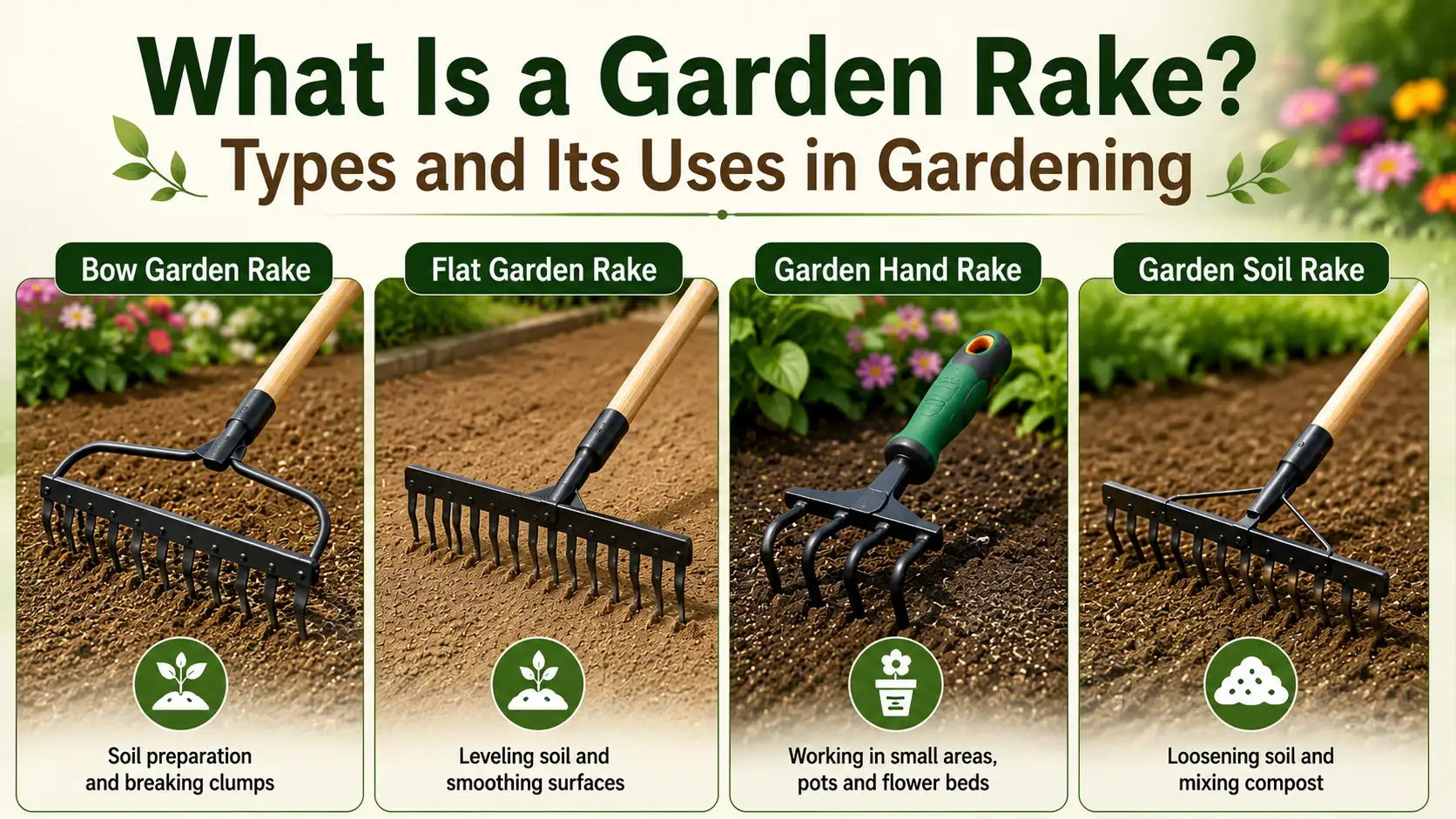
Different rake designs are built for different gardening tasks. To understand how bow rakes, landscape rakes, hand rakes, and other rake types compare, read our guide on Different Types of Rakes and Their Uses.
How to Choose the Best Garden Rake for Your Yard
The best garden rake depends on the type of work you perform most often.
For Soil Preparation
Choose a heavy-duty garden rake with rigid steel tines and a reinforced frame. These tools are designed to break soil clumps, remove debris, and create smooth planting beds.
For Gravel and Landscaping Projects
A steel rake with a durable fiberglass handle provides the strength needed for moving gravel, sand, and other heavy materials.
For Raised Beds and Small Spaces
A small rake for garden beds or a hand rake provides better maneuverability and control in tight planting areas.
Best Rake for Dead Grass Removal
Removing dead grass and lawn thatch requires a specialized grass removal tool capable of pulling up dense organic material without damaging healthy turf.
When choosing the best rakes for dead grass:
- Look for springy steel tines that can penetrate the thatch layer
- Avoid lightweight plastic models for heavy lawn restoration work
- Choose a long handle that allows comfortable operation over larger areas
A quality thatch rake is often the most effective solution for lawn renovation projects.
Are Used Garden Rakes Worth Buying?
Used garden rakes can offer good value if they are in solid condition. Before purchasing a secondhand rake, inspect:
- The condition of the tines
- Signs of severe rust
- Cracks in wooden handles
- Loose or damaged handle connections
For occasional gardening, a well-maintained used rake may perform perfectly well. However, for regular landscaping or professional use, investing in a new high-quality rake is often the better long-term choice.
Common Mistakes to Avoid When Buying a Garden Rake
Choosing the Wrong Head Material
Using a lightweight plastic rake for heavy soil work can quickly lead to damage. Always match the rake material to the intended task.
Ignoring Handle Quality
Even a strong steel head can fail to perform properly if paired with a weak handle. Look for durable fiberglass or hardwood options.
Buying an Oversized Rake
Wide rakes are excellent for open spaces but can be difficult to use around flower beds, garden borders, and narrow pathways.
Maintenance Tips for Longer Tool Life
Clean After Every Use
Remove mud, grass, and debris from the tines after use to prevent buildup and corrosion.
Store in a Dry Location
Keep your rake in a shed, garage, or covered storage area to protect it from moisture and weather damage.
Apply Protective Oil
Occasionally wipe metal parts with a light coating of oil to reduce the risk of rust.
Inspect Connections Regularly
Check bolts, rivets, and handle connections periodically to ensure safe operation.
Conclusion
Choosing the right heavy-duty garden rake depends on your gardening needs. Steel bow rakes are ideal for soil preparation, leveling, and landscaping, while smaller rakes offer better control in raised beds and tight spaces. By selecting the right rake material, design, and size, you can work more efficiently and achieve better gardening results.
For landscapers, retailers, and distributors, JCBL Hand Tools offers durable garden rakes built for reliability, comfort, and long-term performance across a wide range of gardening and landscaping applications.
FAQs
The best garden rake depends on the task. For soil preparation, gravel work, and landscaping, a heavy-duty steel bow rake is often the preferred choice.
Thatch rakes with springy steel tines are generally the best option for removing dead grass and lawn thatch.
Steel is usually the best rake material for heavy-duty gardening because it provides excellent strength and durability. Aluminum is a lighter alternative for less demanding tasks.
A heavy-duty garden rake is a durable tool built with strong steel tines, reinforced connections, and robust handle materials designed for demanding gardening and landscaping work.
Both materials perform well. Fiberglass offers superior weather resistance and durability, while wood provides natural shock absorption and a traditional feel.
Related Readings: