Bow Rake vs Leaf Rake: Key Differences, Uses and Applications
- Bow Rake vs Leaf Rake
- Bow Rake vs Leaf Rake vs Garden Rake: Comparison Table
- What Is a Bow Rake?
- What Is a Leaf Rake?
- What Is a Garden Rake?
- Bow Rake vs Leaf Rake: Key Differences
- Bow Rake vs Garden Rake
- Leaf Rake vs Garden Rake
- Garden Rake vs Regular Rake: What Are the Differences?
- Metal Rake vs Plastic Rake: Which Is Best?
- Rake vs Hoe: What’s the Difference?
- How Professionals Choose the Right Rake
- Common Mistakes When Choosing a Rake
- Maintenance Tips for a Longer Tool Life
- Which Rake Should You Choose?
- Conclusion
- FAQs
Choosing the right rake can make a significant difference in how efficiently you complete gardening, lawn care, and landscaping tasks. Although bow rakes, leaf rakes, and garden rakes may look similar, each is designed for a different purpose. Using the right rake not only improves productivity but also helps you achieve better results with less effort.
Whether you are preparing soil, collecting leaves, spreading mulch, or maintaining a lawn, understanding the differences between these tools will help you select the most suitable option for the job.
Bow Rake vs Leaf Rake
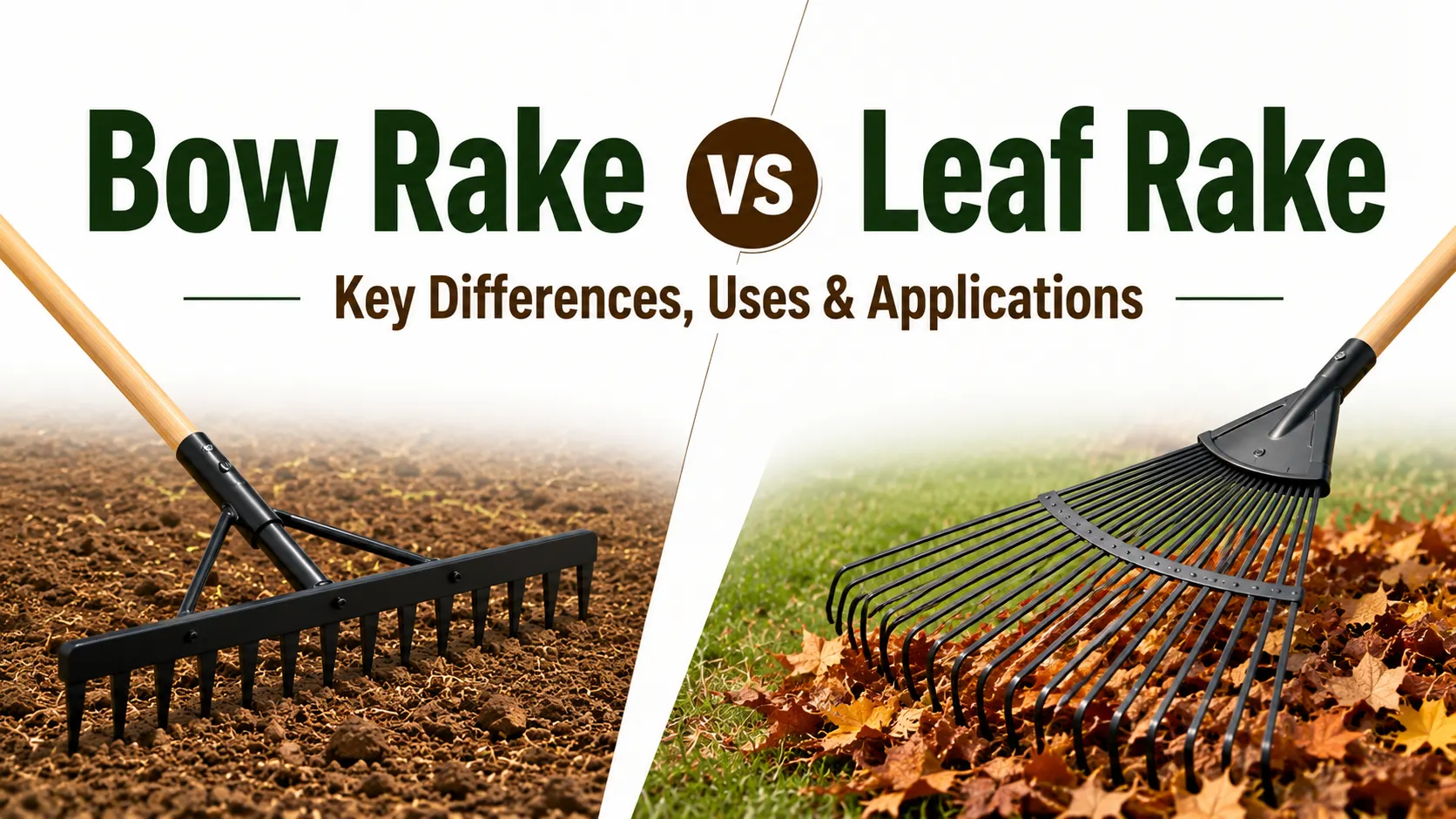
A bow rake is built with rigid steel teeth for heavy-duty soil preparation, leveling ground, and moving gravel while a leaf rake features flexible plastic or wire tines designed for collecting leaves, grass clippings, and lightweight yard debris without damaging the lawn.
Bow Rake vs Leaf Rake vs Garden Rake: Comparison Table
| Feature / Task | Bow Rake | Leaf Rake | Garden Rake |
| Primary Use | Soil preparation and grading | Leaf and lawn cleanup | General garden maintenance |
| Tine Material | Rigid steel | Plastic, wire, or bamboo | Stiff steel or forged iron |
| Soil Leveling | Excellent | Not Suitable | Excellent |
| Moving Gravel | Excellent | Not Suitable | Good |
| Leaf Collection | Limited | Excellent | Basic |
| Seedbed Preparation | Excellent | No | Excellent |
| Durability | High | Moderate | High |
What Is a Bow Rake?
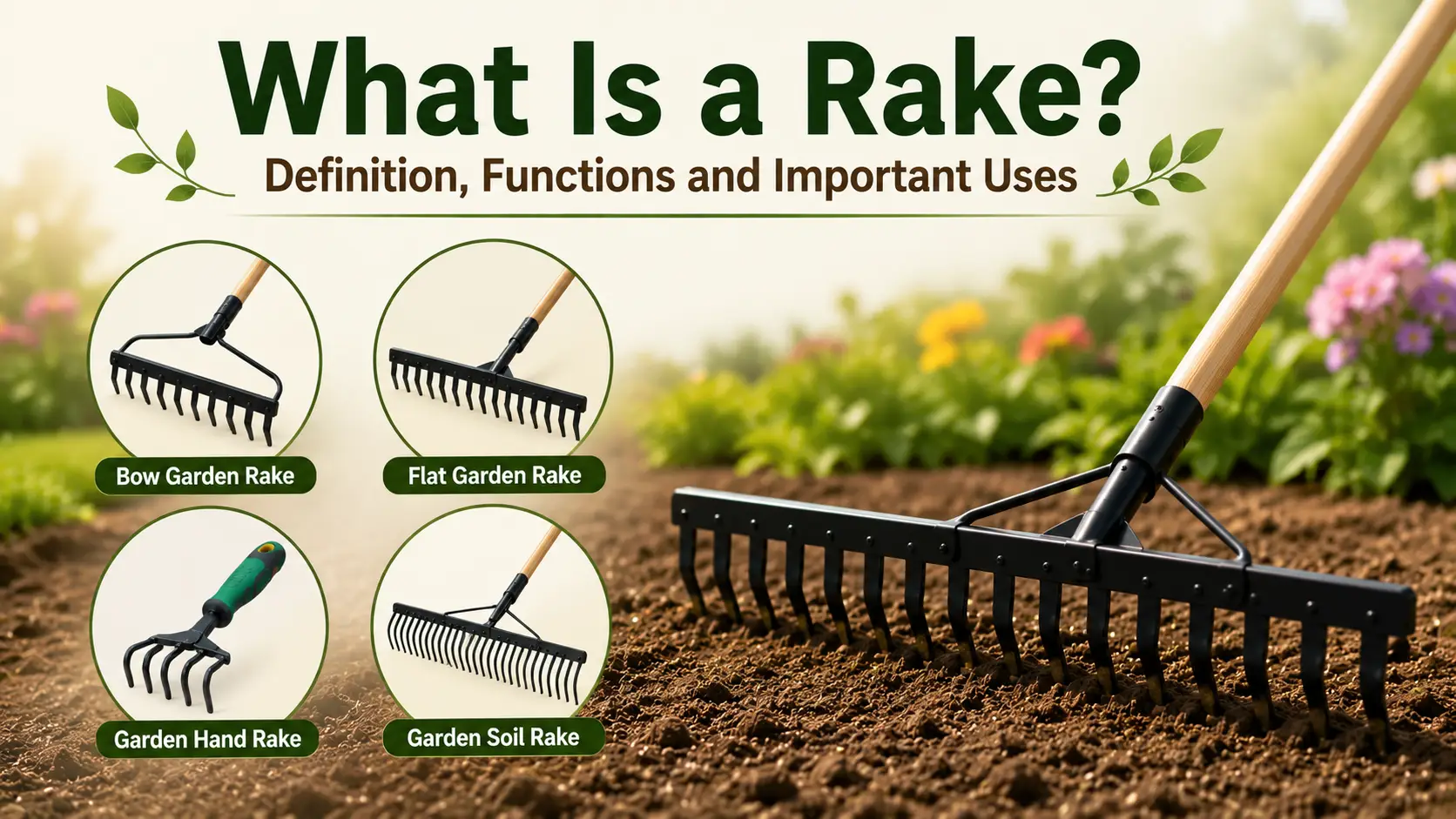
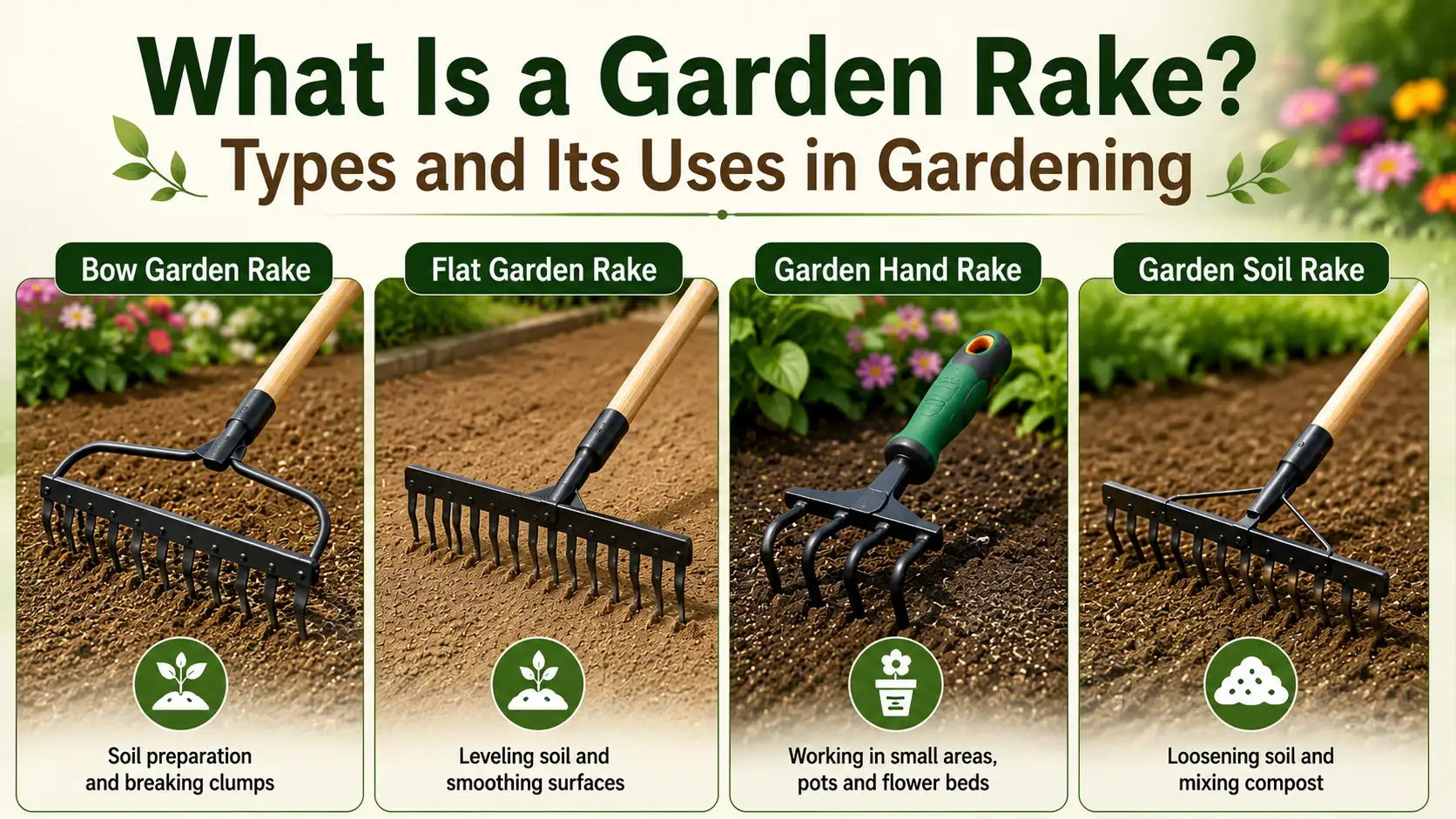
A bow rake is a heavy-duty landscaping tool featuring a row of short, rigid steel teeth attached to a reinforced frame. Its distinctive curved side supports, known as bows, provide additional strength and stability when working with compacted soil, gravel, or other heavy materials.
Common Uses of a Bow Rake
- Breaking up compacted soil and dirt clumps
- Leveling uneven ground
- Spreading gravel, sand, and mulch
- Preparing seedbeds before planting
- Removing rocks and debris from soil
What Is a Leaf Rake?
A leaf rake features a wide, fan-shaped head with flexible tines designed to glide across lawns and collect lightweight debris. Unlike heavy-duty rakes, it is specifically designed for surface cleanup without disturbing healthy grass.
Common Uses of a Leaf Rake
- Collecting fallen leaves
- Gathering grass clippings after mowing
- Removing small twigs and yard debris
- Light dethatching of lawns
- Routine lawn cleanup
What Is a Garden Rake?
A garden rake is a versatile gardening tool with a straight metal head and rigid teeth. It is commonly used for preparing planting beds, leveling soil, removing stones, and spreading compost or mulch.
Common Uses of a Garden Rake
- Preparing garden beds
- Removing stones and roots
- Leveling soil surfaces
- Spreading compost and topsoil
- Creating smooth seedbeds
Bow Rake vs Leaf Rake: Key Differences
The biggest difference between a bow rake and a leaf rake is the design and flexibility of the tines.
A bow rake uses rigid steel teeth that can dig into soil, move gravel, and handle demanding landscaping work. A leaf rake uses flexible tines that sweep across the lawn surface and collect lightweight debris without damaging grass.
Choose a Bow Rake If You Need To:
- Prepare soil for planting
- Break up dirt clumps
- Spread gravel or sand
- Level uneven surfaces
- Perform landscaping work
Choose a Leaf Rake If You Need To:
- Collect leaves
- Gather grass clippings
- Clean up lawns
- Remove light yard debris
- Maintain healthy turf
Bow Rake vs Garden Rake
Many people use the terms bow rake and garden rake interchangeably, but there are some important differences.
A bow rake is generally heavier and stronger, making it ideal for breaking compacted soil, moving gravel, and leveling rough ground. Its reinforced frame is designed to handle demanding landscaping tasks.
A garden rake is better suited for everyday gardening work such as preparing planting beds, removing small stones, spreading compost, and smoothing soil. It offers better control and maneuverability in flower beds, vegetable gardens, and smaller outdoor spaces.
If your project involves heavy ground preparation, choose a bow rake. For general garden maintenance, a garden rake is usually the better option.
Leaf Rake vs Garden Rake
A leaf rake is designed primarily for collecting leaves, grass clippings, and lightweight yard debris. Its flexible tines glide across the lawn surface without damaging healthy grass.
A garden rake, on the other hand, is built for soil-related tasks. Its rigid metal teeth can break up dirt clumps, level planting beds, remove stones, and spread mulch or compost.
If your goal is lawn cleanup, choose a leaf rake. If you are preparing soil or working in garden beds, a garden rake will provide much better results.
Garden Rake vs Regular Rake: What Are the Differences?
The term “regular rake” can mean different things depending on the user. In many cases, people use it to describe a leaf rake commonly used for yard cleanup.
A garden rake is different because it features rigid metal tines designed for soil preparation, leveling, debris removal, and garden maintenance. While a leaf rake focuses on collecting lightweight materials, a garden rake is built to handle tougher ground-related tasks.
When choosing a rake, focus on its design and intended use rather than the name printed on the label.
Metal Rake vs Plastic Rake: Which Is Best?
The best material depends on the job.
Metal Rakes
Metal rakes, usually made from steel or forged iron, are stronger and more durable. They are ideal for:
- Soil preparation
- Gravel spreading
- Mulch distribution
- Heavy landscaping work
Plastic Rakes
Plastic rakes are lightweight, affordable, and resistant to rust. They work best for:
- Leaf collection
- Lawn cleanup
- Grass clipping removal
- Light yard maintenance
If your work involves soil or gravel, choose a metal rake. For lawn cleanup, a plastic rake is usually the better option.
Rake vs Hoe: What’s the Difference?
Although both are common gardening tools, they serve different purposes.
A rake is designed to pull, gather, level, and smooth materials across the soil surface.
A hoe is designed to cut weeds, cultivate soil, and create planting rows using a chopping or slicing motion.
Use a Rake For:
- Collecting debris
- Leveling soil
- Spreading mulch
- Preparing seedbeds
Use a Hoe For:
- Weed control
- Soil cultivation
- Creating furrows
- Breaking hard soil crusts
How Professionals Choose the Right Rake
Professional gardeners and landscapers typically select a rake based on the type of material they need to move.
For breaking soil, grading surfaces, and spreading gravel, a bow rake is usually the preferred choice. For everyday gardening tasks such as preparing beds and spreading compost, a garden rake works best. When collecting leaves, grass clippings, and lightweight debris, a leaf rake offers the most efficient solution.
Choosing the right rake for the task helps reduce physical effort, improves work quality, and extends the lifespan of the tool.
Common Mistakes When Choosing a Rake
Using a Leaf Rake for Soil Preparation
Flexible plastic or wire tines are not designed for digging into soil and can bend or break under pressure.
Using a Bow Rake for Lawn Cleanup
Heavy steel teeth can damage healthy grass and make leaf collection more difficult.
Ignoring Handle Length
A handle that is too short can cause back strain and reduce comfort during extended use.
Maintenance Tips for a Longer Tool Life
Clean After Use
Remove mud, leaves, and debris from the tines after every use.
Store in a Dry Area
Keep rakes inside a garage, shed, or covered storage area to prevent rust and weather damage.
Protect Metal Components
Apply a light coating of oil occasionally to prevent rust and extend tool life.
Check Handle Connections
Inspect the connection between the head and handle regularly to ensure safe operation.
Which Rake Should You Choose?
| Task | Best Rake |
| Collecting Leaves | Leaf Rake |
| Lawn Cleanup | Leaf Rake |
| Soil Preparation | Bow Rake |
| Gravel Spreading | Bow Rake |
| Garden Bed Maintenance | Garden Rake |
| Compost Spreading | Garden Rake |
| Seedbed Preparation | Bow Rake or Garden Rake |
Conclusion
Bow rakes, leaf rakes, and garden rakes are designed for different outdoor tasks. A bow rake excels at soil preparation, grading, and moving gravel, while a leaf rake is ideal for collecting leaves and maintaining lawns. A garden rake provides a versatile solution for everyday gardening and planting bed maintenance.
Understanding the differences between these tools helps homeowners, gardeners, and landscapers choose the right equipment for the job, resulting in better performance and less effort.
For homeowners, landscapers, retailers, and distributors seeking dependable gardening and landscaping tools, JCBL Hand Tools offers a range of durable rake solutions built for performance, comfort, and long-term reliability.
FAQs
A bow rake is better for soil preparation, leveling, and gravel work, while a leaf rake is more effective for collecting leaves, grass clippings, and lawn debris.
Yes, but it is less efficient than a leaf rake. Garden rakes are designed primarily for soil-related tasks.
A bow rake is generally considered the best option for breaking up soil, leveling ground, and preparing seedbeds.
A rake gathers and levels material across the surface, while a hoe is designed for digging, cultivating soil, and removing weeds.
No. Different rakes are designed for different purposes. Bow rakes are best for soil preparation and grading, garden rakes are ideal for general gardening tasks, and leaf rakes are specifically designed for collecting leaves and lightweight debris.
Related Readings: