What Is a Rake in Agriculture? Functions and Uses Explained
- What Is a Rake in Agriculture?
- What Is the Function of a Rake in Agriculture?
- Why Is a Rake Important in Farming?
- When Do Farmers Commonly Use a Rake?
- Common Uses of Rake in Agriculture
- 5 Common Uses of a Rake in Agriculture
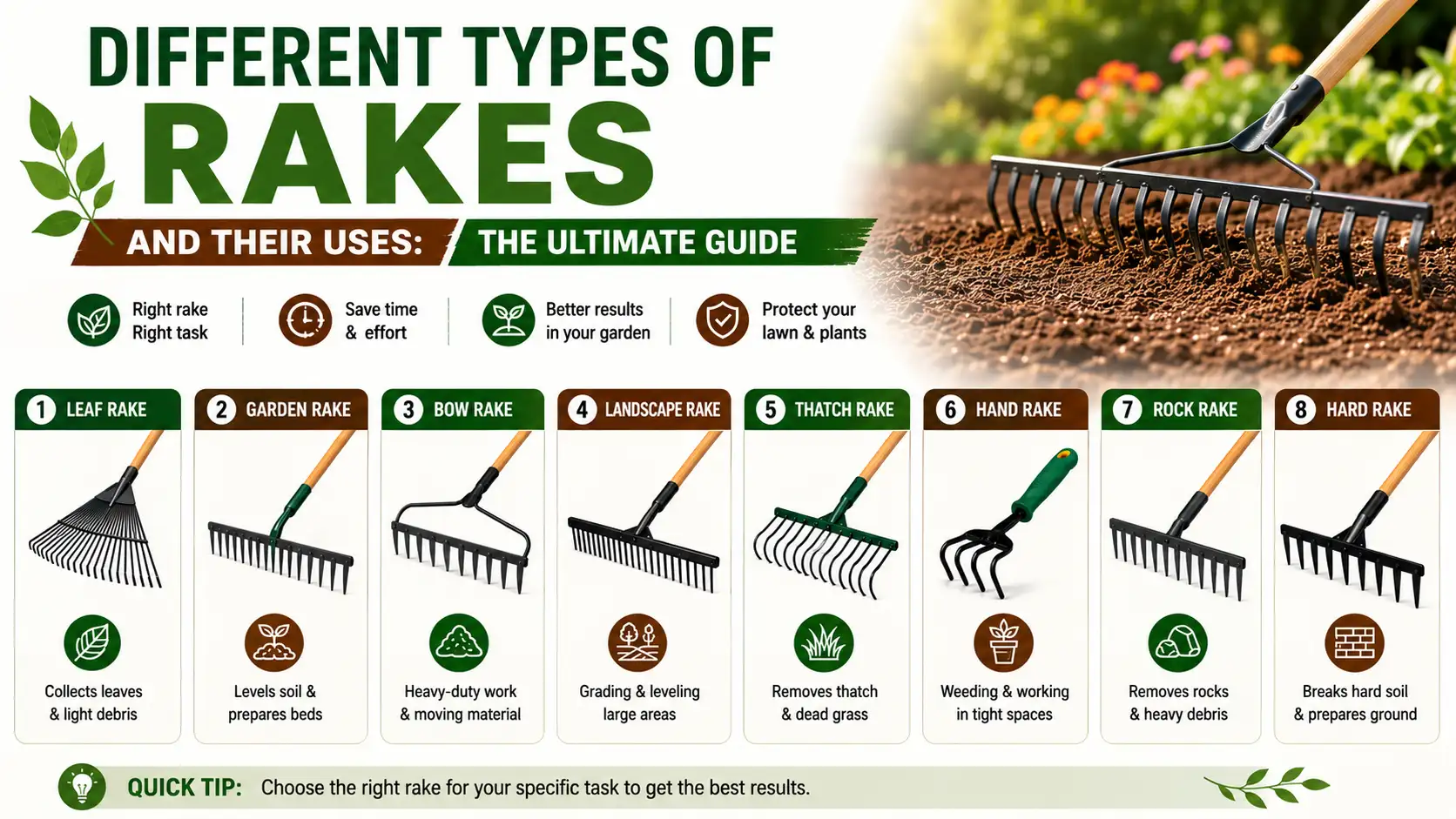
- Common Types of Rakes Used in Agriculture
- Choosing the Right Agricultural Rake
- Agricultural Rake vs Garden Rake
- How to Choose the Right Farming Rake
- Common Mistakes When Using Agricultural Rakes
- Maintenance Tips for Agricultural Rakes
- Conclusion
- FAQs
Agricultural tools play an important role in improving farm productivity, reducing manual labor, and maintaining clean field conditions. Among these tools, the rake is one of the most practical and widely used implements in farming. While many people associate rakes with gardening, they also perform several important tasks in agriculture, from collecting hay and clearing crop residue to preparing fields for planting.
From small family farms to large agricultural operations, rakes help farmers organize materials on the soil surface without disturbing deeper soil layers. Whether used by hand or attached to a tractor, a rake remains an essential farming tool.
To understand the broader role of rakes beyond farming, read our guide on What Is a Rake? Definition, Functions and Important Uses.
What Is a Rake in Agriculture?
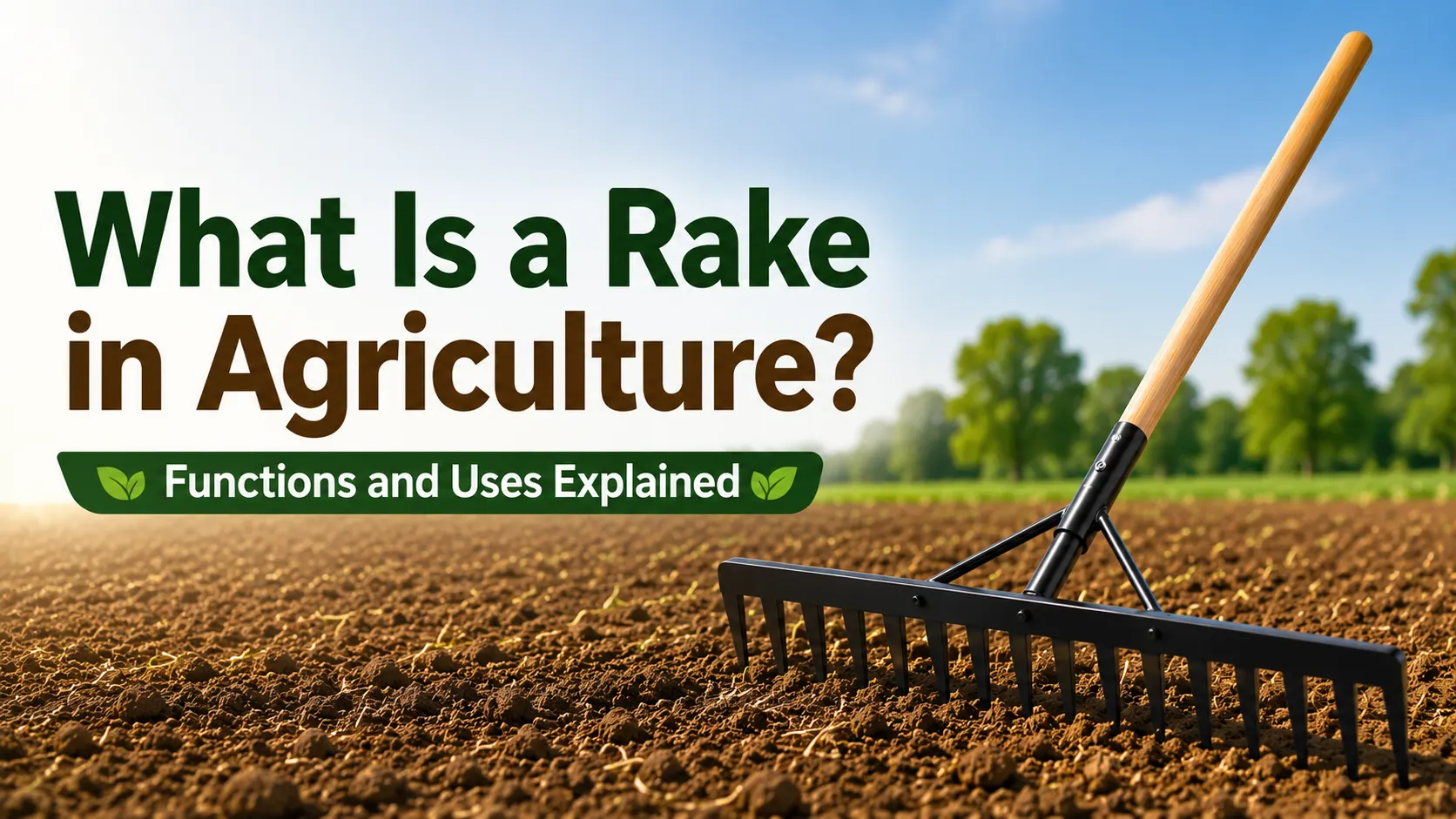
A rake in agriculture is a farming tool used to gather hay, remove crop residue, clear weeds, and level soil. It helps farmers maintain cleaner fields, improve efficiency, and prepare land for planting and harvesting operations.
Farmers use rakes throughout the growing season for tasks such as hay collection, residue management, weed removal, and field maintenance. Depending on the farm size and application, rakes may be operated manually or attached to tractors.
What Is the Function of a Rake in Agriculture?
The main function of a rake in agriculture is to organize and remove materials from the field surface while helping maintain clean and workable land.
A rake helps farmers:
- Gather hay and straw
- Remove crop residue after harvest
- Clear weeds and unwanted debris
- Prepare seedbeds before planting
- Level uneven soil surfaces
- Improve field maintenance efficiency
By keeping fields cleaner and more organized, rakes support smoother planting, harvesting, and land preparation operations.
Why Is a Rake Important in Farming?
A rake helps farmers save time, reduce manual labor, and improve overall field management. Instead of manually gathering crop waste or leveling soil by hand, farmers can use a rake to complete these tasks more efficiently.
Key Benefits of Using a Rake in Agriculture
Improves Field Cleanliness
Crop residue, weeds, and loose debris can interfere with planting and harvesting operations. Raking helps clear these obstacles quickly.
Protects Farm Equipment
Removing rocks, roots, and field waste helps reduce wear and tear on seeders, planters, and harvesting machinery.
Reduces Labor Requirements
Large areas can be cleaned and maintained much faster compared to manual collection methods.
Supports Hay Production
In livestock farming, rakes help gather hay into rows, allowing it to dry evenly before baling and storage.
For grading land, removing stones, and preparing large outdoor surfaces beyond traditional farming applications, a landscape rake is commonly used in landscaping and ground maintenance projects.
When Do Farmers Commonly Use a Rake?
Farmers use rakes throughout the growing season for different field operations. After harvesting crops such as wheat, barley, corn, and other grains, rakes help gather crop residue and clear the field for the next planting cycle.
In livestock and forage farming, rakes are commonly used after mowing hay to form windrows. These rows improve airflow around the crop, helping it dry more evenly before baling. Rakes are also useful for weed removal, seedbed preparation, and routine field maintenance.
Common Uses of Rake in Agriculture
| Use | Purpose |
| Hay Collection | Gather hay into windrows before baling |
| Crop Residue Removal | Clear fields after harvesting |
| Seedbed Preparation | Smooth soil before planting |
| Weed Removal | Remove weeds and unwanted debris |
| Soil Leveling | Improve field uniformity and irrigation |
5 Common Uses of a Rake in Agriculture
1. Hay and Straw Collection
One of the most common uses of a rake in agriculture is gathering cut hay, straw, and forage crops into neat rows called windrows. This makes baling, transportation, and storage easier while helping the crop dry evenly in the field.
2. Crop Residue Management
After harvesting crops such as wheat, corn, or cotton, fields are often covered with stalks, leaves, and plant residue. Farmers use rakes to gather and clear this material, making the land easier to prepare for the next crop cycle.
3. Seedbed Preparation
Before planting, the soil surface should be level and free from large clods. A rake helps break small soil lumps, remove stones, and create a smoother seedbed that supports better seed-to-soil contact and more uniform germination.
4. Weed and Debris Removal
Rakes are useful for removing shallow-rooted weeds, dried grass, and unwanted debris from fields and growing areas. This helps reduce competition for nutrients, water, and sunlight while keeping fields cleaner and easier to manage.
5. Soil Leveling and Field Maintenance
Uneven ground can affect irrigation and crop growth. Farmers use rakes to level small mounds, fill shallow depressions, and maintain a more even field surface, improving water distribution and overall field conditions.
Common Types of Rakes Used in Agriculture
Different tasks require different types of rakes.
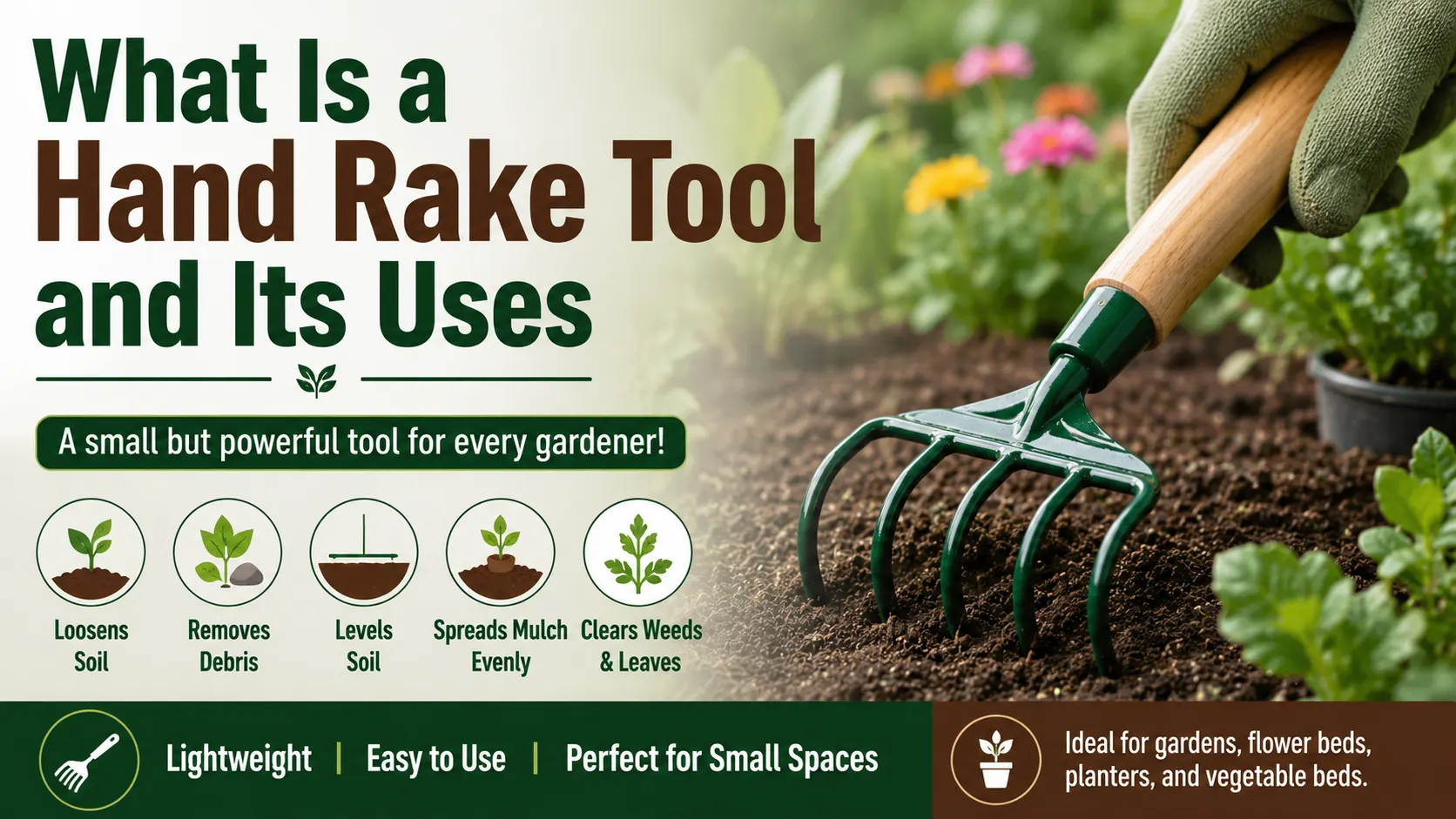
Hand Rake
Hand rakes are commonly used in small farms, nurseries, greenhouses, and vegetable plots where precision work is required. They are useful for light cultivation, soil preparation, and cleanup tasks.
Hay Rake
A hay rake is specifically designed to gather hay and straw into windrows before baling. It is one of the most widely used rakes in livestock and forage farming.
Wheel Rake
Wheel rakes are tractor-operated tools used to collect hay across large fields efficiently. They are popular because they can cover large areas quickly while maintaining good crop quality.
Rotary Rake
Rotary rakes are often used in commercial farming operations where clean, uniform windrows are important. They lift and turn hay gently, helping preserve forage quality and improve drying conditions.
Choosing the Right Agricultural Rake
Selecting the right rake depends on the size of your farm and the type of work being performed.
| Farming Task | Recommended Rake |
| Hay Collection | Hay Rake |
| Small Vegetable Farms | Hand Rake |
| Large Hay Fields | Wheel Rake |
| Premium Forage Production | Rotary Rake |
| Field Cleanup | Hand Rake |
Agricultural Rake vs Garden Rake
Although both tools feature a row of teeth, agricultural rakes are designed for larger workloads and tougher field conditions.
| Feature | Agricultural Rake | Garden Rake |
| Primary Use | Farming and field maintenance | Gardening and landscaping |
| Working Area | Large fields and pastures | Small gardens and flower beds |
| Scale of Operation | Manual or tractor-operated | Primarily manual |
| Hay Collection | Yes | No |
| Crop Residue Removal | Yes | Limited |
| Construction | Heavy-duty steel frame | Lighter construction |
How to Choose the Right Farming Rake
Match the Tool to Farm Size
Small farms and vegetable plots may only require manual hand rakes, while larger operations benefit from tractor-mounted rakes.
Choose Durable Construction
Look for high-quality steel components that can withstand rocks, roots, and demanding field conditions.
Check Equipment Compatibility
For tractor-operated models, ensure the rake matches your equipment specifications and field requirements.
Common Mistakes When Using Agricultural Rakes
Working in Wet Conditions
Raking excessively wet fields can compact the soil and cause residue to stick to the tines.
Using Lightweight Garden Tools
Garden rakes are not designed for heavy agricultural work and may bend or break under demanding field conditions.
Raking Too Deep
Setting the rake too low can pull excessive soil along with hay or crop residue, reducing efficiency and affecting crop quality.
Maintenance Tips for Agricultural Rakes
Clean After Use
Remove mud, plant residue, and debris from the tines after every use.
Store in a Dry Location
Protect tools and attachments from rain and moisture to reduce rust and corrosion.
Apply Protective Lubrication
Occasionally apply a light coat of oil to metal components to help prevent rust.
Inspect Hardware Regularly
Check bolts, fasteners, and mounting points periodically to ensure safe operation.
Conclusion
A rake is an important agricultural tool that helps farmers collect hay, manage crop residue, prepare seedbeds, remove weeds, and maintain productive fields. Whether used on a small vegetable farm or across large agricultural operations, rakes improve efficiency while reducing manual labor.
The effectiveness of a rake depends on selecting the right design for the task, field size, and crop type. Understanding these differences helps farmers improve productivity while reducing unnecessary labor and equipment wear.
For growers, agricultural suppliers, retailers, and distributors looking for dependable farming tools, JCBL Hand Tools offers durable rake solutions designed for demanding agricultural applications. Built with strong materials and reliable construction, these tools provide the performance and long service life required for modern farming operations.
FAQs
A rake in agriculture is a farming tool used to gather hay, remove crop residue, clear weeds, and level soil across fields and pastures.
Its primary function is to collect and organize loose materials on the field surface, making field preparation and cleanup easier.
Common uses include hay collection, crop residue management, seedbed preparation, weed removal, and soil leveling.
A rake can be used both before and after harvesting. Farmers use it for seedbed preparation before planting and for clearing residue or gathering hay after harvest.
Rakes are frequently used in hay, alfalfa, wheat, barley, corn, and forage crop farming.
Yes. Proper raking helps hay dry more evenly, reducing moisture content and improving overall forage quality before baling.
A rake gathers loose materials from the soil surface, while a harrow works deeper in the soil to break clods and prepare land for planting.
Related Readings: