What Is Hot Forging?
- Hot Forging at a Glance
- The Science Behind Hot Forging
- How the Hot Forging Process Works
- Types of Hot Forging Processes
- Key Advantages of Hot Forging
- When Should You Use Hot Forging?
- Why Hot Forging Is Preferred in Critical Industries
- Limitations of Hot Forging
- Industrial Applications of Hot Forging
- 1. Automotive Industry
- 2. Construction & Infrastructure
- 3. Heavy Engineering
- 4. Industrial Maintenance
- 5. Agriculture & Rural Equipment
- Hot Forging vs Other Manufacturing Methods
- Quality Control & Industry Standards
- Conclusion
- FAQs
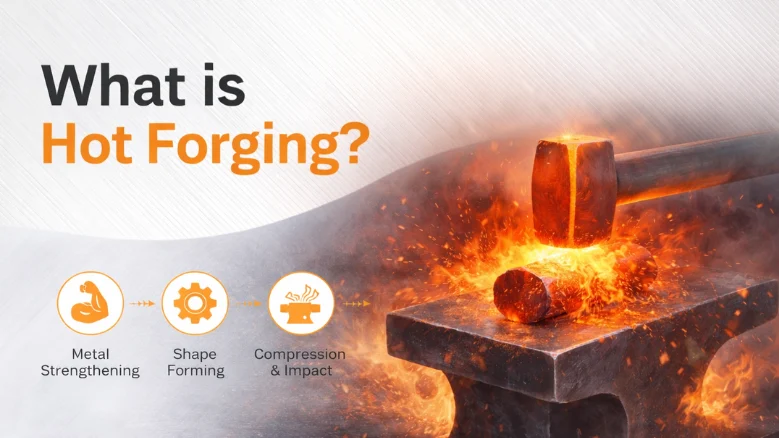
Hot forging is a metal forming process where metals are shaped above their recrystallization temperature to improve strength, toughness, and internal grain structure. It is widely used to manufacture high-performance industrial components that must withstand heavy loads and extreme conditions.
Hot Forging at a Glance
- Process: Deformation of metal above recrystallization temperature
- Typical Temperature Range: 1100°C–1250°C (material dependent)
- Key Outcome: Refined grain structure and improved mechanical properties
- Primary Advantage: High strength and fatigue resistance
- Industries Served: Automotive, construction, heavy engineering, agriculture
The Science Behind Hot Forging
Hot forging is not just shaping metal, it is a metallurgical transformation process.
When metal is heated above its recrystallization temperature:
- Grain refinement occurs: New, strain-free grains replace deformed ones
- Work hardening is eliminated: Prevents cracking during deformation
- Directional grain flow is introduced: Aligns grains along the shape of the component
This results in:
- Higher fatigue resistance
- Improved impact strength
- Enhanced load-bearing capability
This microstructural advantage is why forged components consistently outperform cast or machined parts in high-performance applications.
How the Hot Forging Process Works
A controlled and repeatable process ensures consistent industrial-grade output:
1. Material Selection
Common materials include:
- Carbon steel
- Alloy steel
- Stainless steel
- Aluminum alloys
Material choice depends on load requirements, corrosion resistance, and operating environment.
2. Heating
The workpiece is heated in furnaces or induction systems to a precise temperature range.
Uniform heating is critical to avoid:
- Thermal gradients
- Surface cracking
- Inconsistent grain structure
3. Forging (Deformation Stage)
The heated metal is shaped using:
- Open-die forging (low-volume, large parts)
- Closed-die forging (high-volume, precision components)
To Understand the Difference Between Open-die forging and Closed-die forging Read: Closed-Die vs Open-Die Forging: Process & Key Differences
This stage:
- Eliminates internal voids
- Improves density
- Creates near-net shapes
4. Controlled Cooling
Cooling methods (air cooling, controlled cooling, or quenching) are selected based on desired mechanical properties and hardness levels.
5. Secondary Operations
To meet industrial specifications:
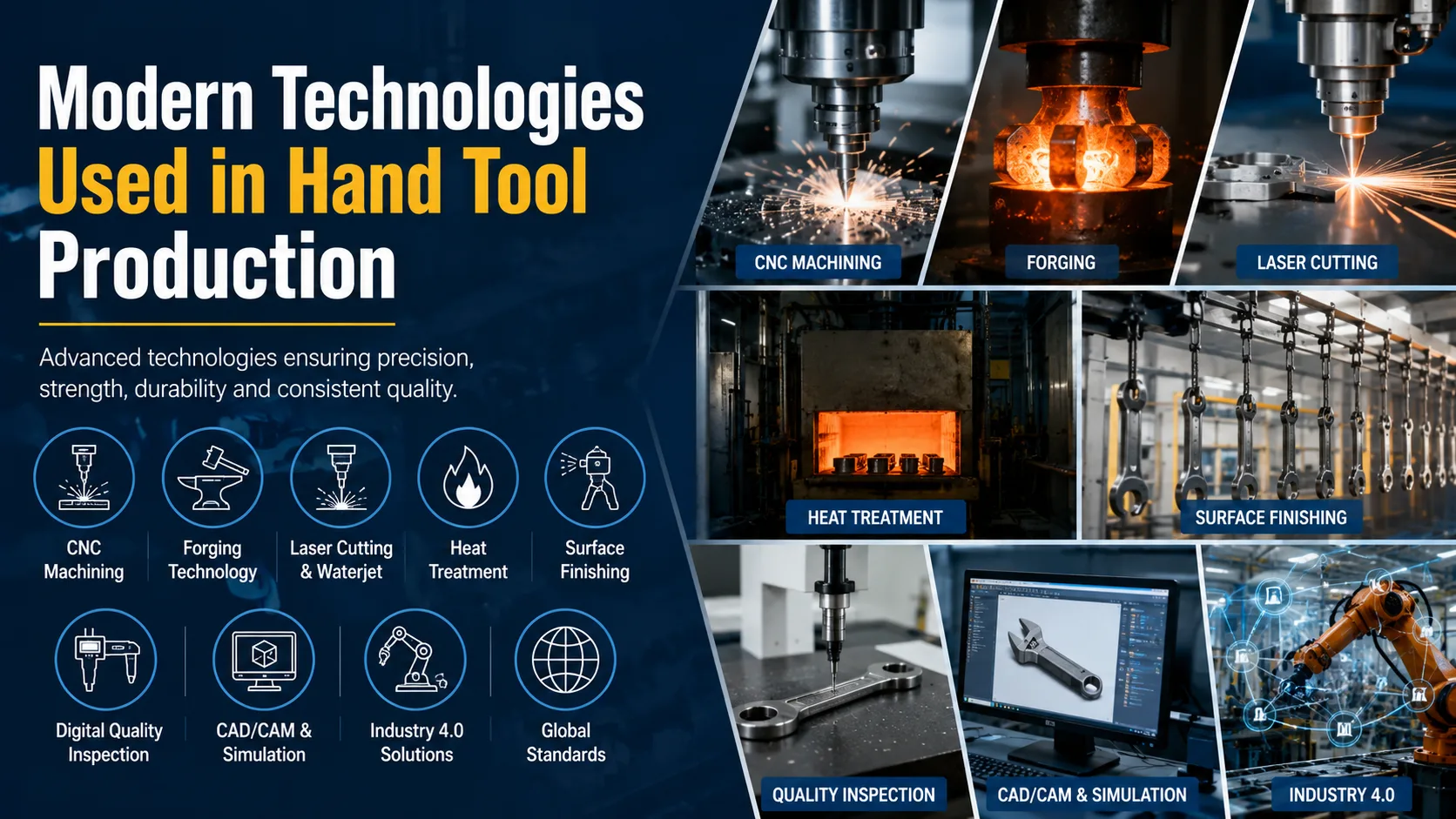
- Trimming
- Heat treatment
- Surface finishing
- Machining (if required)
Types of Hot Forging Processes
Hot forging can be performed using different methods depending on production volume and component complexity:
- Open-Die Forging: Used for large, simple components in low-volume production
- Closed-Die Forging: Ideal for high-volume production with precise shapes and tight tolerances
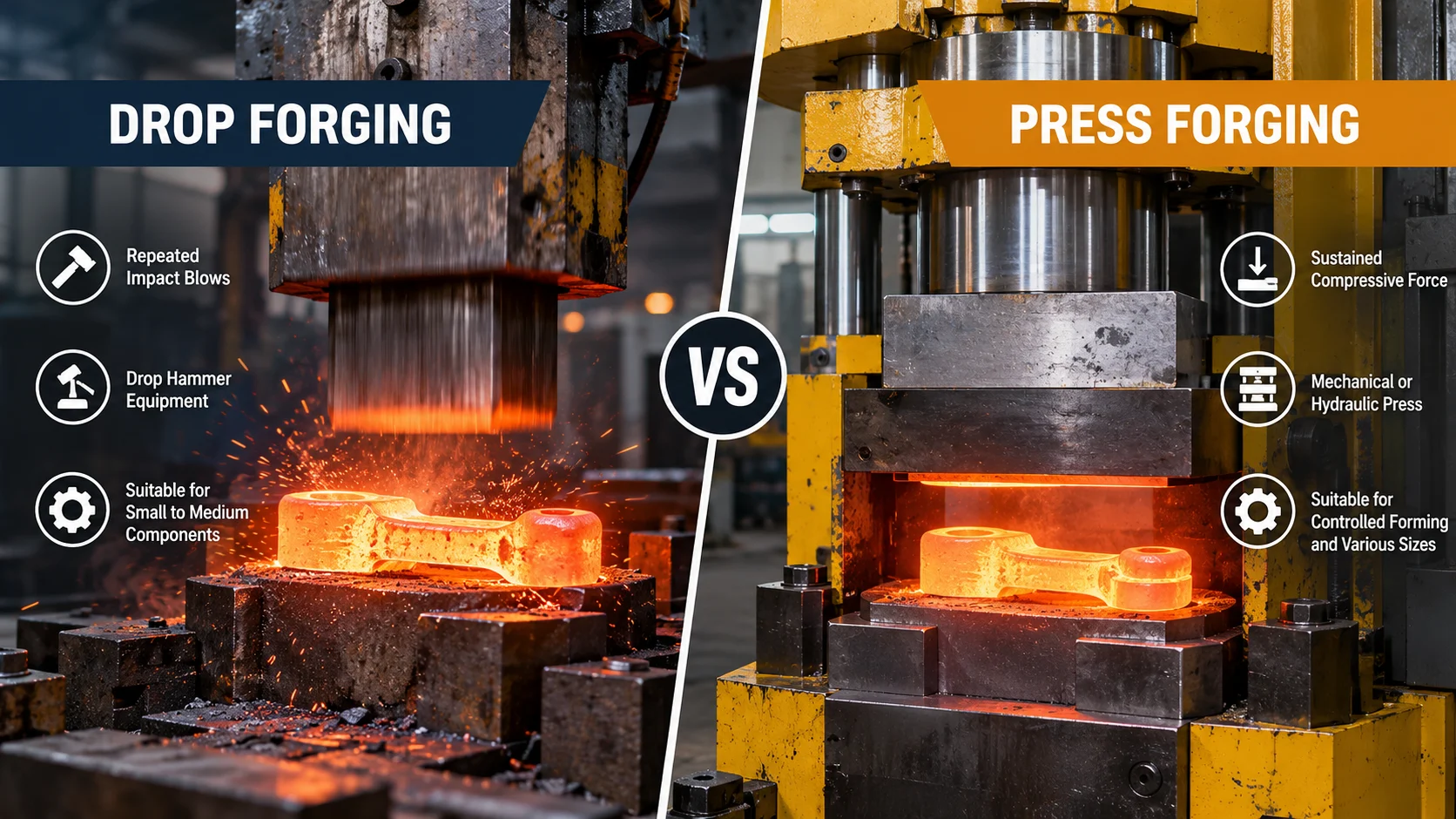
- Press Forging: Applies gradual pressure for deeper deformation and uniform grain flow
- Drop Forging: Uses repeated hammer blows for shaping high-strength components
Key Advantages of Hot Forging
Hot forging delivers measurable performance benefits critical for industrial buyers and engineers.
- High Mechanical Strength: Forged components exhibit superior tensile and yield strength, making them ideal for load-bearing applications.
- Excellent Toughness & Impact Resistance: The refined grain structure allows components to absorb shock without failure, essential for dynamic environments.
- Minimal Internal Defects: Compared to casting, hot forging significantly reduces:
- Porosity
- Shrinkage cavities
- Internal cracks
- Improved Fatigue Life: Forged parts perform better under cyclic loading, reducing the risk of premature failure.
- Material Efficiency: Near-net shaping reduces the following:
- Material waste
- Machining requirements
- Overall production costs (especially at scale)
When Should You Use Hot Forging?
Hot forging is preferred when components must meet strict performance and durability requirements, especially in the following scenarios:
- High load-bearing applications requiring superior strength
- Components exposed to repeated impact or cyclic stress
- Safety-critical parts where failure is not acceptable
- High-volume production requiring consistent quality
- Applications needing improved fatigue resistance and structural reliability
Why Hot Forging Is Preferred in Critical Industries
In sectors like automotive and heavy engineering, component failure can lead to:
- Operational downtime
- Safety risks
- Financial losses
Hot forging addresses these concerns by ensuring:
- Consistent quality across batches
- Predictable performance under stress
- Compliance with industrial standards and tolerances
This makes it the preferred manufacturing method for safety-critical and high-load components.
To better understand the fundamentals of metal shaping, you can explore “what is forging.”
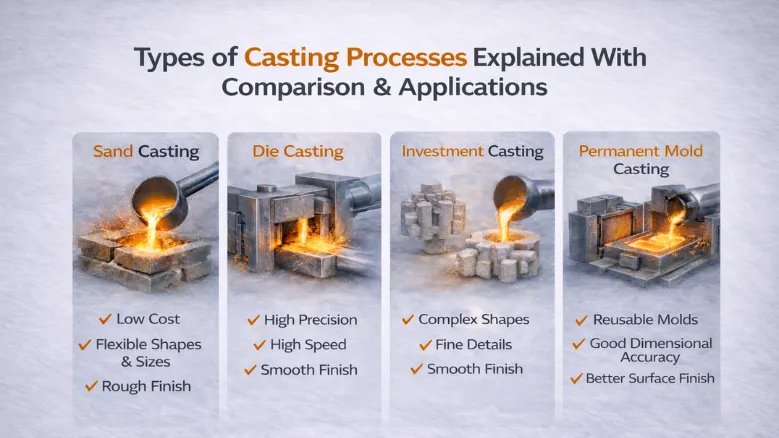
For a clearer comparison of manufacturing methods, the “difference between cast and forged” explains why forged tools perform better in demanding environments.
Limitations of Hot Forging
While hot forging offers significant advantages, it also has certain limitations:
- High energy consumption due to elevated heating requirements
- Surface oxidation and scaling during heating
- Lower dimensional accuracy compared to cold forging
- Additional finishing operations may be required
Industrial Applications of Hot Forging
Hot forging is widely used across industries where mechanical strength, durability, and reliability are critical for components operating under continuous stress, impact, and demanding environmental conditions.
1. Automotive Industry
Hot forging is used to manufacture crankshafts, connecting rods, and gear blanks that require high fatigue strength, dimensional accuracy, and consistent performance under dynamic loads and long operational cycles.
2. Construction & Infrastructure
Forged tools such as hammers, spanners, and fasteners are designed to withstand repeated impact, heavy loads, and harsh site conditions while maintaining structural integrity and long-term usability.
3. Heavy Engineering
Components like shafts, rings, and flanges produced through hot forging deliver high strength and reliability, enabling them to perform effectively under continuous mechanical stress and extreme load conditions.
4. Industrial Maintenance
Hot forged striking tools and torque tools provide consistent performance in repetitive industrial applications, offering enhanced durability, resistance to wear, and long service life in demanding maintenance environments.
5. Agriculture & Rural Equipment
Hot forged hand tools and equipment components are built to resist wear, moisture, and mechanical stress, ensuring reliable performance in rugged agricultural conditions and extended field operations.
Hot Forging vs Other Manufacturing Methods
| Parameter | Hot Forging | Casting | Machining |
| Grain Structure | Refined & directional | Random | Original material |
| Strength | Very High | Moderate | Material dependent |
| Internal Defects | Minimal | Higher | None |
| Fatigue Resistance | Excellent | Lower | Moderate |
| Cost Efficiency | High (volume production) | Moderate | Low (high waste) |
In practice, hot forging is preferred for applications requiring high strength, fatigue resistance, and structural reliability, while casting is more suitable for complex shapes with lower mechanical performance requirements.
Quality Control & Industry Standards
Reliable hot forging operations follow strict quality protocols:
- Material certification and traceability
- Temperature monitoring and control systems
- Non-destructive testing (NDT) such as ultrasonic or magnetic particle inspection
- Dimensional inspection and tolerance checks
Compliance with standards like:
- ISO
- ASTM
- DIN
ensures consistent product quality and global acceptance in B2B markets.
Conclusion
Hot forging is a proven, high-performance manufacturing process that delivers superior strength, durability, and reliability for industrial applications.
By optimizing grain structure and eliminating internal defects, it produces components capable of performing under extreme mechanical and environmental conditions.
For manufacturers, engineers, and procurement professionals, hot forging represents a cost-effective and technically superior solution for producing long-lasting, safety-critical components.
FAQs
Hot forging is the process of shaping metal at high temperatures to improve strength and durability.
It refines grain structure and eliminates internal defects, resulting in better mechanical properties.
Common materials include carbon steel, alloy steel, stainless steel, and aluminum alloys.
Automotive, construction, heavy engineering, agriculture, and industrial manufacturing.
Yes, forged components perform better under repeated stress and cyclic loading.
Related Readings
- What Is Forging?
- What Is Cold Forging?
- What Is Warm Forging?
- Hot vs Cold vs Warm Forging: Key Differences Explained
- Closed-Die vs Open-Die Forging: Process & Key Differences
- Types of Forging Processes Explained
- Grain Structure in Forged vs Cast Metal
- Heat Treatment in Forging and Casting
- Casting Defects vs Forging Defects
- Forging vs Casting Cost Comparison
- What Is Casting?