Spanner Coating Types Explained: Benefits, Differences & Industrial Applications
- What Are Spanner Coatings?
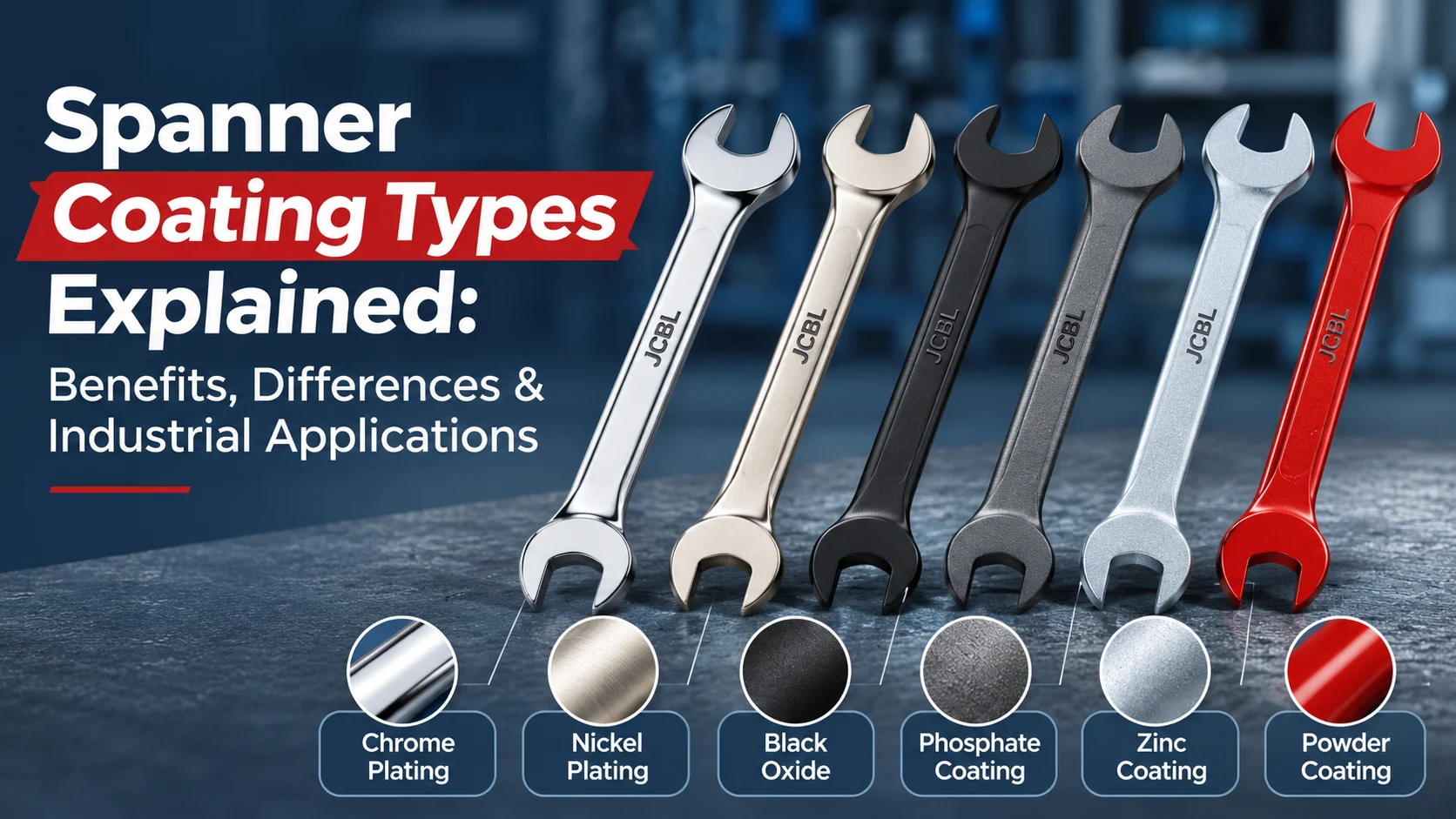
- What Are the Different Types of Spanner Coatings?
- Comparison of Different Spanner Coating Types
- How to Choose the Right Coating for Industrial Spanners
- Which Spanner Coating Is Suitable for Different Industrial Applications?
- Spanner Coating vs Surface Treatment: What Is the Difference?
- Conclusion
- FAQs
Spanner coatings are protective surface finishes applied to steel tools to improve corrosion resistance, surface durability, and appearance. Common spanner finishes include chrome plating, nickel plating, black oxide, and phosphate treatment. Each offers different protective properties, so selecting the right coating is important for industrial applications. The right finish depends on factors such as moisture exposure, working conditions, dimensional tolerances, and maintenance requirements.
What Are Spanner Coatings?
Spanner coatings are surface finishes applied to the steel body of a spanner to protect it against environmental exposure and surface deterioration. Depending on the process, the finish may involve depositing a protective material onto the metal or chemically converting its outer surface.
In industrial spanner manufacturing, coating selection is not just an aesthetic decision. It affects corrosion protection, surface wear, cleaning requirements, and the dimensional accuracy of working areas such as jaws and openings.
What Are the Different Types of Spanner Coatings?
Several coating and surface-finishing options are used for industrial hand tools. The most common options include:
1. Chrome Plating
Chrome plating is one of the most widely recognised finishes for general-purpose spanners. It involves depositing chromium onto the general-purpose prepared steel surface, commonly over a nickel underlayer.
Key Characteristics:
- Provides a bright, polished appearance.
- Offers good corrosion resistance when properly applied.
- Improves surface hardness and wear resistance.
- Creates a smooth surface that is easy to clean.
- Protects the underlying metal from environmental exposure.
Chrome-plated spanners are commonly used in automotive workshops, mechanical maintenance, and general engineering applications.
2. Nickel Plating
Nickel plating involves depositing a layer of nickel onto the steel surface through electroplating. It provides a uniform metallic finish and acts as a protective barrier against corrosion.
Key Characteristics:
- Provides good corrosion resistance.
- Creates a smooth, uniform surface.
- Offers useful surface hardness, depending on the plating process.
- Can serve as an underlayer for chromium plating.
- Supports improved surface durability.
Nickel plating is frequently used as part of a nickel-chrome finishing system. Its performance depends on deposit thickness, plating quality, and surface preparation.
3. Black Oxide Coating
Black oxide is a chemical conversion treatment that forms a thin black layer on the steel surface. Unlike electroplating, it converts the outer surface of the base metal rather than depositing a separate metallic coating.
Key Characteristics:
- Produces a black, non-reflective finish.
- Causes minimal dimensional change.
- Reduces surface glare.
- Provides limited corrosion protection on its own.
- Requires oil or another rust-preventive treatment for better protection.
Black oxide-finished spanners are suitable for applications where a low-glare appearance and minimal coating thickness are preferred.
4. Phosphate Coating
Phosphate coating is another chemical conversion treatment used on steel tools. Zinc phosphate and manganese phosphate are two common types, with different functional characteristics.
Key Characteristics:
- Produces a dark grey or black surface.
- Helps retain protective oils and lubricants.
- Provides a suitable base for supplementary protective treatments.
- Offers limited corrosion protection without additional protection.
- Supports specific surface-finishing requirements.
Phosphate-treated spanners are used where oil retention and a non-reflective finish are desirable. Supplementary oiling or sealing is important for corrosion protection.
5. Zinc Coating
Zinc coating involves applying a protective zinc layer to steel, commonly through electroplating. Unlike barrier-only finishes, zinc provides sacrificial protection by corroding preferentially to the underlying steel.
Key Characteristics:
- Provides sacrificial corrosion protection.
- Helps protect steel against moisture exposure.
- Can be combined with passivation or sealing.
- Offers an economical protective finish.
- Requires suitable coating thickness and process control.
Zinc plating can be considered for specific industrial tool requirements, although it is less commonly associated with conventional spanner finishes than nickel-chrome plating or black finishes.
6. Powder Coating
Powder coating involves applying dry polymer powder to a prepared surface and curing it with heat to form a protective film.
Key Characteristics:
- Provides a durable decorative finish.
- Offers protection against environmental exposure.
- Is available in different colours and textures.
- Can resist surface abrasion depending on the formulation.
- Requires careful thickness control.
Powder coating is generally more suitable for selected external surfaces than spanner jaws and precision openings, where excess coating thickness may interfere with fit and tool engagement.
Comparison of Different Spanner Coating Types
Each finish offers a different protection mechanism and maintenance requirement.
| Finish | Protection Mechanism | Main Advantage | Maintenance |
| Chrome plating | Metallic barrier | Hard, polished surface | Routine cleaning and drying |
| Nickel plating | Metallic barrier | Corrosion protection | Routine cleaning and drying |
| Black oxide | Conversion layer | Thin, low-glare finish | Protective oil required |
| Phosphate | Conversion layer | Oil retention | Oiling or sealing |
| Zinc plating | Sacrificial protection | Corrosion protection | Depends on exposure and sealing |
| Powder coating | Polymer barrier | Decorative protection | Inspect for chips and damage |
Actual performance depends on coating thickness, surface preparation, application quality, sealing, and operating conditions. These finishes are not interchangeable.
How to Choose the Right Coating for Industrial Spanners
For spanner manufacturers, distributors, and industrial buyers, coating selection should consider more than appearance. The following factors help determine the appropriate finish.
1. Working Environment
Identify exposure to moisture, humidity, chemicals, oils, and outdoor conditions. Tools used in high-moisture environments generally require more robust corrosion protection than those used in dry workshops.
2. Corrosion and Wear Requirements
Evaluate the expected exposure to rust, friction, handling, and surface abrasion. Nickel-chrome plating may suit applications requiring a polished, protective finish, while black oxide needs supplementary rust prevention.
3. Coating Thickness and Dimensional Accuracy
Spanner openings, jaws, and other working surfaces require accurate dimensions. Excessive or uneven coating thickness can affect tool fit and engagement. Manufacturers should account for finishing allowances when specifying dimensions.
4. Surface Preparation and Adhesion
Cleaning, degreasing, and appropriate surface preparation are essential before applying a finish. Poor preparation can cause uneven deposits, inadequate adhesion, or premature coating failure.
5. Quality Testing and Specifications
Industrial buyers should evaluate coating uniformity, adhesion, corrosion performance, and abrasion resistance against the relevant product specification. Testing requirements should match the intended tool application rather than relying on the coating name alone.
Which Spanner Coating Is Suitable for Different Industrial Applications?
The appropriate finish varies according to operating conditions.
- Automotive workshops: Chrome-plated spanners are commonly selected for their polished appearance, corrosion protection, and ease of cleaning.
- Manufacturing and industrial maintenance: Nickel-chrome and black finishes may be suitable depending on environmental exposure and maintenance requirements.
- Construction and heavy engineering: Coating selection should account for moisture, outdoor exposure, frequent handling, and surface wear.
- Marine and high-moisture environments: Specify finishes with appropriate corrosion protection based on exposure severity, testing requirements, and maintenance conditions.
For industrial spanner suppliers in India, understanding these application requirements is important when sourcing tools for automotive, engineering, infrastructure, and manufacturing customers.
Spanner Coating vs Surface Treatment: What Is the Difference?
A coating generally involves depositing an additional protective layer onto a metal surface, as seen in chrome, nickel, and zinc plating.
A conversion treatment chemically changes the outer surface of the base metal to form a protective layer. Black oxide and phosphate treatments are examples.
The distinction matters because these processes differ in thickness, adhesion characteristics, corrosion protection, and maintenance requirements.
Conclusion
Selecting the right spanner coating involves balancing corrosion protection, surface durability, dimensional accuracy, and maintenance requirements. Chrome, nickel, black oxide, phosphate, zinc, and powder finishes serve different purposes. For industrial manufacturers, suppliers, and procurement teams, evaluating coating specifications alongside material quality and manufacturing standards helps ensure reliable tool performance.
FAQs
1. Which coating is best for spanners?
Chrome plating is a common choice for general-purpose spanners because it provides a polished finish, good corrosion resistance, and surface durability. However, the best finish depends on the operating environment and performance requirements.
2. Is chrome plating better than nickel plating for spanners?
Chrome plating generally provides a harder, more wear-resistant outer surface, while nickel plating offers corrosion protection and is frequently used as an underlayer in nickel-chrome systems. The choice depends on the required finish and application.
3. Do black oxide-coated spanners resist corrosion?
Black oxide provides limited corrosion resistance on its own. Oil or another rust-preventive treatment is needed to improve protection against moisture and oxidation.
4. What is the difference between chrome plating and black oxide?
Chrome plating deposits a metallic chromium layer, commonly over nickel, whereas black oxide chemically converts the outer steel surface. Chrome generally offers stronger corrosion protection when properly applied.
5. Does spanner coating affect tool durability?
Yes. A suitable coating can improve corrosion resistance and surface wear performance. However, overall spanner durability also depends on base material, heat treatment, manufacturing quality, and intended load.
6. How should coated spanners be maintained?
Clean spanners after use, remove moisture, dry them thoroughly, and store them in a dry environment. Apply suitable rust-preventive oil where required, particularly for black oxide and phosphate finishes.