Manufacturing Standards for Professional Spanners: ISO, ASME & Quality Requirements
- What Are the Manufacturing Standards for Professional Spanners?
- Key ISO Standards for Spanner Manufacturing
- What Do Spanner Manufacturing Standards Specify?
- How Manufacturers Ensure Spanners Meet Applicable Standards
- Why Standards Matter When Sourcing Professional Spanners
- How to Choose a Professional Spanner Manufacturer
- Conclusion
- FAQs
Professional spanners are manufactured to meet defined requirements for dimensions, wrench-opening tolerances, hardness, torsional strength, performance, and safety. Key standards include ISO 691, ISO 1711-1, and ASME B107.100, although the applicable standard depends on the spanner type, product specification, and target market.
For manufacturers and B2B buyers, these standards provide measurable requirements that can be used for product design, manufacturing control, inspection, and performance testing.
What Are the Manufacturing Standards for Professional Spanners?
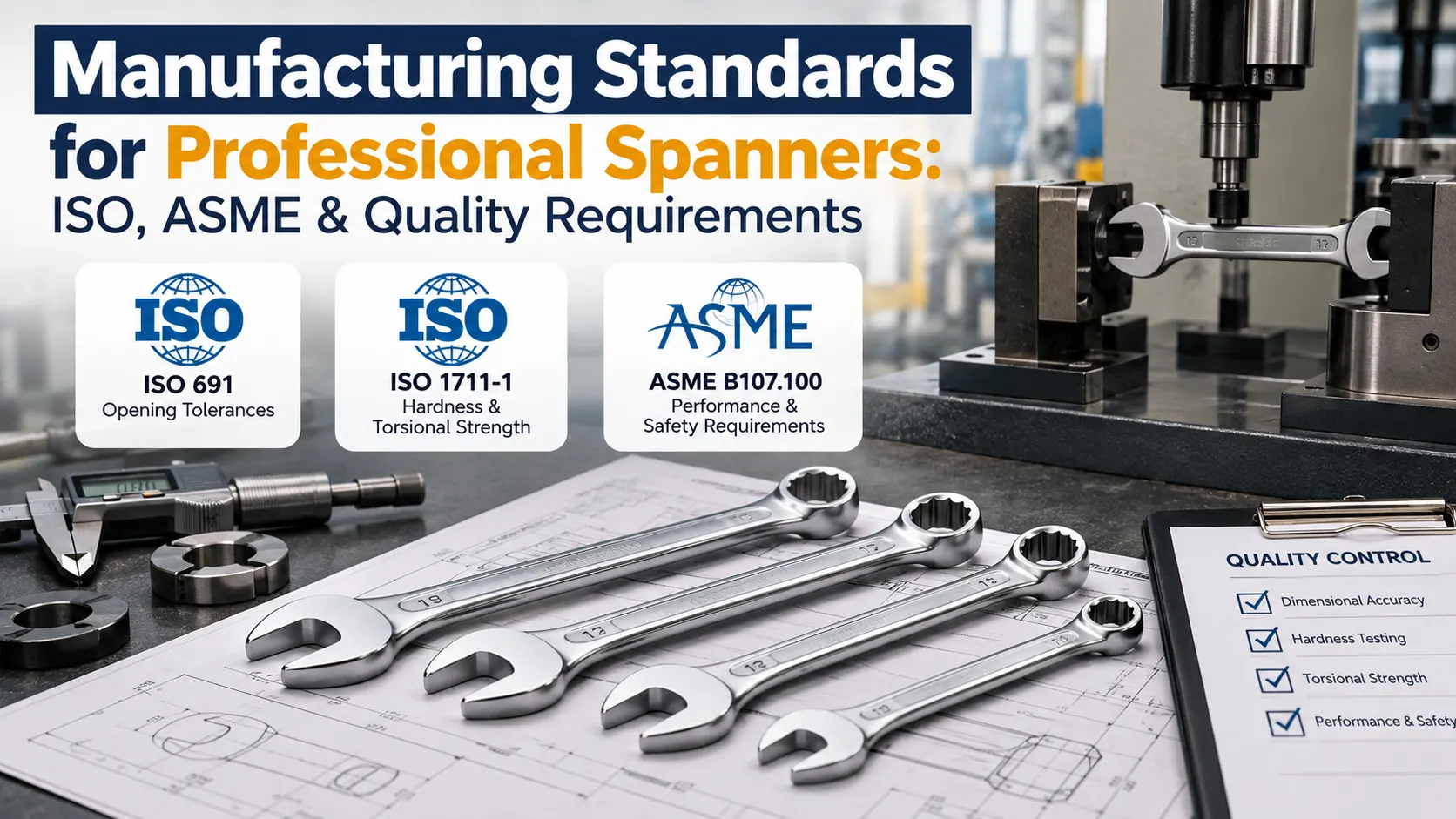
The most relevant standards for professional spanners include:
| Standard | Main focus |
| ISO 691:2005 | Tolerances for wrench and socket openings used with metric fasteners |
| ISO 1711-1:2019 | Minimum Rockwell hardness and torsional strength for covered hand-operated wrenches and sockets |
| ASME B107.100-2023 | Performance and safety requirements for specified flat-wrench categories |
ISO 691 remains the current edition and was reviewed and confirmed in 2025. ISO 1711-1:2019 was also reviewed and confirmed in 2025. These standards should not be treated as a single universal certification requirement for every spanner. Manufacturers need to determine which standards and customer specifications apply to the particular product.
Key ISO Standards for Spanner Manufacturing
1. ISO 691:2005 – Wrench Opening Tolerances
ISO 691:2005 defines tolerances for wrench and socket openings used with metric fasteners, specifying permissible deviations from nominal dimensions.
For professional spanners, these tolerances help ensure accurate fastener engagement and consistent dimensional quality, making the standard particularly relevant to metric tools used in automotive, industrial, and engineering applications.
2. ISO 1711-1:2019 — Hardness and Torsional Strength
ISO 1711-1:2019 specifies minimum Rockwell hardness and torsional-strength values for covered hand-operated wrenches and sockets, with requirements varying by tool category.
Compliance requires controlled material selection, heat treatment, and mechanical testing to verify the finished spanner meets the specified performance requirements.
3. ASME B107.100-2023 for Professional Wrenches
ASME B107.100-2023, Flat Wrenches, establishes performance and safety requirements for several wrench categories, including combination, open-end, box, and flare-nut wrenches, as well as certain adjustable, crowfoot, and ratcheting box wrenches.
For manufacturers serving the U.S. market or customers specifying ASME requirements, the standard provides defined criteria for the relevant wrench type. It is a technical standard, not a blanket certification for all professional spanners.
What Do Spanner Manufacturing Standards Specify?
Although requirements vary by standard and product type, professional spanner manufacturing commonly involves controlling four key areas.
1. Dimensional Accuracy
Critical dimensions can include:
- Wrench opening size
- Width across flats
- Jaw and wrench geometry
- Overall dimensions
- Applicable manufacturing tolerances
ISO 691 provides specific tolerances for metric wrench and socket openings.
2. Hardness
Hardness is a measurable mechanical property that manufacturers control through material selection and heat treatment. ISO 1711-1 establishes minimum Rockwell hardness values for the hand-operated wrenches and sockets within its scope.
3. Torsional Strength
Professional spanners must withstand specified torsional loads appropriate to their category. ISO 1711-1 establishes minimum torsional-strength requirements for the covered tool series.
Testing against the applicable requirement helps manufacturers verify that the finished tool meets its specified mechanical performance.
4. Performance and Safety
Performance and safety requirements vary according to the wrench category and applicable standard. ASME B107.100, for example, establishes performance and safety requirements for the flat-wrench products within its scope.
How Manufacturers Ensure Spanners Meet Applicable Standards
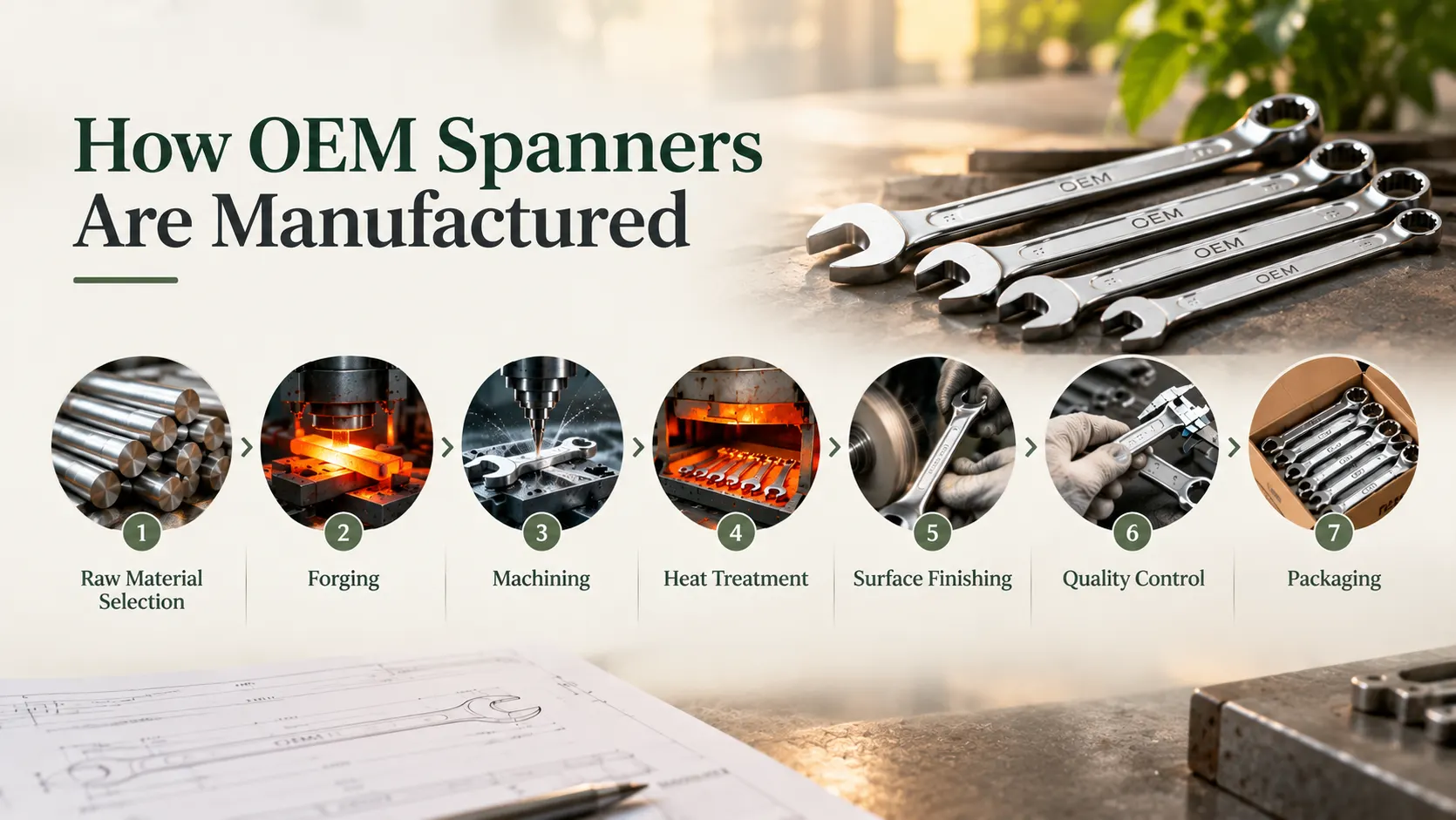
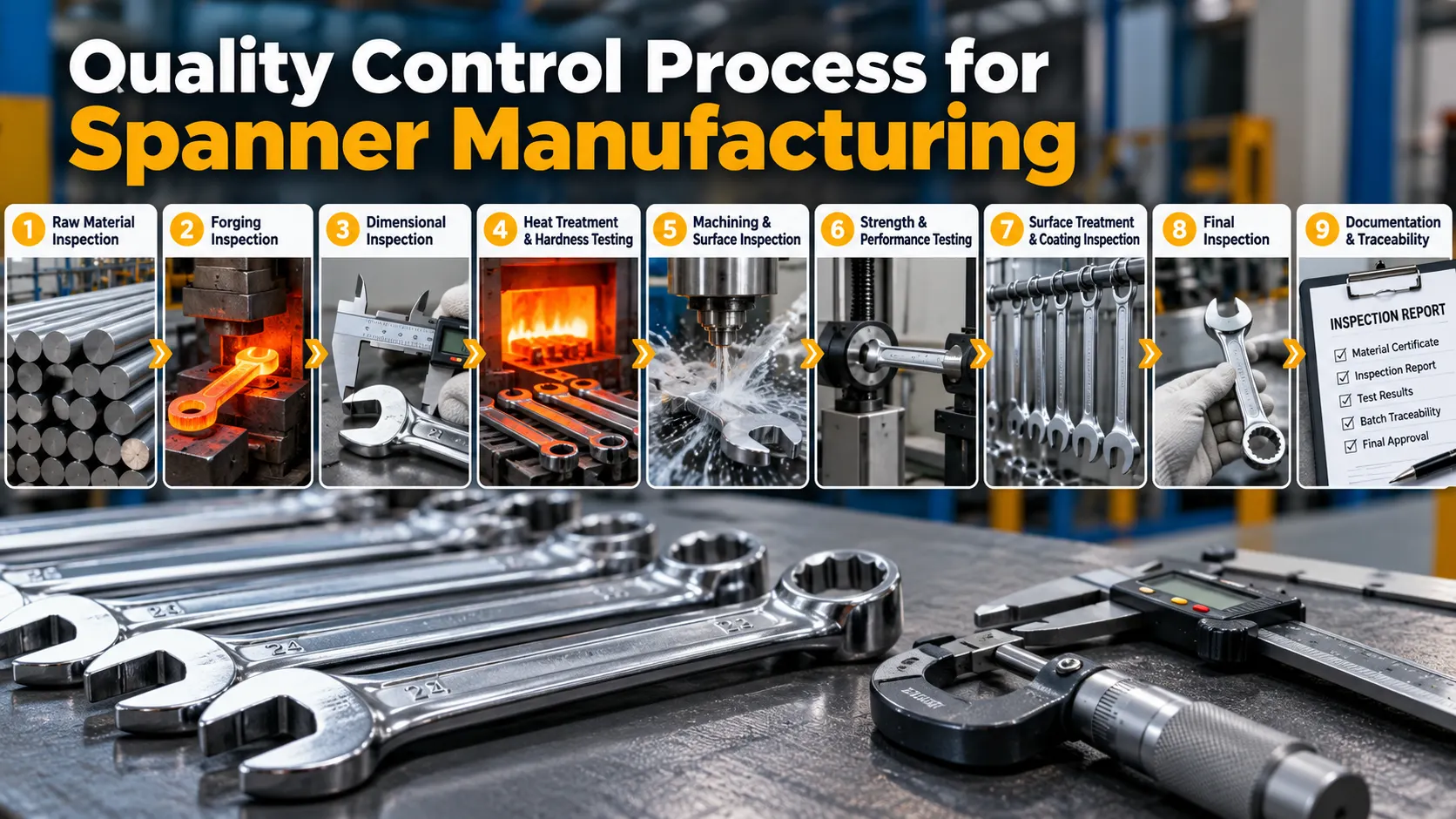
Meeting a manufacturing standard requires more than checking the finished tool. Quality controls should be incorporated throughout production.
- Material selection: The manufacturer selects steel and material specifications appropriate for the product design and required mechanical properties.
- Forging and forming: The blank is formed to produce the required wrench geometry. Process control helps maintain consistency between production batches.
- Heat treatment: Heat treatment is controlled to achieve the required mechanical properties and hardness.
- Machining and finishing: Critical surfaces and wrench openings are processed to achieve the specified dimensions and finish.
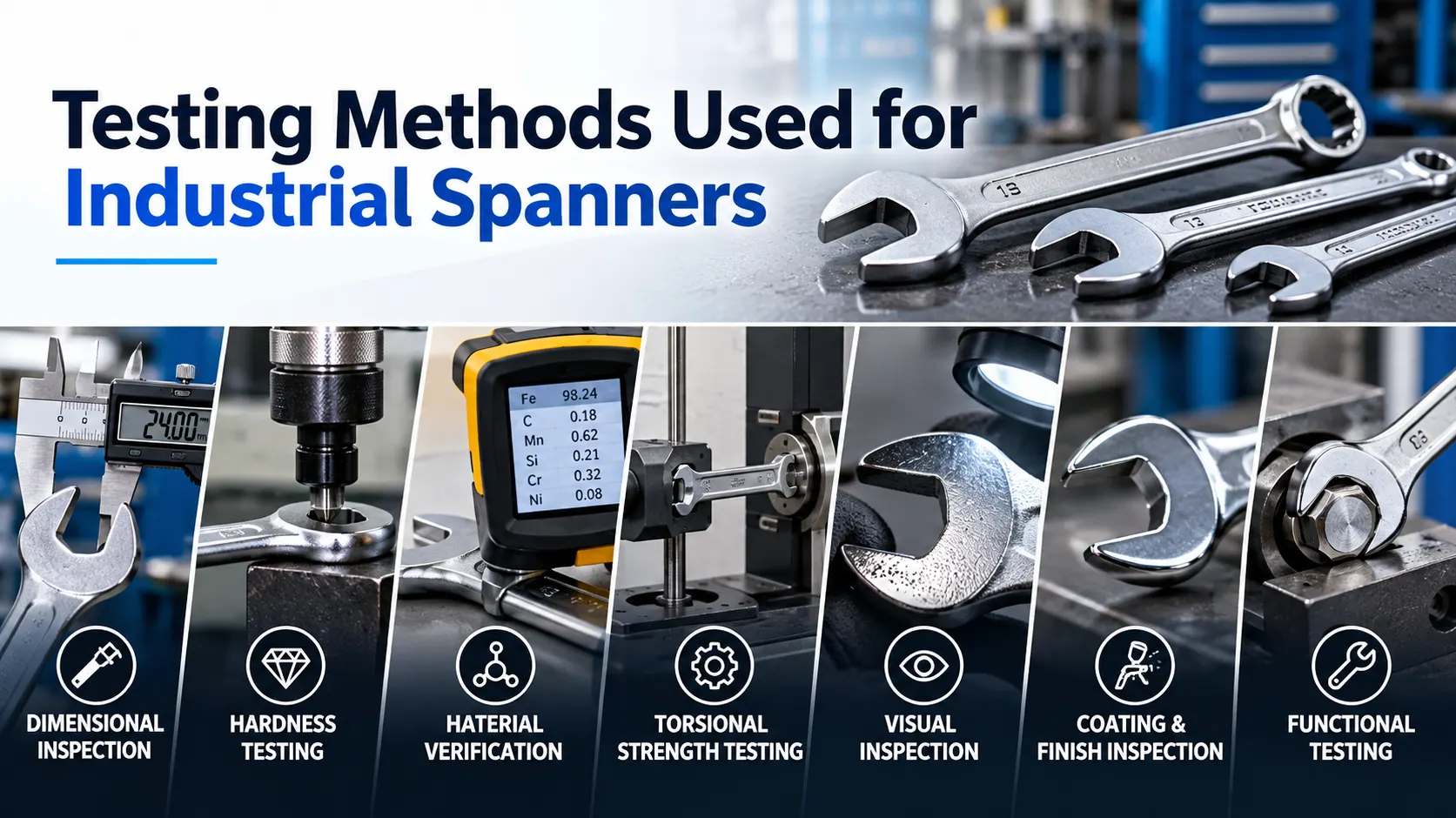
- Dimensional inspection: Gauges and measuring equipment are used to verify critical dimensions and applicable tolerances.
- Hardness testing: Hardness is checked against the applicable specification, particularly where ISO 1711-1 requirements apply.
- Strength testing: Applicable torsional or performance tests are conducted to verify mechanical requirements.
- Final inspection: Finished spanners are checked for dimensional conformity, workmanship, markings, and other customer or standard-specific requirements before release.
The exact manufacturing and inspection sequence can vary by manufacturer, product design, and customer specification.
Why Standards Matter When Sourcing Professional Spanners
For B2B buyers, standards provide a clearer basis for evaluating professional spanners than appearance or material descriptions alone.
When sourcing from a professional spanner manufacturer, buyers should verify:
- Applicable ISO or ASME standard
- Exact standard edition and product scope
- Material specification
- Heat-treatment process and controls
- Dimensional inspection methods
- Hardness testing capability
- Torsional or performance testing
- Quality-control documentation
- Product traceability
- OEM, private-label, or custom specification capability
It is also important to distinguish between conformity to a standard and certification. A manufacturer stating that a product is manufactured according to a particular standard does not automatically mean that an independent certification has been issued.
How to Choose a Professional Spanner Manufacturer
For industrial, automotive, engineering, construction, and export applications, evaluate a manufacturer based on its ability to consistently meet the required technical specification.
A suitable supplier should be able to clearly communicate:
- Which standards apply to the product
- Which material and heat-treatment specifications are used
- How critical dimensions are inspected
- Which hardness and strength tests are performed
- What quality records or test documentation are available
- Whether OEM and private-label requirements can be supported
For international sourcing, buyers should also specify the destination market, applicable standards, required sizes, finish, packaging, markings, and testing requirements before production begins.
Conclusion
Manufacturing standards give professional spanner manufacturers measurable requirements for dimensional accuracy, hardness, torsional strength, performance, and safety. ISO 691, ISO 1711-1, and ASME B107.100 address different aspects of wrench manufacturing and should be applied according to the product and target market. For B2B buyers, checking the applicable standard, testing procedures, quality controls, and supporting documentation is essential when evaluating a professional spanner manufacturer.
FAQs
There is no single standard covering every professional spanner. ISO 691, ISO 1711-1, and ASME B107.100 address different dimensional, mechanical, performance, and safety requirements. The applicable standard depends on the wrench type, market, and product specification.
ISO 1711-1:2019 specifies minimum Rockwell hardness and torsional-strength values for covered hand-operated wrenches and sockets.
ISO 691:2005 specifies tolerances for wrench and socket openings used with metric fasteners.
ASME B107.100-2023 is a standard for flat wrenches, covering performance and safety requirements for specified wrench categories, including combination, open-end, box, and flare-nut wrenches.
Depending on the applicable standard and product type, testing can include dimensional inspection, hardness testing, torsional-strength testing, and other performance checks.