Top Spanner Manufacturers & Suppliers in India for Global Buyers
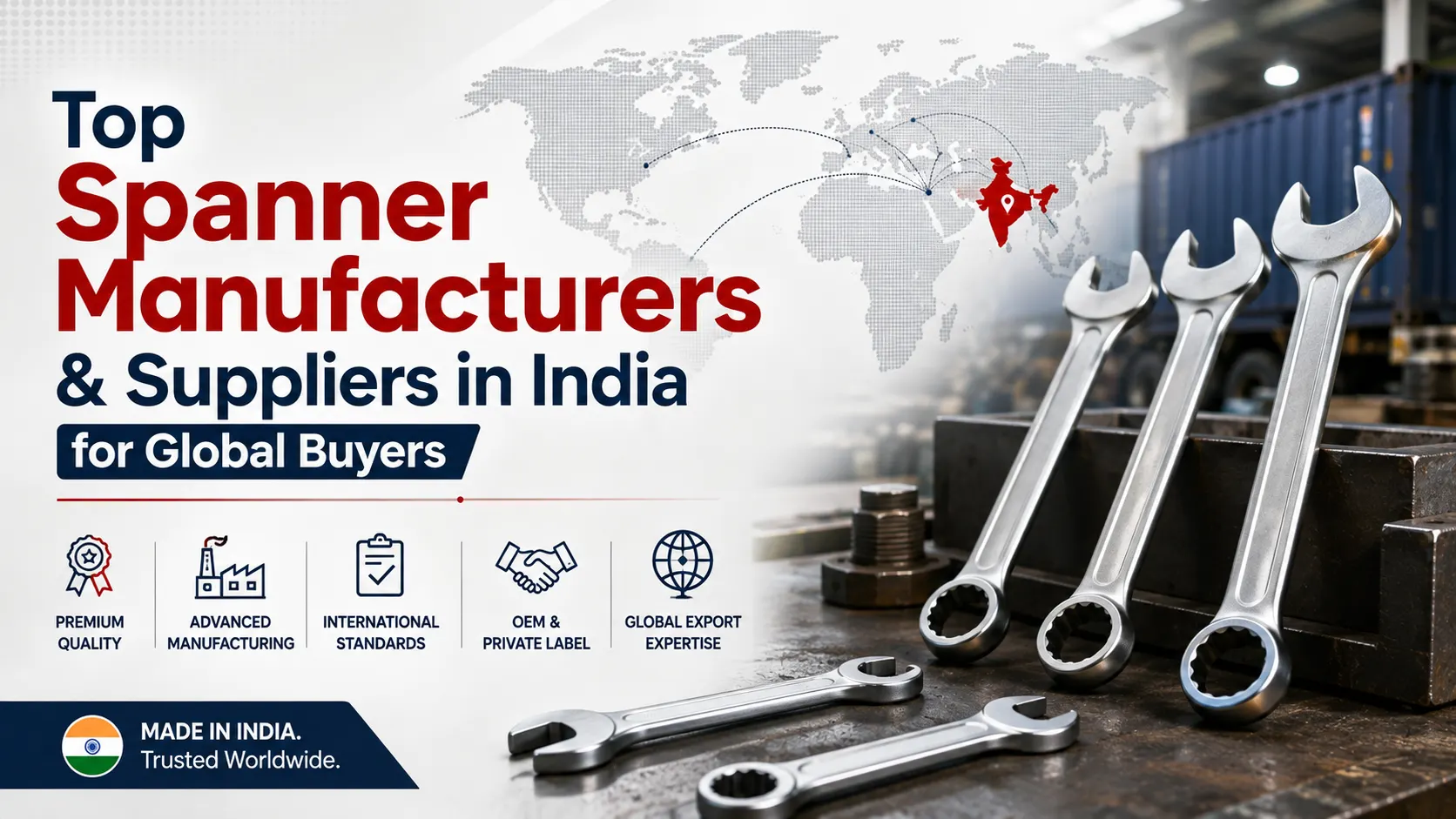
India has become a preferred sourcing destination for industrial hand tools, offering a combination of manufacturing expertise, competitive pricing, and strong export capabilities. For global importers, wholesalers, distributors, and OEM brands, choosing the right spanner manufacturer goes beyond finding the lowest price, it requires evaluating product quality, manufacturing standards, certifications, and long-term supply reliability.
This guide highlights leading spanner manufacturers and suppliers in India and outlines the key factors international buyers should consider when selecting an export partner.
Top Spanner Manufacturers & Suppliers in India
1. JCBL Hand Tools
JCBL Hand Tools is a leading Spanner manufacturer, supplier, and exporter in India, serving OEM brands, wholesalers, distributors, and industrial buyers worldwide. With in-house manufacturing capabilities and a quality-focused production approach, the company supplies high-quality spanners and other industrial hand tools designed to meet the requirements of international markets.
Beyond spanners, JCBL Hand Tools manufactures a comprehensive range of hand tools, garden tools & décor products, safety equipment, and leather aprons for industrial and professional applications. Its controlled manufacturing processes and defined quality benchmarks help ensure consistent product specifications, reliable production volumes, and repeatable quality across bulk orders.
Highlights
- In-house manufacturing and quality-controlled production
- Wide range of industrial hand tools and spanners
- OEM and private-label manufacturing support
- Bulk supply for importers, distributors, and wholesalers
- Export-focused operations serving international markets
- Long-term sourcing support with consistent production standards
2. Eastman Cast & Forge
Eastman is one of India’s established hand tool manufacturers with a comprehensive portfolio of spanners for automotive, industrial, and maintenance applications. The company exports to multiple international markets and emphasizes quality-controlled manufacturing.
Highlights
- Extensive product range
- Large manufacturing capacity
- Export-focused operations
- International quality standards
3. H.R. Industries
H.R. Industries is a government-recognized export house known for manufacturing industrial hand tools for international markets. The company offers a broad range of spanners and supports OEM and private-label manufacturing for global buyers.
Highlights
- Wide range of industrial spanners
- ISO-certified manufacturing
- GS-certified products
- OEM and custom branding
- Global export experience
4. JF Tools
JF Tools manufactures hand tools for customers in more than 30 countries. The company offers private-label production and customized manufacturing for distributors and international brands.
Highlights
- Export presence across multiple regions
- OEM and private-label services
- Wide product portfolio
5. Solid Hand Tools
Solid Hand Tools is a 100% export-oriented manufacturer supplying industrial hand tools to overseas buyers. The company focuses on consistent production quality and international sourcing requirements.
6. Ess Ess Exports
Ess Ess Exports manufactures spanners conforming to IS, DIN, and ANSI standards. The company serves industrial buyers with bulk manufacturing capabilities and a wide selection of forged hand tools.
7. Kastek (India)
Kastek has decades of experience manufacturing and exporting industrial hand tools, including a comprehensive range of spanners for international markets.
8. Hamco Ispat
Hamco Ispat supplies forged hand tools with OEM branding, customized packaging, and bulk export solutions for distributors and private-label brands.
Comparison of Leading Indian Spanner Manufacturers
| Manufacturer | OEM Services | Export Focus | Quality Certifications | Suitable For |
| H.R. Industries | Yes | Strong | ISO, GS | Importers, OEM brands |
| Eastman Cast & Forge | Yes | Strong | International quality standards | Distributors |
| JCBL Hand Tools | Yes | Global | DIN, ANSI, and GS certified | OEM brands, importers, wholesalers, distributors |
| JF Tools | Yes | 30+ countries | ISO | Private-label brands |
| Solid Hand Tools | Yes | Export-oriented | Quality-controlled manufacturing | Bulk buyers |
| Ess Ess Exports | Yes | Global | DIN, ANSI, IS compliance | Industrial supply |
| Kastek | Yes | International | Manufacturing quality systems | Importers |
| Hamco Ispat | Yes | Global | Export-oriented manufacturing | OEM sourcing |
What to Look for in a Spanner Manufacturer
Before placing a bulk order, compare manufacturers on production capability, standards, OEM support, and export experience.
- Export Experience: Ability to handle international documentation, packaging, logistics, and buyer requirements.
- Manufacturing: Drop forging, heat treatment, machining, finishing, and final inspection.
- Standards & Certifications: Relevant DIN, ANSI, IS, ISO 9001, or GS/VPA-GS requirements, where applicable.
- OEM & Private Label: Custom branding, specifications, packaging, and bulk production.
Why Global Buyers Source Spanners from India
India has built a strong reputation in the global hand tool industry, particularly through manufacturing hubs in Punjab. Export-oriented manufacturers serve customers across Europe, North America, the Middle East, Africa, and Asia by producing spanners that meet international quality requirements.
Key advantages include the following:
- Competitive manufacturing costs
- Skilled forging and machining expertise
- Large-scale production capacity
- OEM and private-label manufacturing
- Compliance with international quality standards
- Established global export networks
These advantages make India a practical sourcing destination for businesses seeking consistent quality and scalable production.
Why Global Buyers Choose JCBL Hand Tools
For international buyers, selecting the right manufacturing partner is about more than product pricing; it requires confidence in production capability, quality consistency, and long-term supply reliability. JCBL Hand Tools is built to support these procurement priorities through a combination of in-house manufacturing, controlled quality processes, and export-focused operations.
In-House Manufacturing Expertise
JCBL Hand Tools manages key manufacturing processes in-house, enabling better control over product quality, specifications, and production timelines while supporting consistent output across repeat orders.
Comprehensive Product Portfolio
In addition to spanners, the company manufactures and supplies:
- Hand tools
- Garden tools & décor
- Safety equipment
- Leather aprons
This broad portfolio allows buyers to consolidate sourcing from a single manufacturing partner.
OEM & Private-Label Manufacturing
JCBL Hand Tools supports OEM and private-label requirements with services such as custom branding, product specifications, and packaging solutions, helping distributors and brands develop products tailored to their target markets.
Reliable Bulk Supply
The company works closely with importers, wholesalers, distributors, and procurement teams requiring dependable production volumes and consistent quality for long-term sourcing programs.
Quality-Driven Production
Manufacturing is carried out through controlled processes and defined quality benchmarks to maintain product consistency, reliable performance, and uniform specifications across every production batch.
Whether you’re sourcing spanners for industrial distribution, retail, or OEM branding, JCBL Hand Tools offers a dependable manufacturing partnership backed by scalable production capabilities and an export-oriented approach.
Common Mistakes Global Buyers Should Avoid
Avoid these common procurement mistakes when sourcing spanners from India:
- Choosing a supplier based only on price without comparing equivalent product specifications and quality.
- Skipping sample evaluation before approving bulk production.
- Ignoring production capacity, lead times, and export requirements when finalizing a supplier.
A structured sourcing approach helps buyers reduce quality, delivery, and procurement risks.
Conclusion
India continues to be a trusted sourcing destination for spanners and industrial hand tools, supported by experienced manufacturers, modern production capabilities, and strong export infrastructure. Whether you’re sourcing for wholesale distribution, industrial supply, or private-label branding, selecting a manufacturer based on quality standards, manufacturing expertise, certifications, and export experience is essential for building a dependable supply chain.
FAQs
Some of the well-established manufacturers include JCBL Hand Tools, H.R. Industries and Eastman Cast & Forge.
India offers competitive manufacturing costs, skilled engineering, export-oriented production, OEM capabilities, and manufacturers that produce hand tools aligned with international quality standards.
Yes. Many export-focused manufacturers offer custom branding, laser marking, private-label manufacturing, customized packaging, and bulk production for international buyers.
Depending on the manufacturer and product, buyers may look for ISO 9001 certification and products manufactured according to DIN, ANSI, or IS standards.
Evaluate manufacturers based on production capabilities, certifications, quality assurance processes, export experience, OEM services, delivery reliability, and communication rather than focusing solely on price.
Related Readings: